Starting takes under three percent of a battery's charge, yet heat, cold and one night of lights can finish it.
A 12-volt car battery is a lead-acid store of power that cranks the starter motor and runs accessories with the engine off. Heat, cold, deep discharge and sulfation shorten its life. A dead one can be jump started, following the owner's manual, but never when frozen or damaged.
Leave the headlights on until a low-maintenance car battery is completely flat and you can cost it a third or more of its working life. Starting the engine itself uses less than three percent of the battery's capacity.
What does a 12-volt car battery actually do?
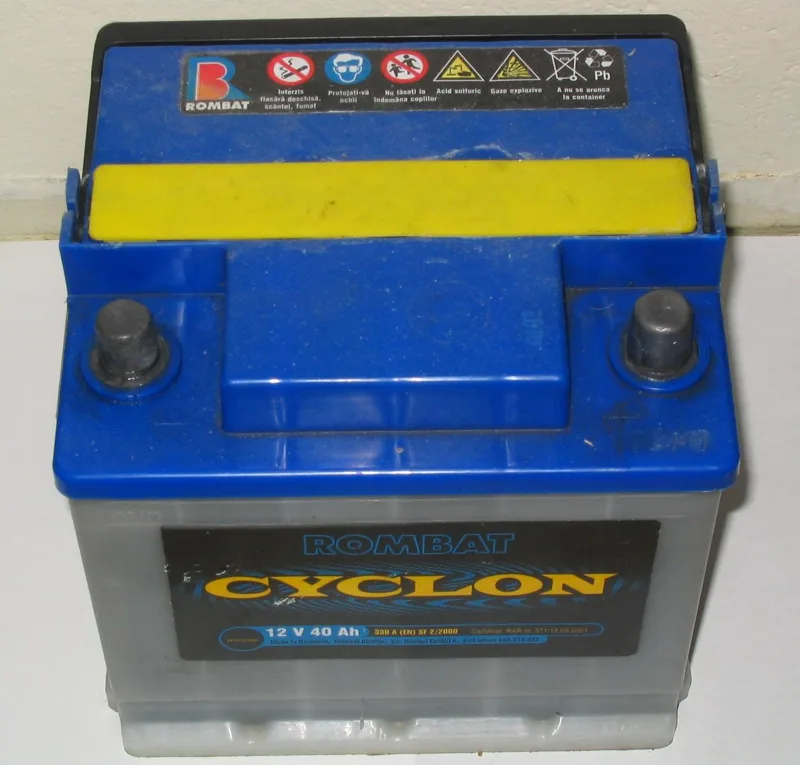
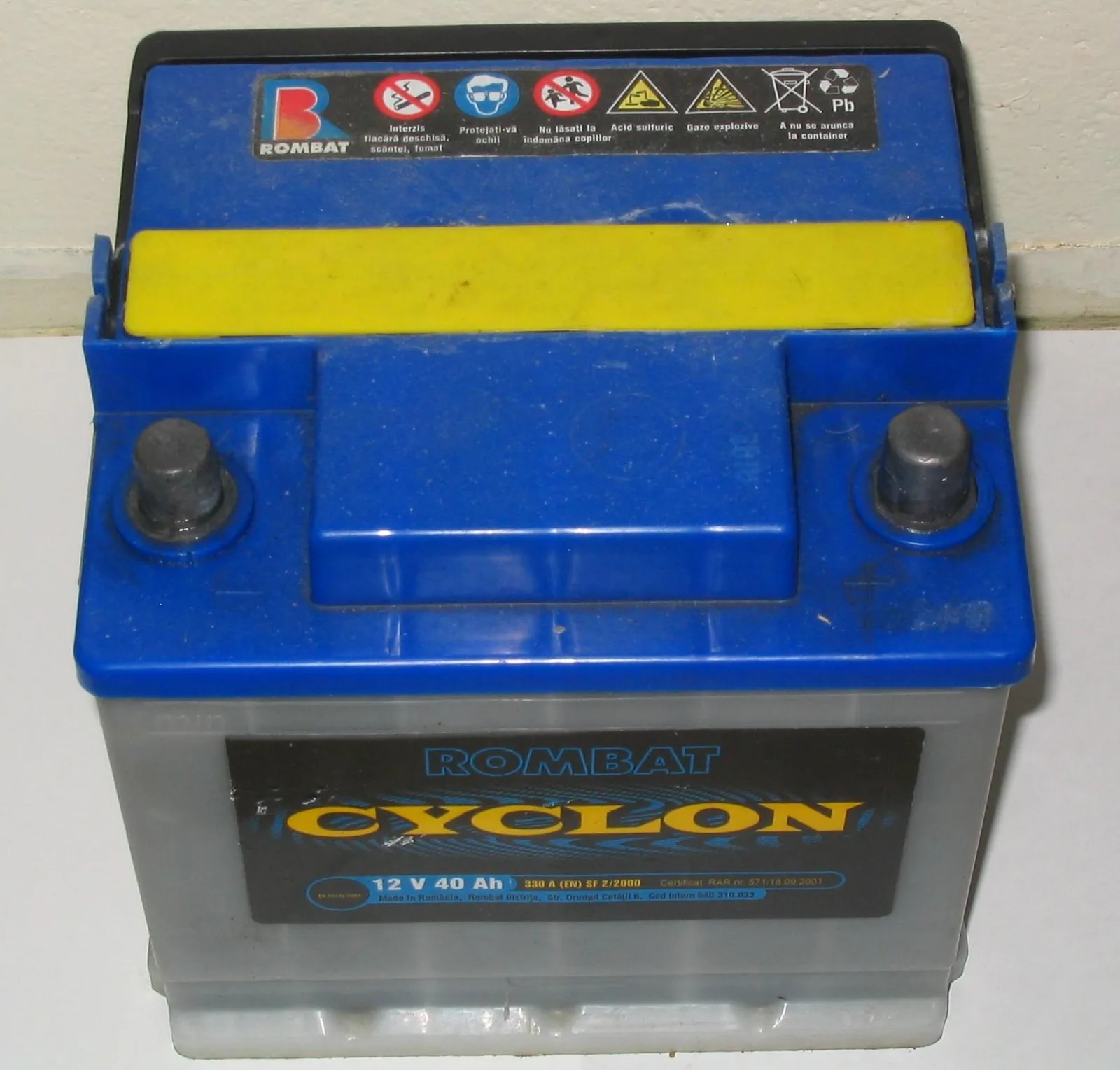
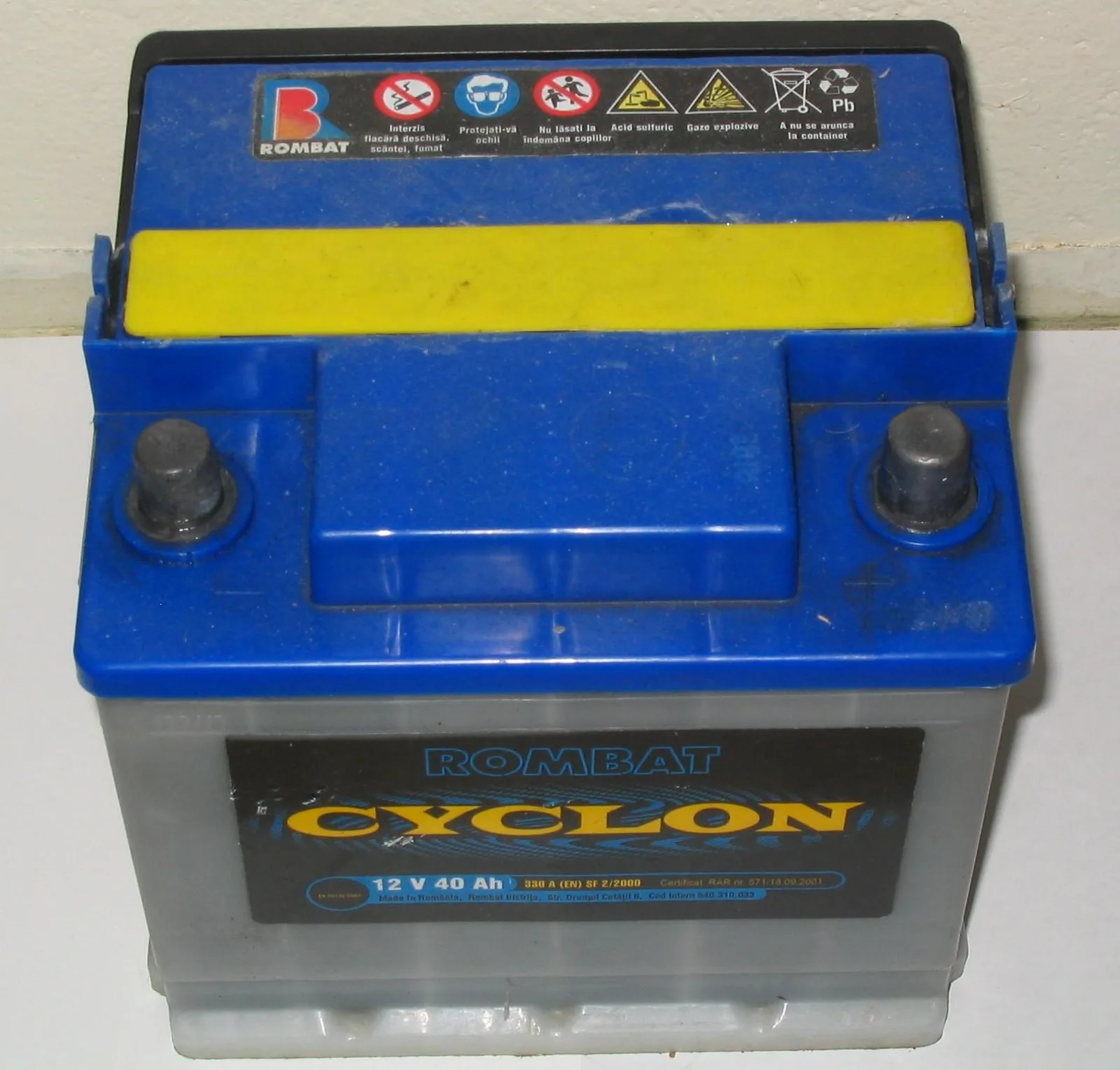
A car battery is a rechargeable store of electricity, usually lead-acid, that gets the vehicle going and keeps the lights and wipers working when the engine is not running. Its chief task is to feed current to the starter motor, which in turn cranks the combustion engine into life.
Once the engine runs, the alternator takes over most of the work, with a voltage regulator holding its output between 13.5 and 14.5 volts. The battery stays in the circuit all the same. It supplies extra power when demand outstrips the charging system and acts as a stabiliser, evening out voltage spikes that could do damage.
Because starting is such a brief and light demand, the battery is built to deliver maximum current for a short burst. That is why it is called an SLI battery, for starting, lighting and ignition. It is not built for deep discharge, and a full drain can shorten its life.
Six cells wired in series give the nominal 12 volts of most passenger cars and light trucks. Each cell contributes 2.1 volts, so a fully charged battery reads 12.6 volts. Heavy trucks and earth-moving equipment use twelve cells for a 24-volt system.
How a lead-acid battery makes electricity
Think of the battery as a reaction that can be run forwards and backwards. Each cell holds plates of lead alloy grid, some filled with sponge lead and some coated with lead dioxide, bathed in a sulfuric acid solution. When the battery discharges, the acid reacts with the plates and turns their surface to lead sulfate, pushing electrons round the external circuit as current. Recharging reverses the process: the lead sulfate becomes lead dioxide again, the plates are restored and the cycle repeats.
The idea dates from 1859, when French physicist Gaston Plante built the first rechargeable battery. It has clear drawbacks: lead-acid cells are heavy, have a relatively low energy density and need long to charge, with an average car battery taking 6 to 12 hours to fill from flat. Their strengths are low cost and an ability to supply high surge currents, which is exactly what a starter motor demands. In 1999, lead-acid batteries made up 40 to 50 percent of the value of all batteries sold worldwide, excluding China and Russia.
Flooded, low-maintenance and AGM batteries
Older batteries needed topping up with water. Lead-antimony plates lose water through electrolysis and evaporation, so those cells needed regular pure water. Switching the alloying element to calcium cut the loss, and modern batteries may need no extra water over their working lives.
The trade-off is tolerance. Low-maintenance batteries are very intolerant of deep discharge, which coats the plates with lead sulfate. Valve-regulated lead-acid batteries, also known as absorbed glass mat or AGM types, cope better with deep discharge but cost more. They accept no added water, have a pressure release valve on each cell and cannot spill their electrolyte, which suits motorcycles. The AGM sealed battery for automobiles was invented in 1971.
A few cars use other chemistries. The 2010 Porsche 911 GT3 RS offered a lithium-ion starter battery as an option, and every Kia Niro conventional hybrid has carried one since 2018.
Heat is a main cause of battery failure.
How long does a car battery last?
No fixed span applies to every battery, because wear depends on treatment. Heat, deep discharge and sulfation all shorten life, and a lead-acid design typically manages fewer than 500 deep cycles. A full drain, such as leaving the lights on, can cut a low-maintenance battery's life by a third or more.
Sulfation is the hard layer of lead sulfate that builds up on the electrodes and weakens the battery, and it appears when a battery is not fully charged and stays discharged. A battery in that state should be charged slowly to avoid further harm. Even on the shelf, a stored battery loses charge through reactions between its electrodes and the acid.
Terminals matter too. Corrosion there creates electrical resistance that can stop a car from starting, and a proper coating of dielectric grease prevents it. Some batteries carry a built-in hydrometer that shows the state of charge, and charge can also be judged from the acid's specific gravity or from open-circuit voltage.
Why does a car battery die in summer and in winter?
Heat is a main cause of battery failure. High temperatures evaporate the electrolyte, shrinking the area of plate exposed to it and leading to sulfation, while grid corrosion speeds up as the mercury climbs. Cold can also end a battery, because capacity falls with temperature.
Winter adds a second risk. A battery with a low charge has a correspondingly low concentration of sulfuric acid, which makes its electrolyte more likely to freeze. A frozen battery cannot be safely jump started, so the way a battery is charged going into the cold months matters.
The ratings reflect this. Cold cranking amperes measure the current a battery can deliver at 0 degrees F (-18 degrees C) for 30 seconds while holding at least 7.2 volts. Because modern computer-controlled fuel-injected engines start in a few seconds, that figure matters less than it used to.
What do you do when a car battery is dead?
A dead battery can be revived by a jump start, which borrows power from another vehicle or an internal high-current source. The borrowed current recharges the flat battery and supplies part of the cranking power. When the engine fires, the car's own charging system takes over.
The usual cause is simple. Lights, or an ignition switch, left on with the engine stopped will drain the battery. After a successful start, leaving the engine running restores the charge, provided the alternator and charging system are undamaged.
Ways to restart a flat battery
| Method | What it needs | What to know |
|---|---|---|
| Jumper cables | A second car running at the same voltage, or a spare battery | Insulated wires with alligator clips, marked black (-) and red (+) |
| Lead-acid jump starter | Its own battery, no second car | Claimed ratings of 300 to 1700 amperes; heavy and large |
| Lithium jump starter | Its own battery, no second car | Appeared around 2013; compact and light, often with a USB port |
| Mains charger with a boost feature | AC power | Five to twenty minutes depending on depth of discharge, battery health and engine size |
| Lighter-socket cable | The 12-volt outlet of another vehicle | Slow recharge only; cannot supply cranking current |
| Push start | A manual transmission and helpers | Fails if the battery cannot power the ignition; most automatics rule it out |
How do you jump start a car safely?
Jump start procedures are set out in the vehicle's owner's manual. The recommended order of connections aims to avoid shorting out the healthy battery or setting off hydrogen, and the manual shows the preferred connection points, which differ from car to car.
Some cars have the battery under a seat, and others provide a dedicated jumper terminal in the engine compartment. Cables should never join two systems of different voltage: linking a 6-volt and a 12-volt system, for example, may cause damage. A lorry that runs 24 volts from two 12-volt batteries in series can still jump a 12-volt car, using only one of the two.
Condition matters before anything is connected. A battery that is cracked, short of electrolyte, worn out or frozen will not be repaired by a jump, and a frozen one should never be boosted, because it may explode.
Reversed cables are the classic mistake. What happens depends on the charge state of the flat vehicle and the capacity of the cables. A partly depleted battery pushes more current through reversed cables than a simply dead one, and jumper cables typically lack overload protection. Their insulation can melt, the donor battery can be shorted, and reversed voltage may damage the vehicle electronics.
Hybrids, vintage cars and push starts
Hybrids often carry a small 12-volt battery that is unsuitable as a source for boosting a conventional car. In the other direction it works well: since the 12-volt system of a hybrid only has to wake the control system, a very small portable battery can boost one, and the main propulsion battery is unlikely to be flat too. Vintage cars may run 6 volts or connect the positive terminal to the chassis, so methods meant for 12-volt negative-ground cars cannot be used.
Push starting works only on manual transmissions and may need several helpers or another vehicle. Most automatics rule it out: the transmission's hydraulic torque converter stops the wheels turning the engine. A lighter-socket cable shares a weakness with the cheap options: starter current greatly exceeds the fuse rating of the outlet, and many cars turn the outlet off with the key.
Why a battery can hurt you
Overcharging a lead-acid battery produces flammable hydrogen by electrolysis of water. Gas can build up where vents are blocked or ventilation is poor, and an ignition source then sets it off. Explosions during engine start-up are typically tied to corroded or dirty battery posts. A charger that applies more than 14.4 volts to a 12-volt system causes hydrogen emission that may damage the battery or create an explosion risk.
The injury figures are sobering. In 1993 the US road safety regulator, NHTSA, studied the injuries and found that 31 percent of battery explosion cases happened while charging. Working on cable connections, jump-starting and checking fluid levels followed. Close to two-thirds of those hurt suffered chemical burns, and nearly three-quarters suffered eye injuries. A 1994 research note from the same agency put at about 442 the number of people hurt when batteries exploded during jump-start attempts.
What matters in a car battery replacement?
A replacement battery has to match the original in physical format, capacity and starting power. The Battery Council International group size gives the dimensions, the terminal type and position, and the mounting style, so a battery that suits the tray and the cable run is a battery in the right group.
Capacity is quoted in amp hours, a rating required by law in Europe. It is the current delivered over 20 hours before voltage falls below 10.5 volts at 80 degrees F (26.6 degrees C). In theory, a 100 Ah battery supplies 5 amps for 20 hours. The relationship is not linear: at a higher discharge rate, capacity drops, and a 100 Ah battery generally cannot hold above 10.5 volts for 10 hours at a constant 10 amps.
Starting power comes in several ratings, and they should not be mixed up. Cold cranking amperes are measured at 0 degrees F, cranking amperes at 32 degrees F (0 degrees C), marine cranking amperes at the same temperature, and hot cranking amperes at 80 degrees F (27 degrees C). The warmer ones always read higher, so a 250 CCA battery has more starting power than a 250 CA battery.
Manufacturing date is stamped on the battery. In the United States, a battery made in October 2015 carries the numeric code 10-5 or the alphanumeric code K-5, with A for January, B for February and so on, and the letter I skipped. In South Africa the code is cast into the cover as year and week, so 1336 means week 36 of 2013.
Where this goes next
The 12-volt standard has outlasted several attempts to replace it. A forty-two-volt standard was proposed in the 1990s to allow more powerful electric accessories and lighter wiring harnesses, but more efficient motors, new wiring techniques, digital controls and the focus on hybrids with high-voltage starter-generators largely ended the push. In 2023 Tesla began delivering the Cybertruck with a 48-volt electrical system, reducing the vehicle's wiring by 70 percent.
Electric cars have changed the job rather than removing it. They normally keep a 12-volt auxiliary battery so that standard accessories still work, charged by a DC-to-DC converter at around 14 volts instead of an alternator, and with no starter motor they ask little of it. In 2021 Tesla introduced a lithium-ion auxiliary battery storing only 99 watt-hours.