From paper pleats and oil baths to HEPA media and the pollen filter behind the glovebox, how air filters work and where each type belongs.
An air filter removes particles such as dust, pollen and bacteria from the air that an engine, compressor or cabin draws in. Paper pleats, foam and oil baths are the main engine types, while cabin pollen filters date to 1940. HEPA media must remove at least 99.95 per cent of particles at 0.3 micrometres.
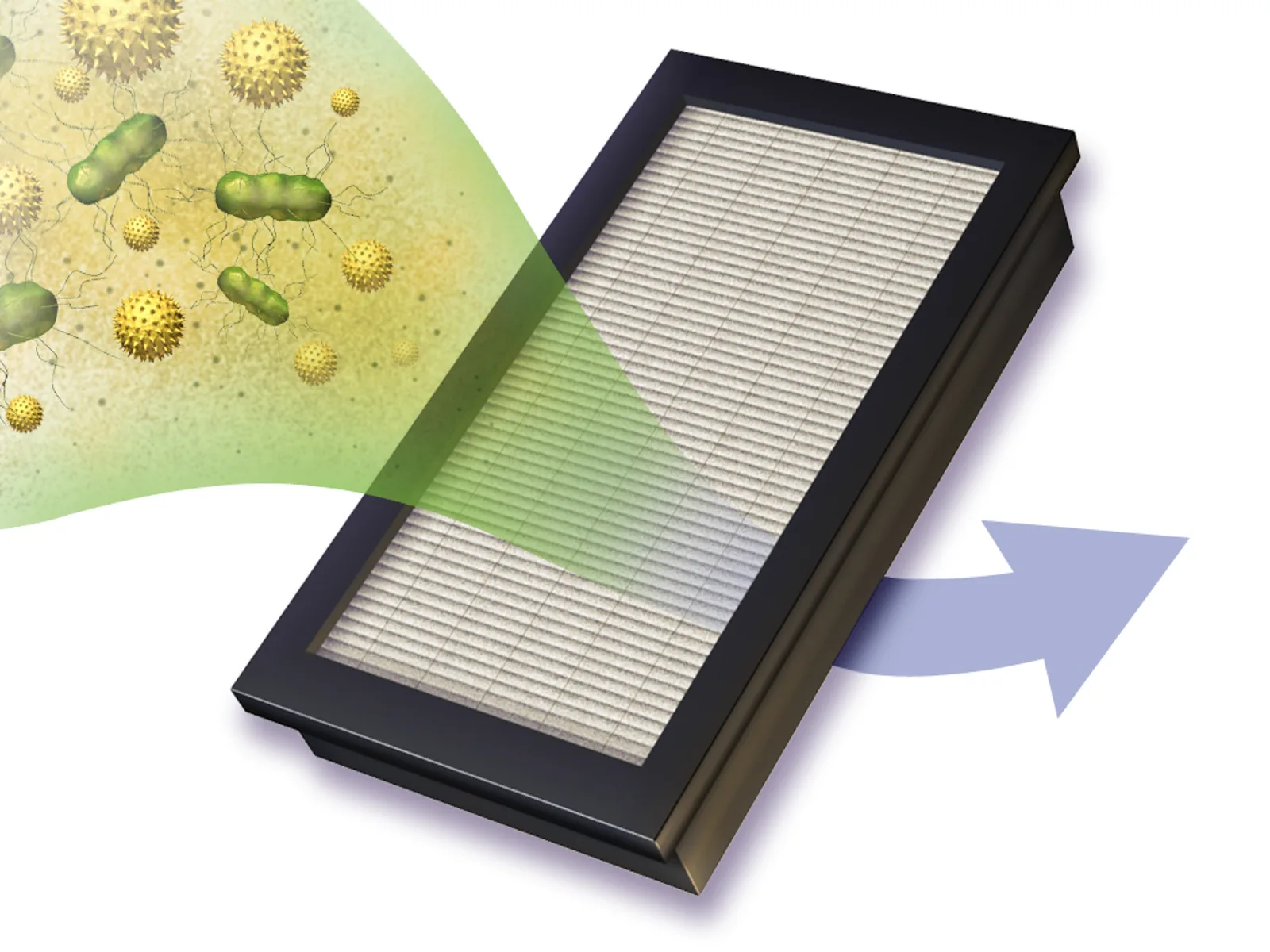
An air filter is a device made of fibrous or porous material that removes particles such as smoke, dust, pollen, mould, viruses and bacteria from the air. Filters that contain an adsorbent or catalyst, such as charcoal or baking soda, can also remove odours and gases. Air filters matter wherever air quality is important, from building ventilation and engine intakes to aircraft cabins and spacecraft.
Where are air filters used?
The main applications are building ventilation systems, the intakes of engines and compressors, and the cabins of cars, aircraft and construction equipment. Filters also protect human-made environments such as satellites and Space Shuttles, where the air supply must stay clean with no room for error.
Most filter media is built from foam, pleated paper, cotton or spun fibreglass. Oil bath filters have fallen out of favour outside niche uses. Air ionisers take a different route, using static electric charge to attract dust, although they can be paired with a conventional filter.
The engine filter guards the cylinders, the cabin filter guards the passengers, and both depend on the same simple trade-off between flow and filtration.
What is a HEPA filter?
High efficiency particulate arrester, or HEPA, is a type of air filter that was once called a high-efficiency particulate absorber. HEPA filters appear in clean rooms for chip fabrication, in medical facilities, in automobiles, in aircraft and in homes. The United States Department of Energy sets efficiency standards that such filters must meet.
Several standards define what counts as a HEPA filter. The two most common, EN 1822 and ASME AG-1, require removal of 99.95 per cent of particles in the European standard and 99.97 per cent in the ASME version, for particles of 0.3 micrometres or larger.
When did cabin air filters first appear?
The cabin air filter, known as the pollen filter in the United Kingdom, is a pleated filter placed in the outside-air intake for the passenger compartment. Some are rectangular, while others take unusual shapes to fit the space available in a particular vehicle.
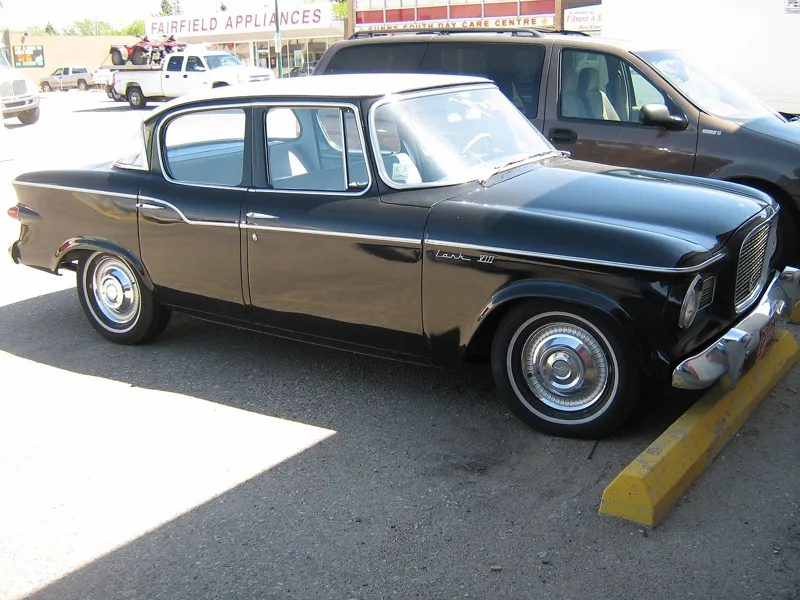
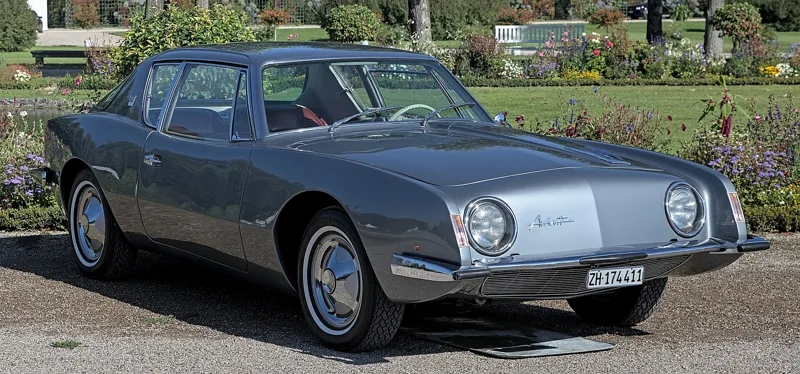
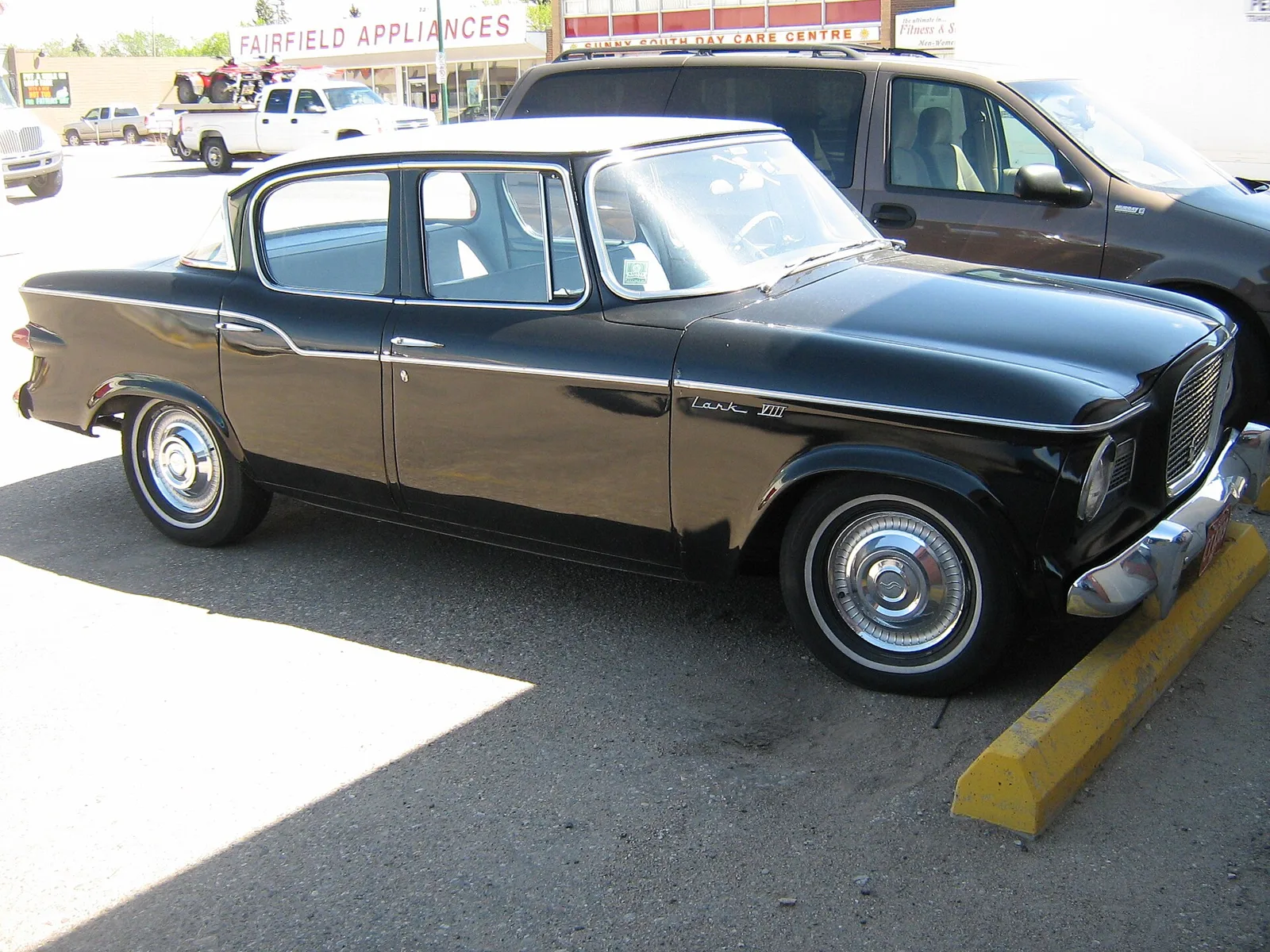
Nash Motors introduced the first disposable filter for the ventilation system in 1940, with its Weather Eye system. Studebaker followed with a reusable heater core filter from 1959, fitted to Lark cars from 1959 to 1966, Gran Turismo Hawk models from 1962 to 1964 and Champ trucks from 1960 to 1964. That filter had an aluminium frame and mesh, sat directly above the heater core, and came out through a slot in the firewall. It could be vacuumed and washed before it went back in.
How is cabin filter performance judged?
A clogged cabin filter cuts the airflow to the vents and lets allergens into the cabin. Because the temperature of cabin air depends on how much air passes through the heater core and evaporator, a dirty filter can noticeably weaken both heating and air conditioning.
Suppliers rarely publish full test data at retail. Some boxes do show a minimum efficiency reporting value (MERV) or cite the N95 rating, although the makers often disclaim NIOSH compliance. Stacking five layers or more can reach higher MERV levels, but every extra layer adds pressure drop. A blower motor that cannot raise its speed to compensate will then move less air.
Efficiency and airflow pull against each other. Closer pleat spacing improves filtration but reduces airflow, and the same trade-off runs through the whole medium.
What types of engine air filter are there?
The combustion air filter keeps abrasive particles out of the cylinders, where they would cause mechanical wear, oil contamination and changes to emissions. Many fuel-injected cars use a flat pleated paper element in a plastic box connected by ducting to the throttle body. Older cars with carburettors or throttle-body injection often use a cylindrical filter between 100 millimetres (4 in) and 400 millimetres (16 in) in diameter. The filter, housing and ducting together form the air cleaner.
| Media | Strengths | Limitations |
|---|---|---|
| Pleated paper | Efficient, easy to service and cost-effective; nearly exclusive for car engines | Clogs as dirt builds up, so it must be replaced on schedule |
| Oil-wetted foam | Holds large dirt loads with little airflow change; popular in off-road and motorsport | Needs oiling and careful handling |
| Oiled cotton gauze | Used in high-performance aftermarket filters | Needs oiling, and is a niche choice |
| Metal mesh | Stainless steel resists rust and hot or harsh chemical conditions | Only suits particular operating environments |
| Oil bath | Sequesters a great deal of dirt for its size | Messy to service and large for high airflow; adds unburned hydrocarbon emissions on spark-ignition engines |
Why are paper filters the usual choice?
Pleated paper is the standard pick for car engine air cleaners, since it combines good filtration with easy servicing and a low price. The name is misleading, since the material is treated with binding resins or surface changes and bears little resemblance to writing or packaging paper. Pleating folds the medium into a zig-zag so that its surface area is roughly 50 times the air opening.
Tuners often argue that paper restricts engine performance, and aftermarket makers of non-paper filters have encouraged that belief. A pleated paper element sized correctly for the airflow presents only a trivial restriction until it is significantly clogged with dirt.
How are air filters tested?
Air filters can be tested under controlled laboratory conditions, independent of any particular application. ISO 5011:2025 sets out test procedures, conditions, equipment and reporting for air cleaners used with internal combustion engines and compressors. ISO 10263-2 specifies similar methods for engine air intake systems.
Common measures include airflow and pressure drop, dust collection efficiency using standard test dusts such as ISO 12103-1 A2 Fine or A4 Coarse, and dust holding capacity measured at a set terminal pressure drop. Oil-bath cleaners are also checked for oil carry-over. Visual inspection can reveal contamination, and image processing has been studied as a way to assess it automatically.
What shapes do air filters come in?
Air filters are built in several geometries, chosen according to the airflow required, the filtration efficiency wanted, the pressure drop allowed and the space available. Pleated filters fold the medium to increase its area within a given face. Wound tubular filters wrap fibrous material around a cylindrical core. V-shaped filters arrange elements in a V to pack more filtration area into a small form.
How do oil bath and water bath cleaners work?
An oil bath cleaner has a sump holding a pool of oil and an insert filled with fibre, mesh, foam or another coarse medium. The air must make a series of U-turns over the oil. Heavy dust cannot turn with the air and falls into the oil, while finer particles stick to the oil-wetted media. Oil bath cleaners were common in cars and small engines until paper filters took over in the early 1960s, and they still serve off-road equipment that meets very high dust levels.
Water bath cleaners were used in some cars, trucks, tractors and engines from about 1900 to 1930, working on much the same principle. The original Fordson tractor used one, but oil bath designs had displaced them by the 1940s because they filtered better.
How are air filters rated in Europe?
Under the European standard EN 779, a set of filter classes applied from 2012 to mid-2018. That standard was then replaced by ISO 16890, so older class labels may still appear on product literature.