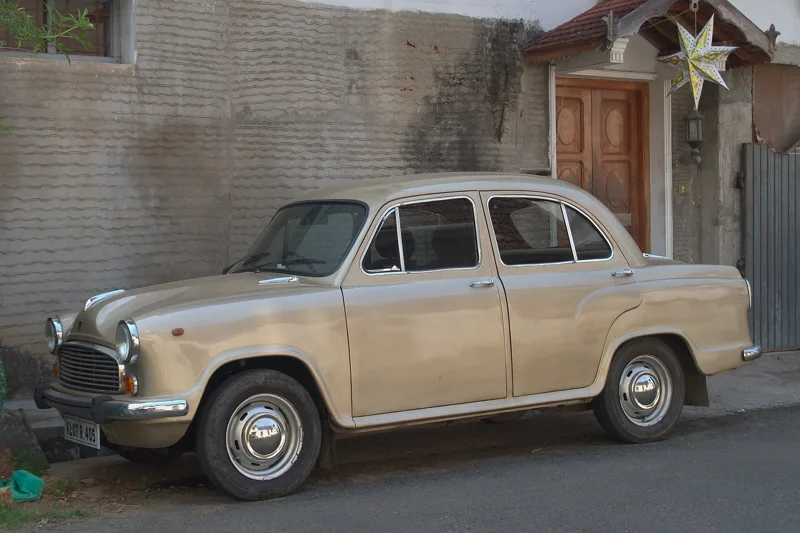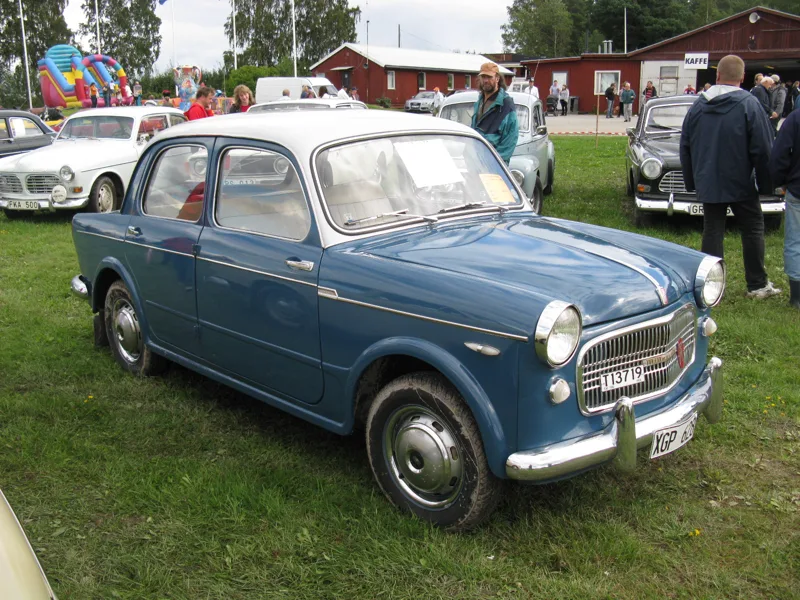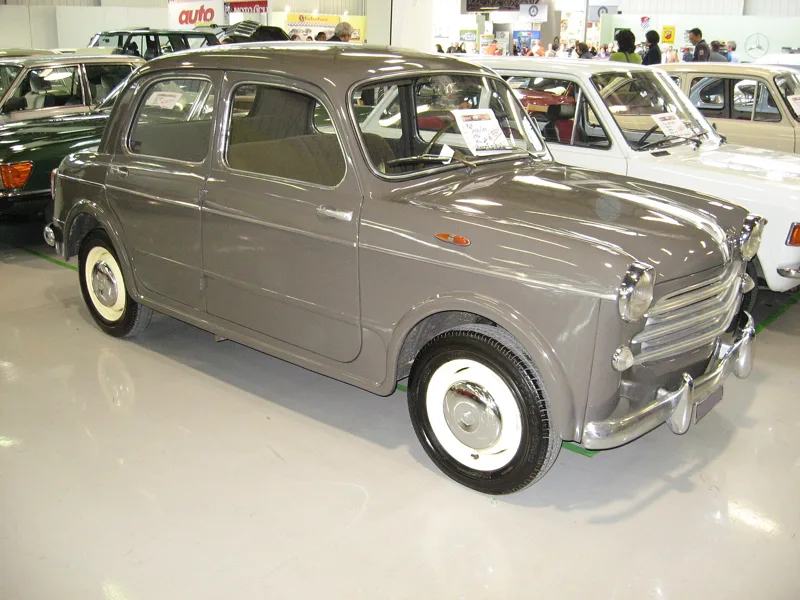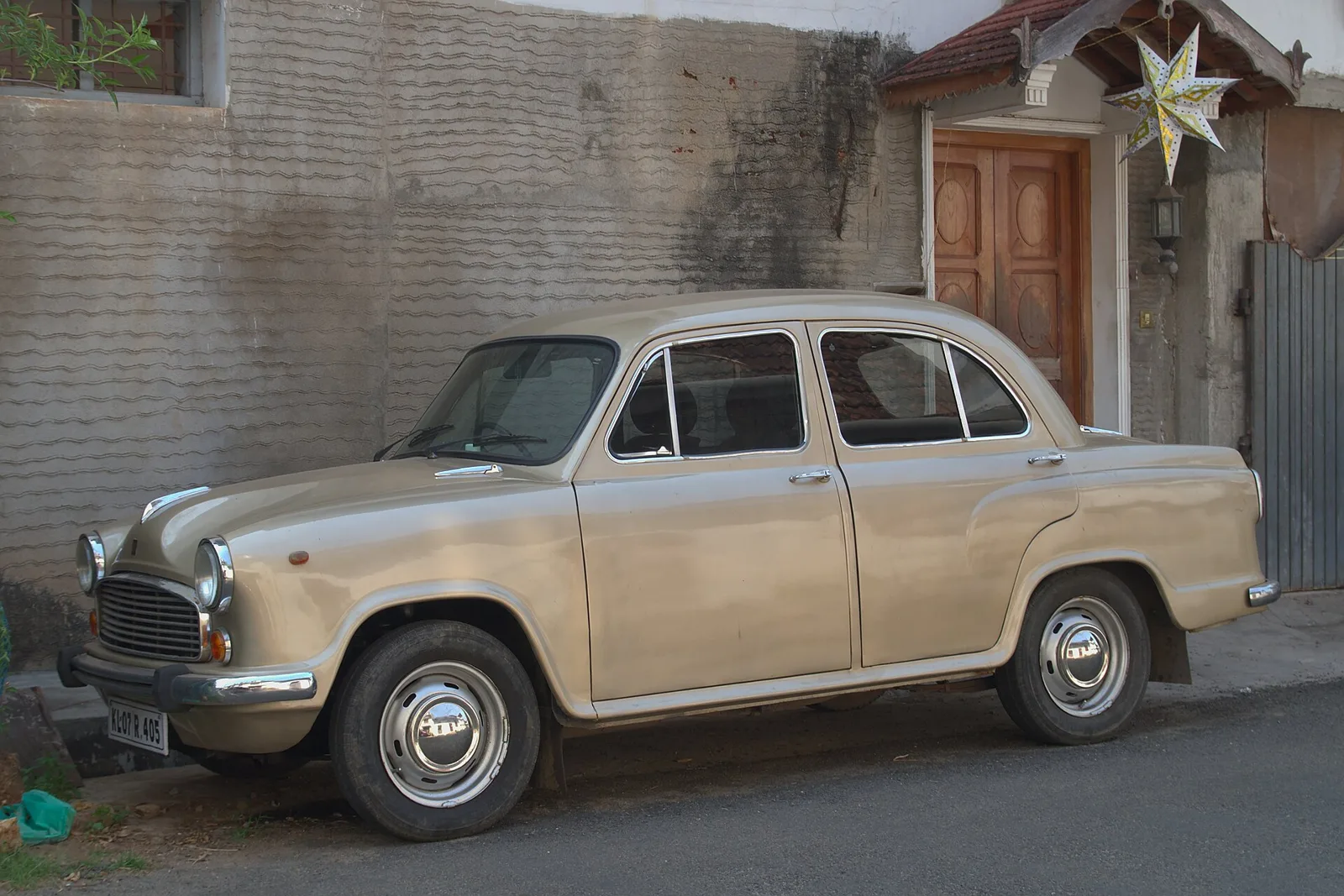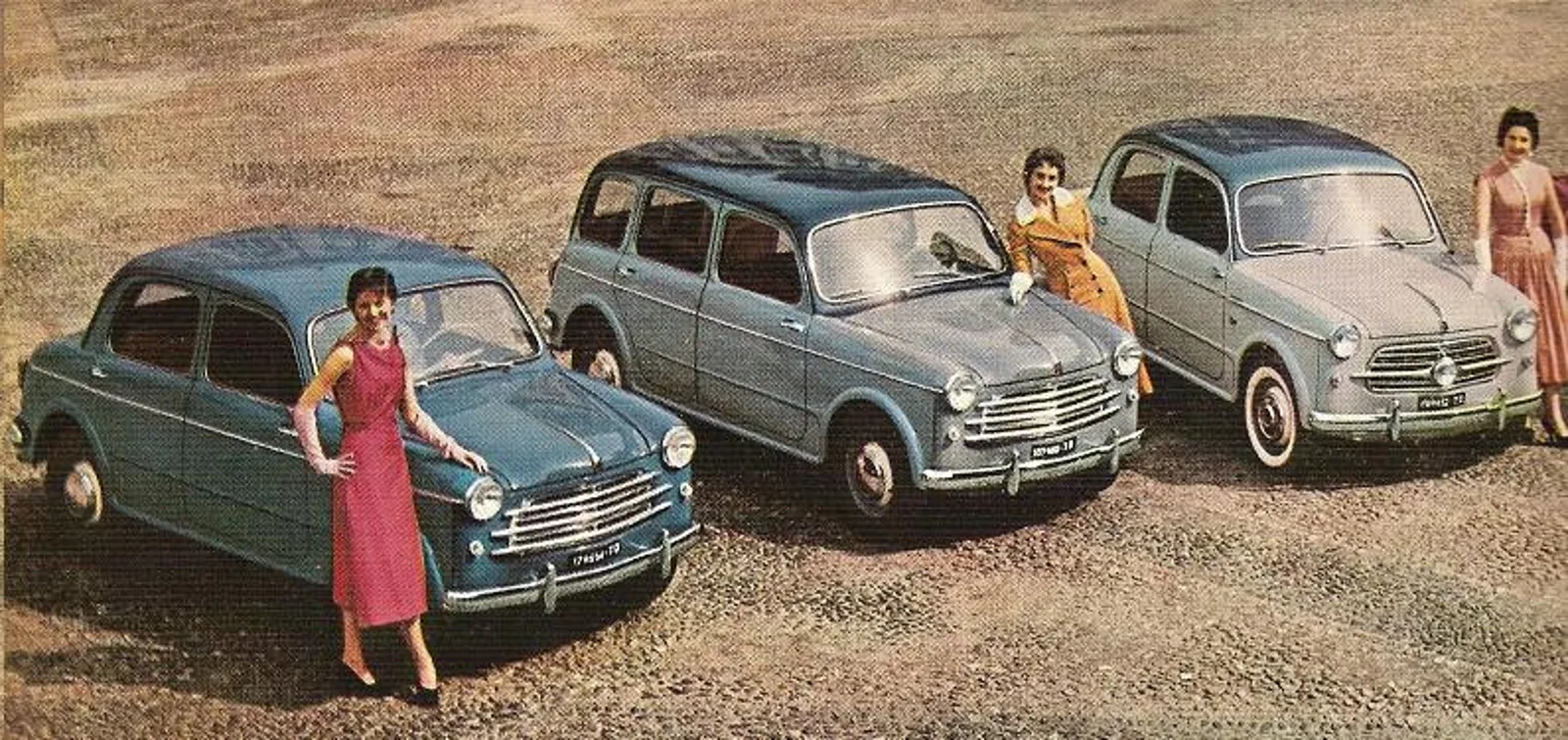
Two long-running family saloons, one Italian and one Indian, that stayed in production for very different lengths of time and followed very different paths.
The Fiat 1100 was a small family saloon built from 1953 to 1969 that replaced the 1100 E. The Hindustan Ambassador was an Indian saloon based on the Morris Oxford Series III, built by Hindustan Motors from 1957 to 2014 with very few changes.
The Fiat 1100 and the Hindustan Ambassador were both family saloons with long production lives, but they came from very different places. The Fiat was an Italian unibody four-door built from 1953 to 1969, while the Ambassador was an Indian car based on an older British design and built until 2014. Set side by side, they show how two makers in two countries answered the same need for a sturdy, practical family car.
When did the Fiat 1100 and the Ambassador first appear?
The Fiat 1100/103 was introduced at the Geneva Motor Show in April 1953 as an all-new unibody saloon. It replaced the 1100 E, which had roots in the pre-war 508 C Balilla 1100 of 1937.
The Ambassador arrived in 1957 as a rebadged Morris Oxford Series III. Morris Motors had sold the rights and tooling for the model to Hindustan Motors in 1956, and the car was built at Uttarpara in West Bengal.
Hindustan Motors was part of the Birla group and began life in 1942, assembling the Morris 10 as the Hindustan 10 at Port Okha in Gujarat. The company's history therefore ran through a series of Morris designs before the Ambassador appeared.
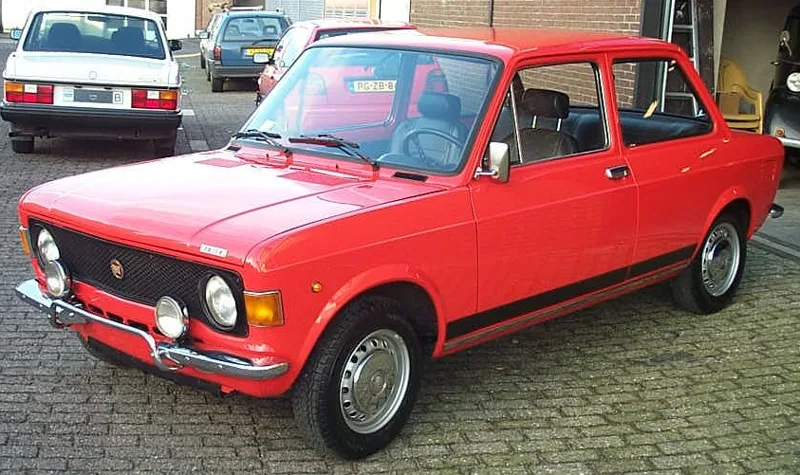
The Fiat 1100 stayed in production until 1969, when it was replaced by the new Fiat 128. The Ambassador ran for far longer, and it was still being built when production finally ended in 2014.
An Italian unibody family saloon from 1953 against an Indian car built on a British design that stayed on the road until 2014.
What engines did the two cars use?
The Fiat 1100/103 used a 1,089 cc overhead-valve four rated 36 PS CUNA (26 kW) at 4,400 rpm. That engine had first appeared in 1937 on the 508 C Balilla 1100, and it fed a four-speed manual gearbox with synchromesh on the top three gears.
The Ambassador's first engine was a 1,476 cc side-valve unit, which was replaced in 1959 by a 1,489 cc overhead-valve BMC B-series engine rated 55 bhp (41 kW). That engine gave the car more pulling power for its weight and its spacious interior.
The sporting Fiat 1100 TV raised output to 48 PS CUNA (35 kW) with a twin-choke Weber carburettor and a higher compression ratio. Its top speed was 135 km/h (84 mph), which was a clear step up from the 116 km/h of the standard saloon.
The Ambassador's diesel, introduced in 1980 with a 1,489 cc BMC engine rated 37 bhp, was the first diesel car built in India. It was initially restricted to taxi and government use, because private ownership of diesel cars was limited.
How did the two cars change over the years?
The Fiat 1100 changed steadily through a run of series. The 1956 103 E raised compression and power, and the 1958 103 D brought a redesigned rear with tailfins and an enlarged rear window.
The 1959 1100 Lusso added elaborate exterior trim, a 50 PS CUNA engine and a two-piece propshaft inherited from the TV. The 1960 range then split into the Export, Special and Familiare estate models.
The Ambassador also changed in stages. The Mark II of 1963 brought a chequered grille, and the Mark III of 1975 added horizontal louvres and a new dashboard with three instruments. The Mark IV of 1979 introduced a larger chequered grille and square park lamps.
The Ambassador Nova of 1990 added a new steering wheel, column, brakes and electrics, and the car kept much of its original character to the end. It changed little in the decades that followed, which set it apart from the Fiat's steady evolution.
How did the two cars sell and where were they built?
The Fiat 1100 was built in Italy and, under licence, in India by Premier Automobiles until the end of 2000. Its estate version, the Familiare, could carry a 300 kg (661 lb) load and seated two additional passengers in its third row.
The Ambassador dominated the Indian market for several decades, mostly because of its spacious size and ruggedness compared with rivals such as the Premier Padmini and the Standard 10. It was also a popular taxi, which kept it visible on Indian streets.
By the early 1980s the Ambassador's low fuel economy and quality problems began to hinder sales, although waiting lists stayed at 12 months. Hindustan sold 2,200 Ambassadors in the financial year that ended in March 2014, only a tenth of its mid-1980s figure.
How do the two cars compare side by side?
| Feature | Fiat 1100 | Hindustan Ambassador |
|---|---|---|
| Introduced | April 1953, Geneva Motor Show | 1957 |
| Production | 1953 to 1969 | 1957 to 2014 |
| Basis | All-new Fiat unibody saloon | Morris Oxford Series III |
| Early engine | 1,089 cc overhead-valve four, 36 PS CUNA (26 kW) | 1,476 cc side-valve, then 1,489 cc overhead-valve from 1959 |
| Top speed, early | 116 km/h (72 mph) | Not given |
| Sporting version | 1100 TV, 48 PS CUNA (35 kW) | Not given |
| Estate | 1100 Familiare, 300 kg load | Ambassador Estate, early 1970s, short-lived |
| Successor | Fiat 128 (1969) | Ambassador Nova (1990); reintroduction announced in 2022 |
| Brand sale | Not applicable | Groupe PSA, 11 February 2017, Rs 80 crore (US$8.3 million) |
How did the Fiat 1100 TV and Familiare shape the range?
The 1100 TV was launched at the October 1953 Paris show with a reworked engine that breathed more freely and ran a sharper compression ratio. Its top speed of 135 km/h (84 mph) was well above the standard saloon's.
The TV's bodywork differed in its larger curved rear window and prominent rear wings, and a single front fog lamp was inset in the grille. Chrome spears and special badging completed the sporting look.
Fiat's Tipo A and Tipo B saloons differed in trim: the A came only in grey-brown with separate front seats and no heater, while the B offered a choice of colours, fabrics and optional whitewall tyres.
The 1100 Familiare estate arrived at the 1954 Geneva show. It had a side-hinged rear door and a folding rear bench that made a flat loading surface, and two forward-facing jump seats gave it room for six passengers.
How did Fiat's special bodies and sporting versions develop?
The 1100 TV Trasformabile roadster appeared at the March 1955 Geneva show. Its bodywork came from Fiat's own special bodies department, which had penned the design in-house rather than hiring an outside coachbuilder.
From 1954 to 1956 Pinin Farina built a two-door 2+2 coupe on TV mechanicals, in a small series of about 780 examples. Its body was steel with aluminium doors, bonnet and boot lid, and from 1955 it carried a panoramic rear window.
The June 1956 update of the 103 E raised compression ratios, softened the suspension and altered the steering geometry. The range by then had built more than 257,000 cars in three years.
How did the Ambassador's cabin and details differ?
The Ambassador's steering wheel changed from the Landmaster's flat two-spoke design to a dished three-spoke wheel with four wires per spoke. Its dimpled bonnet and small rear wing fins were further distinguishing features.
The dashboard changed again in the Mark III, with three standard instruments set on a black recessed mesh. That move away from the earlier coated wooden base reflected the car's gradual update over the decades.
The Ambassador's deep headlamp cowls and small tail fins gave it a look of its own, which set it apart from the Fiat's sleeker lines. Those details were introduced when the car was first built in India.
How did the Ambassador's engines and emissions rules affect it?
In the mid-1980s India began a controlled economic liberalisation, which allowed Japanese companies to form joint ventures. Maruti Suzuki launched the Maruti 800 in the small-car category, which the older manufacturers had not served.
The Ambassador's fully enclosed monocoque gave it a roomy interior, which helped it stay popular in a market that valued space and durability. It remained the principal family car of choice in the middle segment, despite its pre-modern design. The company planned a major upgrade for its mechanical and power plant systems, which produced the Nova in 1990.
In later years Hindustan fitted a cleaner diesel engine to meet new emissions rules. That change allowed the car to resume taxi service in Kolkata, one of the cities where the vehicle had been banned.
Which buyer suits each car?
On the facts given, the Fiat 1100 suits a buyer who wanted a compact European saloon with a sporting TV version and a practical estate. The Ambassador suits a buyer who wanted a spacious, rugged saloon with a long service record.
Fiat buyers could choose a spartan Tipo A, a richer Tipo B, the sporting TV or the Familiare estate, which covered a wide range of needs. The 1100's sporting success in events such as the Mille Miglia gave the range a competitive reputation.
Ambassador buyers gained a fully enclosed monocoque with generous interior room, which made the car popular with official and company fleets as well as taxi operators. Its ruggedness suited Indian roads for decades.
Neither car is shown to be better overall, and the full production total for the Fiat 1100 is not given. The choice rests on whether a buyer values the Italian engineering of the 1950s or the enduring Indian Ambassador.