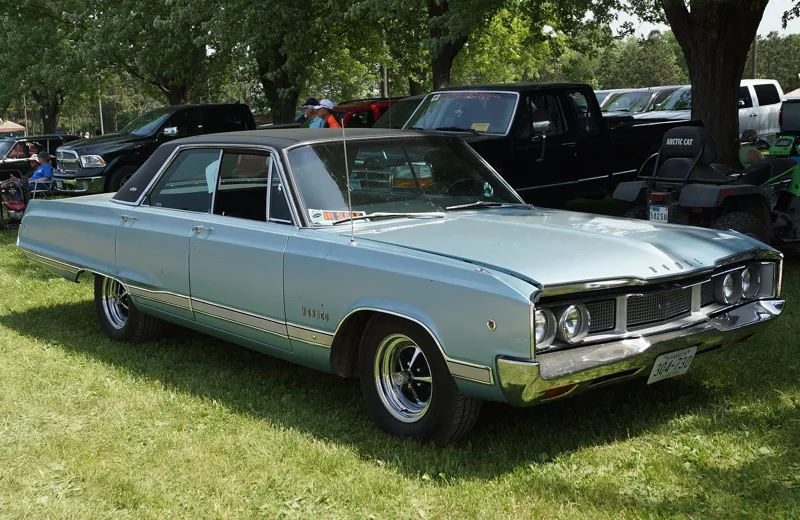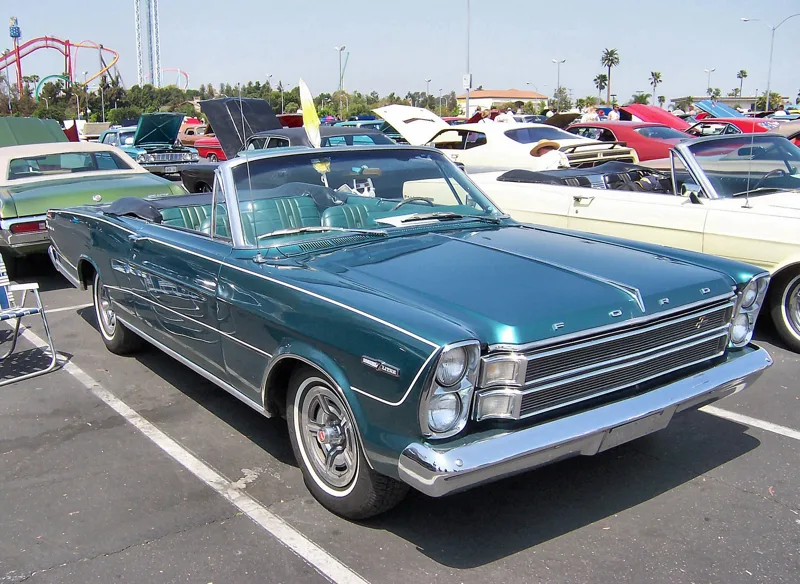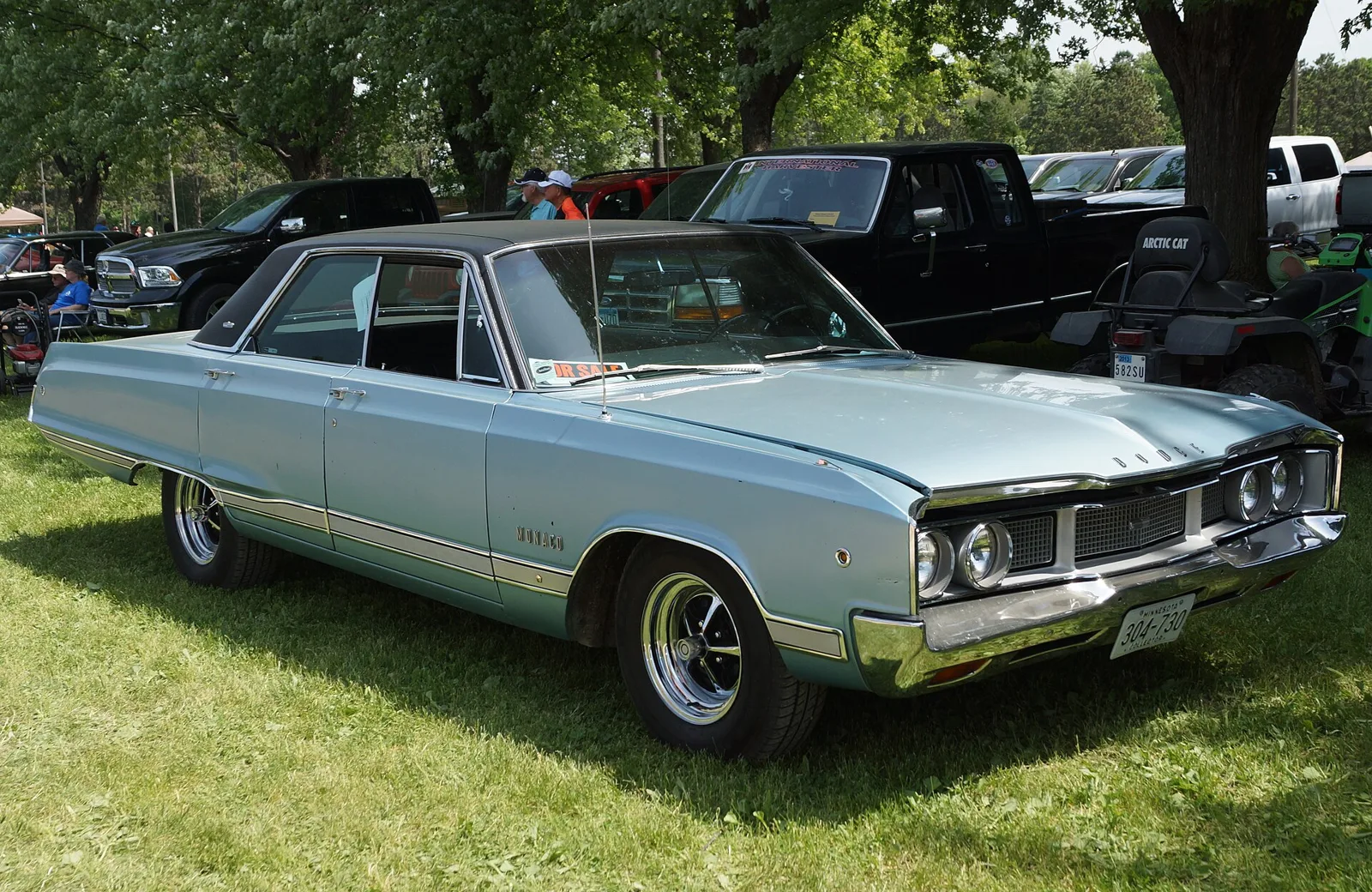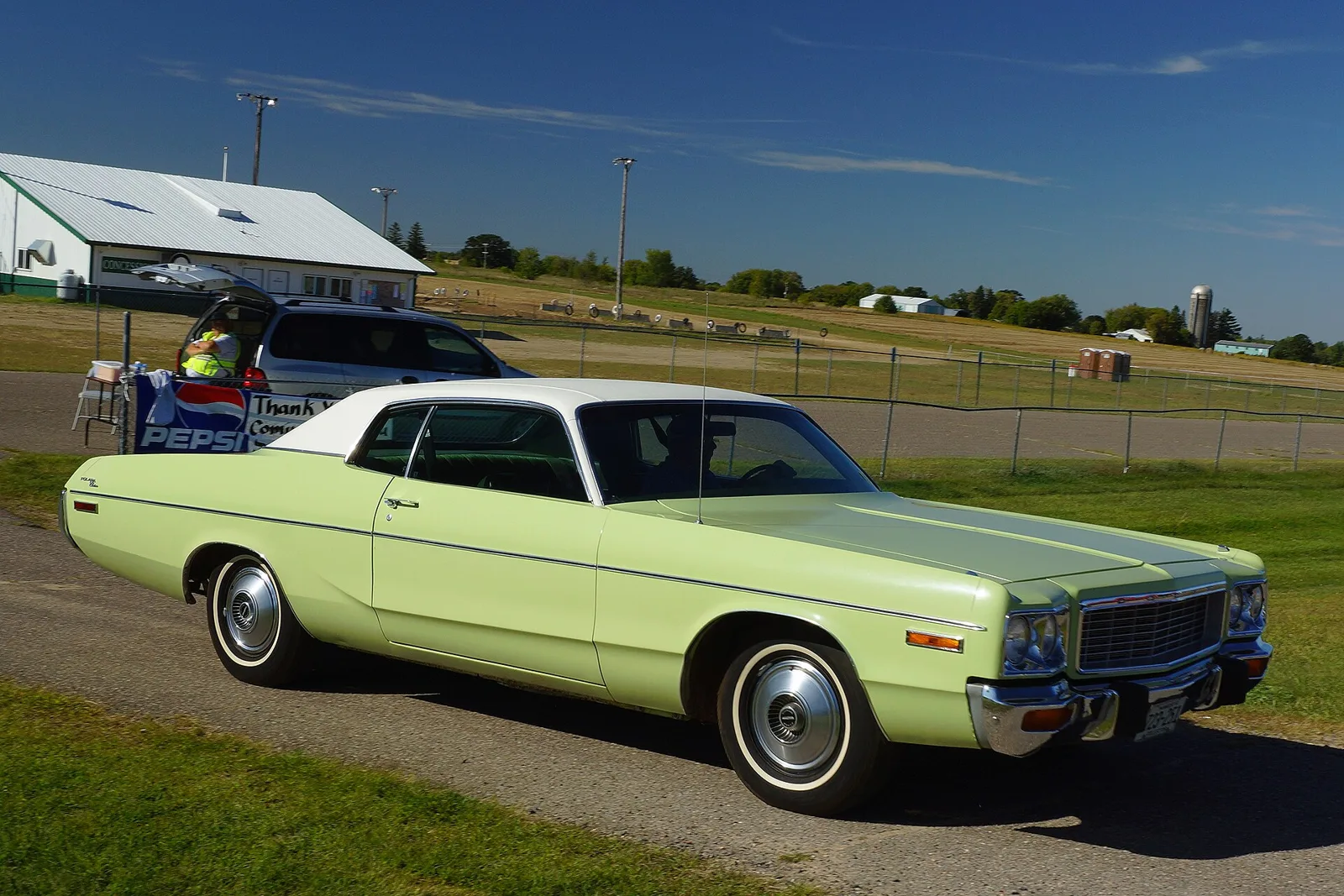
Two full-size sedans from 1960s showrooms: the Polara, a Dodge that shrank and then grew back, and the Galaxie, a Ford trim that became a line of its own.
The Dodge Polara was Dodge's top full-size car from 1960 and was used until 1973, when the Monaco took its place. The Ford Galaxie was a full-size Ford from 1959 to 1974 that later became part of the LTD line.
Dodge's Polara and Ford's Galaxie were built for the same full-size buyers, but their paths diverged quickly. The Polara began as a premium Dodge, was downsized in 1962 and returned to full size in 1965. The Galaxie started as a Ford trim level, grew into its own series and built a racing reputation along the way.
How did the Polara begin as Dodge's top full-size car?
The 1960 Polara was Dodge's top-of-the-line full-size car, with a 122 in (3,099 mm) wheelbase shared with the Matador. Its name refers to the Polaris star, a reference that tied the car to the excitement surrounding the Space Race.
The 1960 styling carried over cues from the 1959 cars, with stacked jet pod taillights and a grille of anodised aluminium rectangles. The Polara also had better interior fabrics and more exterior chrome than the Dart that shared its showroom.
The Polara came as a two-door convertible, a two-door hardtop, a four-door hardtop, a four-door hardtop wagon and a pillared four-door sedan. That range gave buyers a choice of body style at the top of the Dodge line.
The Matador was discontinued in 1961, so the Polara became the only senior car in Dodge's line. The restyle put reversed fins and a concave grille on the car, and buyers were not receptive to the new look.
A Dodge that shrank, grew back and then gave way to the Monaco, against a Ford trim that grew into its own full-size line.
Why did the Polara shrink in 1962?
Chrysler downsized the Dodge range for 1962 after misreading Chevrolet's plans, and the Polara moved onto the new B-body platform with a 116 in (2,946 mm) wheelbase. The change was a last-minute effort to compete with what was expected to be a smaller Chevrolet, and the B-body that resulted stayed in service for two decades.
The Custom 880 was created in January 1962 by mating the 1961 Polara front end to a 1962 Chrysler Newport body. That gave Dodge a true full-size car again, which the Polara could not provide on its own.
The Polara 500 was the sporty model that year, a bucket-seated two-door hardtop and convertible with a 305 hp, 361 cu in V8 as standard. It sat above the Dart 440 and Dart 330 in the Dodge line.
How did the Galaxie emerge from the Fairlane range?
The Galaxie appeared in the 1959 Ford range as a trim level above the Fairlane 500, carrying both Fairlane 500 and Galaxie badges. By 1962 the name covered every full-size Ford, and the Fairlane had moved to an intermediate role.
The Skyliner, a 1959 model with a retractable hardtop that folded into the trunk, was one of the Galaxie range's most unusual cars. The mechanism was complicated and expensive, and it left very little trunk room when folded.
The 1960 Galaxie introduced a simpler design with a pillarless Starliner body. The 1961 Galaxie offered a new 390 cu in FE V8 rated 401 hp (gross) in its three-carburettor form, which gave the range real performance.
For 1962 the Galaxie 500/XL became the sporting bucket-seat model, and Ford's marketing called it Xtra Lively. The 1962 full-size range was the first to carry the Galaxie name across every trim.
What performance editions did the Galaxie produce?
The most notable were the 1963 half-year sports hardtop and the lightweight R-code 427 cars built for drag racing. Ford built 212 lightweight R-code cars, with a list price of about US$4,200 in the 1963 Galaxie 500 Sport Special form.
The 1963 427 engine was rated 425 hp (gross) with two four-barrel Holley carburettors and a solid-lifter camshaft, and it was built in limited numbers. Those cars had a fibreglass hood and aluminium bumpers, and they were stripped of much of their interior trim.
Drag racing and NASCAR were the main arenas for these cars. The overweight problem of the 1963 Galaxies led Ford's Experimental Garage to build lighter versions, which shows how seriously the company took the track.
How did the Polara and Galaxie change in their later years?
The 1965 Polara moved back to the full-size C platform and drew criticism for its fuel economy. Those 383 cu in cars averaged 17.0 L/100 km (13.8 mpg-US; 16.6 mpg-imp) in 1965, a figure that critics found poor.
The 1969 Polara adopted fuselage styling, and a CHP Polara set a top speed of 149.6 mph (241 km/h). The Polara 500 came with the standard 225 cu in six and a choice of 318, 383 and 440 cu in V8s, and it was offered as a convertible or a hardtop coupe. The 1970 Polara convertible ended the line with 842 built, and the car's name was dropped in 1973 in favour of the Monaco.
The Galaxie's end came after 1974, when Ford folded both the Galaxie and the Custom into the LTD line. The Custom 500 survived for fleet sales, which left a small link to the older range. The Galaxie's last years kept its place as the mid-range car, sitting between the Custom and the LTD, which had been its role through much of the 1970s.
How did the two full-size cars compare side by side?
| Feature | Dodge Polara | Ford Galaxie |
|---|---|---|
| First model year | 1960 | 1959 |
| Wheelbase, 1960 | 122 in (3,099 mm) | Not given |
| Wheelbase, 1963 | 119 in (3,023 mm) | Not given |
| Notable V8 | 361 cu in, 305 hp (1962 Polara 500) | 390 cu in, 401 hp (gross) in 1961; 427 cu in, 425 hp (gross) in 1963 |
| Performance model | Polara 500, 1962 to 1964 | 212 lightweight R-code cars (1963) |
| Downsizing | 1962 B-body; back to full size in 1965 | Not given |
| Final year | 1973, replaced by the Monaco | 1974, folded into the LTD |
What did the Polara's 1963 and 1964 models look like?
The 1963 Polara 500 was available only as a convertible or a hardtop coupe, while the 1964 Polara got a new nose and tail lamps. The Polara's rear design drew on the Chevrolet Impala, and its six square taillights set it apart from the mid-size Dodges.
Lower-trimmed mid-size Dodges kept four taillights and lacked the bright trim panel, so the Polara looked noticeably more senior from behind. The rest of the body was largely new as well, with a wheelbase that had grown to 119 in (3,023 mm) for 1963.
The hardtop coupes gained a fresh roof pillar, and that change together with the new nose and tail made the 1964 cars look like a different generation. Sales rose over 1963 as a result.
How did the Galaxie's trim ladder compare with the Polara's?
The Galaxie's range ran from the base models through the 500 and the 500XL, with the sporty XL carrying the most distinctive trim. Base Galaxies came as two- and four-door sedans and the plain Ranch Wagon, which kept the entry price low.
The Galaxie 500 added plusher interiors and more chrome outside, and it came as a sedan, a hardtop and the Sunliner convertible. The 500/XL was Ford's answer to Chevrolet's Super Sport option on the Impala, a package that had lifted Impala sales sharply for 1962.
Dodge's Polara 500 offered a similar sporty appeal in a mid-size body. It had bucket seats, deluxe vinyl upholstery and an engine-turned trim strip along the flanks, which gave it a look of its own in the Dodge showroom.
What engine choices did the early 1960s bring?
Ford's 1963 full-size range offered a 352 V8, three versions of the 390 V8 and a 406 V8, with five transmissions to match. The most common driveline for the Galaxie and the 500 was the 352 with Cruise-O-Matic and a 3.0 rear axle ratio.
The Polara 500 came with a 361 cu in V8 and dual exhaust as standard. Across the Dodge range, optional V8 engines reached as far as 413 cu in, which was useful in stock car racing and drag racing.
Chrysler's B-body platform was long-lived. Although 1962 was the only year for a model named Dart on it, the platform stayed in use with only modest changes until the R-body cars replaced it.
How did the two lines reach 1965 and after?
The 1965 Polara returned to the full-size C platform and replaced the 880 in the range, remaining a step below the Custom 880 in price and trim. The Monaco hardtop became the top Dodge model that year.
The Galaxie 500 LTD was introduced for 1965 as a higher-content flagship. The 1966 model year renamed it the Ford LTD, and the Galaxie became the mid-level full-size series above the Custom and Custom 500.
For 1967 the 500 7-Litre was phased into the Ford XL, which sat above the standard Galaxie and the Galaxie 500, while the LTD kept its place at the top of the range. That structure lasted until the Galaxie was folded into the LTD after 1974, and the LTD name carried the flagship role forward in the years that followed.
Which buyer suits each car?
On the facts given, the Polara suits a buyer who wanted a Dodge with a premium interior and a long run of full-size styling changes. The Galaxie suits a buyer who valued a Ford with a racing record and a wider range of trims.
Polara buyers had a sporty option in the Polara 500 and, from 1965, a luxury option in the Monaco. Their cars changed size and shape more often than the Galaxie did, which kept the Dodge range in flux.
Galaxie buyers had the 500/XL bucket-seat model, the Skyliner and later the sports hardtop. That variety kept the range broad and competitive on the tracks of its era.
Neither car is shown to be better overall, and the figures for later Polara and Galaxie sales are not given. The choice comes down to whether a Dodge or a Ford badge suits the buyer.