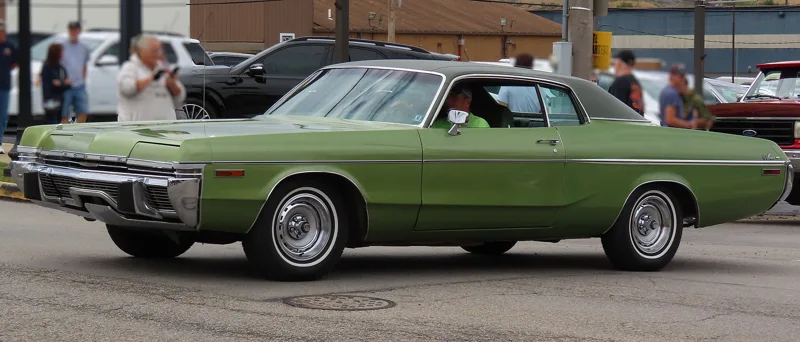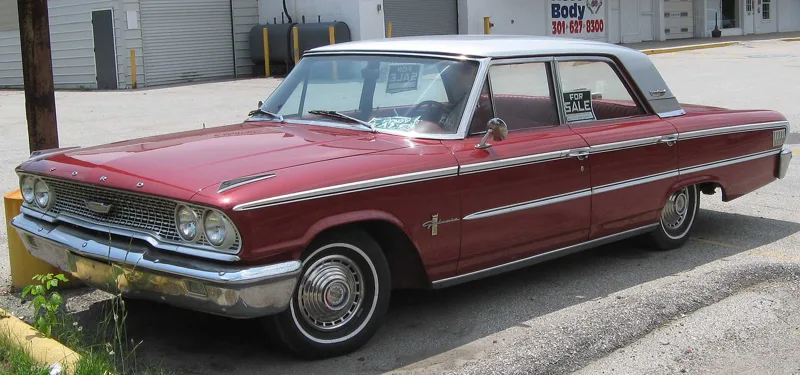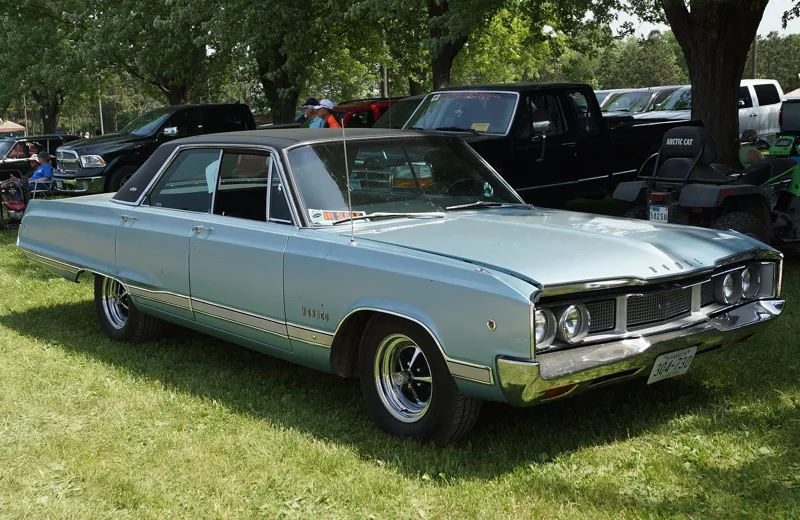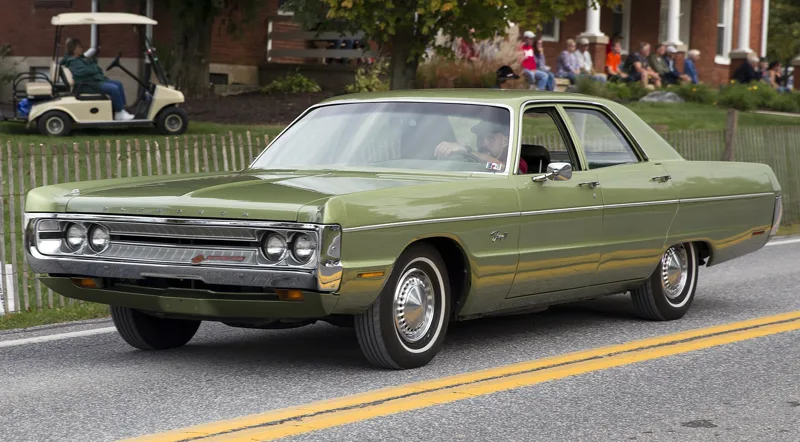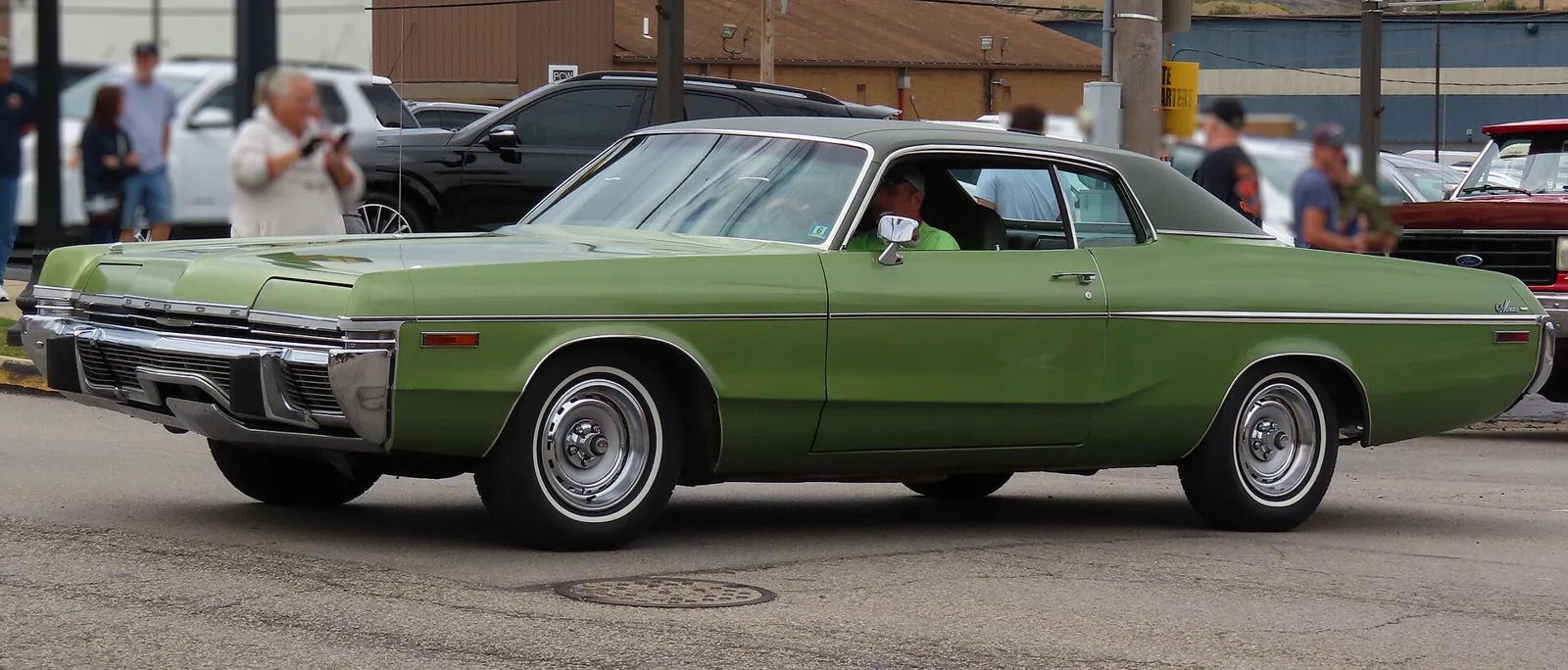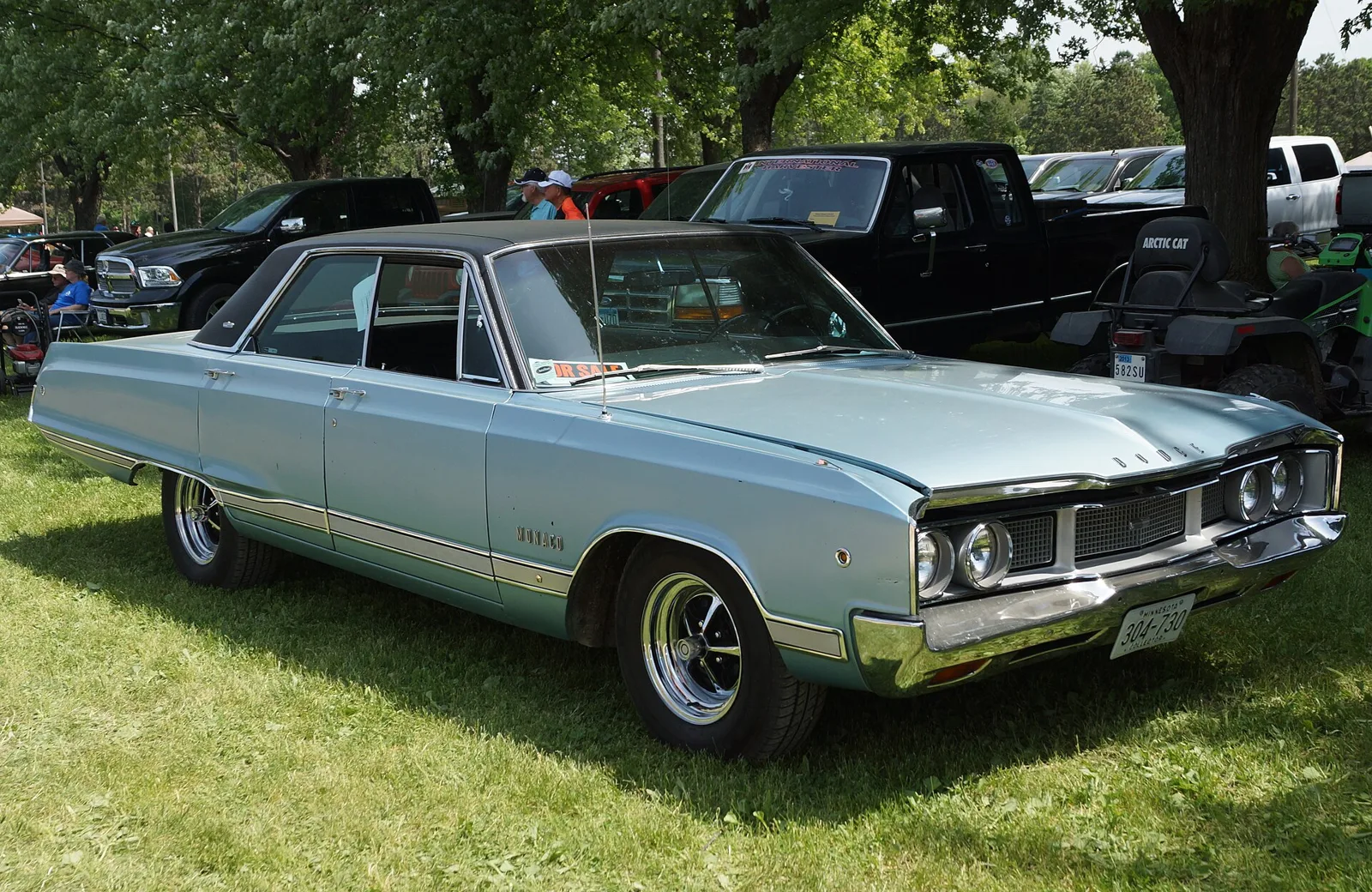
Two Chrysler full-size cars that shared engineering for years, from the Monaco's 1965 launch to the last rear-drive V8 Fury in 1988.
The Dodge Monaco was Dodge's flagship full-size car from 1965, built on Chrysler's C platform and later replaced by the St. Regis. The Plymouth Fury ran from 1955 to 1989 and was a full-size car for several spells, including 1965 to 1974.
Dodge and Plymouth were sister divisions of Chrysler, and their full-size cars often shared engineering, body structures and showroom time. The Monaco and the Fury make a useful pair, because they competed for the same buyers in the 1960s and early 1970s. Each took a different route to its own identity.
When did the Monaco and the Fury first appear?
The Fury began in 1955 as a sub-series of the Plymouth Belvedere and became a separate series above it in 1959. The Monaco arrived for the 1965 model year, launched on 25 September 1964, as the flagship of the Dodge full-size line.
The early Furys were sporty. In 1956 and 1957 the Fury came in sandstone white paint as a two-door hardtop, trimmed in gold anodised aluminium, and its 318 cu in V8 was rated 290 hp.
By 1958 the optional engine was the 350 cu in Golden Commando, rated 305 hp, and a 315 hp Bendix fuel-injection option was recalled by the factory. In 1959 the Sport Fury became Plymouth's top model, and the Fury moved into the second tier below it.
Dodge's own version was the Viscount, which Chrysler Canada built for the 1959 model year alone. Its nose came from a 1959 Dodge, mounted on a Plymouth Fury body, and it had no sport model in the American range.
Two Chrysler full-size cars from the same family, one Dodge flagship and one Plymouth with a far longer history.
How did the Fury's size change between 1959 and 1965?
The Fury was a full-size car from 1959 to 1961, a mid-size car from 1962 to 1964, and full-size again from 1965 to 1974. Those size changes followed Chrysler's wider moves between its platforms.
The 1962 Fury used Chrysler's new B-body unibody platform, and the 1964 two-door hardtop gained a slanted roofline. Sales were slow at first, which prompted the return of the Sport Fury trim as a hardtop coupe or a convertible.
In 1965 the Fury returned to the full-size Chrysler C-body platform, the same family the Monaco used from its launch. The new line included the Fury I, Fury II and Fury III, with the Sport Fury as the sportiest model.
The 1965 body had a grille without chrome and two stacked headlights on each side. The 426 street wedge V8, rated 385 hp, arrived as the first version of that engine that was street legal.
What did the VIP and the Monaco offer buyers in the late 1960s?
The VIP was Plymouth's luxury Fury from 1966, marketed as a separate model, while the Monaco offered Dodge's personal-luxury look with bucket seats and a 500 option. Both aimed at the same upper-middle buyers.
The VIP was introduced in the autumn of 1965 as a four-door hardtop, and a two-door hardtop followed in early 1966. Its interior had plush upholstery and woodgrain trim, and fender skirts came as standard.
The Monaco 500 option gave the car front bucket seats and a centre armrest in the United States, while Canadian Monacos used a separate 500 series. The Super-Lite auxiliary headlamp was offered as an option on the Monaco in 1969 at US$50.
For 1970 the VIP was discontinued, and a four-door hardtop was added to the Sport Fury range. The Sport Fury also gained a hardtop coupe in GT trim, which carried the 440 engine.
How did the engines of the two cars compare?
Both cars offered the 440 as a top engine at different points. The Monaco's 440 was rated 350 hp for 1970, while the Sport Fury GT used a 440 rated 390 hp in the same year.
In 1969 the Monaco's standard V8 was the B-block 383 with a two-barrel carburettor, rated 245 hp, and buyers could order a four-barrel unit rated 330 hp. The Fury's base V8 was the 318, while the 225 six remained standard on the lesser Fury models.
The Sport Fury GT used the 440 with three two-barrel carburettors that produced 390 hp, while the base 440 produced 350 hp. Those figures show how Plymouth used the big engine to build a sporting top model.
By 1971 all full-size Plymouths carried a V8, and the new 360 cu in engine was introduced across the range. The Monaco's 1971 engines also had lower compression ratios, and the four-barrel 383 was rated 290 hp that year.
How did production compare between the two?
The Monaco's production figures are well documented for the early 1970s, while the Fury's output for those years is not given. The Monaco built 24,692 cars in 1970 and 37,013 in 1972.
Monaco production dipped after 1969 and then recovered in 1972 before falling again in 1973 to 29,396. Its 1969 figure of 38,566 was the largest share of Dodge's full-size output that year, which made the car a major part of the division's line-up.
No matching Fury output is given for those years, so the volume comparison cannot be completed. The two cars can only be compared on engines, trims and body styles for the early 1970s.
What happened to the Fury and the Monaco after their full-size runs?
The Monaco's name became the Dodge St. Regis for 1979, and a Monaco returned in 1990 as a rebadged Eagle Premier. The Fury stayed a mid-size car from 1975 to 1978 and ended as a V8 rear-drive car in 1988.
The Gran Fury took over as the full-size Plymouth from 1980 with the R-body, and the M-body Fury followed in 1982. The last V8 rear-drive Fury left the Kenosha Main assembly plant on 23 December 1988.
Unlike its sibling brand, Plymouth did not see a return of the large V8 rear-drive sedan. The Monaco's revival in 1990 was a different route into the full-size segment, built on a car from a partner company.
How did the two cars compare side by side?
| Feature | Dodge Monaco | Plymouth Fury |
|---|---|---|
| Launch | 1965 model year | 1955 as a Belvedere sub-series |
| Full-size years | 1965 to 1977 on the C platform | 1959 to 1961, and 1965 to 1974 |
| Top engine, 1970 | 440 at 350 hp | 440 at 390 hp (Sport Fury GT) |
| Output, 1969 | 38,566 Monacos of 127,252 full-size Dodges | Not given |
| Output, 1970 | 24,692 Monacos | Not given |
| Luxury model | Monaco 500 and Brougham package | VIP, 1966 to 1969 |
| Final V8 year | 1977 on the C platform; B platform for 1977 and 1978 | 1988, last V8 rear-drive Fury |
| Successor | Dodge St. Regis (1979); Monaco revived in 1990 | Gran Fury (1980); M-body Fury (1982) |
What changed in the Fury's trim line during the early 1970s?
The 1971 Fury line was reshuffled. A Fury Custom model arrived in May, sitting between the Fury I and the Fury II in price, while the Sport Fury gained a four-door sedan and a formal hardtop was offered for both the Sport Fury and the Fury III.
For 1972 the Fury received a large chrome twin-loop bumper and hidden headlamps on the Sport Suburban wagon. The new Fury Gran Coupe and Gran Sedan were introduced that year, and the Sport Fury and GT models were dropped.
Options grew too. Buyers could order an electric sunroof on top-line models, headlight washers and a stereo cassette recorder with a microphone, which made it possible to record from the radio or take dictation.
How did the Monaco's options shape its image?
The Monaco's options gave buyers a range of comfort features, from the Brougham package to the Super-Lite lamp, and the 500 package defined much of the car's sporting character in its early years.
The 1969 Brougham package added a vinyl roof to sedans and hardtops, along with a split-bench front seat that reclined on the passenger side on all but the two-door hardtop. Monaco estates carried woodgrain vinyl on their sides, and the tailgate opened both sideways and downward.
In 1971 the 500 package was discontinued, but bucket seats stayed available and the Brougham package remained, even as Dodge added a separate Polara Brougham series. A stereo cassette recorder with a microphone was new on the option list that year.
The Monaco's wagon trim changed again in 1971, when the woodgrain moved high on the sides and around the side windows. The new decals were translucent, so some of the body colour showed through.
What did the Fury become during its mid-size years?
From 1975 the Fury became a mid-size car, and it sat beside the full-size Gran Fury until 1977. By 1979 Plymouth had no large car at all, a gap that the 1980 Gran Fury was designed to fill.
The mid-size Fury was the largest Plymouth in 1978, when the B-body Fury still carried the name. That left Plymouth with a product gap for a year before the R-body Gran Fury arrived.
The M-body Fury followed in 1982 as a different kind of car. The rear-drive V8 car that ended production at Kenosha in December 1988 was the last of the older line, and no later large Plymouth replaced it.
Each division ended the 1970s with a different full-size strategy. Dodge kept a flagship name alive for longer, while Plymouth used the Gran Fury badge to carry its large-car identity.
Which buyer suits each car?
On the facts given, the Monaco suits a buyer who wanted a Dodge flagship with a sporty hardtop look and a standard V8 from 1965. The Fury suits a buyer who valued a Plymouth with a long history and a wide range of trims.
Buyers who liked the Fury's trim range had many choices: the Fury I, II and III, the Sport Fury and the VIP, each with a choice of six or V8. The range was one of the widest in the Plymouth line-up for most of the 1960s.
Buyers who valued the Monaco's personal-luxury image would have looked at the 500 option, the Brougham package and the 440 engine in its later years. Those options gave the Monaco a clear identity inside Dodge's line.
Neither car is shown to be better overall, and the output for the Fury in the early 1970s is not given. The choice depends on whether a Dodge or a Plymouth badge suits the individual buyer.