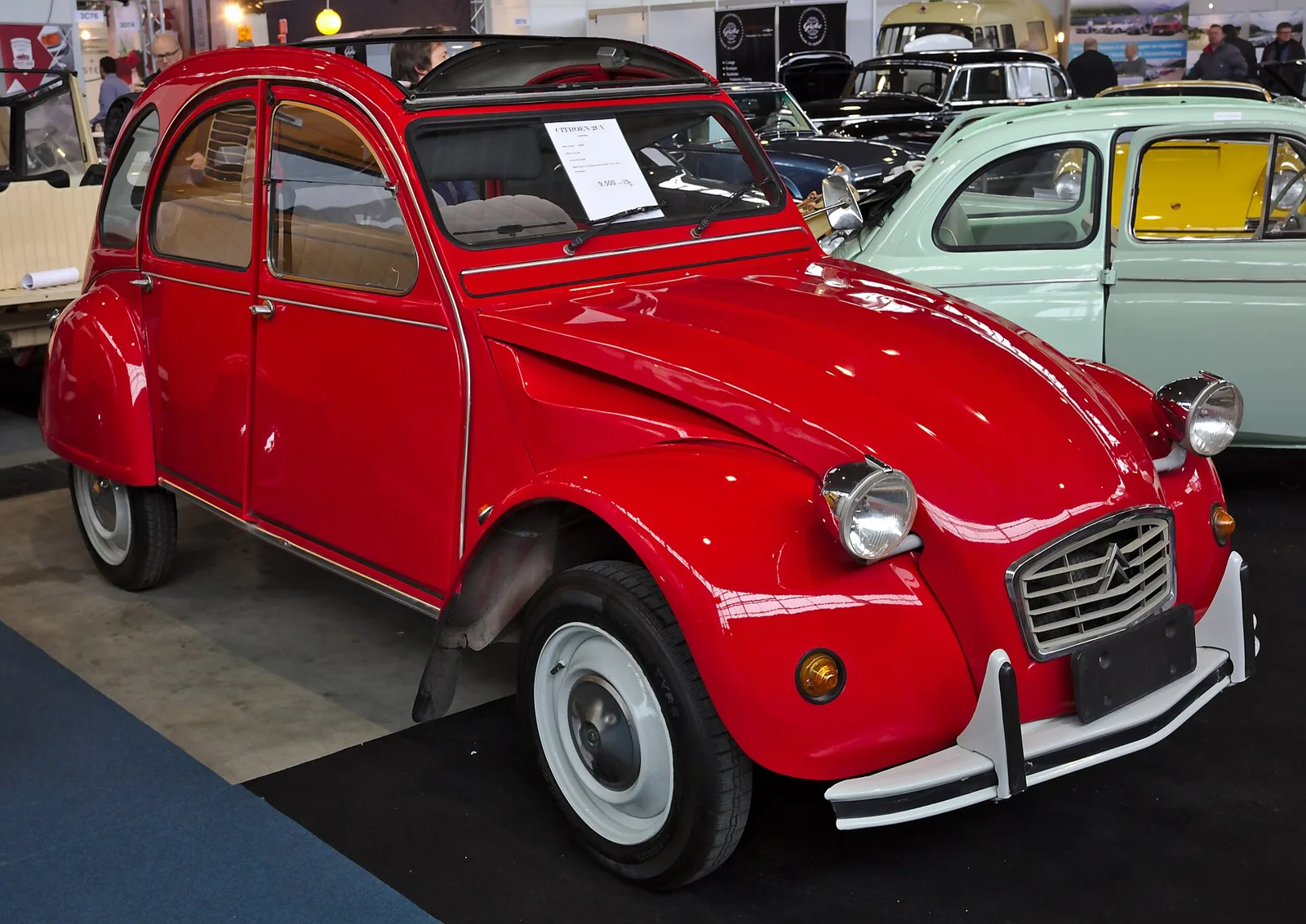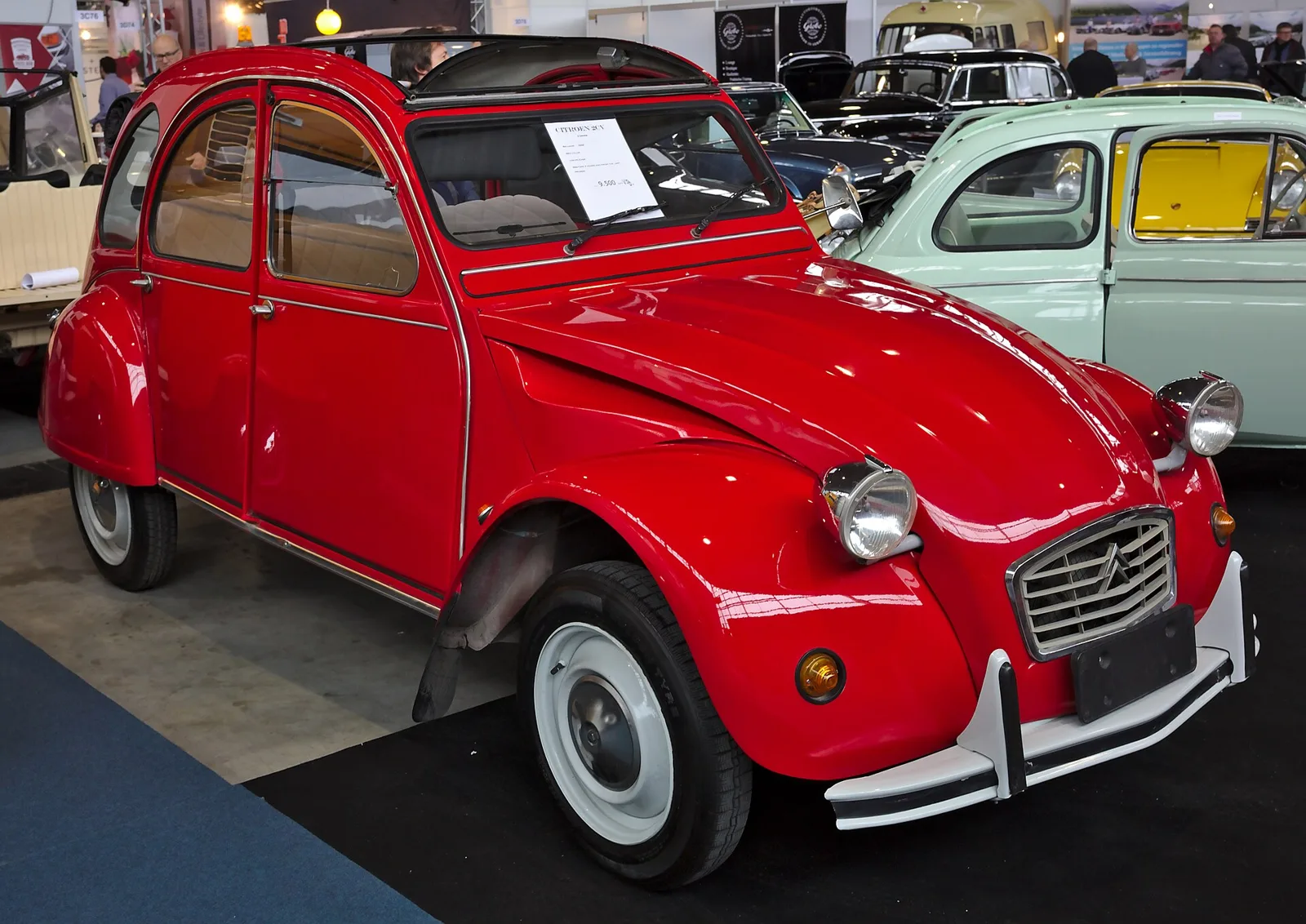
The Citroen 2CV was built for French farmers and the Renault 4 was Renault's answer to it, two front-drive economy cars that shared a brief and little else.
The Citroen 2CV and Renault 4 were front-drive French economy cars from different eras, with the R4 designed as a direct answer to the 2CV. The R4 was faster and more modern, while the 2CV remained the more characterful rural car.
The Citroen 2CV and the Renault 4 were both front-wheel-drive economy cars built for French buyers who could not yet afford much. The 2CV arrived in 1948 and the R4 in 1961, and the second was built as a direct answer to the first. Their brief was similar, but their engines, bodies and approaches to the same road problems were different.
Were the 2CV and R4 rivals?
They were, and the R4 was built with the 2CV in mind. Renault could look closely at what the 2CV did well and badly, and it set out to keep the good parts while fixing the weaknesses.
The R4 was not a copy. It took the 2CV's front-drive layout, its long-travel suspension and its utilitarian intent, then added a more modern engine and a more practical body. The rivalry was fought on the same French roads that the 2CV had been made for.
One French car was built around the egg test, the other was Renault's answer and built a hatchback that outlived its rival in production.
How did the 2CV come about?
Citroen Vice-President Pierre Boulanger conceived the 2CV to help motorise the many French farmers who still used horses and carts in the 1930s. The brief asked for a cheap, rugged car that could carry four people and 50 kg of farm goods to market, and it had to get an egg across a freshly ploughed field unbroken.
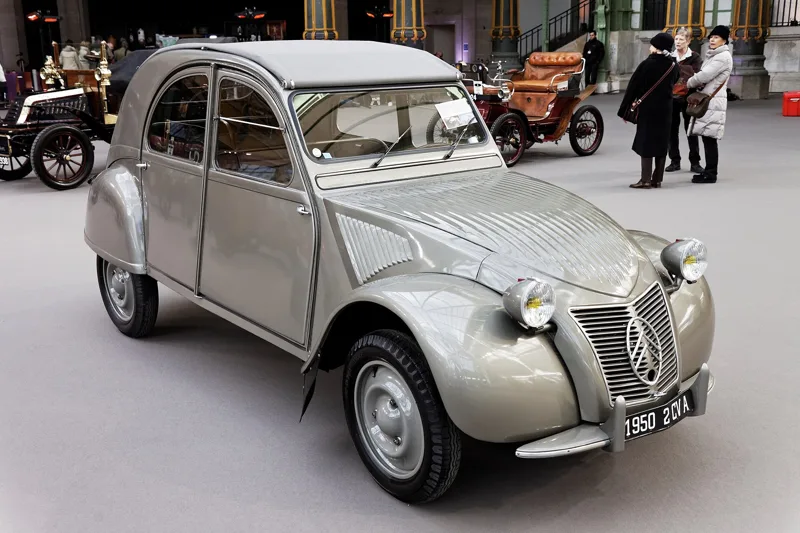
The 2CV was shown first at the 1948 Paris show. Its air-cooled engine sat at the front and drove the front wheels, and its long-travel suspension gave the soft ride that rough French tracks demanded. A prototype called the 2CV 2000 was developed in the late 1990s but never went into production. Michelin's radial tyre was first commercialised on the car.
How did the R4 come about?
In early 1956 Renault's chairman, Pierre Dreyfus, launched the project to replace the rear-engined 4CV. He wanted something for families, farmers and town dwellers alike, and he asked his staff for what he called a blue jeans car, one that could be as useful for work as for play.
The R3 and R4 reached the market together in July 1961. The two cars shared a body and most of their mechanicals, but the R3 used a 603 cc engine while the R4 had a 747 cc unit. Renault rated the R3 at 22.5 hp (16.5 kW), and the R4 at 26.5 or 32 hp (19.5 or 23.5 kW), depending on price and carburettor.
How did the two cars look and carry their loads?
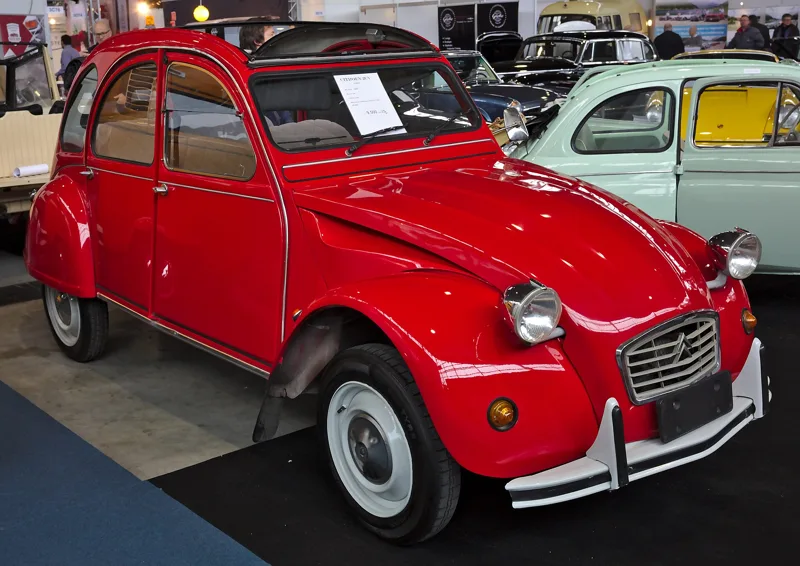
The 2CV's bodywork was a fixed-profile convertible with a full-width canvas roof that rolled back, which made it an umbrella on wheels. The body could carry oversized loads through its open roof, and the design was a deliberate contrast with cars that aimed at style.
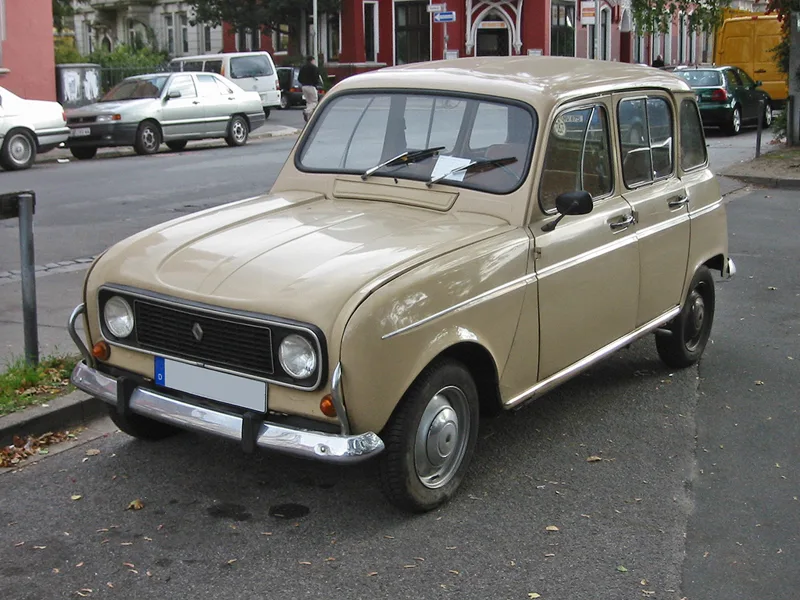
The R4 had a boxy full-width body, which offered more space for passengers and luggage than the 2CV, and it had a top-hinged, single-piece tailgate. That tailgate is why the R4 is now credited as the first mass-produced hatchback. Its deckchair seats could be taken out for loads.
Specifications side by side
| Specification | Citroen 2CV | Renault 4 |
|---|---|---|
| Years built | 1948 to 1990 | 1961 to 1994 |
| Engine | Air-cooled two-cylinder, 375 cc at first, 6.6 kW (9 hp) | Water-cooled four-cylinder, 747 cc, 26.5 or 32 hp (19.5 or 23.5 kW) |
| Top speed | 65 km/h (40 mph) in 1949; 70 km/h (43 mph) by the late 1950s | Over 104 km/h (65 mph) |
| Body | Fixed-profile convertible with a roll-back canvas roof | Hatchback with a top-hinged tailgate |
| Transmission | Four-speed manual | Three-speed manual at first; four-speed from 1968 |
| Suspension | Long-travel system linking front and rear wheels | Long-travel independent suspension with torsion bars |
| Total built | Over 3.8 million 2CVs; over 9 million with derivatives | Over eight million |
Which car was faster?
The R4 was clearly the faster car on paper. It was rated at over 104 km/h (65 mph), while the 2CV had a top speed of 65 km/h (40 mph) in 1949 and reached only 70 km/h (43 mph) by the late 1950s.
The 2CV was never meant to be quick. Its two-cylinder engine was dependable and frugal but loud, and its performance looked weak by the standards of the 1960s. The R4's larger four-cylinder unit gave it the margin that the 2CV lacked.
How did the engines differ?
The 2CV's first engine was 375 cc and produced 6.6 kW (9 hp). It was air-cooled, a design the 2CV shared with the Volkswagen Beetle's boxer layout. Its later engine grew to 602 cc and 29 PS, which kept its character but gave a little more pace.
The R4 always used a four-cylinder water-cooled engine, and it had a sealed cooling system with antifreeze that was meant to last the car's life. Renault first used the 747 cc unit from the 4CV, and the Dauphine's 845 cc engine arrived in the top-spec Super from 1963.
Later R4s used the 1108 cc Sierra engine in the GTL from 1978, and a smaller 956 cc version replaced the 845 cc unit in 1986. The engine family therefore grew steadily across the car's life.
How did the suspension and transmission work?
Both cars used long-travel suspension, and both suited rough roads. The 2CV's system linked front and rear wheels and gave an excellent ride, but it was mechanically complex and needed regular lubrication at intervals as short as every 1,000 miles (1,600 km).
The R4 used torsion bars that needed no regular maintenance, and its rack-and-pinion steering added precision. The transmission was the car's weak point at first. Its three-speed box had synchromesh on only the top two ratios until 1962, and a four-speed gearbox did not arrive until 1968.
The 2CV's four-speed manual had been the more advanced gearbox when the R4 was launched, which made the R4's first transmission look dated to some critics.
What happened to the 2CV during the war?
Boulanger refused to work with the German occupiers and was marked by the Gestapo as a foe of the Reich, living with the risk of arrest. Michelin and Citroen managers decided to hide the project from the Nazis, who might see a military use for it in the way the Beetle became a military vehicle.
Several prototypes were buried in secret locations, and one was disguised as a pickup. Until 1994, when three were found in a barn, it was believed only two had survived. By 2003 five known examples were accounted for.
The wartime redesign was driven by costs. After aluminium prices rose by 40%, Boulanger moved the car to steel with flat panels. In early 1944 the water-cooled two-cylinder was dropped for an air-cooled unit of the same size, and a four-speed gearbox was squeezed into the space of a three-speed.
The French government favoured other producers in the postwar years. The five-year Plan Pons rationed car output until 1949, and the economy car market went to Renault, which received US aid and steel to build its 4CV. Roughly 100,000 of the two million pre-war cars remained in use, and the years were known as the grey years in France.
How did the R4 deal with rough roads?
Renault pitched the R3 and R4 directly at the 2CV's soft suspension. At the 1961 Paris Motor Show, a specially built rolling road showed visitors how the suspension soaked up bumps while the car stayed still, and the same display returned to the Turin show in 1962.
The basic R3 was priced 40 francs below the cheapest 2CV in 1961, but buyers shunned the bare versions. The R4L, with six side windows and chrome trim, cost 400 francs more than the four-window R4, and the R3 was dropped in October 1962 along with the most basic R4.
A Super, branded de Luxe in some export markets, added opening rear quarter-lights and extra trim. Its engine came from the Renault Dauphine and measured 845 cc, and by 1965 the extra R had been dropped from the names, so the R4L became the 4L.
How did the cars sell in their early years?
The 2CV was a commercial success almost at once. Within months of going on sale it had a three-year waiting list, which soon grew to five years, and a second-hand 2CV could fetch more than a new one, since buyers were spared the wait. Output climbed rising from 876 in 1949 to 6,196 the following year, and it reached 16,288 by the end of 1951.
The press was harsher. The British magazine Autocar's correspondent described the car as the product of a designer who had taken austerity to a masochistic extreme, and an American journalist asked whether it came with a can opener. A 1953 review in Autocar, however, praised the car's extraordinary ingenuity.
The R4 benefited from the timing of its launch. It arrived as France's economy grew and car ownership rose, and the million mark came in February 1966, under four and a half years after the car appeared.
What did the R4 do that the 2CV did not?
The R4 combined the 2CV's front-drive economy with a more modern feel. Its water-cooled engine gave better refinement and performance, and its body offered more space and a usable hatchback opening.
The R4 also gave Renault a base for the Renault 5 that followed, which shared many of the R4's internal components. Its 33-year production run placed it seventeenth among the most long-lived single generations, a ranking given in 2020.
How did the 2CV's later life compare?
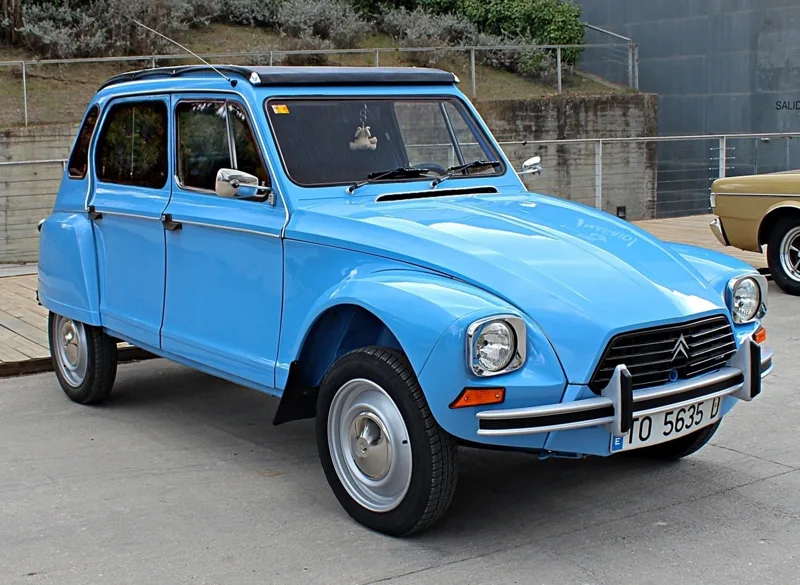
The 2CV's run ended in 1990, after more than four decades in production. It spawned the Ami, the Dyane, the Acadiane, the Mehari and the Fourgonnette panel van, and it became one of the few cars to keep a single generation in production for over forty years.
The R4 kept going until 1994, and it had a long reach in export markets. It was built in twenty factories on four continents, and its layout was an early version of the hatchback.
For about three decades the two cars were on sale together, since the 2CV was still in production when the R4 arrived in 1961. Buyers in rural France therefore had a choice between the old-style umbrella on wheels and the newer hatchback, and the R4 was the one that carried Renault into the 1960s and 1970s.
Which car suits which buyer?
A buyer who wants the most characterful French economy car, with its distinctive shape and an open canvas roof, will look at the 2CV. A buyer who wants a more modern engine and a practical hatchback will look at the R4.
Speed favours the Renault. Its 104 km/h top speed sits well above the 2CV's figures from its early life, and its four-cylinder water-cooled engine was more refined.
Neither car is better across the board. The 2CV is the purer rural machine, while the R4 is the more practical and modern car that made its own place in the market.