Citroen's modernised 2CV, designed as an answer to the Renault 4, set against the Renault that prompted it: origins, engines, sales, the UK road test and the buyer each suited.
The Citroen Dyane and Renault 4 were economy hatchbacks from the French market. The Dyane, launched in 1967, used the 2CV's chassis and sold nearly 1.45 million cars. The Renault 4, from 1961, was built in more than eight million examples up to 1994.
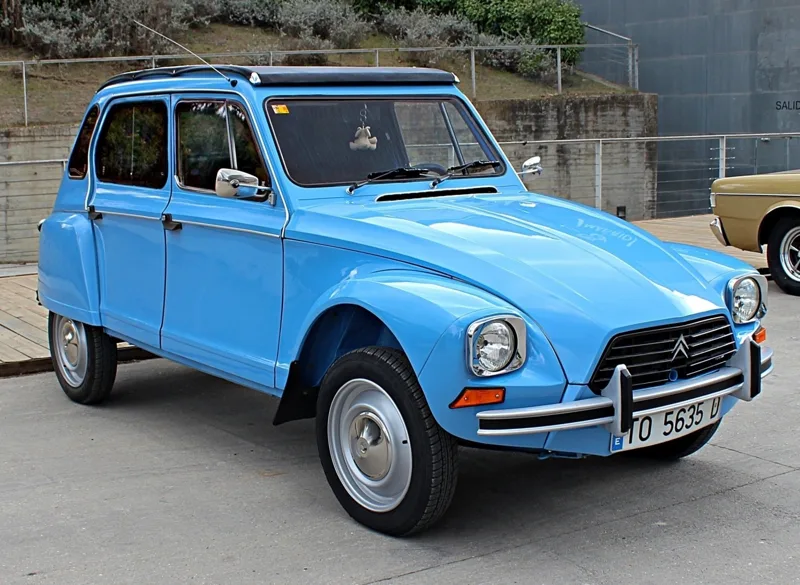
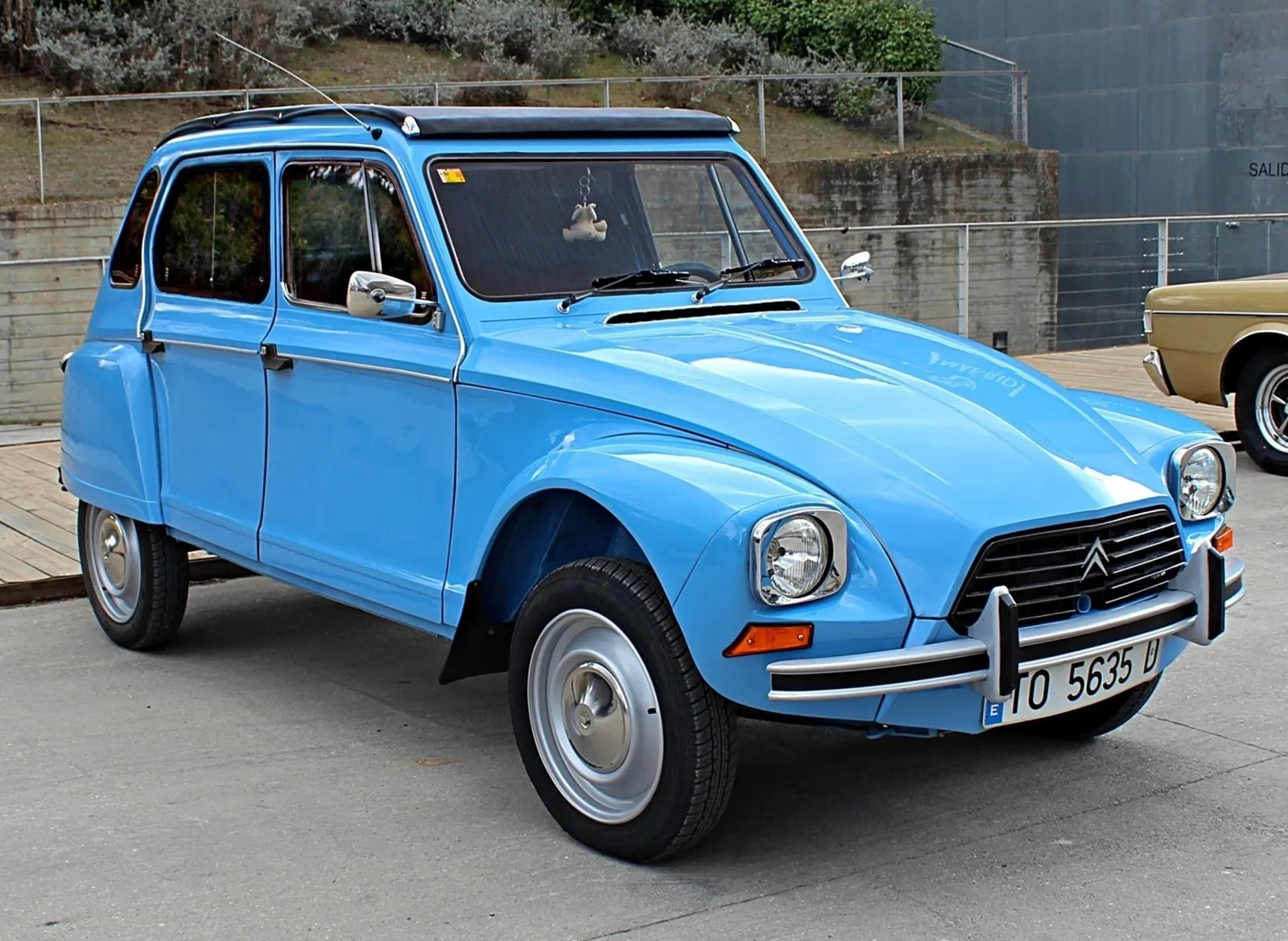
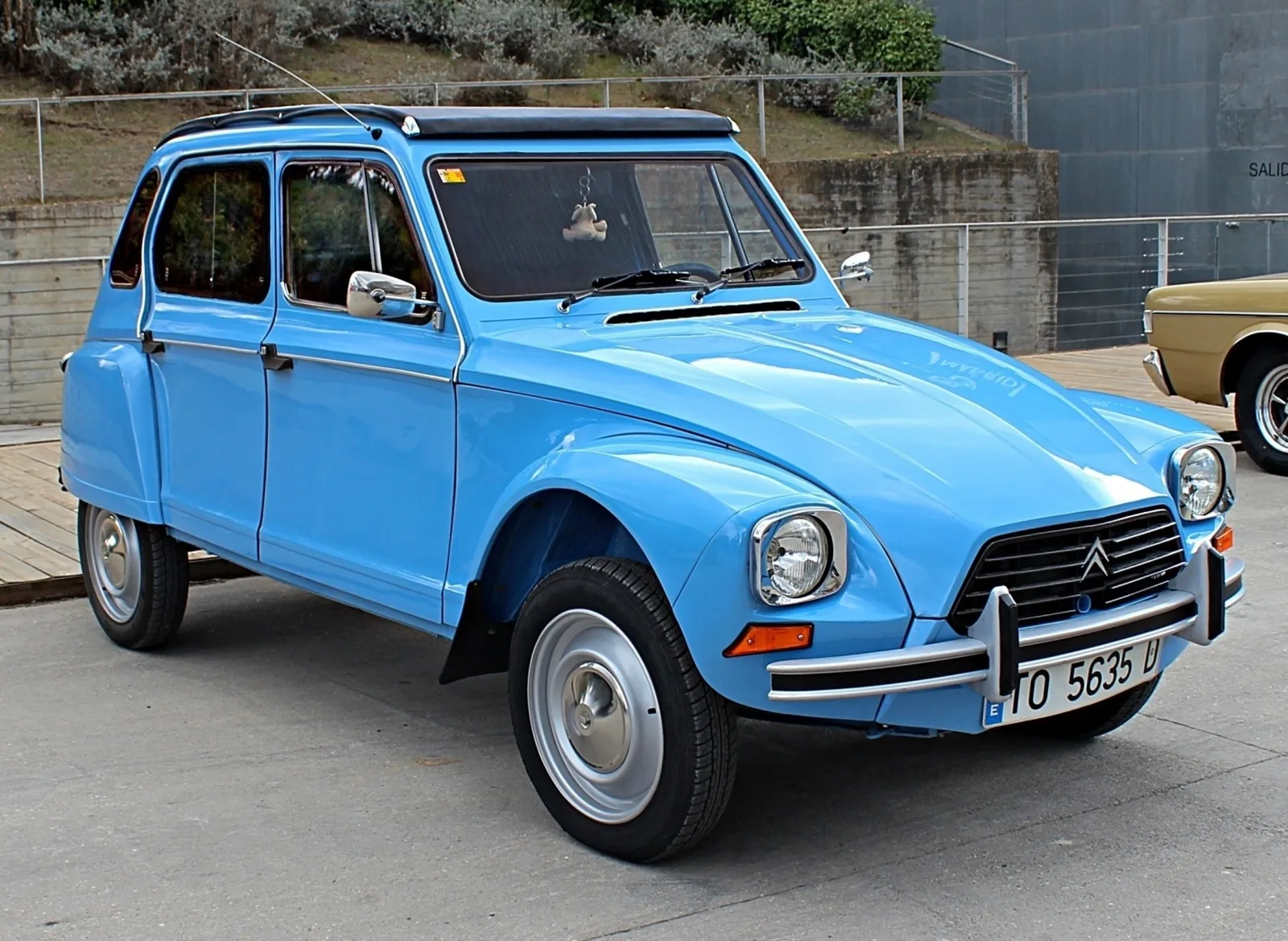
The Citroen Dyane and the Renault 4 were both economy hatchbacks from the French market, and the Dyane was designed as a direct answer to the Renault 4. Citroen built the Dyane on the chassis of its 2CV, but gave it new angular body panels and a large hatchback. The Renault 4 had already done damage to 2CV sales when the Dyane was conceived.
This comparison covers why the two were rivals, how each came about, their engines and running gear, their production figures and their reception in the UK, and which buyer each car suited on the facts available.
Why were the Citroen Dyane and Renault 4 rivals?
They were rivals by design. The Dyane was developed as an answer to the Renault 4, which had come out in 1961 and had affected 2CV sales in France. Citroen needed a hatchback to hold its economy customers, and the Dyane was its response.
The two cars were aimed at similar buyers. Both were practical hatchbacks with simple engines and cheap running costs, though the Dyane sat slightly higher in Citroen's range, between the 2CV and the Ami. The Dyane was never meant to replace the 2CV outright, but it attracted buyers who wanted the versatility of a hatchback.
In the UK the Renault 4 was among the competitors that the Dyane was measured against. Motor identified the Mini, the Hillman Imp, the Reliant Rebel and the Renault 4 as rivals when it tested the Dyane, which confirms how the two were judged side by side.
A 2CV-based hatchback with new angular panels, designed to answer the Renault 4 that had hit 2CV sales.
How did the two cars come about?
The Dyane was a development of the 2CV that began with the Panhard design department, since Citroen's own designers were busy with the DS and Ami. Louis Bionier's team produced a proposal that Citroen's design chief Robert Opron found controversial, and the car was significantly reworked before launch.
The Renault 4 was launched in 1961 with a brief from Pierre Dreyfus for a blue jeans car, a useful family, farm or city vehicle. The R4 was designed to compete with the 2CV, which had made motoring available to rural buyers, and it was launched alongside the cheaper R3 in July 1961.
The Dyane was launched in its home market in August 1967. It carried the 2CV's suspension and running gear, but its body was new, with conventional round headlamps set into the front wings and stainless steel wheel embellishments as standard.
Its body had a squared stainless steel trim ring around each headlamp and a large hatch at the back, which made it more practical for carrying loads than the 2CV. The car also had a more modern look, with straighter and more angular panels throughout.
The Confort version added hubcaps, plastic moulded door panels and a less rustic steering wheel. Its spare wheel and jack sat in a special cradle under the bonnet, rather than loose on the floor of the luggage area.
The basic R4 came with thick C-pillars behind the rear doors, and its quarter glass was a 400 franc option until it soon became standard across the range.
The Renault 4 had a more distinctive origin. It was built around a large structural platform with a separate body, and it used front-wheel drive with long-travel suspension and torsion bars. It also had a top-hinged single-piece tailgate, which made it one of the first mass-produced hatchbacks.
What engines and running gear did the two cars use?
The Dyane's air-cooled engine started as the 2CV's 425 cc unit, and for the first five months that was the only engine fitted. In January 1968 the Dyane 6 appeared with the Ami's 602 cc M4 engine, producing 28 bhp (21 kW; 28 PS) and a claimed top speed of 115 km/h (71 mph).
Two months later the 425 cc unit was replaced in the Dyane 4 by a 435 cc engine producing 26 bhp (19 kW; 26 PS), with a top speed of 105 km/h (66 mph). In September 1968 the 602 cc engine was improved with higher compression pistons and a fan that forced air to the heater, which gave good demisting and heating.
Early cars had no conventional shock absorbers, and the 2CV-based suspension needed greasing at the front hubs every 600 miles, a detail that was often neglected.
The Renault 4 used a water-cooled four-cylinder. Its 747 cc engine was rated at 26.5 or 32 hp, depending on price level and carburettor, and its 603 cc sibling in the R3 produced 22.5 hp. The R4 gained the 845 cc Dauphine engine in 1963, a 1,108 cc engine in the GTL in 1978, and a 956 cc unit in 1986.
The two cars also differed in gearboxes. The R4's three-speed manual was newly developed for the car and gained synchromesh on all three ratios by 1962, with a four-speed arriving in 1968. The Dyane was also offered with a trafficlutch, a centrifugal clutch that helped avoid stalling in slow traffic.
How did the two cars sell?
The Dyane sold strongly from the start. In its first full year of production 98,769 were built, against 57,473 of the 2CV. In 1969 the Dyane again outsold the 2CV, with 95,434 against 72,044, but the 2CV returned to the lead in 1970 with 121,096 cars.
Nearly 1.45 million Dyanes were made, with about 250,000 Acadiane vans, for a total of roughly 1.7 million. The Dyane's annual volumes never again beat those of the 2CV, so its role as a replacement for the older car was short-lived.
The Renault 4 sold far more. Its first million came by 1 February 1966, less than four and a half years after launch, and over eight million were built in the end, in twenty factories on four continents. By 2020 the R4's production run was counted as the seventeenth most long-lived single generation car in history.
The Dyane arrived when the Renault 4 was already selling strongly, and Citroen judged that buyers were ready for a less basic approach than the 2CV offered.
The Dyane was also built under licence in other markets. Tomos assembled it in Yugoslavia, where it was called the Diana, and the Cimos venture formed in 1972 continued assembling Citroens in Koper from kits. SAIPA built the Jyane in Iran from 1968 to 1980, with 120,000 produced there.
How did the UK press judge the Dyane?
Motor tested a Dyane 6 in July 1969. It reached 68.6 mph (110.4 km/h), and it took 30.8 seconds to go from 0 to 60 mph (97 km/h). Its overall fuel consumption was 36.0 miles per imperial gallon (7.8 L/100 km; 30.0 mpg-US), though when driven gently it managed a class-leading 51.0 mpg imperial.
The test car was priced at 648 pounds including taxes, the same as BMC's Mini 1000 Super. The Dyane was commended for its versatility, spaciousness and comfort, and for good road holding and economy when not driven hard. Its acceleration and top speed, however, fell short of the class average. Those figures set the car apart from its more lively rivals in the class.
The Renault 4 is not reported with a test result in the material available for this comparison, so no direct road test verdict can be drawn for the two cars side by side. The Dyane's test is the clearest UK performance record in this pairing.
The Dyane's competitive record was limited. A Dyane driven by Michel Peyret and Jean-Jacques Cornelli entered the 1976 Monte Carlo Rally and finished 80th out of 84 classified competitors, a result that reflects the car's economy-first purpose.
Which buyer suits each car?
On the facts given, the Dyane suits a buyer who wants a 2CV-based economy car with a hatchback, a simple air-cooled engine and very low running costs. The Renault 4 suits a buyer who wants a roomy, water-cooled economy hatchback with a longer production run and a broader engine range.
A buyer who valued the 2CV's character, its unusual suspension and a more modern hatchback body would look at the Dyane. Its mechanical simplicity, its cheap running costs and its fuel economy in the 1969 test made it a sensible choice.
A buyer who wanted more space and a water-cooled engine would look at the Renault 4. Its boxy body, its large cargo space and its sealed cooling system made it a practical everyday car with a strong long-term record.
Neither car is shown to be better across the board. The Renault 4 has the far larger production total and the wider engine range, while the Dyane has the 2CV lineage and the more unusual mechanical character. The better choice depends on whether the buyer values the 2CV's simplicity or the Renault's broader practicality.
Specifications at a glance
| Feature | Citroen Dyane | Renault 4 |
|---|---|---|
| Production | 1967 to 1983 | 1961 to 1994 |
| Cars built | Nearly 1.45 million, plus about 250,000 Acadiane vans | Over eight million |
| Engine | Air-cooled 425 cc, later 435 cc and 602 cc | Water-cooled 747 cc, later 845 cc, 1,108 cc and 956 cc |
| Power | 26 bhp (19 kW) 435 cc; 28 bhp (21 kW) 602 cc | 26.5 or 32 hp (19.5 or 23.5 kW) at launch |
| Top speed | 105 km/h (66 mph) Dyane 4; 115 km/h (71 mph) Dyane 6 | Over 104 km/h (65 mph) |
| 0-60 mph | 30.8 seconds, Motor test 1969 | No figure given |
| Fuel economy | 36.0 mpg imperial overall (Motor, 1969) | No figure given |
| Body | Hatchback with 2CV-based chassis | Hatchback, top-hinged single-piece tailgate |
| Gearbox | Four-speed manual with optional trafficlutch | Three-speed manual, four-speed from 1968 |
| UK price | GBP 648 in 1969 | No figure given |