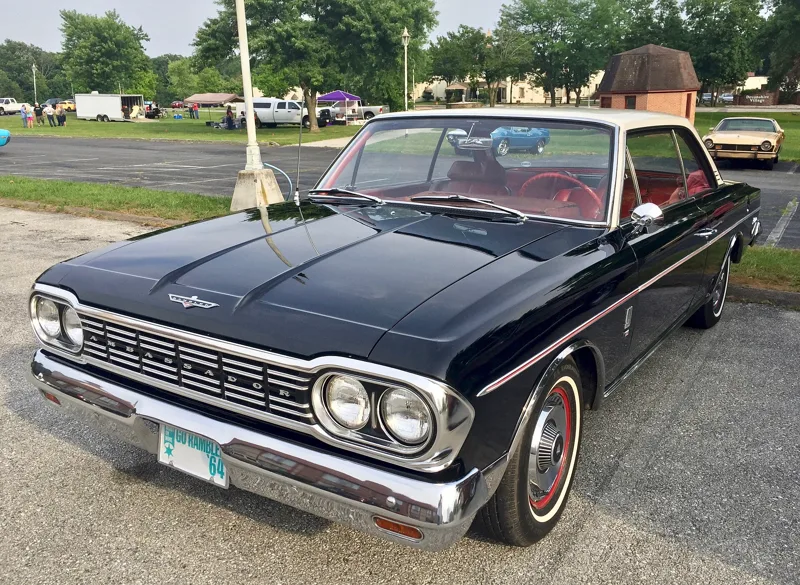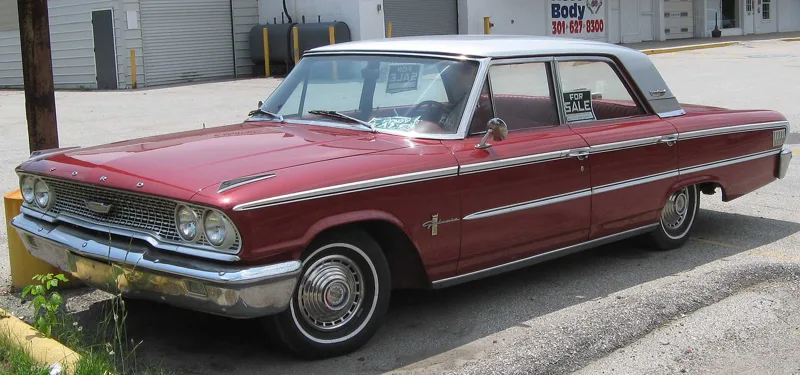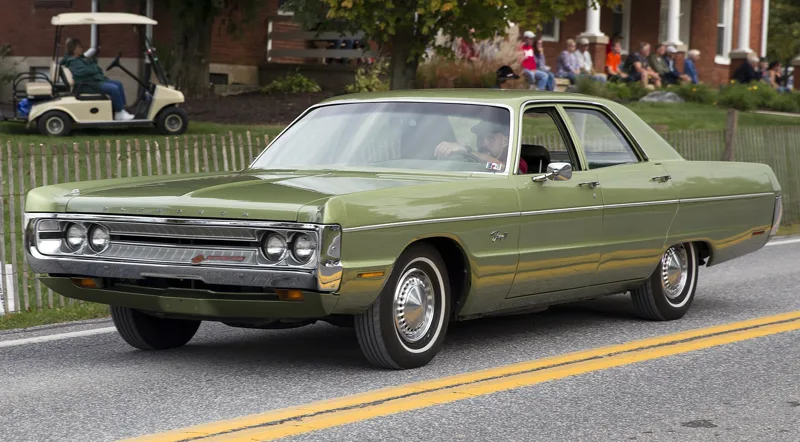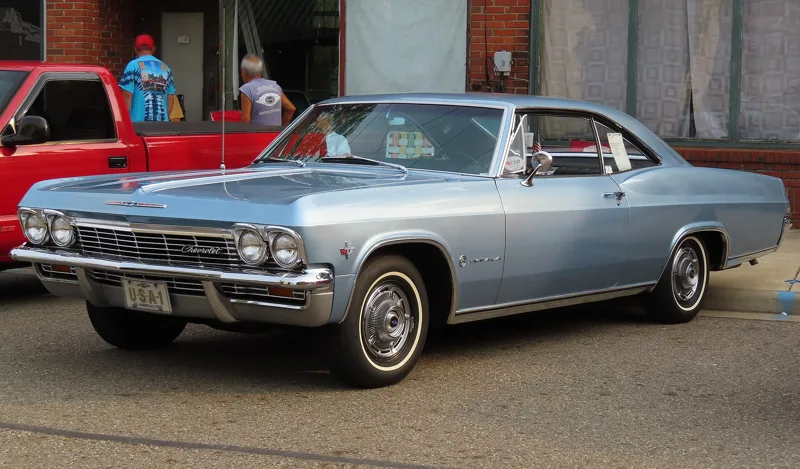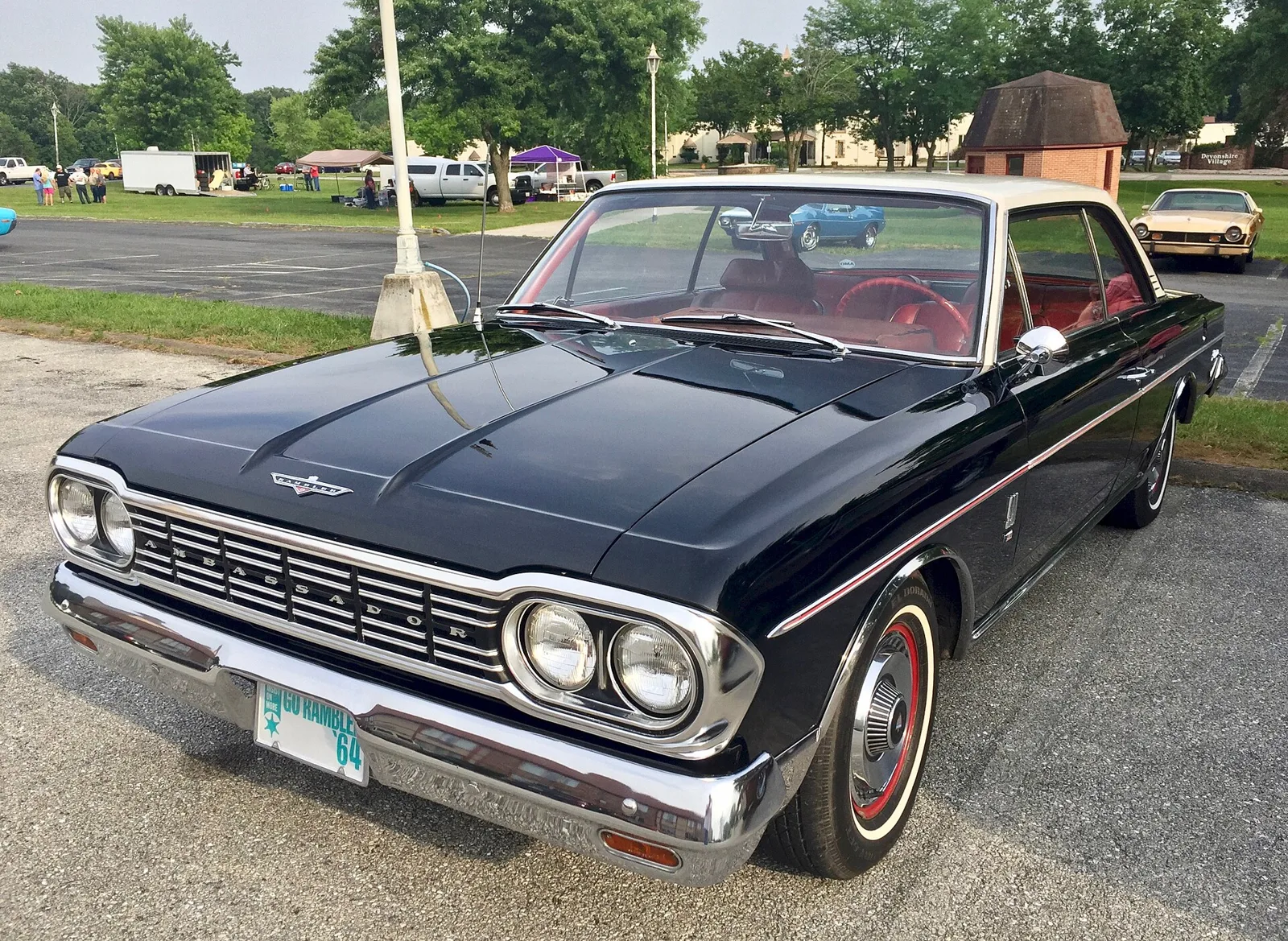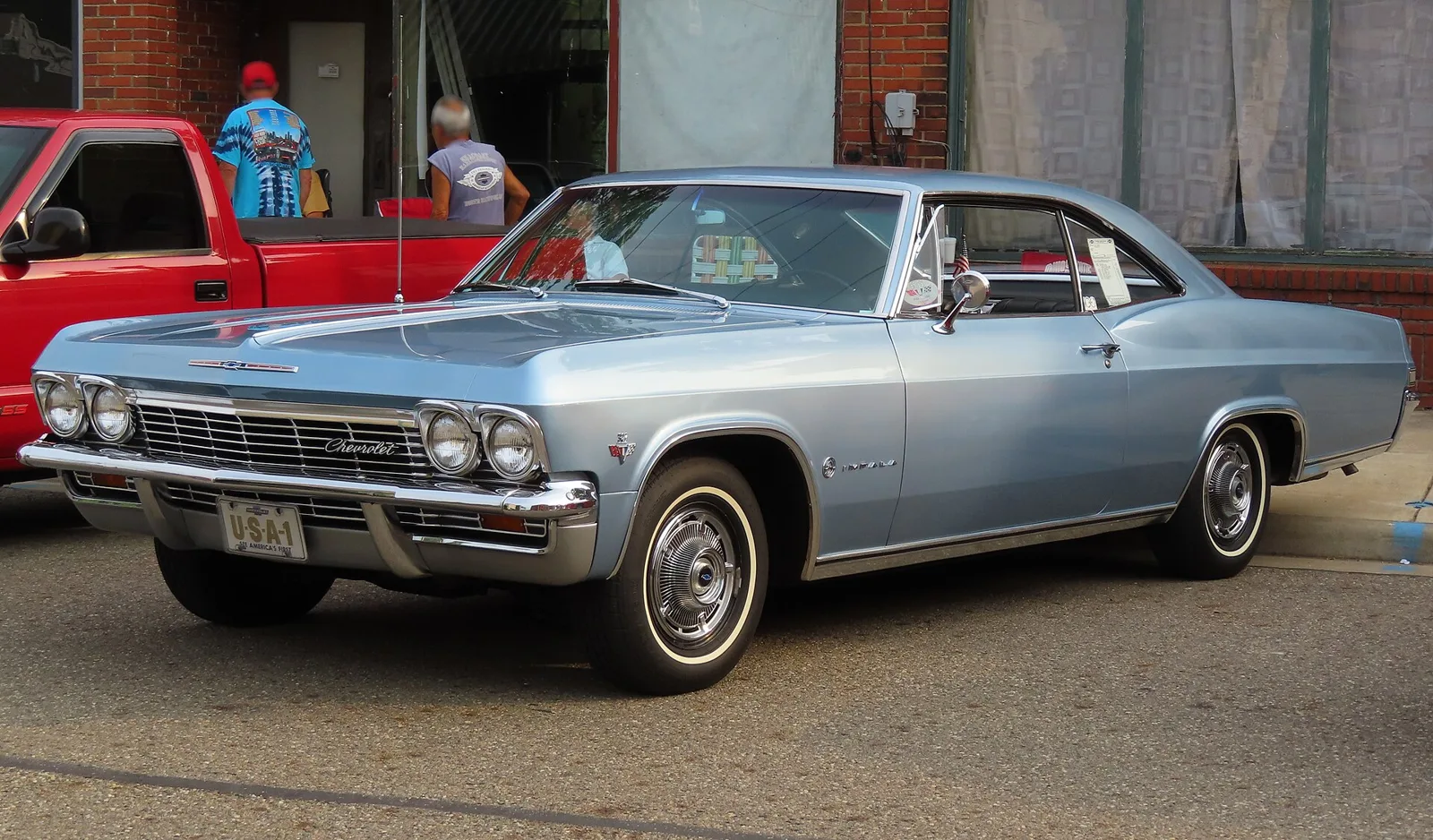
Chevrolet's 1965 Impala set a sales record that still stands, and Plymouth answered with a Fury that returned to full size and carried its own strong V8s.
The 1965 Chevrolet Impala set an annual US sales record above one million, and it offered V8s up to 425 hp by 1969. The Plymouth Fury, full size again from 1965, had a 385 hp Street Wedge V8 and a luxury VIP model.
The fourth-generation Chevrolet Impala and the Plymouth Fury were built to win the same full-size buyer in the late 1960s. The Impala dominated the sales charts for years, and its 1965 redesign set an annual sales record that has never been bettered. The Fury had a longer lineage, having been built from 1955 as a Belvedere sub-series, and its V8 engines and fast-top coupes gave it a real claim on the same showroom floor.
How did the 1965 Impala change the market?
The 1965 Impala was a complete redesign, and it moved more than 1 million cars across the American market in its first year. Rounded sides, a new front end and curved, frameless side glass gave the car a modern look.
Under the skin, a Girder-Guard perimeter frame replaced the old X-frame and reduced the bulk of the driveline tunnel.
Chevrolet pushed the car's wide stance, its adhesively bonded windshield and a full-coil suspension in its advertising. Buyers could also order the Turbo Hydra-Matic automatic, which was offered for the first time, alongside two-speed Powerglide and three- or four-speed manual gearboxes.
The Caprice name gave the car much of its image. Chevrolet offered it as a $200 option group on the four-door Sport Sedan, with a blacked-out grille, a vinyl top with Fleur-de-lis emblems and unique wheel covers. Its popularity led Chevrolet to make the Caprice a full series for 1966, and it was V8 only.
The Chevrolet full-size Impala set a sales record, while Plymouth's Fury answered with a 385 hp Street Wedge and a luxury VIP trim.
Specifications side by side
| Specification | Chevrolet Impala (1965 to 1970) | Plymouth Fury |
|---|---|---|
| Production span | 1965 to 1970 model years | 1955 to 1989; full size from 1965 to 1974 |
| Wheelbase | 119 in (3,023 mm) on the perimeter frame | 119 in (3,023 mm) in 1965; 121 in (3,073 mm) for wagons |
| Base engine | 250 cu in six from 1966 | 318 cu in V8 until 1967, then the LA V8; 225 cu in six on the base Fury I in 1969 |
| Top engine | 427 cu in Turbo Jet at 390 and 425 hp (1966); L72 at 425 hp (1969) | 426 cu in Street Wedge at 385 hp (1965); 440 cu in at 390 hp (1970 GT) |
| Convertibles | 38,000 sold in 1966; 9,562 built in 1970 | None given for the fourth generation |
| Output | 777,000 in 1969 including Kingswood wagons; 612,800 in 1970 | None given |
| Top trim | Caprice from 1965, a full series from 1966 | VIP luxury model, 1966 to 1969 |
| Price | None given | None given |
| Automatic | Turbo Hydra-Matic offered from 1965 | TorqueFlite automatic optional |
What engines did the Impala offer?
The Impala's 1965 engine line was led by the 396 cu in Turbo Jet, which was the first General Motors engine fitted with the Rochester Quadra-Jet four-barrel carburettor. That carburettor stayed in production until the early 1980s.
The 396 came in a 325 hp version with hydraulic lifters and a 425 hp high-performance version with solid lifters and a higher compression ratio.
Early 1965 cars were also fitted with the 409 cu in engine, available only with four-barrel tuning at 340 and 400 hp, before that unit was dropped. By 1969 the choice had spread. The standard 327 produced 235 hp, the 350 offered 255 or 300 hp, the 396 made 265 hp, and the 427 came in 335 or 390 hp versions.
How did the Fury get its start?
The Plymouth Fury first appeared for 1956 as a sub-series of the Belvedere, and the first ones were sandstone white two-door hardtops with gold trim. The engine that made the name was the 1958 Golden Commando, a 350 cu in big block with twin four-barrel carburettors and 305 hp.
The Fury became a separate series above the Belvedere for 1959.
Chrysler moved the Fury onto the B-body unibody in 1962 and then returned it to full size on the C-body for 1965.
What did the full-size Fury offer in 1965?
For 1965 the Fury came as Fury I, II or III models, and the Sport Fury sat above them as the sportiest trim. The Sport Fury was aimed at the Impala Super Sport and the Ford Galaxie 500 and XL, and it came with a racier cabin and outside trim.
The Fury rode on a 119 in (3,023 mm) wheelbase, and the wagons stretched to 121 in (3,073 mm).
The 426 Street Wedge V8 arrived in the same year, rated at 385 hp and the first version of that engine to be legal for the street. Plymouth also launched the VIP in 1965, a luxury trim with woodgrain and standard fender skirts. It was marketed as a separate model, although it was essentially an upgraded Fury III.
What did the Impala add for 1966 and 1967?
The 1966 Impala brought triple rectangular taillights in place of the round lights that had been used on full-size Chevrolets for most years since 1958, along with chrome beltline strips added after complaints about door dings in parking lots.
A 250 cu in six replaced the 230 six, and two new 427 Turbo Jet V8s were offered at 390 and 425 hp.
The 1967 Impala was redesigned with Coke-bottle styling on the same 119 in wheelbase, and the Sport Coupe had a graceful fastback roofline that flowed into the rear deck. Safety equipment became standard across the range, including a collapsible steering column and shoulder belts for closed models. The top engine that year was a 427 rated at 385 hp. Front disc brakes became standard with the SS-427 option, and buyers could order an eight-track stereo and vacuum-powered door locks.
How did the Fury's 1967 restyle look?
The 1967 Fury was restyled with sharper angles, and its stacked quad headlight bezels sat more deeply in the body for a more muscular look. A new formal two-door hardtop with smaller rear quarter windows and a wider C-pillar joined the thin-pillar hardtop, both in VIP and Sport Fury trim.
The same year brought the end of the 318 cu in V8, replaced by the thin-wall LA engine. The new unit made more power without any change in the advertised figure, and the 318 LA did not reach export or Canadian cars until 1968. Dual-circuit brakes and energy-absorbing steering became standard on every Plymouth.
What changed on the Impala in 1968 and 1969?
The 1968 Impala received horseshoe-shaped taillights and a new formal Custom Coupe body, which had been a Caprice exclusive before. Most Chevrolets got hidden windshield wipers, and the car offered a 307 V8 and a 325 hp 396 as options, with a 427 at either 385 or 425 hp at the top of the range.
The 1969 Impala was restyled with crisper body lines, front bumpers that curved around the grille, and front windows with no vents. The station wagon became the Kingswood, a return to the old Chevrolet habit of giving wagons their own nameplate. Headrests became standard, and the steering column ignition switch doubled as a lock. Variable-ratio power steering was a new option that year.
Which full-size car had the stronger V8 story?
The Impala had the broader engine menu and the bigger sales record, with the 396 and 427 Turbo Jets in the 1960s and the 454 in 1970. The Fury's flagship V8 in 1965 was the 426 Street Wedge, and by 1970 the Sport Fury GT's 440 cu in engine matched the Impala's 390 hp top option.
Both makers used V8s in their top models, but Chevrolet offered more engine choices for each year. A buyer who wanted a six in a full-size car could still order the Impala's 250 cu in unit from 1966, while full-size Plymouths were all V8 cars by 1971.
How did the 1970 models differ?
The 1970 Impala had a more conventional bumper and new triple vertical taillights. The 427 gave way to a longer-stroke 454 cu in engine rated at 345 or 390 hp. Chevrolet built 612,800 Impalas that year, and only 9,562 of them were convertibles.
Plymouth's 1970 Fury dropped the VIP and added a four-door hardtop to the Sport Fury range. The Sport Fury GT ran the 440 cu in engine, and in 1970 buyers could specify three two-barrel carburettors for 390 hp.
How did the sales figures compare?
The Impala's numbers were in a different league. Chevrolet built 777,000 Impalas in the 1969 model year, including Kingswood wagons, against 166,000 Caprices and Caprice Estate wagons. Of the Impala total, 768,000 cars had V8 engines and only 8,700 had sixes.
The 1970 figures showed a similar pattern. Chevrolet built 612,800 Impalas that year, against 75,800 Bel Airs, 35,400 Biscaynes and 92,000 Caprices, with another 162,000 station wagons across all series. A walkout of 65 days in the autumn of 1970 hit output, and full-size Chevrolet production for the calendar year fell below the million mark.
Fury output is not given, so the most useful measure is each car's place in its maker's range. The Impala was the Chevrolet volume leader, while the Fury was a family of its own, from the Fury I up to the Sport Fury and the VIP.
What did the Fury's line-up look like in 1969?
The 1969 Fury came as a two-door hardtop, a two-door convertible, a four-door hardtop, a four-door sedan and a four-door station wagon. The 225 cu in six came standard on the Fury I and II, while the 318 V8 was standard on the Sport Fury and the VIP.
A three-speed manual was standard, with the TorqueFlite automatic optional. The parking lights now came on with the headlights, so a single failed low-beam headlight would not make the car look like a motorcycle in the dark. The VIP was dropped for 1970, and by 1971 every full-size Plymouth carried a V8.
The 360 cu in LA V8 introduced for 1971 was the largest small-block V8 that Chrysler produced, and it became the standard engine for the full-size line. That change ended the six-cylinder option on full-size Plymouths.
Which buyer suits each car?
A buyer who wanted a record-setting full-size Chevrolet with a convertible option, a long list of V8s and the Caprice luxury trim had the Impala. A buyer who wanted a Plymouth with a 385 hp Street Wedge, the VIP luxury package or the 1970 Sport Fury GT had the Fury.
The two cars were built for overlapping but different expectations, and the figures do not single out one winner.