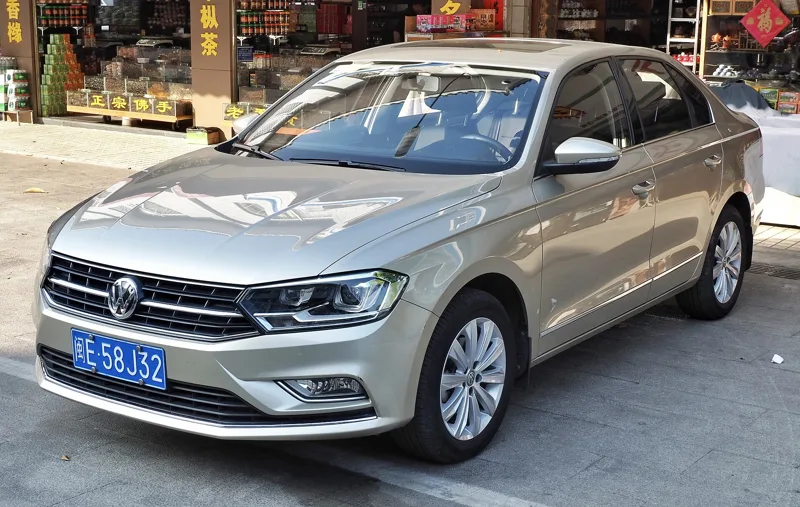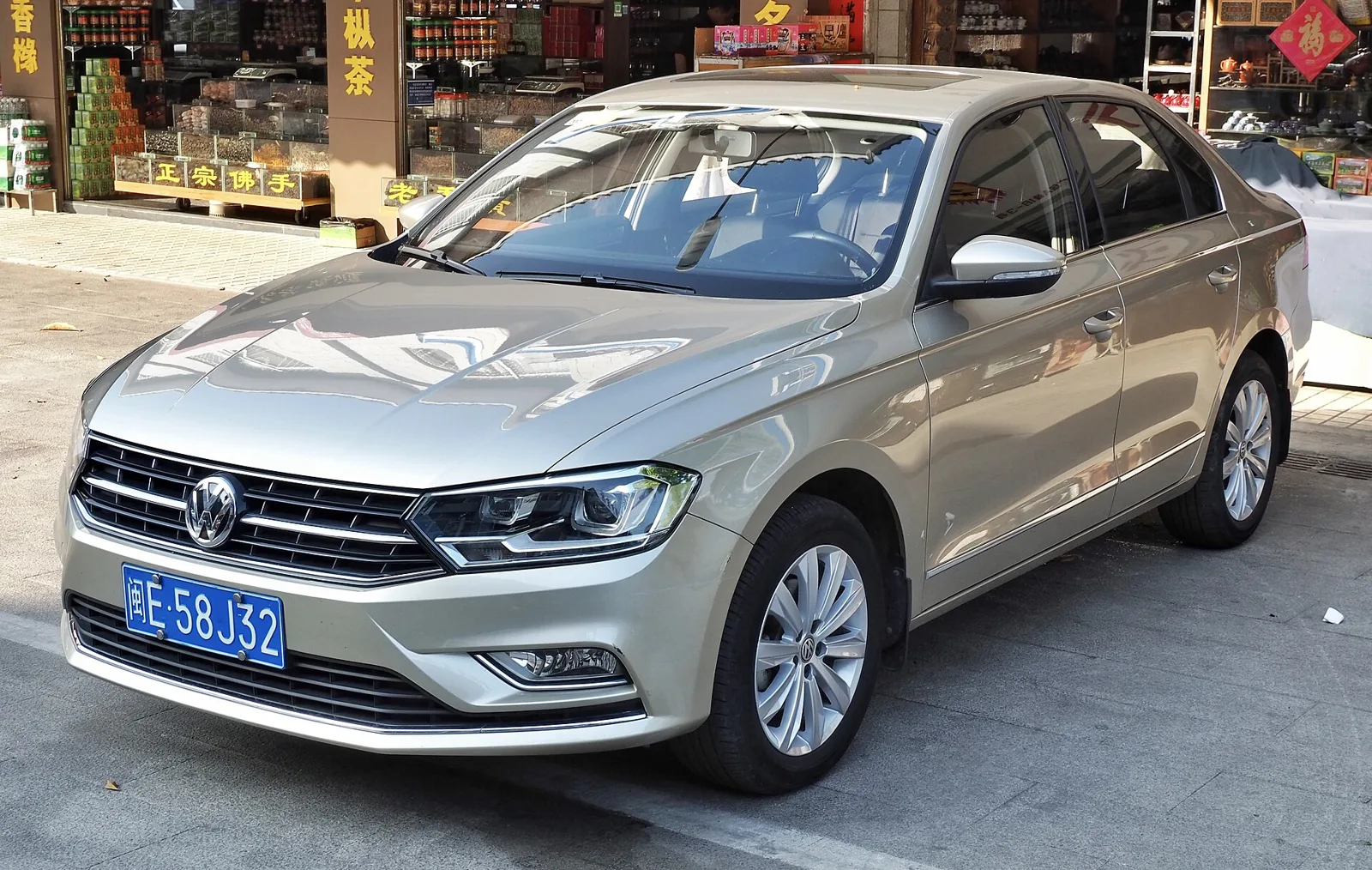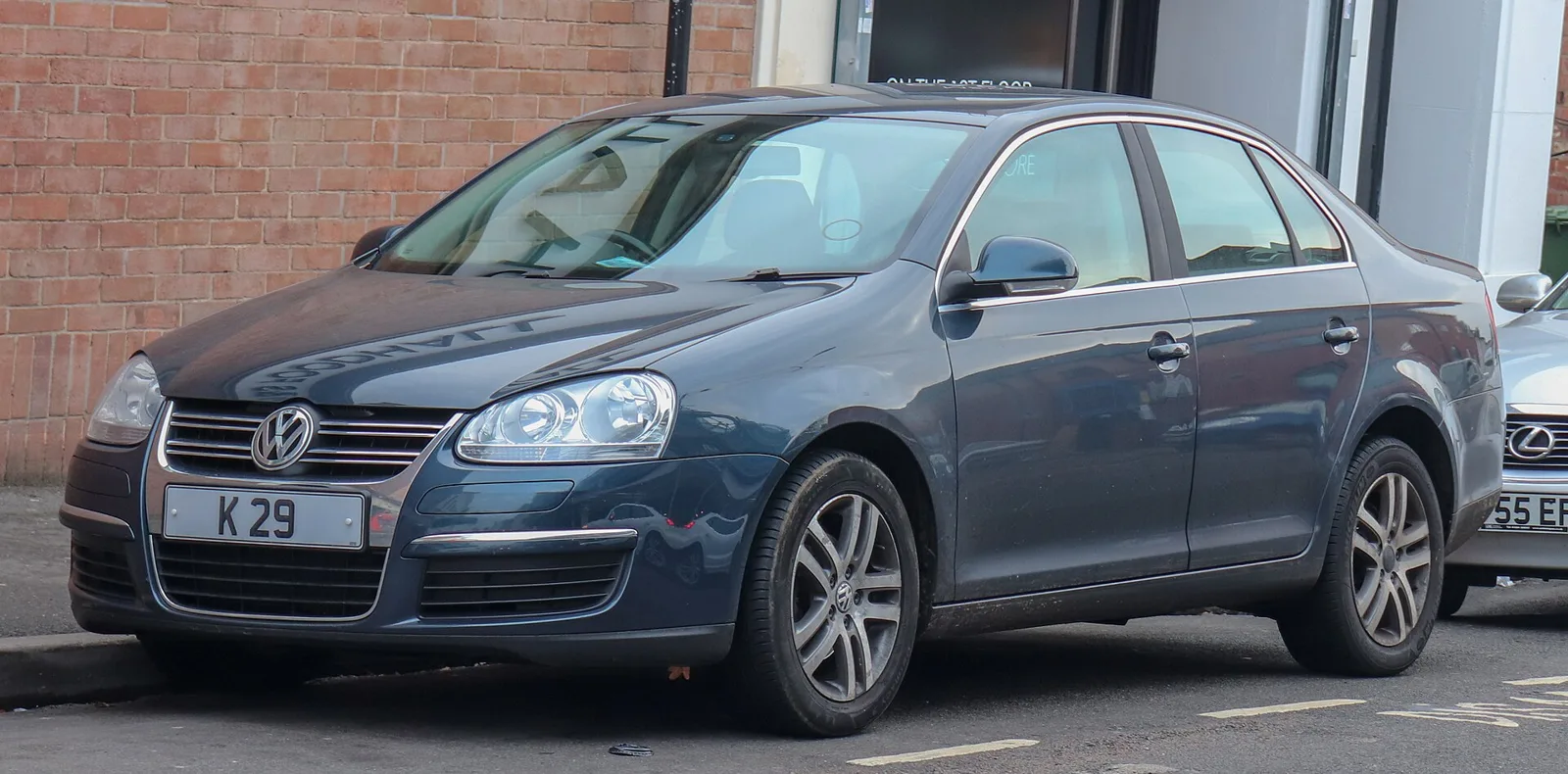
A Golf Mk5-based sedan with a new multi-link rear end, a Mexican plant built around it and a 2010 TDI Cup special.
Volkswagen's fifth-generation Jetta, known as the A5 or Mk5, was a sedan derived from the Golf Mk5 and built between 2005 and 2010. It introduced a multi-link rear suspension to the model, offered five-cylinder and 1.4-litre engines, and closed out with a TDI Cup Street special of which only 1,501 were built.
Volkswagen unveiled the fifth-generation Jetta at the Los Angeles Auto Show on 5 January 2005, and the United States was the first market to receive it. The Jetta A5, also called the Mk5, was a three-box sedan built on the Golf Mk5, and it wore several different names around the world.
The car also marked a shift in Volkswagen's styling, with a new chrome grille and a multi-link rear suspension that the Jetta had never carried before. Both changes were visible from the moment the car was shown.
Where did the Jetta A5 come from?
The fifth-generation Jetta, codenamed 1K, succeeded the Bora and was built from 2005 to 2010, and until 2011 in China. Volkswagen sold it as the Bora in Mexico and Colombia, the Vento in Argentina, Chile and Uruguay, and the Sagitar in China.
It was only the second Volkswagen to premiere at an American auto show, after the New Beetle. The United States also received the Mk5 sedan before any other country, which reflected how much the car mattered to the brand in that market.
Styling was a clear break from the past. A chrome front grille first seen on the Golf Mk5 R32 spread to other models, and critics split over the result. Some liked it, while others said it was no less bland than the fourth generation.
A Golf Mk5 sedan with a multi-link rear, a US-first launch and more than 42 hours of factory work per car.
How much bigger was the Jetta A5 than its predecessor?
The A5 was 170 mm (6.7 in) longer and 30 mm (1.2 in) wider than the car it replaced, and its wheelbase grew by 70 mm (2.8 in). Rear legroom gained 65 mm (2.6 in), and luggage volume reached 453 L.
Interior room rose from 2.46 to 2.58 cubic metres. The extra space was most noticeable at the back, where reviewers said the fourth generation had felt cramped.
Volkswagen used high-strength steel and laser welding on 35% of the body parts. The result was double-digit gains in both dynamic and torsional rigidity.
Two safety touches stood out. The front bumper was designed to yield slightly in a collision with a pedestrian, which reduces the risk of injury, and a new door design let the outer panel alone be replaced if damaged, instead of the whole door.
Why was the rear suspension such a big change?
The Jetta A5 introduced the first multi-link independent rear suspension fitted to a Jetta. Its layout resembled the one used on the Ford Focus, and Volkswagen reportedly hired Ford engineers who had designed that Focus suspension.
The switch to a more complex independent rear suspension is blamed in part for the long assembly times discussed later in this piece. The car's engineers had to fit a more involved arrangement into the same production process.
Electrics were redesigned as well. Control modules talked to one another over Controller Area Network (CAN) buses running at 500 kilobits per second, which cut the number of wires needed and the scope for faults.
Lighting followed the same logic. In most markets the rear lights used LEDs, and cars with halogen headlamps carried a VW logo inside the bulb shield. North American cars used standard filament bulbs of a different design to comply with FMVSS 108.
Volkswagen also set its own motor oil quality standard, and only oil meeting it kept full warranty cover.
What safety equipment did the Jetta A5 carry?
Safety kit included curtain airbags for the sides, rear side airbags built into the seats, electronic stability control with traction limiting and brake assist, and active head restraints. In IIHS crash testing it earned overall Good ratings in the front offset and side impact tests, and in 2006 it won a Top Safety Pick award.
The side impact result stood out. The Jetta earned Good marks in all nine measured categories, and in 2005 the Institute said its side impact protection was the best it had ever rated.
Volkswagen built a television campaign around the tagline Safe happens. The adverts showed cars in collisions, with the occupants shown emerging unhurt. In China the car received the maximum five stars in NCAP crash tests.
Which engines did the Jetta A5 offer?
Engines depended on the market. Europe received a range of Fuel Stratified Injection petrol engines, plus a 1.4-litre Twincharger that combined turbocharging and supercharging, while the Americas and Middle East got a 2.5-litre five-cylinder in most trims.
The five-cylinder had 20 valves and shared its cylinder head design with the V10 that powered the Lamborghini Gallardo and Audi R8.
For model year 2009, certain markets dropped the 2.0-litre four and its six-speed automatic in favour of a smaller 1.4-litre turbocharged four with a six-speed DSG, the same gearbox fitted to the new Golf Mk5. The change made the car more powerful and more economical at the same time.
Power rose 7%, from 110 to 118 kW (148 to 158 hp; 150 to 160 PS), and torque was up 20%. Fuel use fell 17% for the manual, from 8.2 to 6.8 L/100 km, and 23% for the automatic, from 8.6 to 6.6 L/100 km.
Acceleration improved too. The manual's 0-100 km/h (0-62 mph) time dropped from 9.2 seconds to 8.5 seconds, an 8% gain, and the automatic fell from 9.9 seconds to the same 8.5 seconds, a 14% gain.
Why was the TDI absent from some US states?
The TDI diesel was not offered in five US states when the Mk5 arrived, because of the tight emission standards set by the California Air Resources Board. Four other states had also adopted the stricter California standards.
Where it was sold, the TDI sat in the least restrictive emission category. That category was removed in 2007, leaving the diesel Jetta unavailable for more than a year until a new common-rail diesel arrived in August 2008, after a delay of about six months caused by technical problems with its emissions control system.
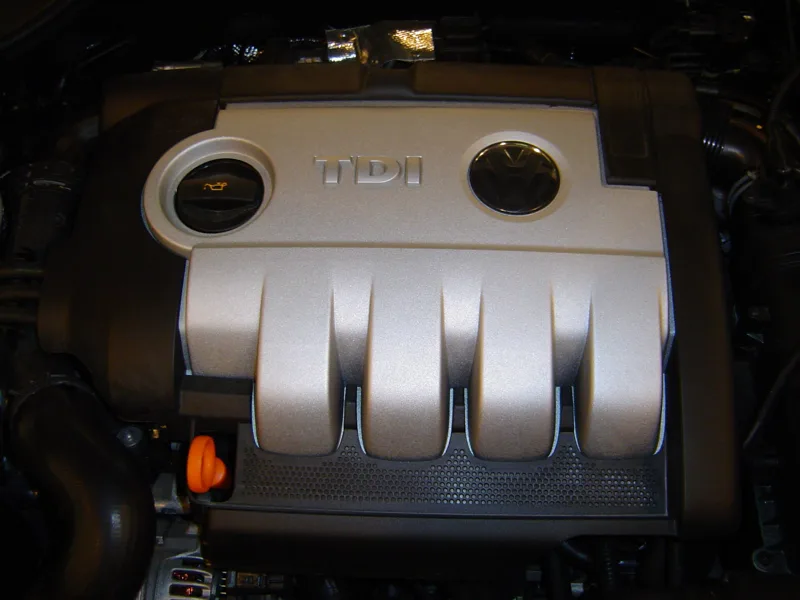
The TDI Clean Diesel was rated 103 kW (138 hp; 140 PS). It used a diesel particulate filter and a NOx-storage catalyst rather than AdBlue, which removed the need for urea fluid and the upkeep that goes with it.
That combination let it qualify as Tier II Bin 5, the equivalent of California's LEV II rating, so it could be sold in all 50 US states. A 2015 finding showed that this engine's emissions had been falsified, a fact that now forms part of the car's record.
Why did US regulators look at the 2009 Jetta TDI?
In August 2010 the National Highway Traffic Safety Administration was reported to be investigating 37,889 2009 Jetta TDIs over a stalling problem. Owners said their cars went into limp-home mode and then stalled almost at once while being driven.
Motor Trend reported separate complaints about early failure of the high-pressure fuel pump.
How did reviewers rate the Jetta A5 on the road?
Reviewers found the ride firm and well controlled, though less forgiving than the previous generation. Handling was the car's strongest point, with quick, precise steering and minimal body roll from its MacPherson strut front suspension.
Fit and finish drew excellent marks, and the car felt upscale. Reviewers liked the firm front seats, and the back row offered far more room than the fourth generation had.
Some reviewers thought the redesign had cost the car some of its character. Controls and displays were decent, but critics noted they could fall apart and short out with age.
The Sportline models, known as the GLI in North America, won the warmest reception. They came with sport seats, a firmer suspension that sat 15 mm (0.59 in) lower, and tyres with low sidewalls, and the 2.0 Turbo FSI engine won praise for its power, smooth running and low fuel consumption.
Independent reviews also placed the car among the strongest for resale value, alongside its hatchback relatives.
How long did a Jetta A5 take to build?
The Mk5 still took more than 42 hours to assemble at the factory in Mexico, even after improvements over the fourth generation. Part of the delay was blamed on the switch to the more complex independent rear suspension, and Volkswagen said publicly that it wanted to streamline the next A-platform cars.
In the meantime Volkswagen de Mexico brought in outside help, consulting experts from Toyota and other Japanese companies. Lean manufacturing principles were applied with a goal of raising factory productivity by 30% or more.
Where was the Jetta A5 built?
Most cars were made in Puebla, Mexico, which had the largest production volumes. China and South Africa assembled the car from complete knock-down kits shipped from Puebla, and local assembly in Kaluga, Russia, started in early 2008.
India followed in 2008 at the Skoda factory in Aurangabad, which also used knock-down kits from Volkswagen de Mexico.
Puebla received a major upgrade for the car. Volkswagen spent US$800 million on the facilities, including a US$290 million line for the five-cylinder engine, a US$50 million investment in the press shop and US$200 million for 460 robots, which lifted automation by 80%.
What was the 2010 Jetta TDI Cup Street edition?
The 2010 Jetta TDI Cup Street edition commemorated the 2008-plus TDI Cup race series and marked the last year of the Mk5. It was built on the TDI Clean Diesel sedan, so it kept that car's diesel engine and basic layout. Only 1,501 were built worldwide, with 588 manual cars and 913 DSG cars.
The car kept the TDI engine at 104 kW (139 hp; 141 PS) and 325 Nm (240 lb ft) of torque. The package added GLI brakes, suspension and sway bars, 18-inch wheels with Pirelli P-Zero or Yokohama ADVAN sport tyres, and a short shifter.
Inside, the car had an Interlagos cloth trim with heated sport seats, a leather-wrapped steering wheel, aluminium pedals, faux carbon fibre inlays and a black interior. Buyers could pick a six-speed manual or the DSG with paddle shifters, and the Thunderbunny body kit was optional on this edition only.
The concept debuted at the 2008 SEMA Show, and production cars reached showrooms in January 2010. The starting price was US$24,990 before destination fees and options.
Volkswagen Jetta A5 specifications
| Specification | Detail |
|---|---|
| Codename | 1K (A5 or Mk5) |
| Built | 2005 to 2010, and up to 2011 in China |
| Debut | 5 January 2005, Los Angeles Auto Show |
| Length | 170 mm (6.7 in) longer than the previous Jetta |
| Wheelbase | 70 mm (2.8 in) longer than the previous Jetta |
| Rear legroom | 65 mm (2.6 in) more than the fourth generation |
| Luggage | 453 L |
| Five-cylinder | 2.5-litre, 20-valve, Americas and Middle East |
| Twincharger | 1.4-litre petrol, turbo and supercharger, Europe |
| 2009 base engine | 1.4-litre turbo four, 118 kW (158 hp; 160 PS), six-speed DSG |
| TDI Clean Diesel | 103 kW (138 hp; 140 PS) |
| Manual fuel use, 2009 | 6.8 L/100 km, down from 8.2 L/100 km |
| Automatic fuel use, 2009 | 6.6 L/100 km, down from 8.6 L/100 km |
| 0-100 km/h (0-62 mph), 2009 | 8.5 seconds for both manual and automatic |
| TDI Cup Street | 104 kW (139 hp; 141 PS), 325 Nm (240 lb ft), 1,501 built |