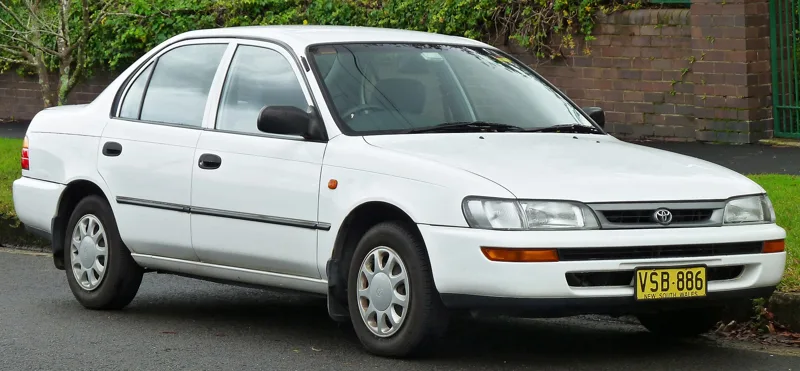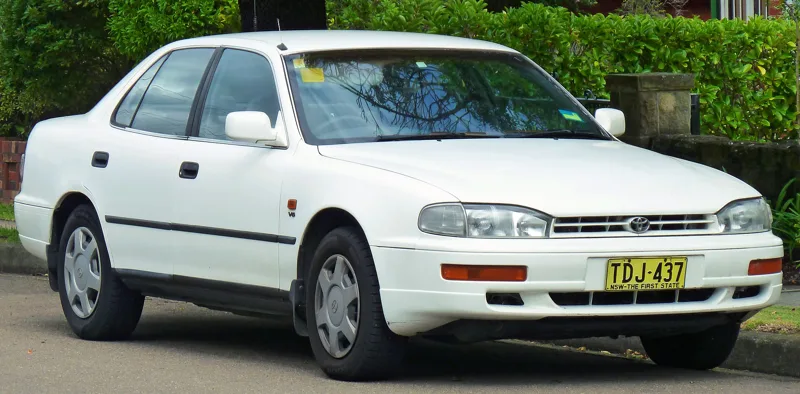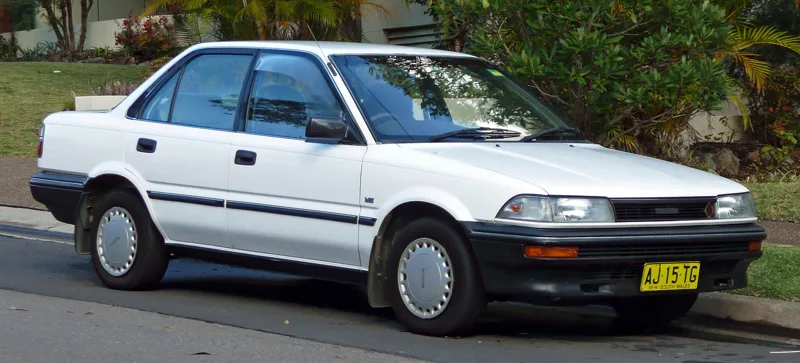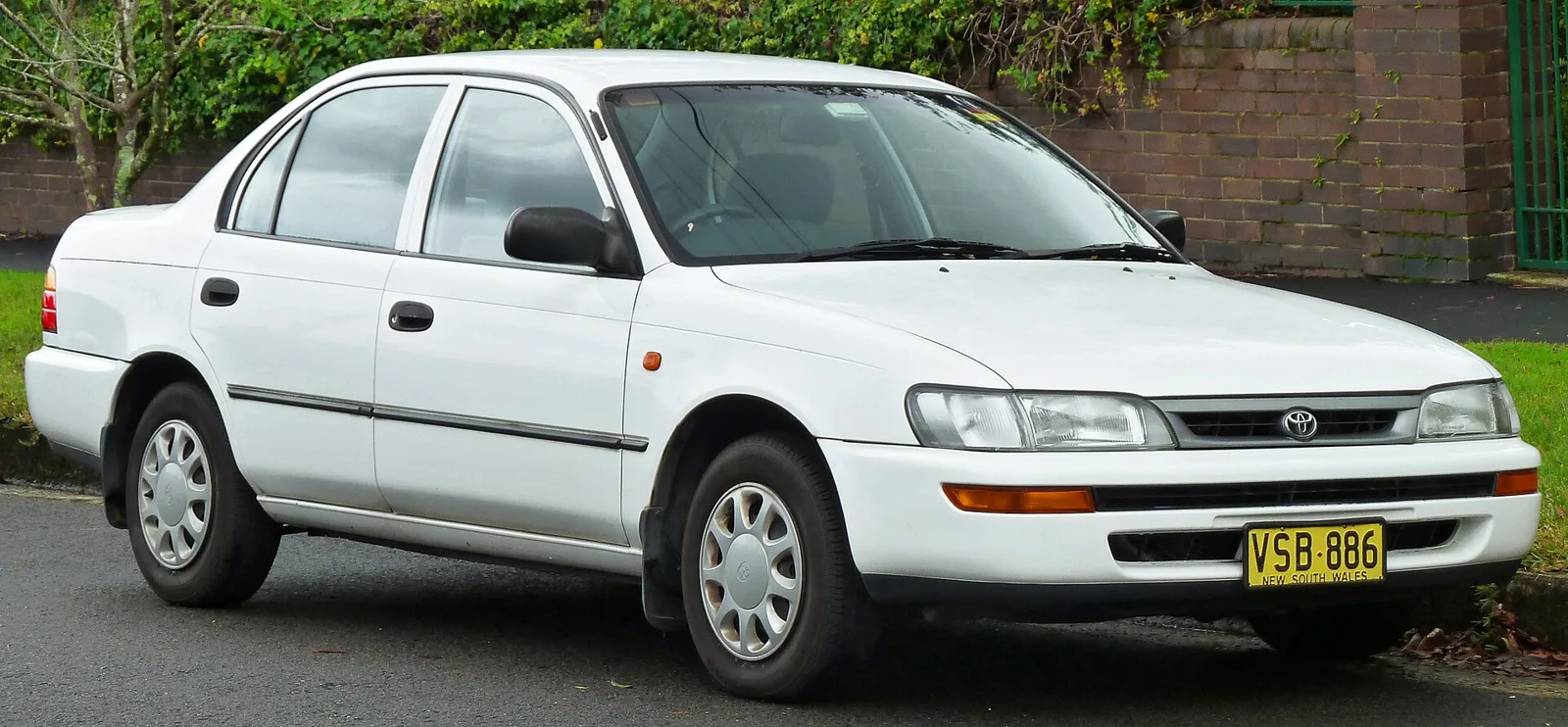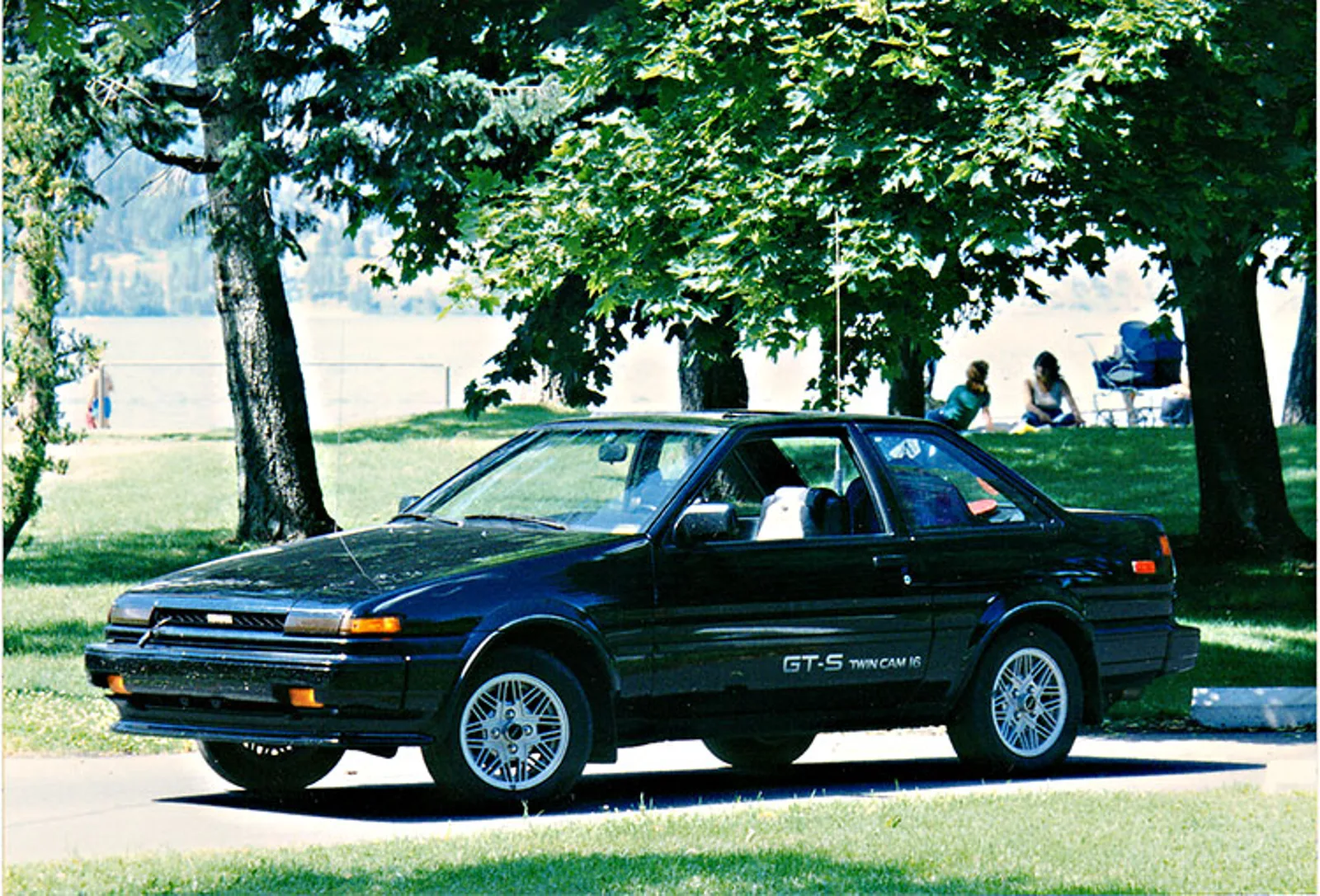
A 1983 to 1987 Corolla Levin and Sprinter Trueno with a 1,587 cc twin-cam engine, whose racing record and anime fame made it a cult classic.
The Toyota AE86 was a rear-drive Corolla coupe and liftback built from 1983 to 1987. Its 4A-GEU twin-cam engine, light weight and balance made it a racing and drifting favourite, and its fame grew through the Initial D series.
The Toyota AE86 is the rear-drive version of the fifth generation Corolla, built from 1983 to 1987 as the Corolla Levin and Sprinter Trueno. It was the last Corolla to send power to the rear wheels, and its light weight and balance made it a favourite with racers and, later, drifters. Decades on, it remains one of the best-known small Toyotas ever built.
What is the Toyota AE86?
The AE86 is a compact coupe or liftback from the E80 Corolla family, with a front engine and rear-wheel drive. Toyota sold it in Japan as the Corolla Levin or Sprinter Trueno and exported it as the Corolla. Japanese enthusiasts call it Hachi-Roku, which translates as Eight-Six.
The chassis code tells the story. The A refers to the engine series, E8 to the generation and 6 to the variant within it. Its siblings included the AE85, which used a smaller 1.5-litre engine, and the front-drive AE82 with the same 1.6-litre unit.
A light, rear-driven Corolla whose racing record and anime fame turned it into a cult classic.
Where do the Levin and Trueno names come from?
Trueno comes from the Spanish word for thunder, while Levin takes its name from the Middle English word for lightning. The Trueno had retractable headlights and the Levin fixed ones, and both were sold as hatchbacks or coupes. Export buyers saw the car simply as a Corolla.
The model is split into two periods. Cars marketed from 1983 to 1985 are known as zenki, or early period, and those from 1986 to 1987 are kouki, the latter period. A May 1985 facelift changed the taillights, alloy wheels, bumpers and grilles.
How was the AE86 put together?
The car sat on the rear-drive E70 Corolla platform, which shares its wheelbase and many parts with that earlier design. It used MacPherson strut front suspension and a four-link live rear axle with coil springs. Weight was split close to 50/50 between the front and rear wheels.
Depending on the market, the car came with a T50 five-speed manual gearbox, and a four-speed automatic was also offered, and the twin-cam version could be ordered with a limited-slip differential, but only with the manual gearbox.
Which engines did the AE86 use?
In Japan the AE86 used the naturally aspirated 4A-GEU, a 1,587 cc DOHC unit with four valves per cylinder and 9.4:1 compression. It produced 96 kW (128 hp; 130 PS) and 149 N-m of torque, helped by Denso electronic port injection and T-VIS variable intake geometry.
North American cars used the 4A-GEC to meet California emissions rules, rated at 84 kW (112 hp; 114 PS). The cheaper SOHC 4A-C was rated at 70 to 74 hp. European cars carried the 4A-GE with 10.0:1 compression, producing 124 PS (122 hp; 91 kW) in DIN form.
Lower-spec Japanese cars used the AE85 with the smaller 1.5-litre 3A-U engine, but they shared the rear-drive platform and much of the body with the AE86. Twin-cam models gained ventilated front discs, while single-cam cars kept solid front discs and rear drums. The MacPherson strut front end and the live rear axle stayed the same across all of them.
What trims and body styles did the AE86 come in?
Japanese buyers chose from GT APEX, GTV and GT, all with the 4A-GEU. The GT APEX sat at the top with brown-tinted glass, a three-spoke wheel and sport seats, while the GTV was a three-door with 14-inch steel wheels. The GT was the base two-door and the lightest of the range, at about 900 kg (1,984 lb).
GT APEX buyers could add a limited-slip differential, cruise control, power windows, a power sunroof, automatic air conditioning and an Alpine sound system. A digital instrument cluster was standard on the zenki liftback, and a factory aero sports package became available after September 1983.
The GTV came as a three-door with two-tone paint, air conditioning, power steering, power mirrors, a power sunroof and rear wipers available as options. The base GT could be ordered with air conditioning, power steering, power mirrors and rear defrost, and automatic transmission was available on Kouki GT models only.
North America sold the car as the Corolla Sport. The DX and SR5 came first with the SOHC 4A-C, and the DOHC GT-S arrived in August 1984. North American models carried bumpers rated to 5 mph (8 km/h).
Were there special editions of the AE86?
Yes. Toyota marketed a 1986 Black Limited, built in a run of 400 units and based on the kouki GT APEX liftback. In early 1987 a soft-top convertible also appeared, produced in small numbers by a Toyota dealer in Tokyo and priced well above the top Trueno.
Several models also carried sports options from the zenki period, including an aero kit and a leather-wrapped steering wheel.
How did the AE86 perform in motorsport?
The car was a fixture in Showroom Stock, Group A and Group N events. It competed in the under-2.0-litre class, mostly in the 1401 to 1600 cc A6 and N2 classes. Privateer teams kept racing it long after production ended, and it remains a club and rally favourite.
In Europe the car raced in Division 1 of the European Touring Car Championship from 1984 to 1988. Its chief opponents were the Volkswagen Golf GTi and the Audi 80 GLE. In 1986 the AE86 helped win the manufacturers' title with 267 points, beating BMW entries in the process.
Rallying gave the car some of its best results. A privateer AE86 finished second in class at the 1984 Rally de Portugal, and the first class win came at the Acropolis Rally three rounds later. The best World Rally Championship placing was third overall at the 1989 Rallye Cote d'Ivoire.
Chris Hodgetts took the British Touring Car title in 1986 and again in 1987, driving an AE86 for Toyota (GB) and his own team. In Japan, Kaoru Hoshino of the Trampio Levin team took the 1985 Division 1 class crown and finished third overall.
In Ireland, where rally regulations are loose, the car was a favourite from the start and still is. Teams there buy cars from the UK and Japan to cover local shortages. In Finland the car competes in the F-Cup for naturally aspirated 2WD machines.
In Australia, Toyota Team Australia prepared AE86s that dominated the under-2.0-litre class in three championships between 1985 and 1986. The team took five class titles in total, John Smith took four of those titles, while Mike Quinn claimed the fifth at the 1986 Australian Endurance Championship. The AE86 also won Bathurst class races for the team in 1985, 1986 and 1988, and privateers running the local Sprinter liftback took class wins in 1987, 1990 and 1991.
Kraft, a semi-factory supported outfit, ran a spaceframe Trueno in the GT300 category of the JGTC in 1999, using a 3S-GTE engine from an MR2 Turbo. The car was abandoned in 2001 after it caught fire at Sugo, and Kraft replaced it with the new MR-S.
Why is the AE86 linked to drifting?
The rear-wheel-drive layout and light weight made the AE86 well suited to sliding through corners. Keiichi Tsuchiya, known as the Drift King, used the car to help popularise drifting, and it remains a staple of drift shows and competitions.
Japanese street racers, known as hashiriya, took the car to touge mountain passes, where its downhill handling suited the tight corners. Katsuhiro Ueo won the 2002 D1 Grand Prix series with an AE86, and other drifters from Japan helped build its reputation in the scene.
Modified examples now compete around the world in professional drifting, autocross, gymkhana, time attack, rallycross and hillclimbing.
How did Initial D make the AE86 famous?
The car is central to the Initial D manga and anime, which ran from 1995 to 2013. The lead character, Takumi Fujiwara, drives a Trueno GT APEX to make tofu deliveries and later to race. Rivals in the series drive other AE86 variants, including a turbocharged Levin and a notchback coupe.
The series pushed used prices up so far that fans call the premium the Takumi tax or tofu tax. The AE86 is also playable in the Initial D Arcade Stage series, and Road & Track described the car as a cult icon in 2015.
Did Toyota keep making AE86 parts?
In November 2021 Toyota restarted a small run of AE86 parts, and dealers can now order steering knuckle arms and rear brake calipers. Half shafts for the rear axle are also due to be remade. Toyota said the revival was temporary, and the parts would last only as long as stocks did.
Toyota Gazoo Racing and Lexus showed two converted AE86 liftbacks at the Tokyo Auto Salon in January 2023. The H2 car ran on hydrogen and used two high-pressure tanks from the Mirai, while the BEV car used an 18.1 kWh battery and a motor from the Tundra Hybrid.
Where was the AE86 built?
Toyota built the AE86 at its Kanto Higashi-Fuji plant, now closed, and at the Takaoka plant. More than 360,000 cars are estimated to have been built, and Takaoka produced most of them, including the exports.
Higashi-Fuji accounted for only 28% of AE86s, and all of those went to Japan. Its serial numbers began with a 5, while Takaoka cars began with a 0.
What are the AE86's key specifications?
| Specification | Detail |
|---|---|
| Production | 1983 to 1987 |
| Drive layout | Front engine, rear-wheel drive |
| Japanese engine | 4A-GEU, 1,587 cc DOHC, 9.4:1 compression |
| Japanese output | 130 PS (128 hp; 96 kW), 149 N-m torque |
| North American GT-S | 4A-GEC, 112 hp (114 PS; 84 kW), 132 N-m torque |
| North American SR5 and DX | 4A-C SOHC, 70 to 74 hp |
| European twin-cam | 4A-GE, 10.0:1 compression, 124 PS (122 hp; 91 kW) |
| Gearbox | T50 five-speed manual; optional four-speed automatic in some markets |
| Front suspension | MacPherson strut |
| Rear axle | Four-link live axle with coil springs |
| Lightest model | GT, about 900 kg (1,984 lb) |
| Total built | Over 360,000 estimated |