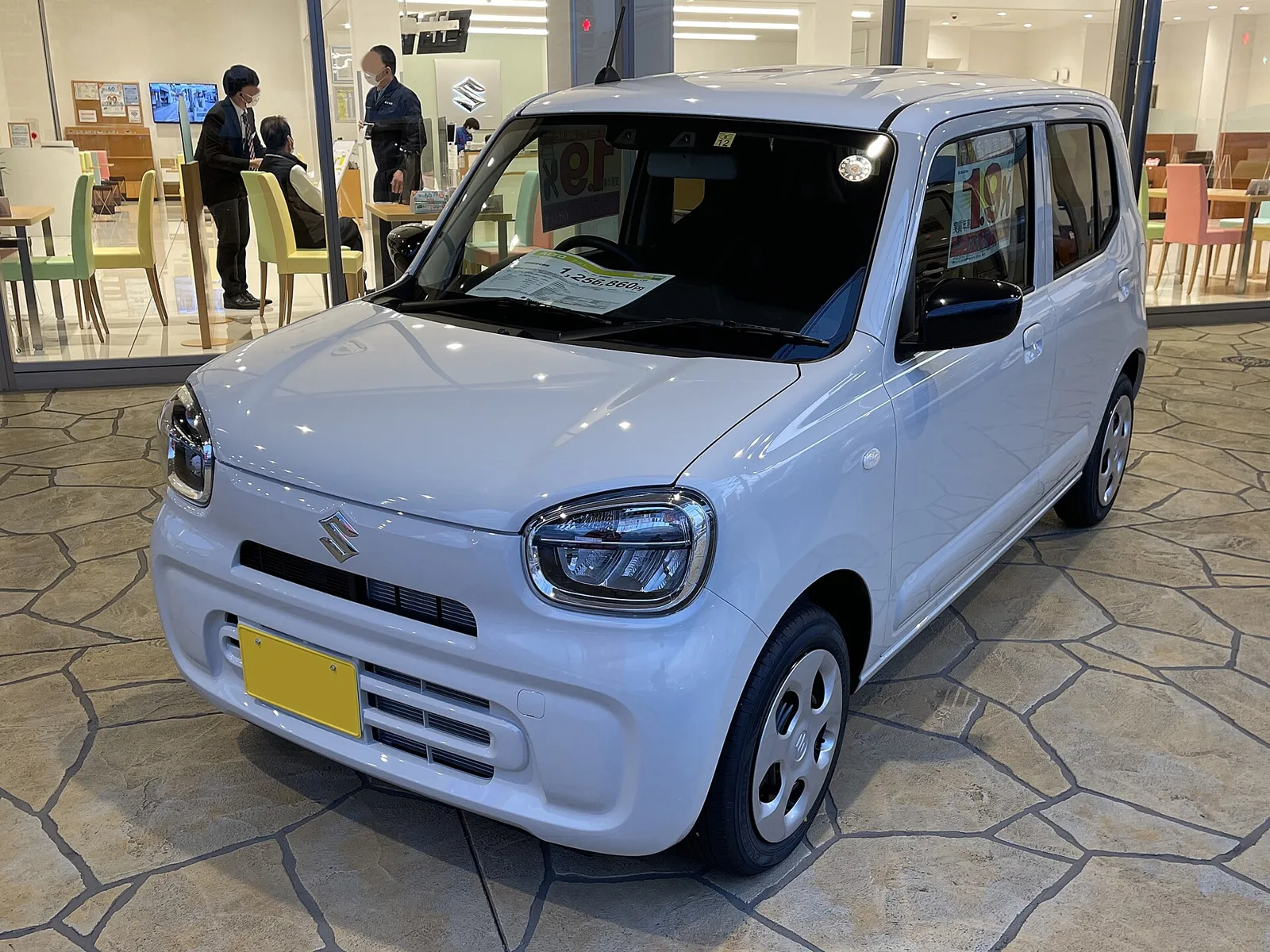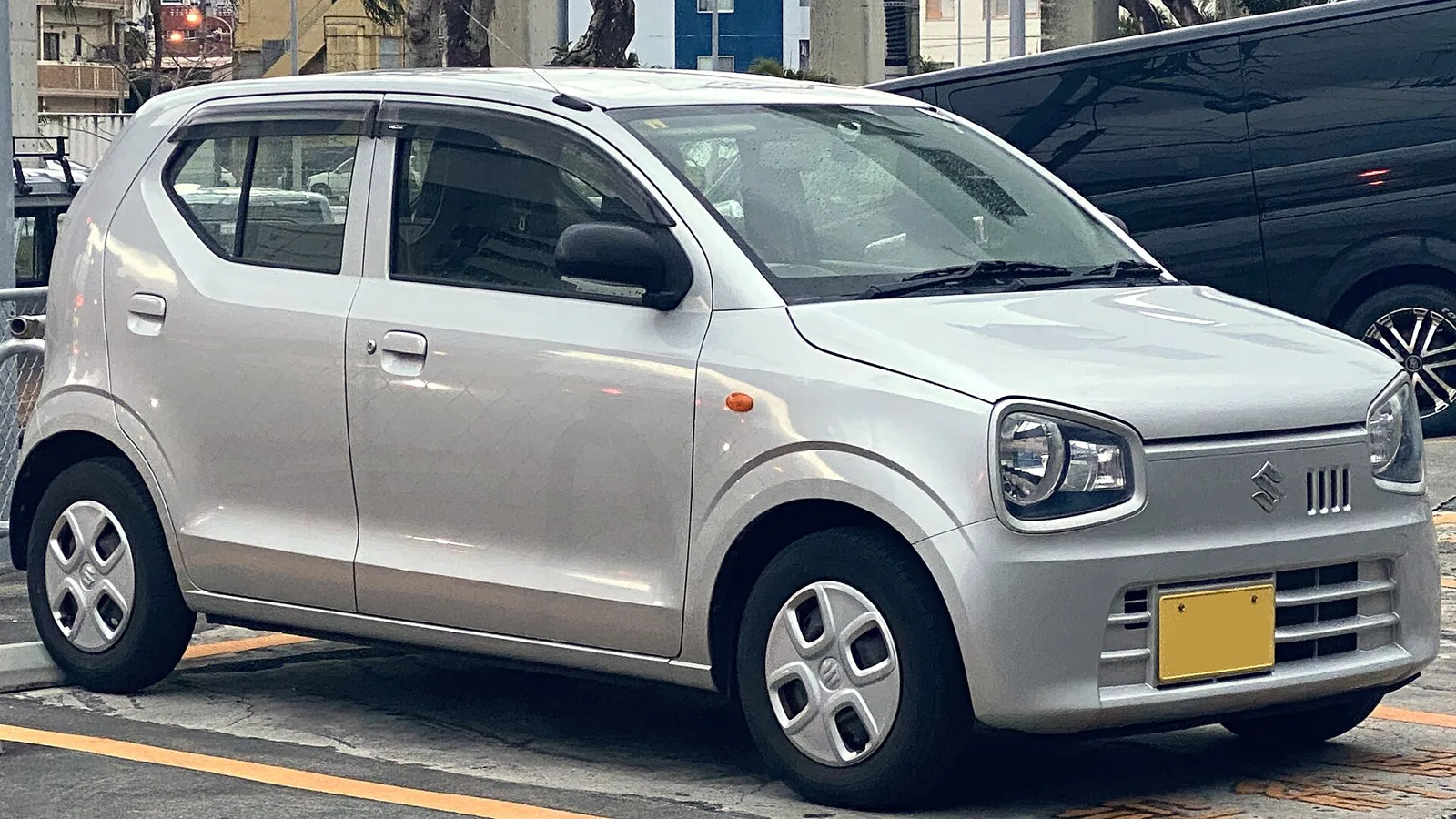
Suzuki's eighth-generation kei car, built around a 650 kg kerb weight target, 37.0 km/L fuel economy and a platform that later took the HEARTECT name.
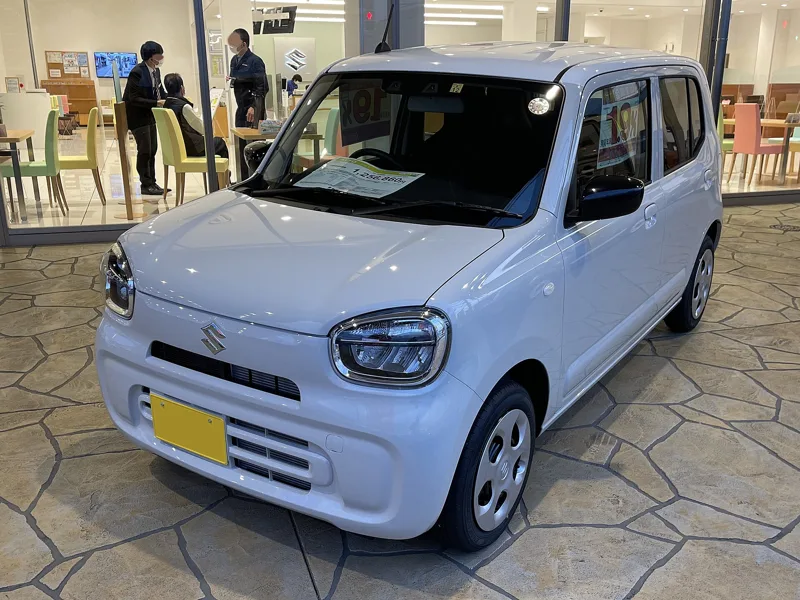
The Suzuki Alto HA36 is an eighth-generation hatchback kei car sold from December 2014. It was built as a sedan and a van, targeting a 650 kg kerb weight and 37.0 km/L fuel economy, with the turbocharged Turbo RS and Works versions added later.
Suzuki's HA36 Alto went on sale in December 2014 as a deliberate return to the simplicity of the first Alto, and its 37.0 km/L fuel economy was the best of any production car. Japanese production ended in November 2021, yet the model still builds in Pakistan for local customers.
Where did the HA36 Alto come from?
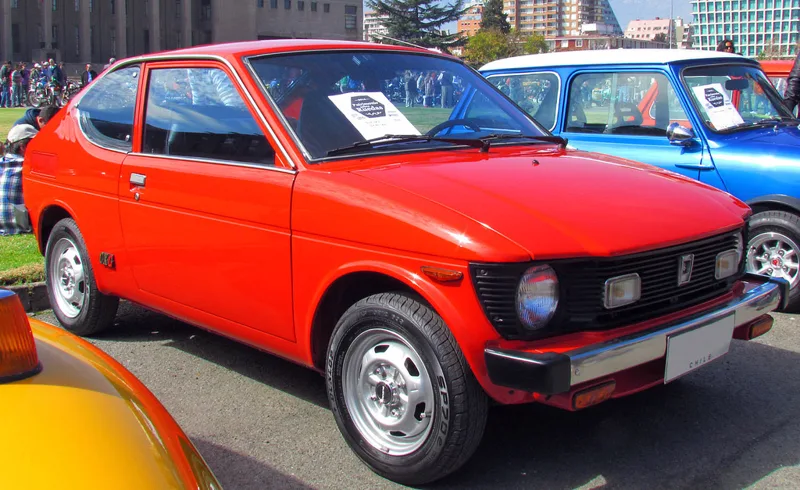
The HA36 was a deliberate return to the first Alto, which had sold well at a 470,000 yen price. Suzuki wanted the new car to be simple, light and efficient, and its chief designer said the makers of the first Alto had inspired the shape.
The sixth and seventh generations had been aimed strongly at women, and Suzuki needed new buyers to close the gap with its rivals. The eighth generation was therefore styled to suit men and women alike, without targeting one particular group.
Development set two numerical goals from the start: a kerb weight of 650 kg (1,433 lb) and a fuel economy figure that would top every production car. Both goals shaped the platform and the body.
Two numbers set the brief from the start: 650 kg and 37.0 km/L, the best figure among production cars.
How much fuel did the eighth generation save?
Front-wheel-drive CVT cars of the eighth-generation Alto reached 37.0 km/L in JC08 mode. That was 2.0 km/L better than the final Alto Eco at 35.0 km/L. A government survey carried out after the fuel economy measurement scandal recorded 38.3 km/L.
The Alto was sold on a low price, so the mild hybrid S-Enecharge system was left out. The Alto Eco, a seventh-generation model built to compete with the Daihatsu Mira e:S, was discontinued and absorbed into the Alto range.
The five-speed AGS, a robotised manual, was the first of its kind in a Suzuki passenger car. In AGS form the official JC08 figure and the economy drivers see on real roads almost match, as the e-nenpi real-world figures show.
How did the engines and gearboxes change?
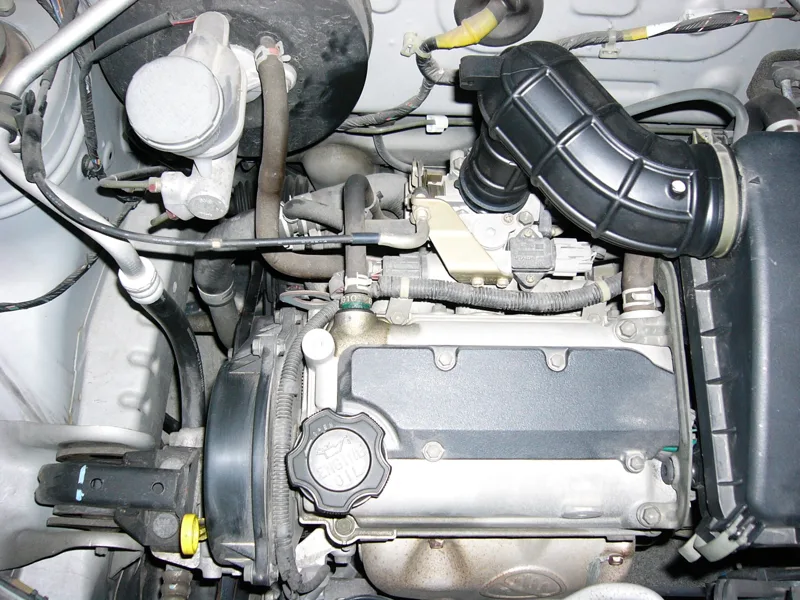
The in-line three-cylinder R06A kept its designation, but its cylinder head was redesigned as a single unit with the exhaust manifold, and its compression ratio rose from 11.2 to 11.5. External EGR was added, which improved fuel economy and raised low and mid-range torque without changing the peak figures.
The Turbo RS uses a turbocharger designed for low and mid-range response, and its maximum torque is 3 N m higher than the earlier turbo engine. Turbo lag improved by 20%. Its five-speed AGS is the only transmission offered, with gear ratios specific to the turbo engine.
The Works goes further with tuned engine control, lifting maximum torque by a further 2 N m to 100 N m (74 lb ft). Its five-speed manual has closer first-to-fourth ratios and a short-stroke shifter, and the clutch is calibrated so that torque builds in step with pedal travel.
Manual and van models dropped variable valve timing to save cost, which lowers their output and torque. The Works AGS and the Turbo RS both have a manual mode, which can be used from the shift lever or the steering wheel paddles.
Why did the platform and suspension change?
The new platform was Suzuki's fifth-generation kei car structure, drawn from scratch so that weakened joints from carried-over parts no longer added weight. It later took the name HEARTECT and was planned for other Suzuki models and for A-segment cars.
Suzuki had used the Isolated Trailing Link, or I.T.L., rear suspension on its kei cars for about 30 years. Front-wheel-drive versions now switch to a coupled-beam torsion beam, which suited the weight, cost and space goals. Four-wheel-drive cars keep the three-link I.T.L. layout.
The steel body uses 980 MPa-class high-tensile steel for 16% of its structure, which allowed thinner panels to keep their strength. Body shell weight fell by about 15%, while bending and torsional stiffness each rose by roughly 30%.
The front suspension keeps MacPherson struts, but its travel grew by 15% at the front and 26% at the rear. The Turbo RS and Works have dedicated KYB dampers, and the Turbo RS also has a strut tower bar and 28 extra spot welds. Compared with the previous model, the redesign cut 60 kg (132 lb).
Two details stand apart from the rest of the chassis. The steering uses variable gear ratio steering, a first for a kei car, and the front doors have an intermediate two-stage stopper that narrows the opening of the first stage.
How did safety equipment develop?
Radar brake support, a first for the Alto, arrived with a function to suppress sudden starts and an emergency stop signal. Over time these moved onto more grades, and the radar-equipped van became the first commercial vehicle to qualify as an ASV.
ESP was adopted on the Alto for the first time and fitted as standard on all sedans, including the Turbo RS and Works. The van also has four-wheel ABS and ESP as standard, and four-wheel ABS had never been available as an option. Every sedan also gained a passenger seatbelt reminder, where previously only the driver's seat had one.
In December 2018 passenger models gained a dual-sensor brake support that pairs a laser radar with a monocular camera. Lane departure warning, a drowsiness warning, a preceding-car start alert and high-beam assist were added, and four ultrasonic sensors in the rear bumper enabled reverse braking support.
A later change in July 2019 took the collision damage mitigation brake off the van, along with the sudden-start suppression and the emergency stop signal. Those items had been offered on the van before then.
What was the design aim?
Suzuki aimed for a design that would not target one buyer group, with a simple shape that looked back at the first Alto. The design finally chosen changed the image greatly, because its freshness was valued.
The headlamps were given a strong, eye-catching look, framed by a garnish called the megane garnish, modelled on spectacles. The Nikkan Kogyo Shimbun reported that Satoshi Wada was the designer, but Suzuki neither confirmed nor denied the report.
On the fenders, the side turn lamps on the F, L, S and van turned amber, the first time since the fourth generation that the kei-car-standard Alto had used that lens colour.
Inside, the team aimed to cut the number of parts for weight. The interior is deliberately plain, and the passenger tray that Suzuki models often carry was dropped, which widened the footwell. The front seats have integrated headrests, and every grade now gets a one-piece folding rear seat.
How much room does the Alto HA36 have?
The wheelbase grew by 60 mm to 2,460 mm (96.9 in) by shortening the overhangs, and the interior length rose by 145 mm to 2,040 mm. The distance between front and rear occupants is 900 mm, 85 mm more than before.
Overall height came down by 45 mm to help fuel economy through better aerodynamics. Designers had feared that this would cost interior space, but the lower height was judged better for the proportions. Seat heights rose by 20 mm at the front and 5 mm at the rear to make getting in and out easier.
Which grades and gearboxes were offered?
Seven grades were offered: the VP van, F, L, S, X, Turbo RS and Works. Front-wheel and four-wheel drive were available on every grade, and the L, S and X used a CVT, while the Turbo RS was AGS only.
The VP, F and Works could be had with a five-speed manual or five-speed AGS, though the four-wheel-drive VP had no manual option. The L, S and X all came with a CVT.
Equipment rises through the range. The L adds Eco Cool, rear power windows and an idling stop system, the S adds power-folding remote mirrors and rear headrests, and the X adds keyless push-start and fully automatic air conditioning.
The Turbo RS and Works come with discharge headlamps, paddle shifters and a tachometer, and their audio is deleted. The Turbo RS has a passenger seatback pocket, while the Works shows boost pressure on a gauge that turns from white to red as boost builds.
The VP van is the basic model: manual windows, an AM/FM radio with speakers, a spare tyre and centre caps. Dealers also offer a genuine audio replacement garnish for 200 mm wide DIN-size navigation, Suzuki's third model to get one, which allows a 200 mm wide unit to be fitted whether Suzuki-branded or aftermarket.
What colours could buyers choose?
Eight body colours were offered, including Pure Red and Chiffon Ivory Metallic, and the white shade depended on the grade. The Turbo RS came in three colours, and the Works had four, including a dedicated Steel Silver Metallic.
The white shade depends on the grade. The F, L and S use Superior White, the X, Turbo RS and Works use Pearl White, and the van is offered only in Superior White, the same as the grades below the S.
In December 2016 Suzuki marked its brand passing 5 million cumulative domestic sales, excluding the Alto Lapin, with three special colours for the L and S, a first for a Suzuki car. They were French Mint Pearl Metallic, Coffret Pink Pearl Metallic and Fawn Beige Metallic, and sales of them ended in May 2017.
The X had an optional two-tone back door, which was dropped in December 2018. In the same update the Works lost Pure Red in favour of Brisk Blue Metallic, a colour already used on other models.
Where is the Alto still built?
Production for Japan ended on 26 November 2021, but Pak Suzuki Motor Company continued building the car in Pakistan. Production near Karachi began in 2019 with the 660 cc specification unchanged, and it made the Alto the first kei car knocked down overseas.
In August 2026 Suzuki exported kei cars for the first time from a knock-down production country, and sales began in Brunei through the local distributor Boustead. Mazda had sold the sedan on an OEM basis as the seventh-generation Carol, the HB36S.
Suzuki Alto HA36 specifications
| Item | Detail |
|---|---|
| Launch | 22 December 2014 |
| Body | Hatchback kei car; sedan HA36S, van HA36V |
| Engine | R06A in-line three-cylinder |
| Transmissions | CVT, five-speed manual and five-speed AGS, by grade |
| Fuel economy | 37.0 km/L (JC08 mode); 38.3 km/L in the government survey |
| Kerb weight target | 650 kg (1,433 lb) |
| Wheelbase | 2,460 mm (96.9 in), 60 mm longer than before |
| Interior length | 2,040 mm, 145 mm longer |
| Turbo RS torque | 3 N m above the earlier turbo engine |
| Works torque | 100 N m (74 lb ft) |
| Tyres | 165/55R15 on X, Turbo RS and Works; 145/80R13 on the rest |
| Japanese production ended | 26 November 2021 |
What is the Works badge history?
The Works name was used from the second generation to the early fifth generation, then went unused until it returned in December 2015. The Turbo RS took the turbo role without the badge, because it was aimed at a wider group of buyers than the Works.