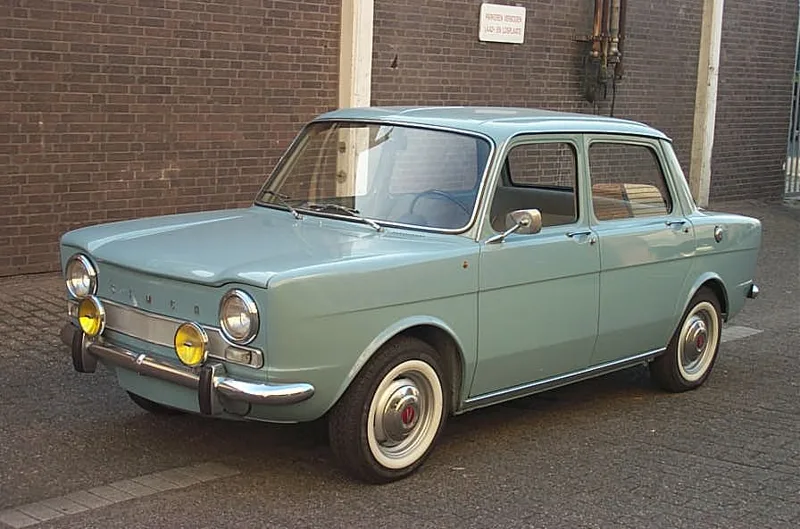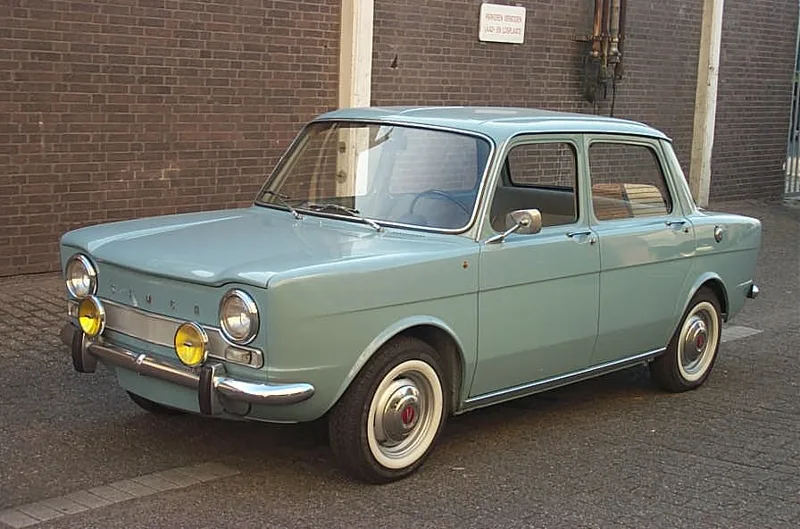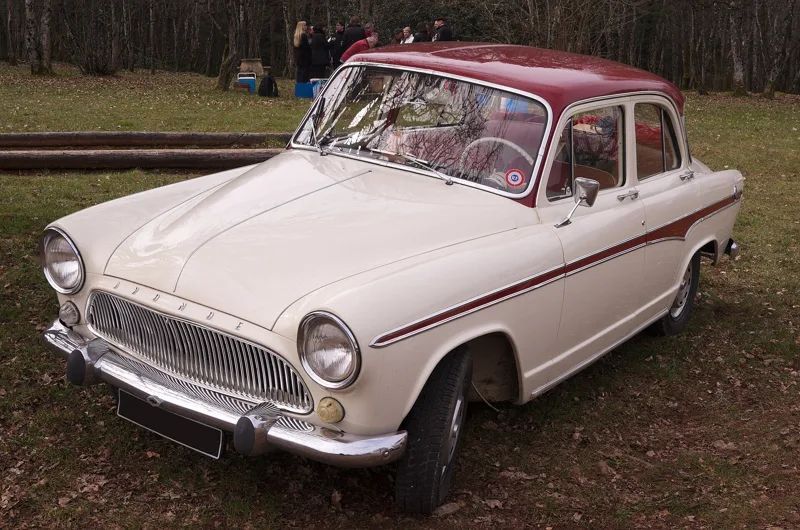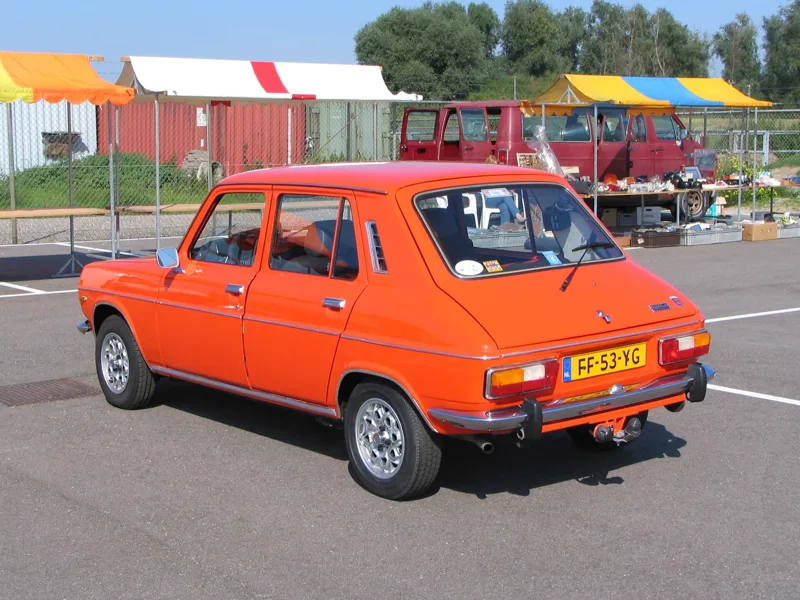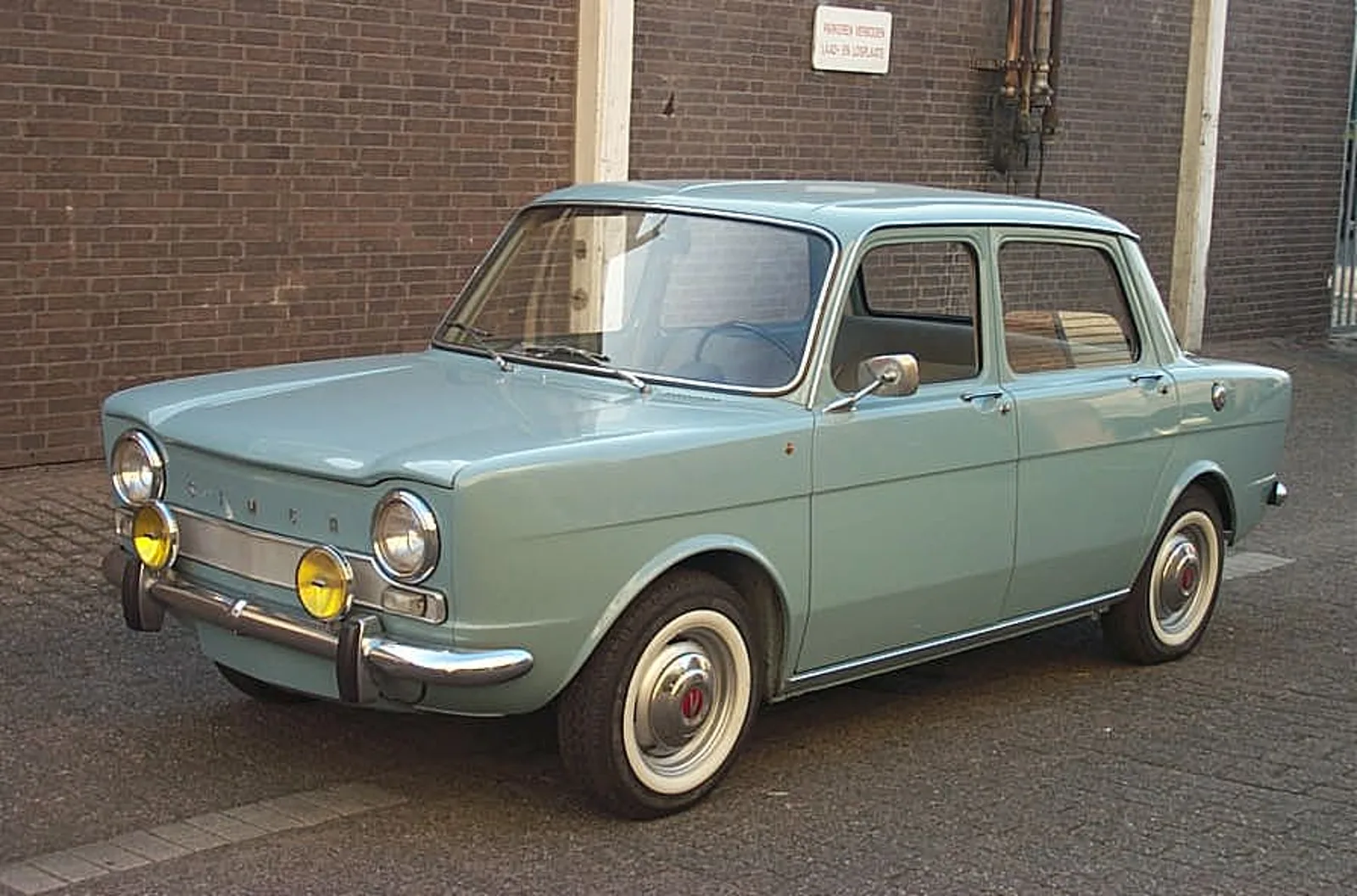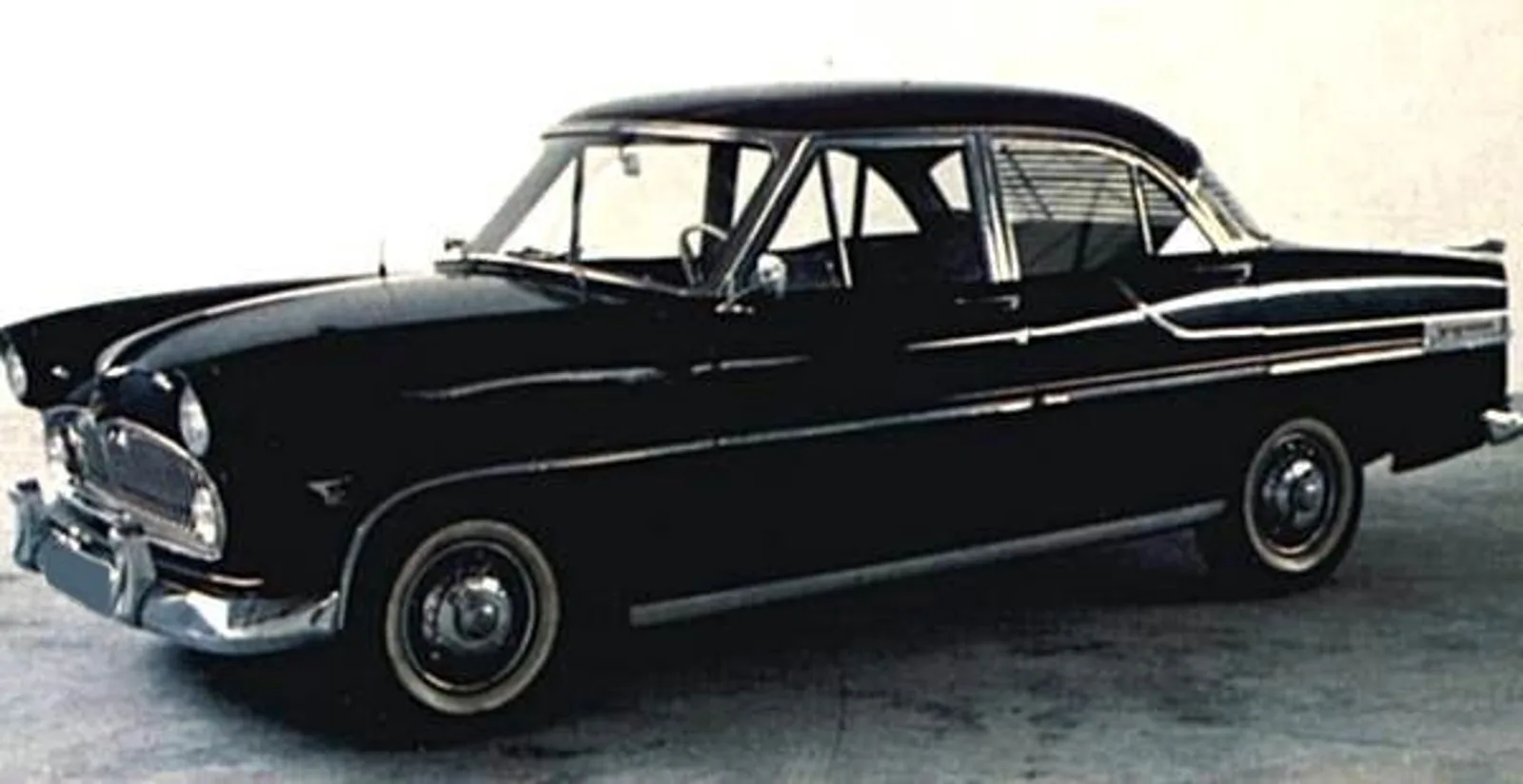
A large American-styled saloon taken over from Ford in 1954, the Vedette gave Simca a V8 flagship in France and kept production going in Brazil until 1966.
The Simca Vedette was a French executive car built by Simca at Poissy from 1954 to 1961. It began as a Ford design, used a 2351 cc V8 in its first generation, and kept going in Brazil until the Esplanada replaced it in 1966.
The Simca Vedette was a large executive car that Simca built at Poissy, near Paris, from 1954 to 1961. Its roots lay in a Ford design, and its American-style body and V8 engine kept it at the top of the Simca range, with Brazil carrying the model on until 1966.
Where did the Simca Vedette come from?
The Vedette was a Ford product that Simca took over. Ford wanted to sell its French subsidiary, Ford SAF, and Henri Theodore Pigozzi bought the Poissy plant and the model line in July 1954. The purchase suited Simca, since the Vedette was larger than anything in its own range.
Simca's first Vedettes were displayed at the Paris Motor Show, held in October 1954, at the Ford France display. The brochures played down the Ford connection, with the name turning up a single time, in tiny lettering on the last page. Formal control passed to Simca on 1 December 1954.
Some export markets took longer to drop the Ford name. At the Brussels show in January 1955, the Vedettes stood beside cars from Ford of Britain, on the display of the Belgian importer.
A Ford design taken over at Poissy that became Simca's flagship and then a long-running Brazilian V8.
How was the first-generation Vedette built?
The first-generation Vedette was powered by a 2351 cc sidevalve V8 known as the Aquilon, which made 75 hp (55 kW). That capacity placed the car in the 13 CV French tax class, and a three-speed manual with a column shift sent power to a live rear axle.
A two-barrel Zenith-Stromberg 32NX carburettor fed the engine. Independent front suspension used MacPherson struts, and drum brakes were fitted all round. The V8 was a development of Ford's Flathead engine family, which made it unusually small for a car of its size.
Simca named the trim levels after the grand period of French baroque history. The entry Trianon sat beneath the Versailles, while the Regence topped the range. An optional Vistadome panel, a large glass roof that slid into the body, was available on every version.
Simca updated the car every year in the American manner. The 1956 model added the Marly estate, a pedal-operated windscreen washer and a second odometer. Armrests were added to the Versailles and Regence, and in 1957 buyers could order the Gravina automatic clutch, with V8 badges on the Regence and Marly.
Output at Poissy climbed sharply. Ford had turned out around 150 cars a day, and Simca pushed that figure to 250. Even so, annual volume fell from 42,439 in 1955 and 44,836 in 1956 to 17,875 in 1957, as the car approached its first major change.
What changed in the second-generation Vedette?
After three years, the Vedette received a longer body with a more ornate front and large tailfins, and its output rose to 84 hp (62 kW) as the Aquilon 84. The Versailles became the Beaulieu and the Regence became the Chambord, while the estate kept the Marly name.
The new bodywork followed a wider European fashion for tailfins, which could be seen on Peugeot, Fiat, BMC and Mercedes-Benz cars of the period.
The 1959 range gained the Presidence, a luxury flagship with a radiotelephone, a continental kit and an upholstered interior. Automatic transmission arrived the same year as the Rush-Matic, which offered a fully automatic mode or manual selection by the driver.
Coachbuilder Chapron made special cars for officials. It produced two two-door Presidence convertibles for a governor of a French colony, then two four-door convertibles for President Charles de Gaulle the following year.
The 1961 cars received new seats, fresh chrome trim and a new anti-vibration crankshaft.
When did French production of the Vedette end?
French production of the V8 cars ended in the summer of 1961, after 173,288 had been built. Output had dropped to 28,142 in 1958, 15,966 in 1959, 13,914 in 1960 and just 3,813 in 1961 as the model neared its end.
The Ariane, the four-cylinder car that used the old body, continued until 1963 and sold 166,363 units. It was fitted with the 1.3 litre Aronde engine from April 1957, so the old body gained a new lease of life.
Even so, a Chambord appeared at the October 1961 Paris show, a sign that Simca still had stock to clear. Simca's return to European luxury came only in 1970, when the Chrysler 160, 180 and 2 Litre models began production.
How did the Vedette live on in Brazil?
Brazil kept the Vedette in production for much longer. Simca do Brasil built the first Chambord in March 1959, and the car was the first V8-engined vehicle made in Brazil. Early cars relied on French parts. Production ended when the Esplanada arrived in November 1966.
Brazilian cars were refined over time. Power rose from the standard 84 hp (62 kW) V8 to 100 hp (74 kW) in the Tufao, then to 140 hp (103 kW) in the Emi-Sul, which took its name from its hemispherical combustion chambers.
Local content grew steadily. The Chambord began with parts imported from France, but by 1961 98% of its parts were Brazilian, and an improved 90 hp (66 kW) engine with 15% more torque arrived. By 1966 the more powerful Chambords produced 130 hp (96 kW), could sprint from 0 to 100 km/h in 14.3 seconds and could reach 160 km/h (99 mph) at the top.
Brazilian production totals show how the range was split. The Chambord family, including the Profissional, reached 42,910 cars. The Presidence accounted for 848, the Rallye for 3,992, the Jangada station wagon for 2,705 and the Alvorada for 378.
- Chambord, including the Profissional: 42,910 built up to 1966
- Presidence: 848 units
- Rallye: 3,992 units
- Jangada station wagon, based on the Marly: 2,705 units
- Alvorada: 378 units
- Total Brazilian production: 50,833 vehicles
What was the Simca Alvorada?
The Alvorada was a stripped-down Chambord built in 1963 after the Brazilian government required every manufacturer to offer a cheap basic car. Simca do Brasil named it after the presidential palace in Brasilia, and only 378 were built in the two years it was offered.
The Alvorada came in only two colours, with no chrome, no trim and a very plain interior. Simca do Brasil was unhappy with the idea, since the brand had built a luxury image it wanted to protect, but it produced the car anyway.
In 1965 the Profissional replaced it. A new government financing scheme through the state bank Caixa Economica Federal let buyers pay over four years at 1% a month. The Profissional was 30 percent cheaper than the Chambord, achieved by removing trim, the oil cooler and even the glovebox lid, and it was discontinued in 1966.
Why does the Vedette still matter?
The Vedette matters because it started as a Ford product and became one of Simca's most important cars, while also giving the company a foothold in Brazil. Its history runs from a V8 flagship in France to a stripped-down Brazilian taxi car.
Vedettes also reached Australia. Chrysler Australia said in July 1959 it planned to assemble and sell Simca models there, and it built the Vedette Beaulieu until 1962 using imported and locally made components.