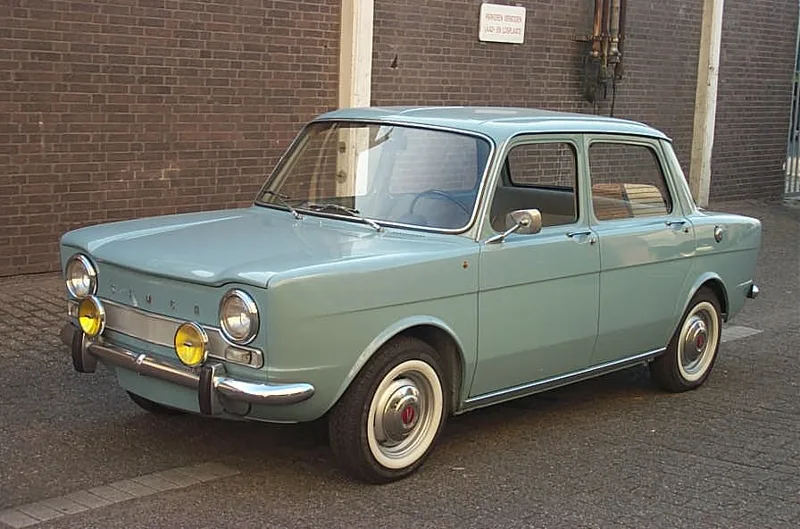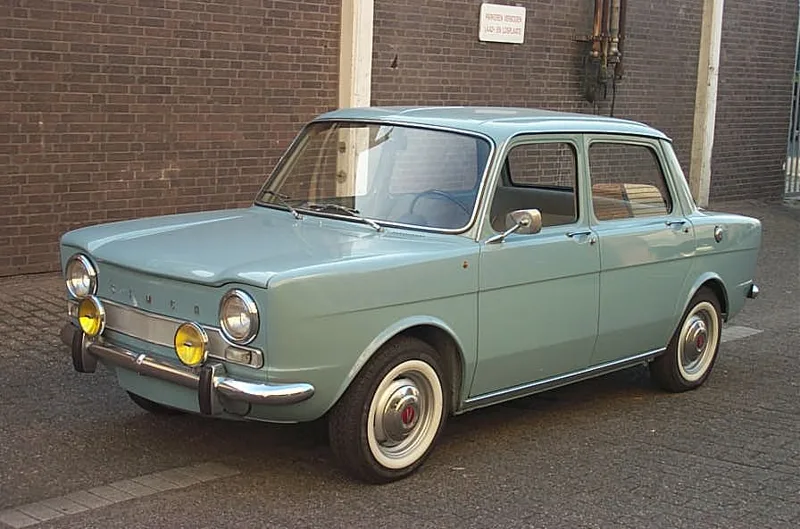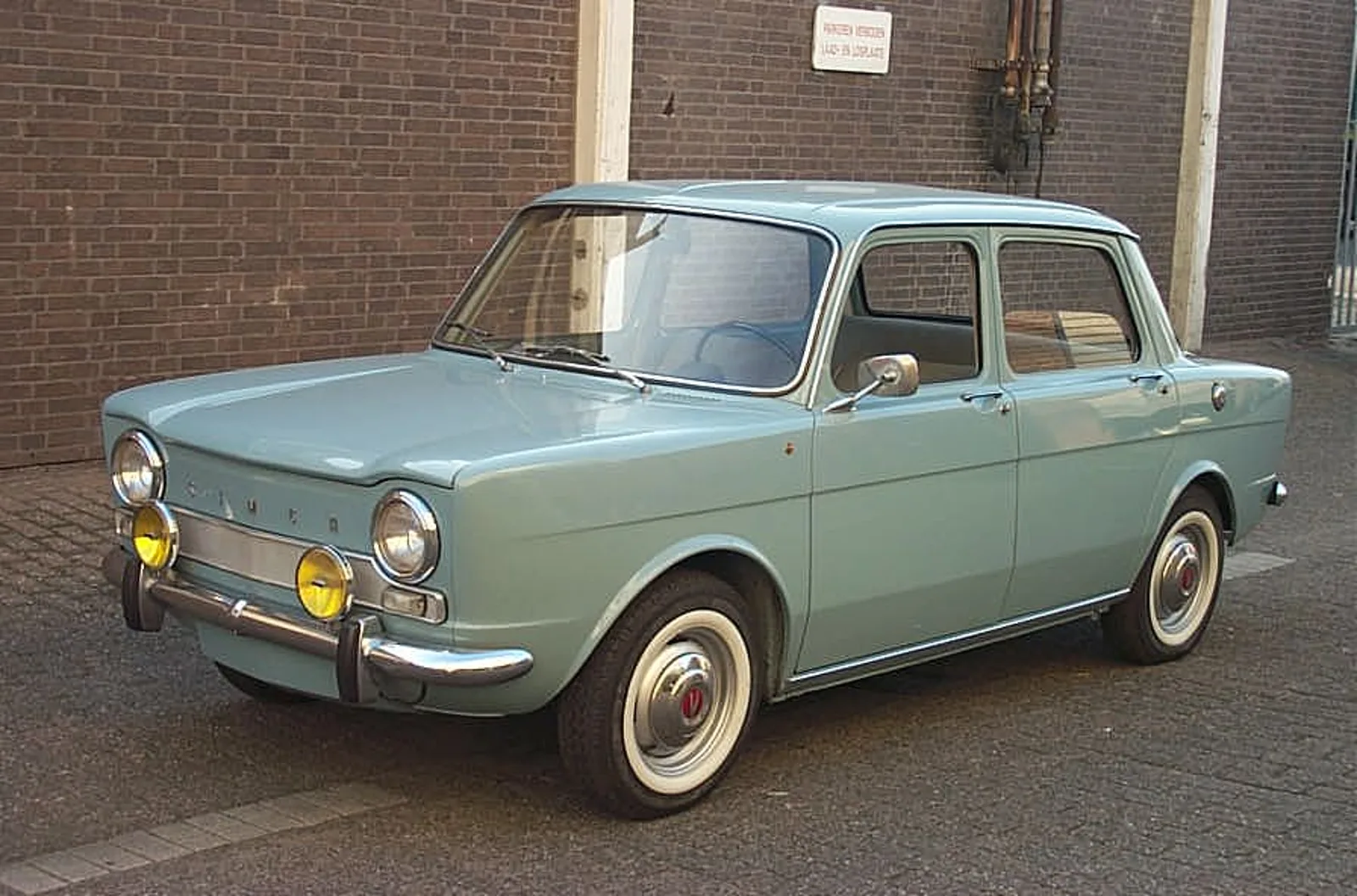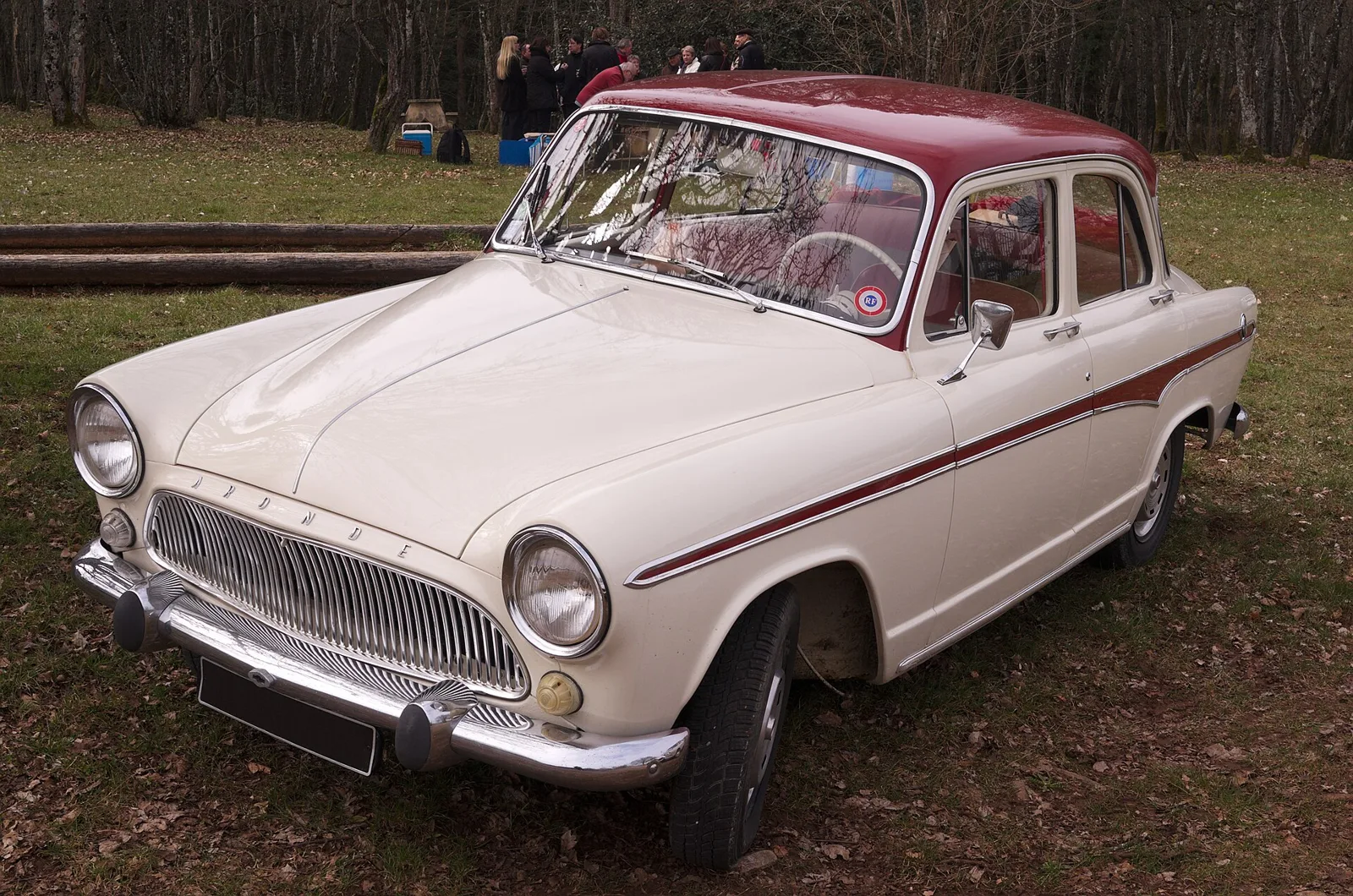
Simca's first original design and first unibody car, built in three generations from 1951 to 1964, with record runs, Facel-bodied sports models and an Australian chapter.
The Simca Aronde was a French family car built by Simca from 1951 to 1964, in three generations. It was Simca's first original design and its first unibody car, and it helped lift Simca to become the second-biggest French automaker by the end of the 1950s.
The Simca Aronde was a French car that carried the Simca name from 1951 until 1964. Its three generations, the 9 Aronde, 90A and P60, sold in very large numbers and helped turn Simca into a major manufacturer. The swallow-inspired name and the company's first unibody construction marked a clean break from the Fiat-based cars that came before.
Where did the Aronde come from?
The Aronde was Simca's first original design, replacing models that had largely been based on Fiats. It was also the company's first unibody car. The name means swallow in Old French, a nod to the swallow on Simca's logo of the time, and the model's success helped Simca grow into a major maker.
The first Aronde appeared in the spring of 1951, but only a few hundred pre-production cars reached selected 'guinea-pig' buyers. The full production version was finalised in time for the Paris Motor Show and went on sale in October 1951. A moulded plastic dashboard gave it a modern look against the metal dash of its main rival, the Peugeot 203.
Refinements followed quickly. Early in 1952 engineers found room to move the battery under the bonnet, because the earliest cars had carried it beneath the front seat. The change is a small detail, but it shows how the car was still being sorted out during its first year on sale.
Simca's first original design, built in three generations and sold in about 1.4 million examples.
How was the first Aronde engineered?
The 9 Aronde used a front-mounted 1221 cc engine borrowed from the Simca 8, fed by a Solex 32 carburettor and driving the rear wheels through a four-speed manual gearbox. Its front suspension used coil springs, while the rear was a live axle on semi-elliptic leaf springs.
The engine was rated at 44.5 bhp (33.2 kW), and the gearbox had synchromesh on its top three ratios. Hydraulically operated drum brakes measuring 9.85 in (250 mm) were fitted at every corner.
Only the four-door saloon was offered at the October 1951 launch, so the chassis and running gear were shared across the early body styles that followed.
What body styles did the Aronde come in?
The launch model was a four-door saloon, but estates, vans and sporting coupes soon followed. The Aronde commerciale estate, later known as the Chatelaine, arrived with a horizontally split tailgate, and a van called the Messagere and a part-panel commerciale semi-vitree joined in 1953.
The coupe story belongs to Facel. The two-door coupe was coachbuilt by Facel, and for 1953 it was replaced by the Grand Large, a coupe on the saloon body with a three-piece wrap-around rear window. When both side windows were lowered, the car gained a pillarless look.
A cabriolet conversion by the coachbuilder Figoni was shown for the 1953 model year, complete with ballerinas at the display. Engineers could not give the car enough structural rigidity without an unacceptable cost and weight penalty, so the Figoni cabriolet never reached production.
How did the Quotidienne cut the price?
The Aronde Quotidienne arrived in January 1953 as a stripped version priced at 630,000 francs, a saving of 45,000 francs over the previous base model. The heater disappeared and most exterior trim went, although buyers could still pick from the full range of body colours.
The 1952 Motor Show had shown a broader trend, with several makers offering cut-price models to widen their ranges. Renault had started it with the 4CV Service, and Rosengart and Simca followed. Simca kept the chrome headlight surrounds, and the company was keen to point out that its car was less stripped than the Renault Fregate Affaires, which came only in black.
The 9 Aronde proved especially popular in France. Total production at the Nanterre plant passed 100,000 on 17 March 1953.
Did the Aronde break speed records?
Yes. Henri Pigozzi, the company's flamboyant boss, used record runs for publicity. In May 1952 an Aronde broke five international records over 50,000 km (31,000 mi), and in August 1953 another car, picked at random from the line, covered 100,000 km at Montlhery under ACF supervision.
The May 1952 run averaged 117 km/h (73 mph). The August 1953 attempt ran for forty days and forty nights at the Montlhery circuit, and the car completed 39,242 laps. That average exceeded 104 km/h (65 mph), and the effort involved breaking more than 30 international records.
How fast was the Aronde on the road?
Road tests give a clear picture of the range. A British magazine test carried out in France in 1951 recorded 73.9 mph (118.9 km/h) and 0-60 mph in 30.2 seconds, while a 1956 Elysee reached 82.6 mph (132.9 km/h) and covered 0-60 mph in 23.9 seconds.
The 1960 Montlhery model was tested as well, reaching 83.6 mph (134.5 km/h) and covering 0-60 mph in 19.6 seconds, a little quicker than the earlier Elysee. It also returned 35.0 mpg imp (8.1 L/100 km; 29.1 mpg-US), which beat the Elysee's economy.
Prices were noted too. The 1951 test car cost 970 francs on the French market, with the UK equivalent converted to 657 pounds. The 1956 Elysee cost 915 pounds including taxes in Britain, and the Montlhery cost 896 pounds there.
What did the 90A Aronde change?
The second generation debuted in October 1955 with the 1290 cc Flash engine, which gave 45 hp (34 kW) at 4,500 rpm or 48 hp (36 kW) at 4,800 rpm in the forms shown at the October motor show. The bodywork was updated for 1956 with restyled ends and a spare wheel moved under the boot floor.
The 1290 cc Flash unit kept the 75 mm (3.0 in) stroke of the older engine, while the bore grew to 74 mm (2.9 in). A raised compression ratio gave a small rise in claimed power. Moving the spare wheel under the floor freed a substantial amount of boot space.
New trim levels named Elysee and Montlhery appeared, the latter named after the Autodrome de Montlhery. The Commerciale and Messagere vans carried on, and the Chatelaine three-door estate and the Intendante pick-up were also offered.
In January 1957 the 500,000th Aronde was built, and the cars were by then being exported as far as the United States. That October brought two Facel-bodied two-seaters, the Oceane cabriolet and the Plein Ciel coupe.
What did the P60 Aronde introduce?
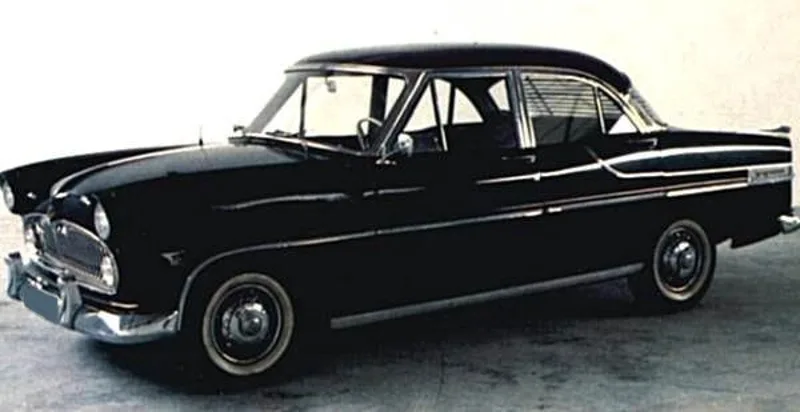
The P60 saloons arrived at the Paris Motor Show in October 1958 with a new modern body, while keeping the 2,440 mm (96.1 in) wheelbase. Under the skin the car changed little, but customers gained a wider choice of engines and many more model names.
The body still echoed the 1951 original in its central section, with a slightly lowered roof. Discreet tail fins and restyled rear lights were added, along with new headlights set either side of a larger grille.
The Elysee was a four-door saloon with 48.8 PS DIN (35.9 kW) and 51.5 PS SAE (37.9 kW). The Grand Large was a two-door hardtop coach panoramique with the same engine. The Montlhery saloon had a higher-compression 1290 cc engine producing 56.2 PS DIN (41 kW) and 60 PS SAE (44 kW), and the Monaco hardtop shared that engine. The Artisanale and Chatelaine estates made 45 PS SAE (33 kW).
Direct comparisons between the Elysee and the previous car found slightly less top-end performance, which was blamed on body changes that reduced aerodynamic efficiency. In 1960 a more luxurious estate, the Ranch, combined the new front end with the rear of the earlier estates, and its nose was said to resemble the 1957 Ford Thunderbird.
How did Simca widen the Aronde range?
Simca brought back the 1090 cc, 6CV engine for a cheaper car in 1958, the Aronde Deluxe Six, priced to rival the Renault Dauphine. Within the year the entry-level models received the P60 body too, and by 1960 the range had more names, including the Etoile six and Etoile sept.
The Deluxe Six was aggressively priced at 598,000 Francs, which let it compete with the Renault Dauphine, whose listed prices began at 594,500 Francs. The old body also survived in one model, the Deluxe sept, sold overseas as the Outremer, chiefly in Algeria.
By 1960 the entry-level Deluxe Six listed at 6,050 New Francs for a basic saloon, while the basic Dauphine remained under 6,000 New Francs. The Etoile six had more sophisticated rear suspension, and the Etoile sept used the 1290 cc engine.
From October 1960 a new five-bearing 1290 cc Rush engine appeared, with output ranging from 48 PS (35 kW) to 57 PS (42 kW). Higher-octane fuel and changes to the power measurement basis complicated the figures. A 70 PS (51 kW) version, the Rush Super M, debuted in September 1961 in the Montlhery Speciale saloon and the Monaco Speciale hardtop coupe.
Was the Aronde built in Australia?
Yes. Northern Star Engineering began assembling the 90A in Australia in 1956 from CKD kits, alongside Continental and General Distributors, using local content. Chrysler Australia moved production to Adelaide in July 1959, and the P60 followed in 1960. The Australian run ended in 1964.
The five-door P60 station wagon arrived in late 1961. It was unique to Australia, built on the four-door sedan with an extended roof and a tailgate fitted with a wind-down window.
At the start of 1964 the sedan retailed at 999 pounds including taxes, while the station wagon cost 1,109 pounds. Those prices show where the car sat in the Australian market at the end of its run.
What was the Simca Sport?
The Simca Sport was a two-seater sports car that began as a coupe version of the Simca 8 and later shared its wheelbase and engine with the Aronde. It became a monocoque hardtop in 1952 and was bodied by Facel from 1953, until it was withdrawn in 1962.
The 1952 monocoque car came only as a two-seater hardtop, because the monocoque body could not match the rigidity needed for a cabriolet. The three-window 9 Sport arrived in April 1952 and lasted less than a year before five-window Facel bodywork took over in 1953. Simca later renamed the best-equipped version the Coupe de Ville in the autumn of 1954.
The cabriolet, shown in October 1952, only reached production in the spring of 1955. The new generation at the 1956 Paris Motor Show had Facel bodies again, offered as a cabriolet or a hardtop with fashionable panoramic windscreens. Prices were high: the 1957 Plein Ciel was listed at 1,079,000 francs, against 595,000 francs for the Aronde.
In 1957 the cabriolet was named Oceane and the fixed-roof model Plein Ciel. The engine grew to 57 CV (42 kW) in 1956 and 60 CV (44 kW) in 1960, before the 62 CV (46 kW) Rush Super arrived in 1961 alongside a lower-priced S model. The Sport was still priced at nearly twice the entry-level Aronde in 1961.
Prototype replacements were developed at the end of the 1950s, and four cars were built, but none went into production. Production finally ended in 1962 without a replacement, with 20,196 Facel-bodied Simca sports built according to Facel's records.
Simca Aronde specifications
| Specification | Detail |
|---|---|
| 9 Aronde engine | 1221 cc, 44.5 bhp (33.2 kW), four-speed manual |
| 9 Aronde brakes | Hydraulic drums all round, 9.85 in (250 mm) |
| 90A engine | 1290 cc Flash, 45 hp (34 kW) at 4,500 rpm |
| P60 wheelbase | 2,440 mm (96.1 in), unchanged from 1951 |
| P60 Montlhery engine | 1290 cc, 56.2 PS DIN (41 kW), 60 PS SAE (44 kW) |
| Deluxe Six engine | 1090 cc (6CV), 40 PS SAE (29 kW) |
| Rush engine | 1290 cc, five-bearing, 48 PS (35 kW) to 57 PS (42 kW) from October 1960 |
| Production | About 1.4 million Arondes, 1951 to 1964 |
| Australian wagon | Five-door P60, introduced in late 1961 |
| Simca Sport production | 20,196 Facel-bodied sports cars |