The second Twingo grew longer, added diesel engines to the range and produced an RS with a 133 PS 1.6-litre engine that later spawned two rally cars.
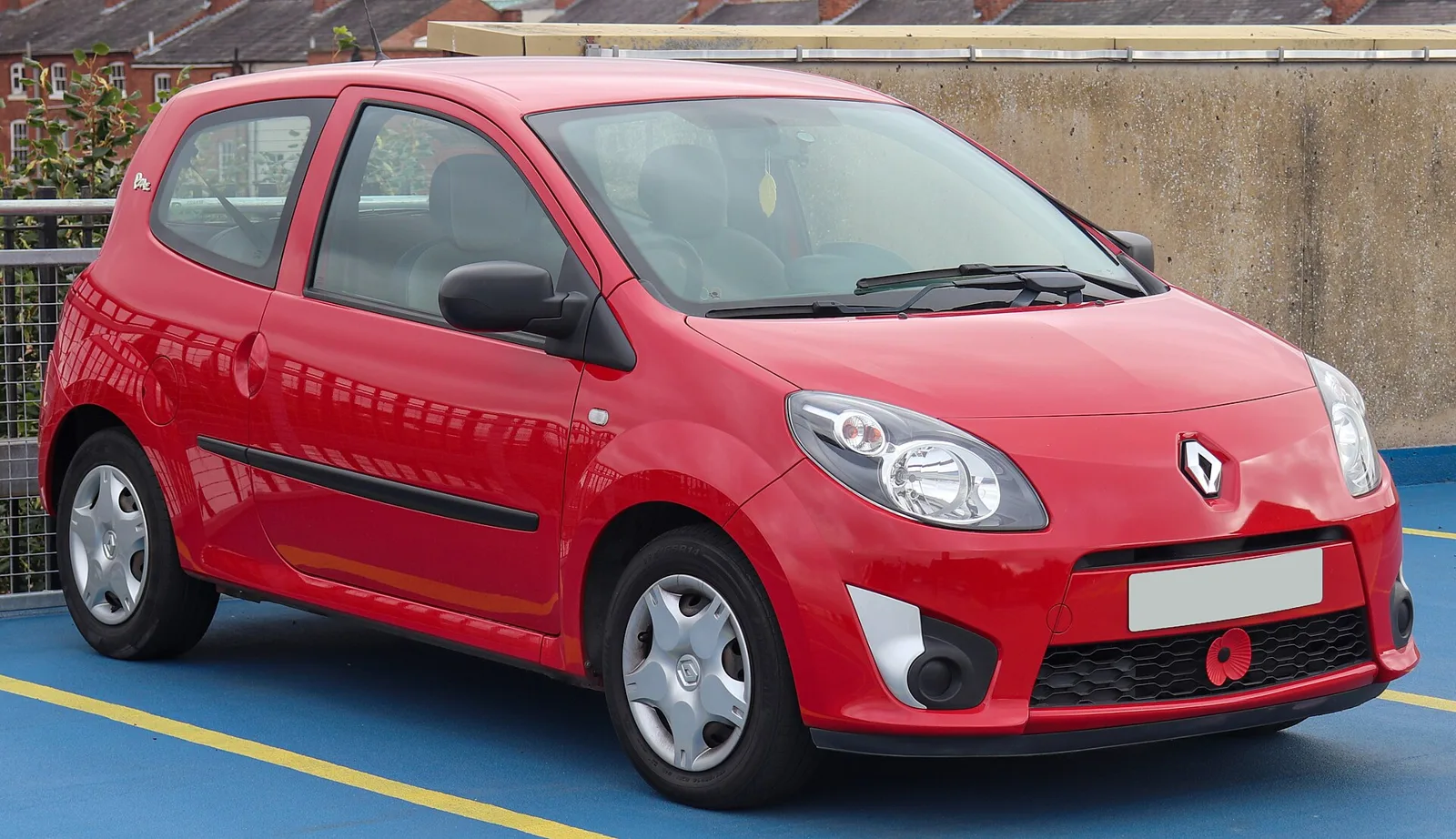
A second-generation Twingo, the Twingo II went on sale in 2007 and ran until 2014. It was the first Twingo offered with diesel engines, it was 16.7 cm longer than the car it replaced, and its RS version gave rise to two rally cars.
The Renault Twingo II was a city car built from 15 June 2007 until September 2014. It grew 16.7 cm longer than the car it replaced, brought diesel engines to the Twingo range for the first time, and its sporting RS version later became the basis for two Renault Sport rally cars.
Where did the Twingo II come from?
The Twingo II was the second-generation Twingo. It was previewed by the Twingo Concept show car at the 2006 Paris Motor Show and presented at the Geneva Motor Show on 6 March 2007. It succeeded the Twingo I, which had been on sale for 14 years, and it was built at Renault's Novo Mesto plant in Slovenia.
Renault wanted a change of direction. The previous generation was judged too feminine to attract a mixed clientele, and the brand also wanted a longer bonnet to give a greater sense of safety.
The new car lost much of the good-natured charm and originality of its predecessor. Critics lamented the loss of the style that was once unique, and noted that its profile was very close to that of the Citroen C2.
Mechanically the change was bigger. Diesel engines joined the petrol range, something the Twingo had never offered, and that mattered in France, a market very fond of diesels.
Among the Twingo range, the RS was the one that went rallying.
How big was the Twingo II?
Measured end to end, the Twingo II stretched 3.60 m (11.8 ft), was 1.65 m (65.0 in) across and stood 1.47 m (57.9 in) tall. Its weight rose 13%, from 820 kg (1,808 lb) to 925 kg (2,039 lb) compared with the Twingo I, and its boot held between 165 and 959 L depending on where the rear seats sat.
The car was 16.7 cm longer than the Twingo I. Its wheelbase grew by 2 cm, mainly to improve pedestrian protection and to make room for more powerful or diesel engines, and it also gained 2 cm in width and 4.7 cm in height.
The sliding rear bench carried over from the previous generation. From the better-equipped trims upward, the bench gave way to two separate rear seats.
In EuroNCAP testing the Twingo II earned four stars for protecting its occupants and driver, out of five, and two stars for pedestrian protection, out of four. The tested car had no curtain airbags, which were available as a 250-euro option.
What did the 2011 facelift change?
The phase 2 Twingo II was partly revealed early after press leaks at the end of January 2011. It was officially presented at the Frankfurt Motor Show on 13 March 2011, and it went on sale on 20 January 2012 with a new front end that had a grille slot enclosing a larger logo and round indicators separate from the headlamps.
The rear lamps became two-part units, one of them on the tailgate. The interior changed little, but customers responded to the newer look, which felt more modern.
Cost cutting shaped the French phase 2 cars. They had no automatic headlamps or rain-sensing wipers and, except on the Gordini and RS models, no rev counter. ESP became optional, although it was standard on the RS.
What engines and gearboxes did the Twingo II use?
The D engines, the D4F and D7F, were carried over from the Twingo I. The gearboxes were JB, JH or JR units from one family, and the JB first appeared on the Renault 9 and 11. The JH and JR were its cable-operated descendants.
One petrol option was a 1.2 L (73.2 cu in) engine of 75 PS (55 kW; 74 hp). The top Night and Day and Initiale trims could be ordered with the Quickshift 5 robotised gearbox on that engine.
The sporting range had three versions. The GT, later replaced by the Gordini, offered a turbocharged petrol engine of 1.2 L (73.2 cu in), rated 100 PS (74 kW; 99 hp). The alternative was a 1.5 L (91.5 cu in) dCi diesel with 85 PS (63 kW; 84 hp) or 90 PS (66 kW; 89 hp).
The RS and Gordini RS used a 1.6 L (97.6 cu in) petrol engine producing 133 PS (98 kW; 131 hp). It was the K4M 854, a version of the 16-valve 1.6-litre engine that Renault had used across its range for years.
Key specifications
| Item | Figure |
|---|---|
| Length | 3.60 m (11.8 ft) |
| Width | 1.65 m (65.0 in) |
| Height | 1.47 m (57.9 in) |
| Weight | 925 kg (2,039 lb) |
| 1.2 L petrol engine | 1.2 L (73.2 cu in), 75 PS (55 kW; 74 hp) |
| RS engine | 1.6 L (97.6 cu in) K4M 854, 133 PS (98 kW; 131 hp) |
| Boot | 165 to 959 L |
| RS motorway speed | 4,400 rpm at 130 km/h |
How did the RS chassis differ?
The RS chassis was largely different from the standard car. Its rear axle came from the Clio II RS, its front axle was specific to the Twingo RS and the Wind, and it used aluminium suspension wishbones. The Sport chassis sat 10 mm lower, and the Cup sat 14 mm lower.
Wider tracks made a body kit compulsory: the front track measured 1,460 mm (57.5 in) and the rear 1,445 mm (56.9 in). The Cup, shod with 195/40R17 tyres, was mostly for the circuit, since it could be counterproductive on broken roads.
The brakes borrowed from two other Renault models. The front calipers came from the Laguna III, with single-piston calipers of 57 mm, while 280 mm ventilated front discs and 240 mm solid rear discs came from the Megane II. The RS had no emergency brake assist, which made the pedal easier to dose on track.
The steering needed 1.345 turns of the wheel (half lock). The JR5-176 gearbox had cable linkage and was geared for sport rather than economy, so it turned 4,400 rpm at 130 km/h on the motorway. The ESP could be switched off completely by a push button under the steering wheel.
Inside, the RS kept most of the standard Twingo's interior. The main differences were an 8,000 rpm rev counter and seats similar to those of a Clio II Dynamique, with orange seatbelts on all but the Gordini.
Twingo RS R2 and R2 Evo
The R2 engine was the K4M RS 1,598 cc (97.5 cu in), a 16-valve naturally aspirated unit that Renault Sport developed for competition. It made 160 PS (118 kW; 158 hp) at 7,250 rpm, and its maximum torque of 160 N.m (118 lb ft) arrived from 5,500 rpm.
The five-speed sequential gearbox carried a disc-type limited-slip differential, and it was operated by a joystick on the right of the steering wheel. An engine cut-off switch let the driver keep a foot on the accelerator through gear changes.
The R2 Evo of 2012 raised output to 190 PS (140 kW; 187 hp) and pushed torque past 180 N.m (133 lb ft). The braking system was redesigned to be more effective and more consistent, and the ball-jointed front and rear axles were combined with Ohlins shock absorbers.
How did the Twingo RS R1 rally car work?
The R1 kept the production Twingo RS's engine and gearbox, which were strictly original. A short-ratio final drive helped on rally stages, and a welded roll cage was sleeved in two parts and bolted into the shell to simplify fitting.
Output stood at 133 PS (98 kW; 131 hp) at 6,750 rpm, while torque reached 160 N.m (118 lb ft) at 4,400 rpm. Its wheels were 15-inch, with tyres 190 mm wide, and its stiffer springs and special brakes were set up for competition.
Trophies were built around the R1. In France, a Junior French Rally Championship for drivers under 25 was launched alongside the Twingo R1 France trophy from 2011. The 2012 Twingo RS R1 Trophy UK ran on the same format with no age limit.
Which special series did the Twingo II get?
Renault issued a long run of limited special series, with new names almost every year from 2007 to 2014. Examples include Helios, Night and Day, Purple and a 2012 Summertime model with a power-operated fabric roof.
Some series were built for particular markets. A 2007 series was made for Poland, Japan received several versions in 2008 and 2010, and the 2013 Purple was called Colour in some countries.
How did the Twingo Concept preview the car?
The Twingo Concept show car, shown at the 2006 Paris Motor Show, previewed the new model with a turbocharged 1.2 TCe petrol engine of 100 PS (74 kW; 99 hp). The production car followed in 2007, and the RS version was launched officially in September 2008.
The RS had a production run of its own, which ended in August 2013. The Twingo II was replaced on 13 September 2014 by the Twingo III, which had a radically different rear and came only as a five-door.