A 2009 people carrier built on the Megane III platform, with a petrol and diesel range at launch and a short-wheelbase X-Mod that grew a Cross version.
The Renault Scenic III was a 2009 people carrier built on the Megane III platform, sold in a seven-seat long version and a shorter five-seat version. After two restylings, the fourth generation was presented in 2016, which marked the end of its production.
The Renault Scenic III was a mid-size people carrier that Renault built from 2009 to 2016, sold first as a long seven-seater and then as a shorter five-seat model. It had a platform borrowed from the Megane III, a range of petrol and diesel engines at launch and two restylings before its successor was presented. Its short-wheelbase X-Mod later grew a Cross version that sat somewhere between a people carrier and a crossover.
Why did Renault develop the Scenic III?
The Scenic III answered a market that was changing fast. The Citroen C4 Picasso dominated French people carriers, the Scenic II had been on sale since 2003, and the Peugeot 5008 was about to arrive. The JZ project had been running for several years when the 2009 car finally launched.
The second Scenic had been the first to come in two body lengths, and the third generation was planned on a slightly different idea. The two versions were meant to have different stylistic features.
The project was nearly finished when the financial crisis spread across the world and hit the car market. The Geneva show in March 2009 was the public debut, and Renault gave priority to the long, seven-seat version, on sale from May 2009. The short version followed in September.
Designed to fix the Scenic II's faults and win over its critics, the third generation succeeded only in part.
How did the Scenic III's design differ from its predecessor?
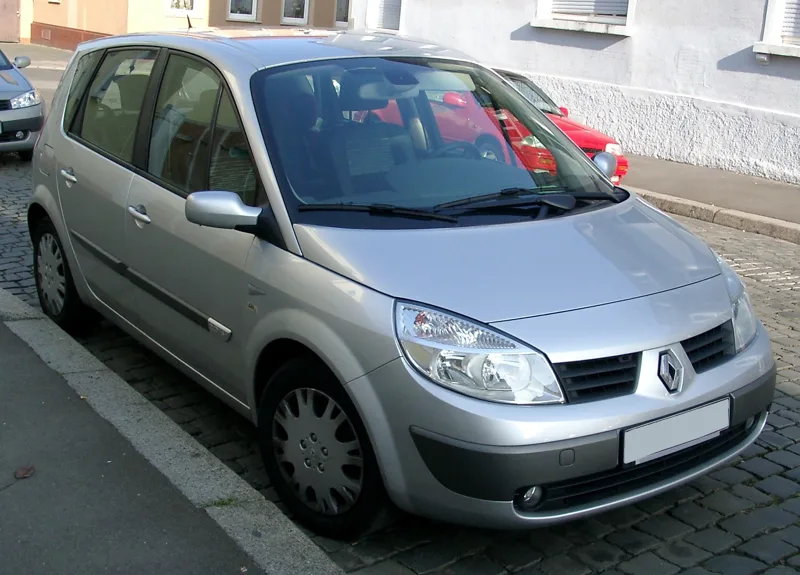
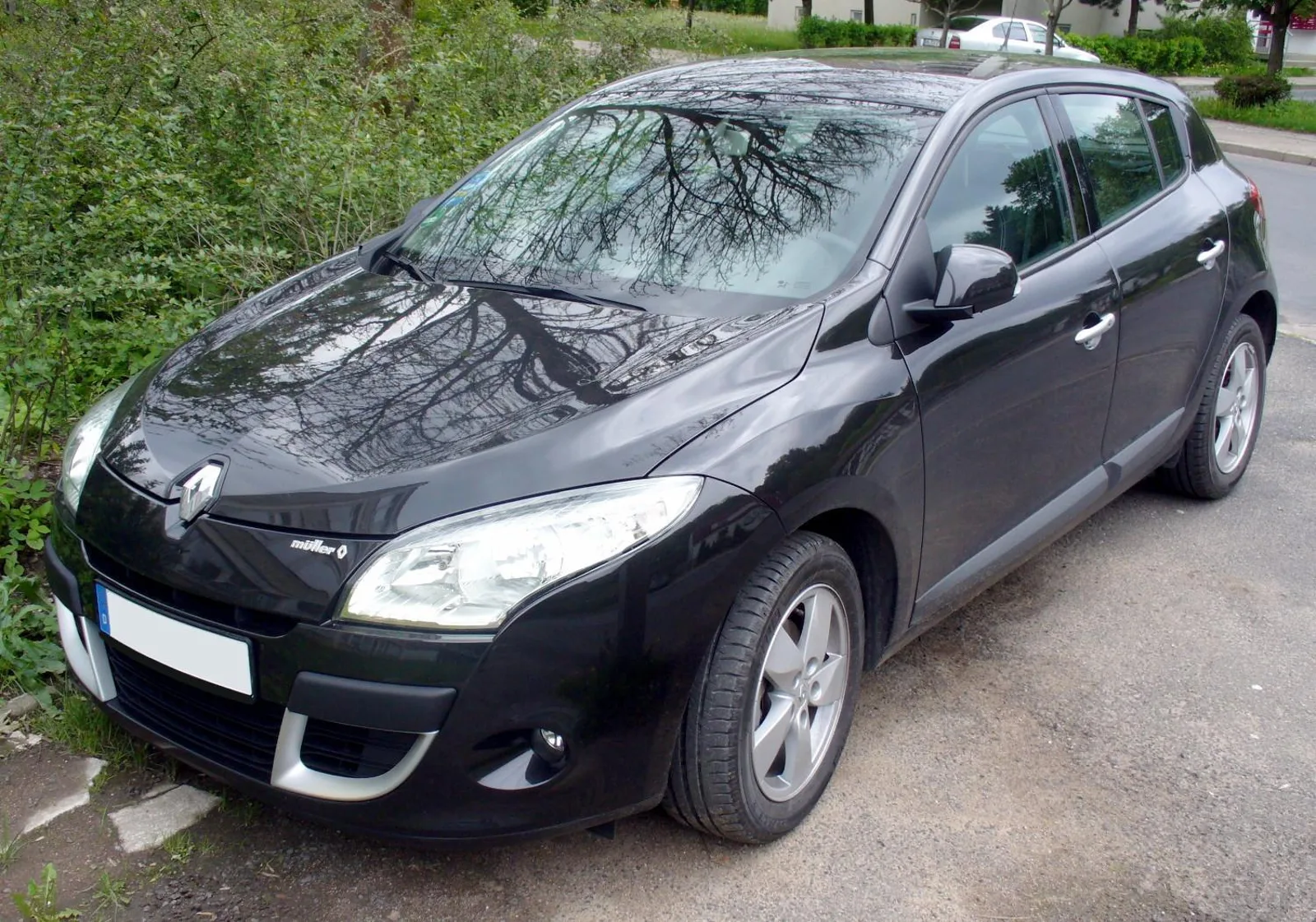
The Scenic III kept some Scenic II cues but broke with the angular lines of its predecessor. Designers led by Laurens van den Acker took their cue from the Laguna III's new style, and the car had a smoother grille, a more pronounced nose and boomerang rear lights. It was 7 cm (2.8 in) longer and 4 cm (1.6 in) wider than the car it replaced.
At the front, the light clusters sat further back, their outer edge cut by the bumper profile, something the Laguna III had already shown. The grille was smoother, with only a thin slot, so the large air intake on the bumper did most of the cooling. The windscreen also grew wider.
The pronounced nose was a pedestrian safety measure, intended to offer better protection in low-speed collisions. At the sides the wheel arches were reshaped to project less, the side mouldings were removed, and new ribs were added to the lower door panels.
At the rear, the boomerang lights echoed a style used on some Nissan models. That shared styling reflected the Renault-Nissan group, which had brought the two carmakers together since 1999, allowing platforms, engines and some styling solutions to be shared.
Inside, the cabin kept the central instrument layout of the Scenic II, reworked in a more sober and modern form with a larger digital display dashboard. Luggage space began at 208 litres with all three rows in place, reached 702 litres with the third row folded and extended to 1,863 litres with the middle row also removed.
What platform and suspension did the Scenic III use?
The Scenic III rode on the Megane III platform, a refinement of earlier saloon and people-carrier designs. Its wheelbase was stretched by 35 mm (1.4 in) and its tracks were widened by 20 mm (0.8 in), with suspension tuned for better handling and comfort.
The layout stayed broadly the same. MacPherson independent front suspension and interconnected rear suspension were retained, and coil springs remained on both axles. A real change was new gas-filled dampers replacing the hydraulic units used before.
Braking kept the four-disc arrangement, with self-ventilating front discs, so the big change was in the dampers rather than the brakes.
Which engines did the Scenic III have at launch?
At debut the Scenic III was offered with petrol and diesel engines. The 1.4 TCe was the first Type H engine in a Scenic, a turbocharged 1,397 cc (85.3 cu in) unit with 130 PS (128 hp; 96 kW). Most engines were paired with a six-speed manual gearbox as standard.
| Engine | Displacement | Maximum output | Notes |
|---|---|---|---|
| 1.4 TCe | 1,397 cc (85.3 cu in) | 130 PS (128 hp; 96 kW) | Turbocharged, first Type H in a Scenic |
| 1.6 16v | 1,598 cc (97.5 cu in) | 110 PS (108 hp; 81 kW) | K4M, carried over from the Scenic II, naturally aspirated |
| 2.0 16v | 1,998 cc (121.9 cu in) | 140 PS (138 hp; 103 kW) | Top petrol, not offered in all markets |
| 1.5 dCi | 1,461 cc (89.2 cu in) | 85, 105 or 110 PS (84, 104 or 108 hp; 63, 77 or 81 kW) | K9K common-rail turbodiesel |
| 1.9 dCi | 1,870 cc (114.1 cu in) | 130 PS (128 hp; 96 kW) | F9Q, later replaced by a 1.6 dCi |
| 2.0 dCi | 1,995 cc (121.7 cu in) | 150 or 160 PS (148 or 158 hp; 110 or 118 kW) | M9R, 150 PS version with automatic gearbox |
The 150 PS 2.0 dCi was the one diesel with a six-speed automatic, while the 2-litre petrol came with a continuously variable transmission. The 105 PS 1.5 dCi was dropped from the lists in 2012, where it had been offered, and the 85 PS version was not offered in every market.
What was the Scenic X-Mod?
In Italy the short five-seat Scenic took the X-Mod name, while elsewhere it stayed the plain Scenic. It was 7 cm (2.8 in) shorter in wheelbase than the long version, with a new bumper and 437 litres of luggage space with all seats in place.
Up to the roof the X-Mod held 522 litres, and with its rear seats removed, which were single armchairs in this version, it reached 1,637 litres. The engine range almost matched the seven-seat car, plus an 85 PS 1.5 dCi offered only in the short version and not in every market.
In 2010 a six-speed dual-clutch gearbox became available with the 110 PS 1.5 dCi, and the 85 PS 1.5 dCi gained 10 PS. In 2011 a bi-fuel petrol and LPG version based on the naturally aspirated 1.6 arrived, and from mid-year a 130 PS 1.6 dCi replaced the ageing 130 PS 1.9 dCi.
What did the 2012 restyling change?
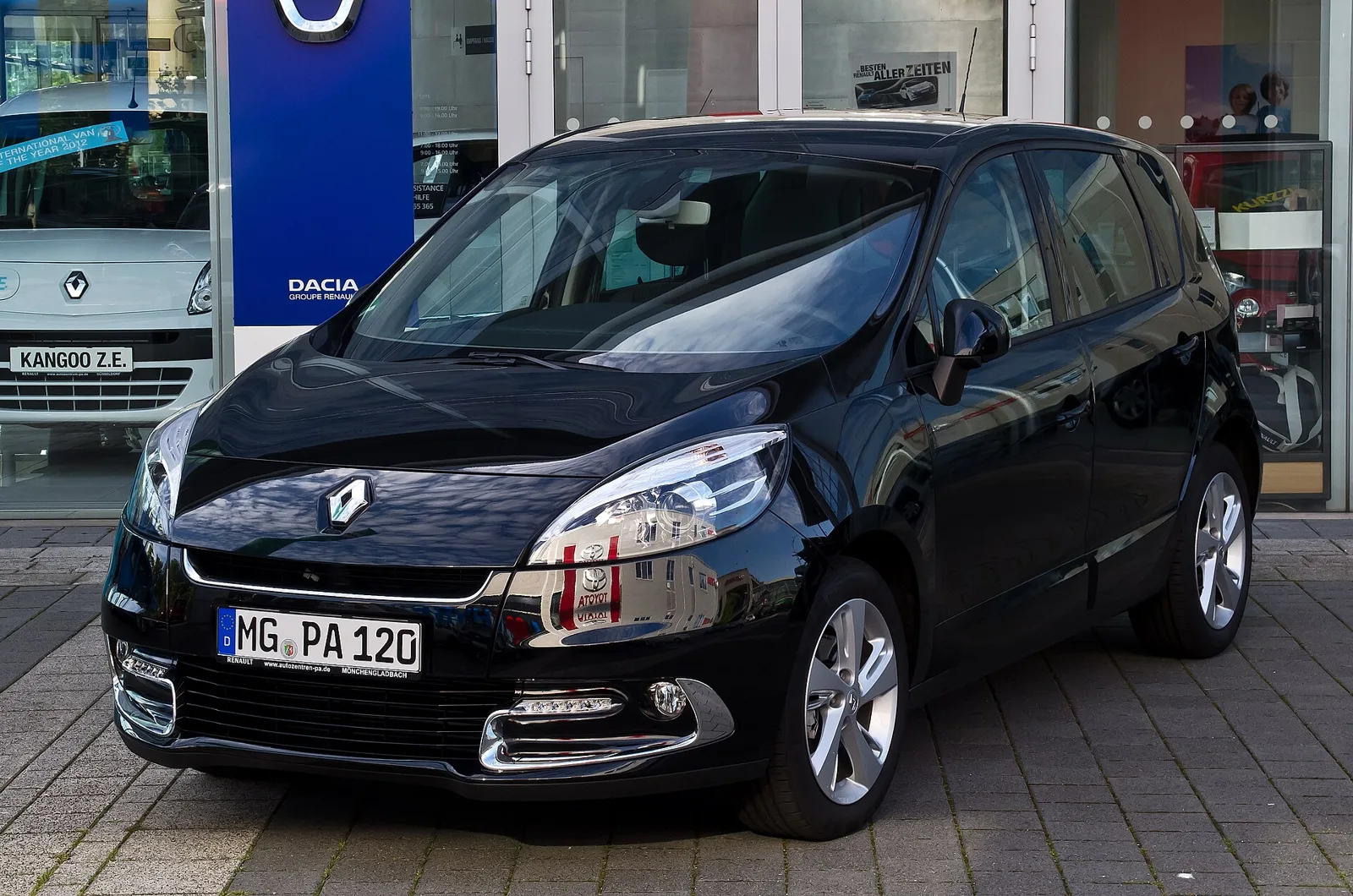
The first restyling came at the 2012 Geneva Motor Show, for both the long and short versions. The front received sharper light clusters, a redesigned bumper with a larger grille and new housings for LED daytime lights. A new 1.2 TCe of 115 PS (113 hp; 85 kW) also arrived.
That 1.2 TCe replaced the 1.6 16v of 110 PS, which lingered only in some markets, mainly for LPG versions and the Scenic 1.6 16v E85, which could run on ethanol. The 110 PS 1.5 dCi was thoroughly revised and joined the Energy family of low-emission engines, with performance unchanged.
The 2-litre petrol with 140 PS and the 2-litre diesel with 160 PS disappeared from the range. The 150 PS automatic diesel was kept, but only for some markets.
What changed in the 2013 restyling?
The second restyling came at the Geneva show in March 2013. It gave the front a new grille with a larger brand emblem and a redrawn lower air intake. Only the X-Mod received deeper changes, including a Cross version with roof bars and raised suspension.
The X-Mod Cross was a crossover-style version, built along the lines of the contemporary Peugeot 3008. It stayed front-wheel drive only and used an electronic traction system in place of four-wheel drive. The X-Mod alone also gained a flat-bottomed steering wheel.
The 1.4 TCe of 130 PS left the lists and gave way to a 1.2 TCe with identical output, taken from the 115 PS unit. The Cross used the same engines as the regular X-Mod.
Why did the Scenic III's sales fade?
The Scenic III's sales career entered decline after 2013. The LPG version was dropped at the end of 2013, and the petrol-only 1.6 was removed in 2015 where it still sold. Renault presented the fourth generation at the 2016 Geneva show, which marked the end of third-generation production.
The third generation had a restless life, with two restylings, a rare occurrence in 21st-century car production. It was meant to fix the faults of the Scenic II and win over its critics, but the deep recession in the car industry after the global financial crisis of late 2008 limited how far it succeeded.