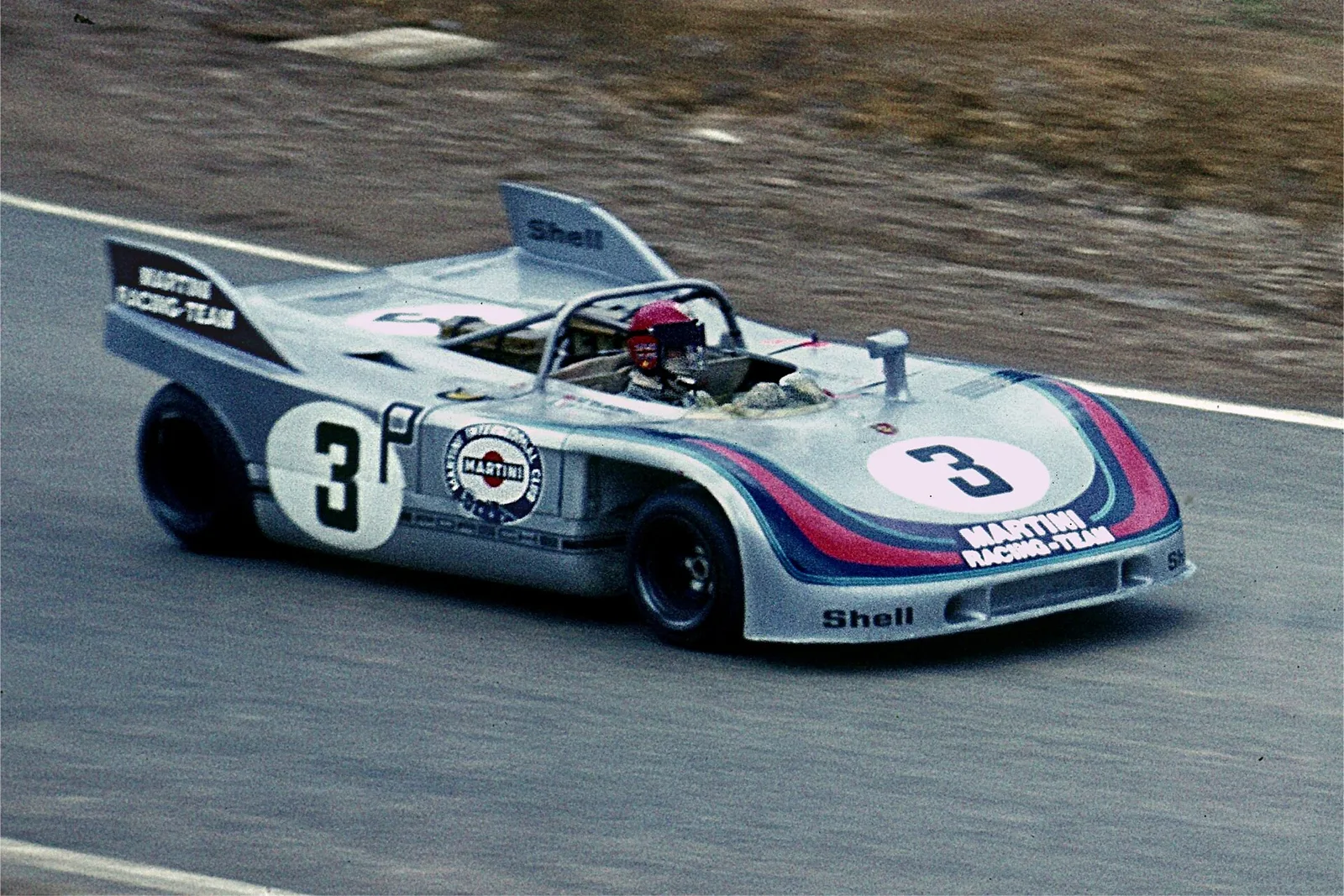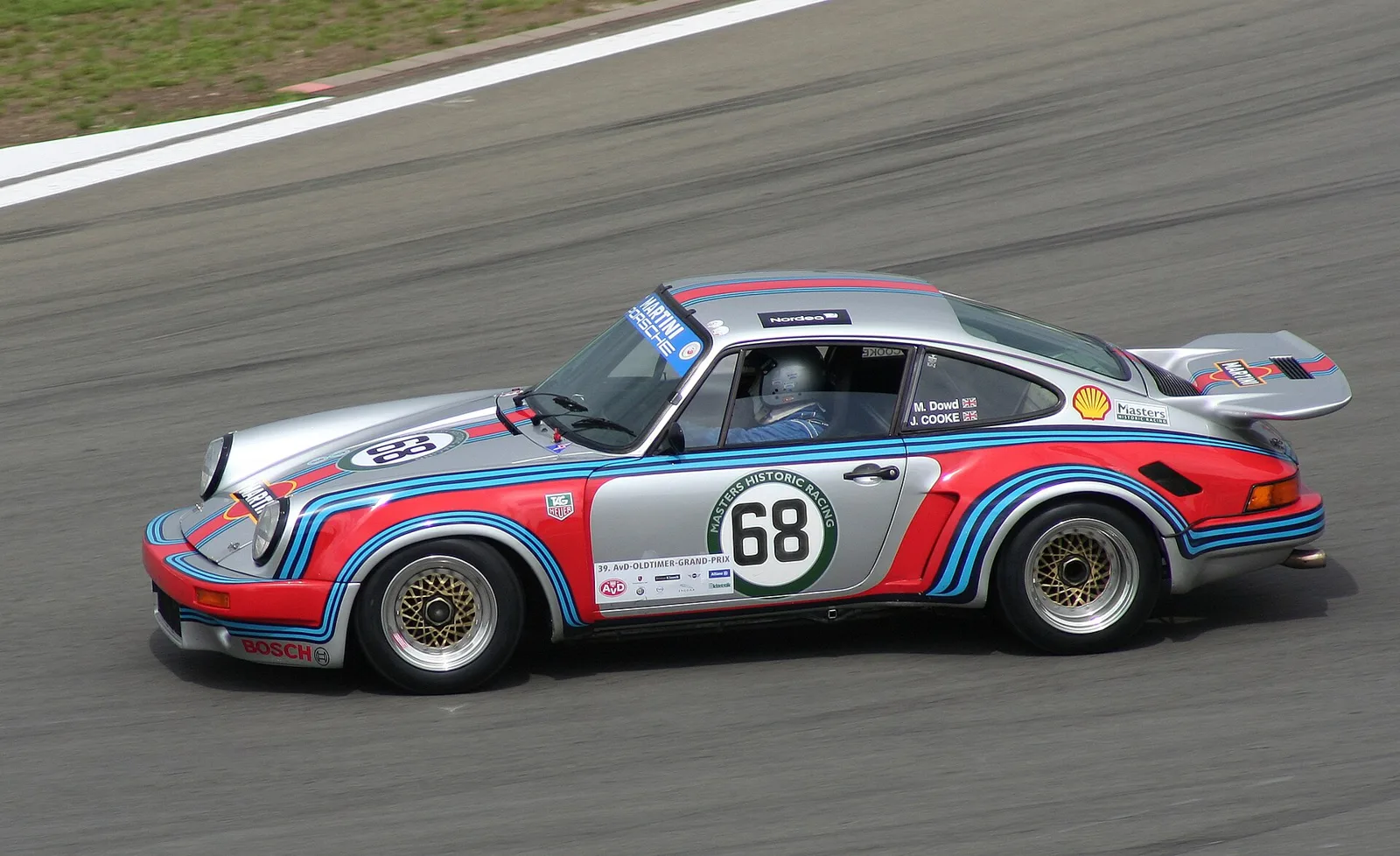
A stripped, widened 911 built for the planned 1975 rules, with 2.8, 3.0 and turbo versions that raced in Europe and North America from 1973 to 1985.
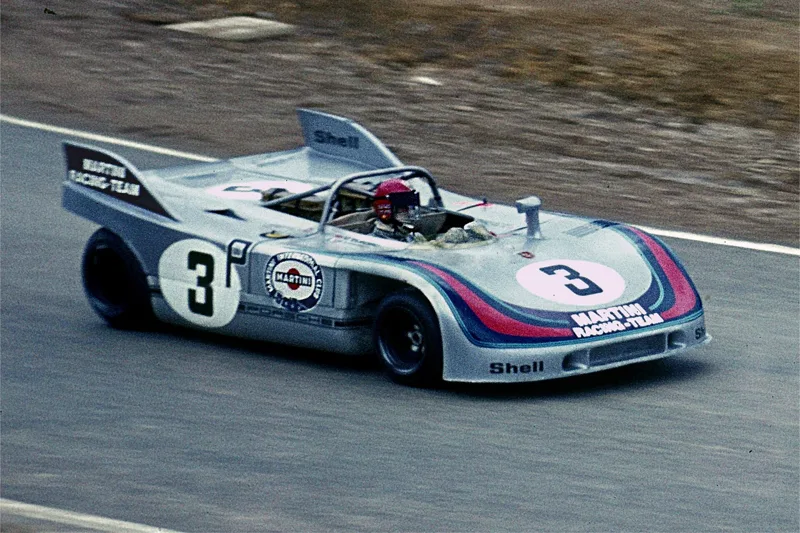
Porsche built the 911 Carrera RSR for racing in 1973 and 1974 by stripping and widening the Carrera RS. It appeared in 2.8, 3.0 and Turbo 2.1 versions, and the turbo model made up to 367 kW in its later tune, with private teams racing the cars for years afterwards.
The Porsche 911 Carrera RSR was a racing car built in 1973 and 1974 on the basis of the 911 Carrera RS. Porsche's works team raced it in the manufacturers' World Championship, and private teams kept it in competition until 1981 in the World Championship and 1985 in North America.
Why did Porsche build a racing 911?
Porsche needed a new car because its 917 could no longer race in the World Championship. Planned rules for 1975 would admit production-based racing cars, so the company built a racing 911 and tested it in the 1973 and 1974 championships.
From 1972 the championship admitted only three-litre sports cars with a minimum weight of 600 kg. Porsche turned to the CanAm series in North America, where the 917 stayed competitive, while Ferrari, Alfa Romeo and Matra-Simca dominated the World Championship with new three-litre cars. Porsche's only eligible car, the 908, went to private teams.
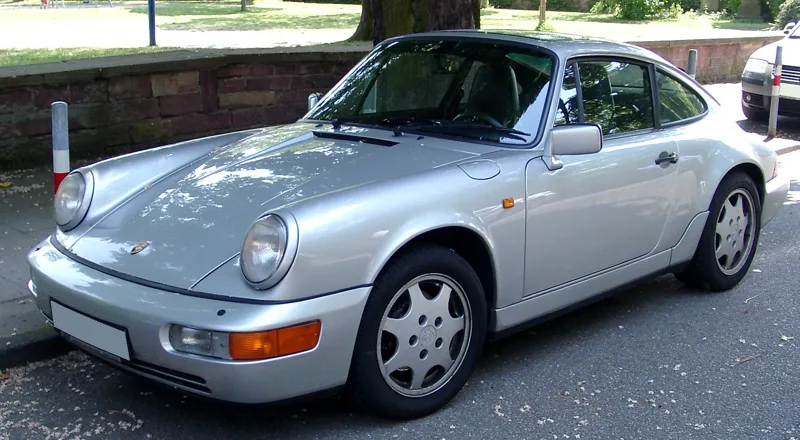
The work started from the Carrera RS 2.7, a homologation model that had already been built in a small series in 1972. Norbert Singer led the engineering of the new car, which was named 911 Carrera RSR.
The Turbo 2.1 was the last and most powerful RSR and the direct forerunner of the 934 and 935.
How did the RSR differ from the Carrera RS?
The RSR kept the road car's shape but was stripped and widened for racing. Wider wheel arches, an oil cooler in the nose and a cleared interior were the main changes, and plastic doors and a bonnet helped bring the 2.8 car down to about 890 kg (1,962 lb).
The RSR 2.8 conformed to Group 4. Its wider arches took wheel and tyre combinations of 9 and 11 inches, and the car kept the duck's tail spoiler of the Carrera RS. Inside, the interior was emptied apart from the racing seats, safety belts and roll bar.
At the front went a 120-litre fuel tank with a quick-release filler cap, along with a fire extinguishing system. Plexiglas replaced the glass in the side windows, and the spare wheel was removed from the nose.
The suspension gained metal joints in place of rubber ones for more precise wheel location, and the front struts could be adjusted for camber and caster. The car was lowered to bring its centre of gravity down. The brakes used four-piston calipers all round, with parts taken from the 917/10, and the wheel hubs had a central lock so that the light magnesium wheels could be used.
The works prototypes went further than the customer cars. Because they were not bound by the same regulatory restrictions, their wheel arches were wider still, and they could take wheels 11 inches wide at the front and 14 inches wide at the rear.
The works team also tried several spoiler variants at the rear. The small standard spoiler was widened on each side and drawn out to the wheel arches. That shape first ran at the 1000 km race at Zeltweg in 1973, and inside the company it was called the Maria Stuart collar.
Engine and specification figures
| Specification | RSR 2.8 (1973) | RSR 3.0 (1973 to 1974) | Turbo 2.1 (1974) |
|---|---|---|---|
| Displacement | 2.8 litres (171 cu in) | 3 litres (183 cu in) | 2.1 litres (131 cu in) |
| Bore | 92 mm | 95 mm | 83 mm |
| Stroke | 70.4 mm | Unchanged | 66 mm |
| Compression | 10.3:1 | - | 6.5:1 |
| Power | 220 kW (300 PS; 296 hp) at 8,000 rpm | 231 kW (315 PS; 311 hp), later 242 kW (330 PS; 325 hp) | 330 kW (450 PS; 444 hp), later 367 kW (500 PS; 493 hp) |
| Weight | About 890 kg (1,962 lb) | - | About 750 kg (1,653 lb) |
| Top speed | About 290 km/h (180 mph) | - | 310 km/h (193 mph) |
| Gearbox | Five-speed type 915 | - | Five-speed type 915 |
How did the 2.8 engine change from the road car?
The 2.8 engine kept the flat-six layout but grew from 2.7 litres (165 cu in) to 2.8 litres (171 cu in). The bore was 92 mm and the stroke 70.4 mm, with compression at 10.3:1, and the engine made 220 kW (300 PS; 296 hp) at 8,000 rpm.
Dual ignition replaced the single ignition of the production engine, and mechanical fuel injection came from a six-plunger Bosch pump. The five-speed type 915 gearbox was kept but given different gearing, which allowed a top speed of about 290 km/h (180 mph).
What changed on the RSR 3.0?
The 3.0 car used the new G series body that Porsche introduced in mid-1973. Its front indicators moved into the front bumper or nose section, and a large rear wing replaced the duck's tail. The engine was enlarged to 3 litres (183 cu in).
The enlargement came with a bore of 95 mm, while the stroke stayed the same. The engines first produced about 231 kW (315 PS; 311 hp), and later examples reached 242 kW (330 PS; 325 hp). Porsche built 54 examples of the RSR 3.0, while 57 of the 2.8 were made.
Private teams ran the small-series cars in the GT classification, while the works team used the prototypes in the sports car class. Porsche built 54 of the 3.0.
Which versions did the RSR family include?
Porsche built the 2.8 and 3.0 cars in small series for customers and private teams, and their GT classification entries were run by those teams. The Carrera RSR Turbo 2.1 followed in 1974 as the last and most powerful stage of the range, and twelve prototypes were built in total.
The Turbo 2.1 test car and the later turbo cars R9, R12 and R13 differed in their body details. The second turbo prototype, R9, widened its rear arches from 161 cm to 200 cm.
What made the Turbo 2.1 different?
The Turbo 2.1 was the last and most powerful RSR and the direct forerunner of the 934 and 935 racing cars. Its flat-six measured only 2.1 litres because the rules multiplied turbo engines by a form factor of 1.4 to reach the 3-litre limit.
The engine had a bore of 83 mm, a stroke of 66 mm and a compression ratio of 6.5:1. Its displacement of 2,142 cc (131 cu in) put it at the 3-litre maximum once the form factor was applied. Turbo cars carried the 120-litre safety tank behind the driver, which allowed the target weight split of 30% front and 70% rear.
A turbocharger delivered up to 1.4 bar, and a handwheel in the cockpit let the driver control the wastegate to raise boost for short periods. An aluminium intercooler behind the engine cooled the compressed air by about 100 degrees C. Titanium coil springs replaced steel ones, and the car weighed about 750 kg (1,653 lb). The chassis changes alone saved around 30 kg (66 lb) compared with the 2.8.
The first turbo engine, type 911/78, produced 330 kW (450 PS; 444 hp) at about 8,000 rpm. The later type 911/76 gave 367 kW (500 PS; 493 hp) at 7,600 rpm. With the type 915 gearbox the car reached 310 km/h (193 mph).
Which races did the RSR win in 1973 and 1974?
The RSR first raced in the World Championship at the 1973 24 Hours of Daytona, where Brumos Porsche and Penske Racing ran the prototypes R3 and R4. The Brumos car, driven by Peter Gregg and Hurley Haywood, won the race outright.
Herbert Muller and Gijs van Lennep gave the works team a second World Championship win that year at the Targa Florio. In 1974 they took second place at the 24 Hours of Le Mans.
In the European Championship for GT cars, Claude Ballot-Lena won the 1973 title on a 2.8, and John Fitzpatrick took the 1974 drivers' title with an RSR. In North America, Porsche won the IMSA GTO manufacturers' title in 1973 and 1974, and Peter Gregg won the IMSA GT drivers' title in both years.
How did the RSR perform in 1975 and 1976?
In 1975 the RSR dominated the European GT Championship, where Hartwig Bertrams took the title, and Peter Gregg won his third IMSA title in succession. The 24 Hours of Daytona went to Gregg and Haywood again, and it was Porsche's only racing car win in the World Championship that year.
The race also counted toward the manufacturers' title. From the 1976 season the Porsche 934 and 935 replaced the RSR, which was no longer competitive in the main championships.
The RSR still had winning chances in the American IMSA GT Championship, where the 934 and 935 did not run. Al Holbert and Michael Keyser won the 12 Hours of Sebring in 1976, and Jurgen Neuhaus took a DRM win at Kassel-Calden the same year, the car's last DRM win.
When did the Carrera RSR finish its career?
The car was last used in the DRM in 1979 and in the manufacturers' World Championship in 1981. Its last IMSA start came at the GT race at Portland in 1985, where Monte Sheldon finished tenth.
From 1982 only smaller teams or privateers ran the RSR in IMSA, while many large teams used the 935, and Group C prototypes had replaced Group 4 and Group 5 racing cars in Europe. The best placing for a Carrera RSR in that later period was third in the GTO class at the 1984 Grand Prix of Miami, where the Dominican Luis Mendez drove the car.
What did the RSR leave behind?
The Carrera RSR Turbo 2.1 was the basis for the Porsche 934 and 935, the racing cars that took over from it in 1976. The large rear wing of the RSR 3.0 was later used on the first Porsche 930.
The RSR 3.0 body already looked very similar to the later production 911 Turbo.