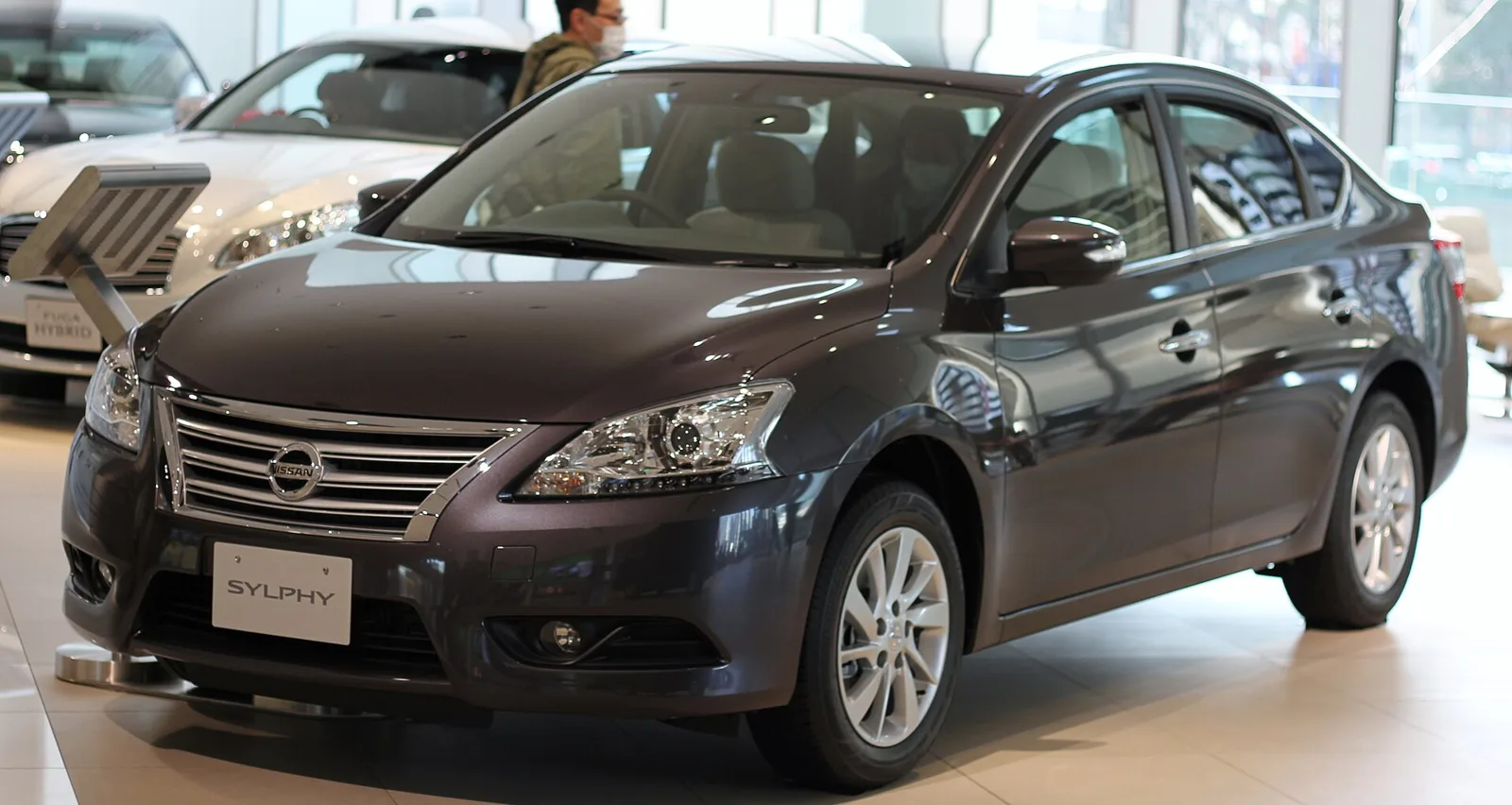
One C-segment sedan sold as the Sylphy, Sentra and Pulsar in 120 countries and regions, with a Japanese build meant to lift Oppama's utilisation.
Nissan's B17 arrived in 2012 as one C-segment sedan sold under three names: Sylphy, Sentra and Pulsar. Its 1.6 and 1.8 L engines came with manual or CVT options, and the Japanese cars were built with only 35% domestic parts, the rest imported from Thailand and China.
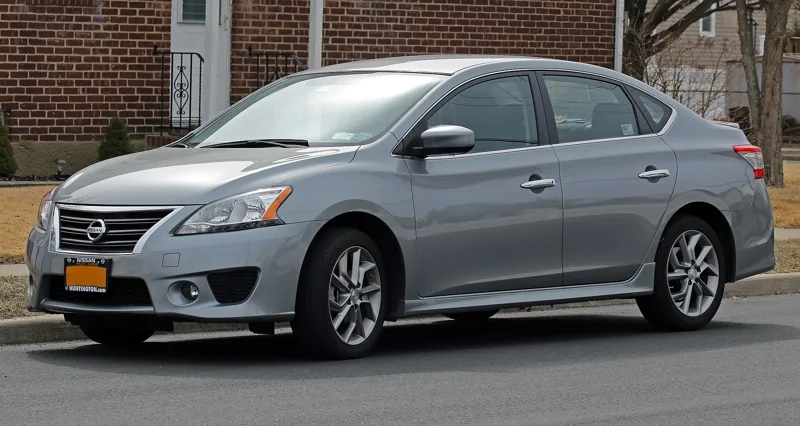
The Nissan Sylphy B17 is a C-segment sedan that Nissan built and sold from 2012, with the model code B17 and sales in 120 countries and regions. It is the Sylphy in Japan, China and Thailand, the Sentra in North America and the Pulsar Sedan in Oceania. Japanese sales ended in October 2021, after a run that began with a Beijing show reveal.
Where did the Sylphy B17 come from?
The Sylphy was unveiled at the Beijing Motor Show in April 2012 and went on sale in China that July, ahead of Thailand, North America and Japan. Its model code is B17, which follows the B-series of the Sunny and Sentra rather than the G-series of the Bluebird Sylphy. In China the Chinese name was Xuanyi.
By the time this car arrived, the Sylphy name had taken hold in Japan. The Bluebird label, in use for 53 years after the 1959 Datsun debut, was therefore removed from the car.
In Thailand the earlier G10 had been built at a Tan Chong plant in Selangor, Malaysia, but the G11 was never sold there. The B17 was launched in Thailand as the successor to the Tiida Latio.
One platform, three names across three big markets, and a Japanese build meant to lift Oppama's utilisation.
Where was the Sylphy built?
Production took place at the Huadu plant of Dongfeng Motor in Guangzhou, at the Nissan Thailand plant in Samut Prakan and at the Oppama plant in Yokosuka. Thai-built cars went to Asian countries other than China, Japan and Taiwan, to Oceania as Pulsar Sedans and to the Middle East, while everything from Oppama was for Japan.
Oppama cars were a mixed build. Only 35% of the parts, including the body shell, engine, transmission and battery, were made in Japan. The other 65% came from Thailand and China, where production had begun earlier, and some body panels were imported as well. Nissan's aim was to raise the plant's utilisation and protect Japanese manufacturing while still making a profit on a planned 600 units a month.
Mexico had built the earlier Sentra models exclusively. The B17 added a second base at Nissan's Canton plant in the United States. More than US$150 million went into the Aguascalientes plant for the B17, and cars from there are sold in Mexico and shipped to the United States and Canada.
In Taiwan the car was built by Yulon Nissan Motor from October 2013, carrying the name Super Sentra, and that change ended the use of the Bluebird name on any car sold worldwide.
Which engines and transmissions did the Sylphy use?
At launch the Sylphy offered a 1.6 L (97.6 cu in) inline-four, the HR16DE, and a new 1.8 L (109.8 cu in) inline-four, the MRA8DE. The 1.6 L paired with a five-speed manual or a CVT, and the 1.8 L with a six-speed manual or a CVT. The CVT was a JATCO JF015E CVT7 with an auxiliary gearbox.
The MRA8DE was new rather than a stretched 1.8. Compared with the MR18DE of the same capacity, it had a longer stroke, better combustion efficiency, lower cooling losses and a higher peak output.
Singapore received the sporty Sylphy SSS in October 2014, with a 1.6 L direct-injection turbocharged four-cylinder MR16DDT and a CVT that offers a six-speed manual mode. A CNG version of the 1.6 L arrived in Thailand in 2014, rated at 116 PS (85 kW; 114 hp).
The platform was a new design based on the B platform. Against the B16 Sentra it weighs about 68 kg (150 lb) less, and both cabin and luggage space grew. The body borrows heavily from the second-generation C12 Tiida, known as the Pulsar Hatch in Oceania, which launched before it.
Front brakes are ventilated discs on every car, but the rears vary by market. China, Thailand, Australia and Taiwan all fit rear discs throughout. US cars have drums on every grade, with discs as an option on some, while Japanese cars keep leading-trailing drums with no disc option because of road and traffic conditions at home.
What did the Sylphy look like?
Parts of the headlamps and front grille were inspired by the Eryule concept, displayed in Los Angeles in November 2010. Taillamps are LED units, and some markets fit LED clearance lamps to the headlamps on selected grades.
Compared with the G11 Bluebird Sylphy it replaced, the car is 5 mm (0.2 in) longer overall, with a 15 mm (0.6 in) longer front overhang and a 10 mm (0.4 in) shorter rear overhang. It is 65 mm (2.6 in) wider and 15 mm (0.6 in) lower, and shoulder room is up by 30 mm (1.2 in) with rear leg room unchanged.
Against the earlier Sentra, the Sylphy measures 58 mm (2.3 in) more in overall length, sits 30 mm (1.2 in) narrower and stands 15 mm (0.6 in) lower.
Aerodynamics improved with a front spoiler and tyre deflectors under the floor. The drag coefficient fell from 0.32 on the G11 to 0.29, and the fuel-economy FE+ versions reached 0.27. The North American B16 Sentra was rated at 0.34, so the gain is clear in both markets.
Rear seats differ by market. The Sylphy and Pulsar use a through-type centre armrest and a centre head restraint. The Sentra drops the centre seat and gives its outer seats integrated head restraints, but its backrest still splits 6:4 to fold. The parking brake is a lever, on the left in front of the centre console on every version, which leaves it farther from the driver on right-hand-drive cars.
How many Sylphys were planned, and where did they sell?
By 2016 the car had reached 120 countries and regions, with annual sales planned at 500,000 units worldwide. Japan's monthly target was far smaller, at 600 units. In China and Japan the car is the Sylphy, and in China it succeeded a G11 that had also carried that name.
China
Chinese cars come in XE, XL and XV grades. Only the top XV uses the 1.8 L alone, while the other grades offer a choice of 1.6 L and 1.8 L engines. The 1.6 L takes a five-speed manual and the 1.8 L a six-speed manual, with the 1.8XE and 1.8XV on CVT only. XV wears 17-inch alloys, and XL and above add a sunroof, a power driver's seat and leather seats.
Thailand
Thai cars use S, E and V grades on the 1.6 L and V and VL on the 1.8 L. Every grade offers a CVT, and only the S has a five-speed manual. V and VL bring an intelligent key, leather upholstery, rear-seat air vents and LED clearance lamps, and VL adds satnav. The base S lacks ABS, EBD and BA, and every car sits on 16-inch alloys.
Japan
Japanese cars come only with the 1.8 L engine and a CVT. The range opened as S, X and G, and the G Le Grand joined in January 2015. The S Touring, an Autech Japan trim based on the X, followed in August 2015. By January 2016 the range was five grades, or six with the Autech Japan X that has a swivel passenger seat.
The G, G Le Grand and S Touring have 16-inch alloys, while the S and X wear 15-inch full covers shared with several other models, including the Serena. Every grade except the S has auto lights, an intelligent key and door-mirror indicators. The G adds six speakers, xenon headlamps, wood-grain trim and SRS curtain airbags over the X, and the G Le Grand changes the seats and wheels from the G. Japanese cars have a keyhole on the trunk lid's right side and no factory options at all.
What were the Sentra and Super Sentra versions?
In North America the B17 replaced the sixth-generation B16 Sentra, and it is also sold in Russia. US cars come in six grades, from S to SL, all with the 1.8 L. The S gets a six-speed manual as well as a CVT, while the others have a CVT only. Only the SR and SL can have disc brakes at the rear.
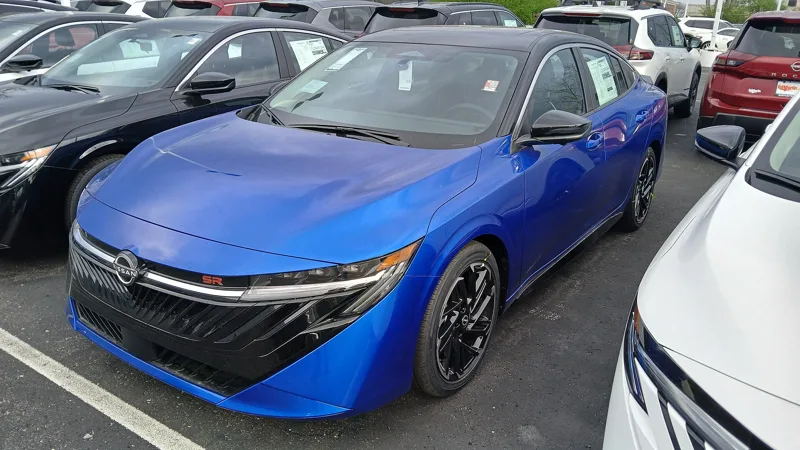
The 2016 model received a heavily revised front end with the V-Motion grille, the design icon of recent Nissan cars. Emergency braking and lane departure warning were added, and some grades also received LED low-beam headlamps. A NISMO model built on the MR16DDT car was available from 2017 onward.
Taiwan sold the car as the Super Sentra, using the MRA8DE and an Xtronic CVT. Its five grades are the Classic, Legendary, Deluxe, Deluxe Audio-Visual and Flagship editions, and some of them have a sunroof and 17-inch alloys that Japan does not offer. On 2 December 2014 the Sentra Aero, developed with Autech Japan, went on sale as a Taiwan-only limited model, with a front air dam, side steps, rear under-spoiler and dedicated 17-inch alloys. In November 2017 the car was facelifted to resemble the North American version, and the Super prefix was dropped.
Was the Pulsar a separate car?
In Oceania the B17 was sold as the Pulsar Sedan beside the Pulsar Hatch, the regional name of the C12 Tiida. The Pulsar name had come from the G10 Bluebird Sylphy until 2006, then lapsed for a while when the Tiida sedan took over, before returning six years later on the B17.
Australia started with ST, ST-L and Ti grades, all with the 1.8 L. The Ti was later replaced by the SSS, which took some of its equipment and added aero parts, an intelligent key with a push-start button and the MR16DDT engine. Weak sales led the car to withdraw from Australia at the end of 2016, alongside the Hatch and the Micra.
What happened to the B17 in Japan?
The B17 went on sale in Japan in December 2012 as the Sylphy, and it became the de facto replacement for the N17 Latio when that car was discontinued in December 2016. Production of the Japanese-market car stopped on 30 September 2020, and sales followed until 26 October 2021, completing Nissan's withdrawal from the mainstream sedan class in Japan, a line with roots in the 1959 Bluebird.
Key dates in the Sylphy story
- April 2012: unveiled at the Beijing Motor Show
- July 2012: sales begin in China as the Sylphy
- October 2012: sales begin in North America as the Sentra
- December 2012: sales begin in Japan as the Sylphy
- October 2013: Super Sentra announced and on sale in Taiwan
- October 2014: Sylphy SSS with the MR16DDT added for Singapore
- January 2015: G Le Grand special edition goes on sale in Japan
- August 2015: S Touring special edition goes on sale in Japan
- March 2016: All-New Sylphy facelift for China
- September 2020: Japanese production ends
- October 2021: Japanese sales end
Sylphy B17 specifications
| Specification | Detail |
|---|---|
| Model code | B17, B-series lineage (Sunny and Sentra) |
| Launch | Beijing Motor Show, April 2012; China sales July 2012 |
| Engines | 1.6 L (97.6 cu in) HR16DE; 1.8 L (109.8 cu in) MRA8DE |
| Turbo option | 1.6 L MR16DDT in Singapore SSS from October 2014 |
| Transmission | CVT (JF015E CVT7) or five-speed or six-speed manual |
| Weight | about 68 kg (150 lb) lighter than the B16 Sentra |
| Length change | 5 mm (0.2 in) longer than G11 |
| Width change | 65 mm (2.6 in) wider than G11 |
| Height change | 15 mm (0.6 in) lower than G11 |
| Drag coefficient | 0.29 (FE+ 0.27) |
| Japanese parts | 35% made in Japan |
| Japanese target | 600 units a month |
| Japanese sales end | 26 October 2021 |