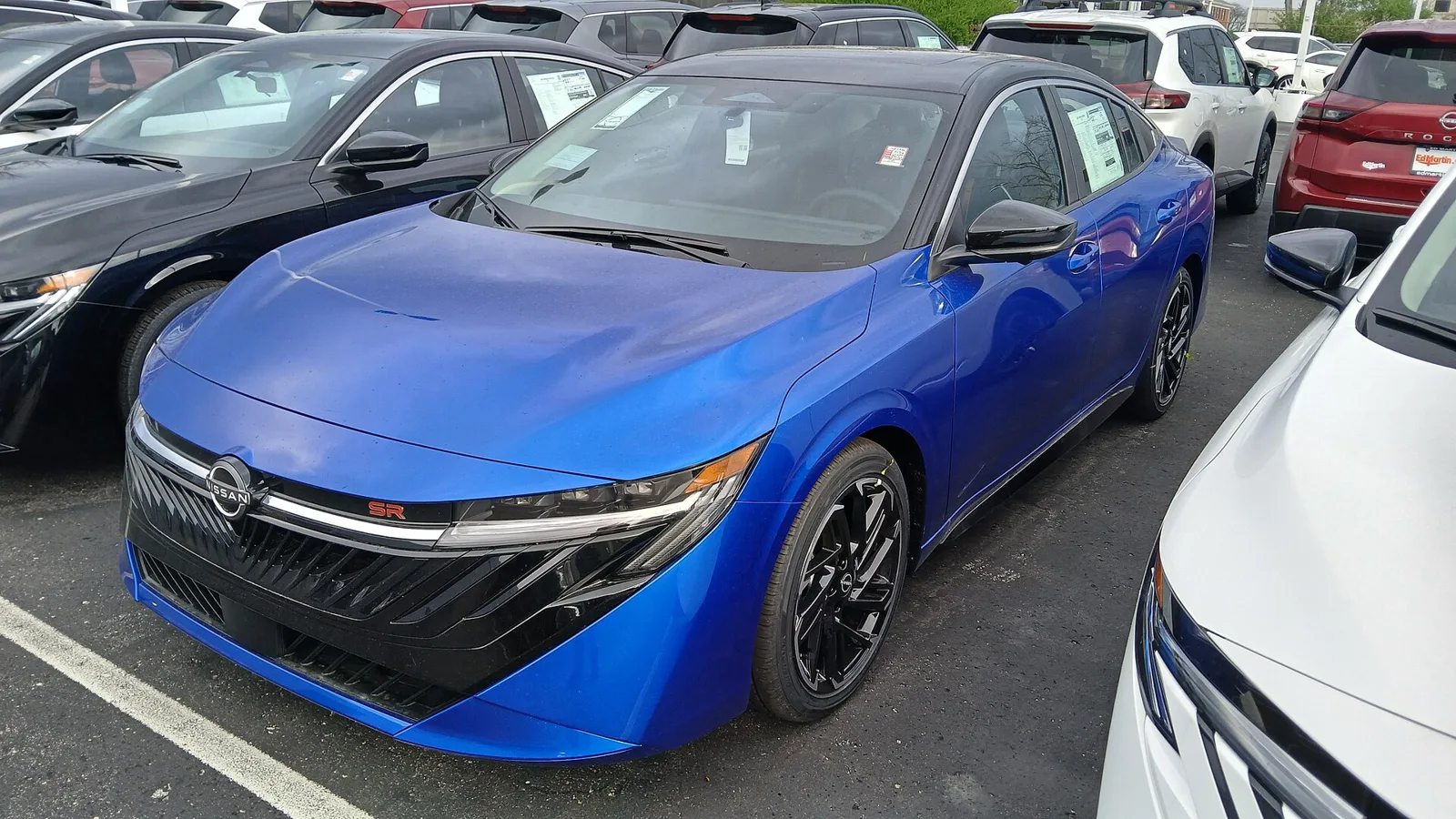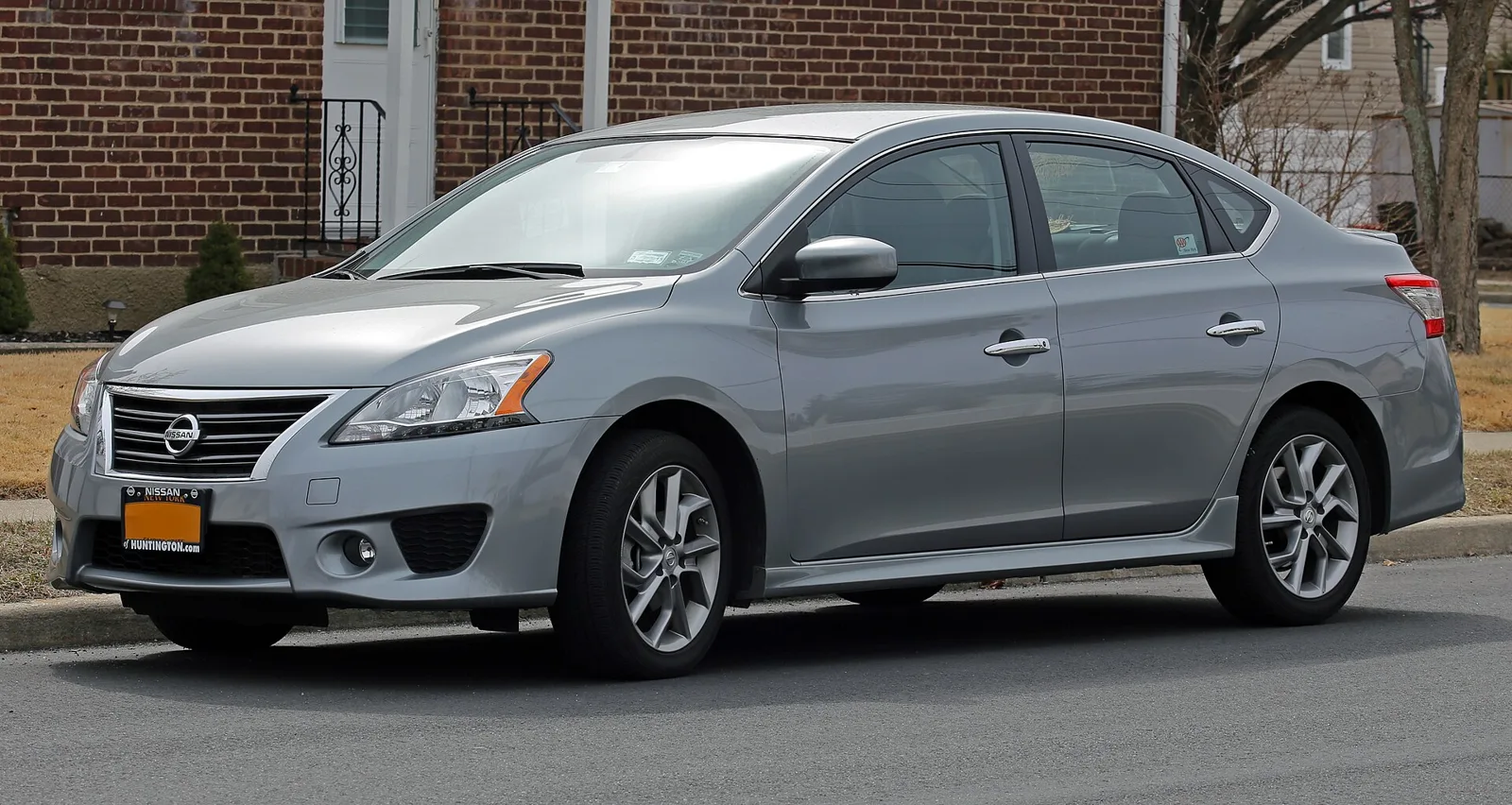
Nissan's seventh-generation C-segment car, launched as the Sylphy in 2012 and sold under the Sentra name in most other markets until 2020.
The Nissan Sentra B17 was the seventh generation of the Sentra, produced by Nissan from 2012 to 2020. It was launched as the Sylphy in Asia, while most other markets sold it as the Sentra, with a 1.8-litre engine in North America and a 1.6-litre turbo in later sporty trims.
The Nissan Sentra B17 was a C-segment passenger car that Nissan built from 2012 to 2020. It was the seventh Sentra, and it arrived under the Sylphy name in Japan and parts of Asia before most other markets adopted the Sentra badge. Its engines ranged from a 1.8-litre four in North America to turbocharged 1.6-litre units in later sporty trims.
Why did the car have two names?
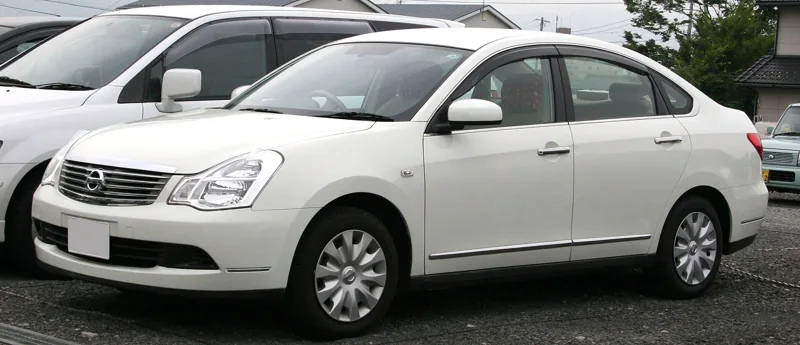
The car was first presented in 2012 as the Nissan Sylphy. Nissan had planned to merge the production of the next Sylphy and Sentra onto a single chassis, and that plan led it to rename the Sylphy as the Sentra in other markets. The Sentra name was used in the Middle East, the Americas and parts of Asia, while Japan, China and several other Asian markets kept the Sylphy.
The Sylphy of 2013 was shown at the 2012 Beijing Motor Show. Nissan planned for the model to debut in more than 120 countries around the world by 2014.
One car, two names: the Sylphy at home in Asia and the Sentra almost everywhere else.
What did the B17 look like?
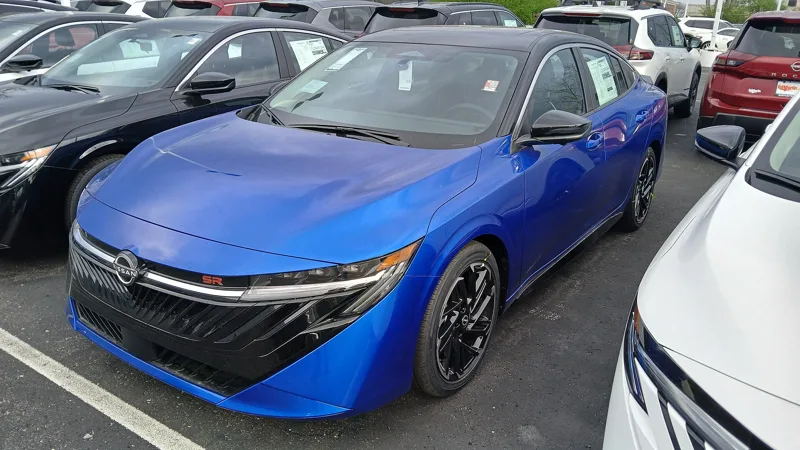
The design was based on an aerodynamic shape, with LED-rimmed headlights, LED tail lights and a boot lid with right-angled edges and chrome details. The interior offered plenty of space, and the boot was described as the largest in its class. Smart-key entry and push-button start were part of the package, along with dual-zone climate control on some markets.
The North American car was restyled inside and out to look more like Nissan's larger saloons, the Altima and the Maxima. It added LED accents on the headlights, LED rear lights and a new navigation and electronics system, giving it a more upmarket appearance than the generation before.
What safety and comfort kit came with the Sentra?
The Sentra carried ABS with EBD and brake assist, with the option of disc brakes on all four wheels. It also had stability control, six airbags and a reversing camera. Audio began with a basic 4.3-inch colour screen. Buyers could also order a Bose set-up with a 5.2-inch display and navigation, and the speaker count was six or eight.
The best-equipped versions added leather upholstery, and LED lighting ran along the rear with accents on the headlights.
Which engine did the B17 use in North America?
Compared with the outgoing model, the B17 dropped from a 2.0-litre engine to a 1.8-litre (110 cu in) unit. This new four-cylinder, the MRA8DE, is a 16-valve DOHC engine. It delivered 130 hp (97 kW) and 128 lb-ft (174 Nm) of torque. A figure of 129 hp (96 kW) at 6,000 rpm, with torque at 3,600 rpm, is also quoted.
The transmissions were a six-speed manual or an X-tronic CVT. The new engine was offered to give better economy than the previous car, with figures of 12.7 km/l around town and 16.5 km/l on the highway. The car was also 2.3 inches (58 mm) longer and had a wheelbase 0.6 inches (15 mm) longer, yet it weighed 68 kg (150 lb) less than its predecessor.
What was the Sentra like in Mexico?
The Mexican market received the car with less safety equipment than the American version, even though it cost the same. Mexican cars had only two airbags, rear drum brakes without a disc option, and no stability control. This was despite the fact that the Sentra was built at Nissan's plant in Aguascalientes, Mexico.
The car lagged its rivals on safety and equipment in Mexico, but not on sales. Its competitive price and Nissan's financing offers helped it sell well. Mexico's own output of the Sentra reached 189,501 units in 2019, which made it the country's fourth most produced vehicle that year.
What was the Sylphy's career in Japan and China?
In Japan the Nissan Sylphy went on sale on 5 December 2012. It was built at the Oppama plant in Yokosuka, Kanagawa Prefecture, and the Bluebird name that had appeared before it was dropped from the car's title.
The Chinese range used a 1.8-litre (110 cu in) MRA8DE that produced 102 kW (137 hp) and 174 Nm (128 lb-ft), alongside a 1.6-litre (98 cu in) HR16DE that produced 93 kW (125 hp) and 154 Nm (114 lb-ft). Transmissions were a five-speed (or a six-speed on the 1.8) or a CVT, and the trims ran from the 1.6 XE up to the 1.8 XV. An electric version was available in 2018 with a slight redesign of the front and rear.
How did the Sylphy differ in Thailand?
Thailand was the second market to get the Sylphy and used the Chinese engines in reduced form. The 1.6 fell to 85 kW (114 hp) and the 1.8 to 96 kW (129 hp), while torque was unchanged. Thai models came in four variants, namely the 1.6 S, 1.6 E, 1.6 V and 1.8 V, each with air conditioning and a CD player as standard, and two airbags were fitted across the range.
On 15 October 2015 Nissan Thailand added the MR16DDT to the range during its mid-life update. The direct-injection petrol unit produced 140 kW (188 hp) and 240 Nm (177 lb-ft) and was able to run on 95 or 91 RON fuel. The number of trim levels was reduced from eight to seven, and cruise control and NissanConnect became available options.
What happened to the Sylphy in the Philippines, Singapore and Malaysia?
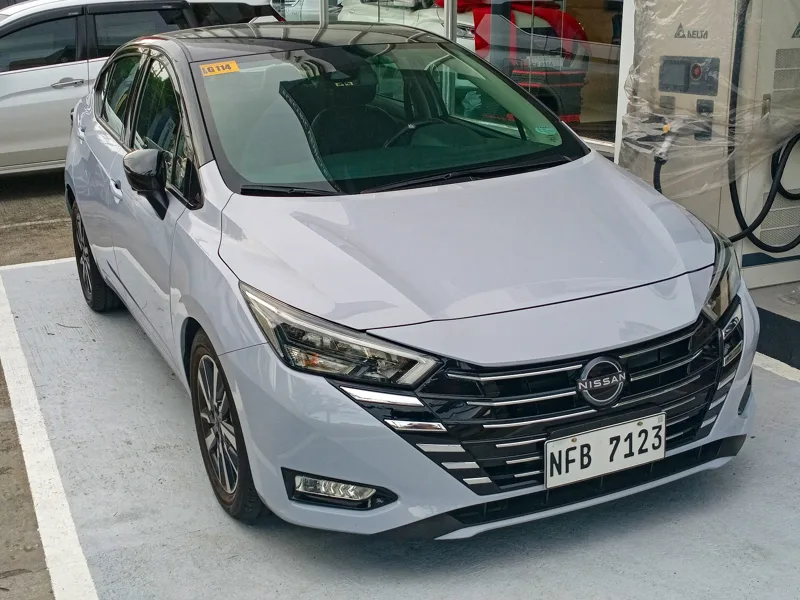
The Philippines introduced the Sylphy B17 on 7 March 2014, just after a Nissan press event that also launched the mid-size Altima. The Sylphy replaced the Sentra N16 there and came in white, black, grey, silver and bronze.
Singapore launched the B17 in March 2013 with 1.6 and 1.8 variants. After about five years the car was refreshed with a new grille, accentuated headlights and side lights, and piano-black interior plastic. In 2019 buyers could pick the 1.6 Lite or the 1.6 Premium. The facelift arrived on 10 January 2019 at the Singapore Motor Show, with headlamps that echoed the Taiwanese Sentra's.
Malaysia received the Sylphy on 29 April 2014, with six SRS airbags, VDC, TCS, ABS, EBD and BAS as standard. The two versions were the 1.8E and the more luxurious 1.8VL, both built entirely in Thailand. Impul accessories arrived in August 2014. The Sylphy disappeared from Malaysian price lists and from Nissan's official Malaysian website in 2018.
How did the Pulsar name come back in Australia?
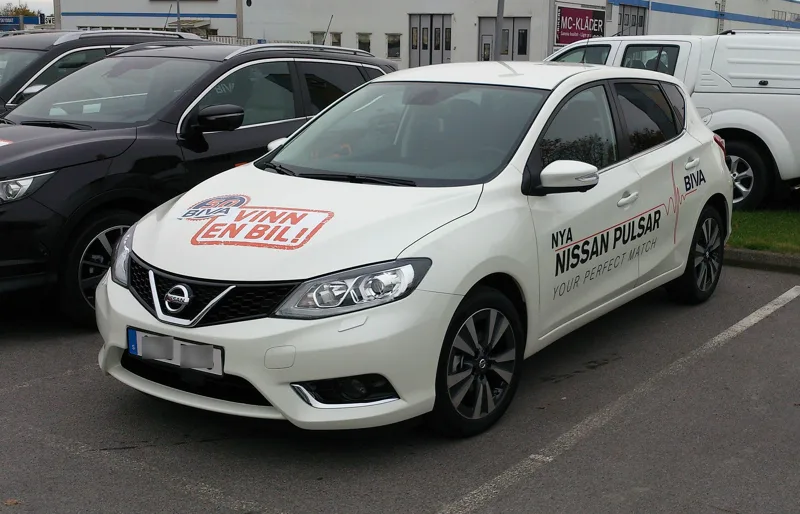
The Pulsar name was revived in Australia and New Zealand on 28 February 2013, after its unveiling at the Sydney show in October 2012. Three trims were offered: ST, ST-L and Ti. Manual and CVT automatics were both available, though the manual was limited to the ST and ST-L.
Basic equipment across the range covered six airbags, alloy wheels, Bluetooth and cruise control. Stepping up to the ST-L meant leather on the shifter and wheel, fog lamps and a rear spoiler. The Ti sat at the top, with xenon headlamps, leather seats, two-zone air conditioning, satellite navigation and a reversing camera. A five-door Pulsar hatchback followed later in 2013, but it was based on the Nissan Tiida C12.
What were the North American trims and changes?
The new Sentra arrived in North America in August 2012 as a 2013 model, third in line for the B17 after China and Thailand. Like the earlier model, it was offered in the S, FE+ S, SV, FE+ SV, SR, SR Turbo, SL and NISMO trims. Every trim except the base S had a reworked CVT, and the base S was the one with a six-speed manual.
The SE-R and SE-R Spec V versions were dropped. The SR was the sporty model, with a rear spoiler, 17-inch alloy wheels and silver details. Higher grades brought navigation, a smart key with push-button start and two-zone climate control. In Canada the trims were S and SV, with SL and SR as options on the SV, and air conditioning was optional on both.
| Engine | Market | Power | Torque |
|---|---|---|---|
| 1.8-litre (110 cu in) MRA8DE | North America | 130 hp (97 kW) | 128 lb-ft (174 Nm) |
| 1.8-litre (110 cu in) | China | 102 kW (137 hp) | 174 Nm (128 lb-ft) |
| 1.6-litre (98 cu in) HR16DE | China | 93 kW (125 hp) | 154 Nm (114 lb-ft) |
| 1.6-litre (98 cu in) turbo MR16DDT | Thailand from 2015 | 140 kW (188 hp) | 240 Nm (177 lb-ft) |
How did the model-year updates change the car?
For 2014 Nissan tuned the CVT, adjusted the steering and suspension, and made the sliding front armrest standard on the SL. The NissanConnect upgrade brought navigation and integration with iPhone and Android apps, better voice control, and destination entry by a single phrase. An automatic hazard warning light was also introduced.
For 2015 the Sentra gained new exterior colours, and the SR gained rear disc brakes, indicator repeaters in its side mirrors and keyless push-button start as standard. The 2016 redesign then gave the car new front and rear fascias, lights, bonnet, boot and wheels, which made it look more like Nissan's larger saloons. The SR and SL received LED headlights with LED daytime running lights, and the colour Blue Pearl was introduced.
What did the 2017 SR Turbo and NISMO add?
For the 2017 model year the Sentra gained two new trims, the SR Turbo and the NISMO. Both used the 188 hp MR16DDT engine. They were the first turbocharged Sentras that Nissan offered in the North American market. The NISMO had a lowered, performance-tuned suspension, sports seats, LED tail lights and red interior trim, along with a NISMO-specific body kit and wheels.
How did the Sentra fare in South America?
In Brazil the B17 was sold as the Nissan Sentra with a 2.0-litre (122 cu in) MR20DE flex-fuel engine. Nissan kept that engine because of market demand, as every direct rival used a 2.0-litre unit. The Brazilian model was built in Aguascalientes, Mexico.
In Trinidad and Tobago the car was also called the Nissan Sentra. Massy Motors, the local agency chain for Nissan, sold it and provided services.
What is the car's legacy?
The B17 was a single car sold under two names in different regions, built in several countries, and sold in markets on several continents. Its 2016 redesign and 2017 turbo trims were changes to the North American line.
Production ran from 2012 to 2020. The Mexican plant's output, the Thai engine changes and the Australian Pulsar return each show a different side of the car's life.