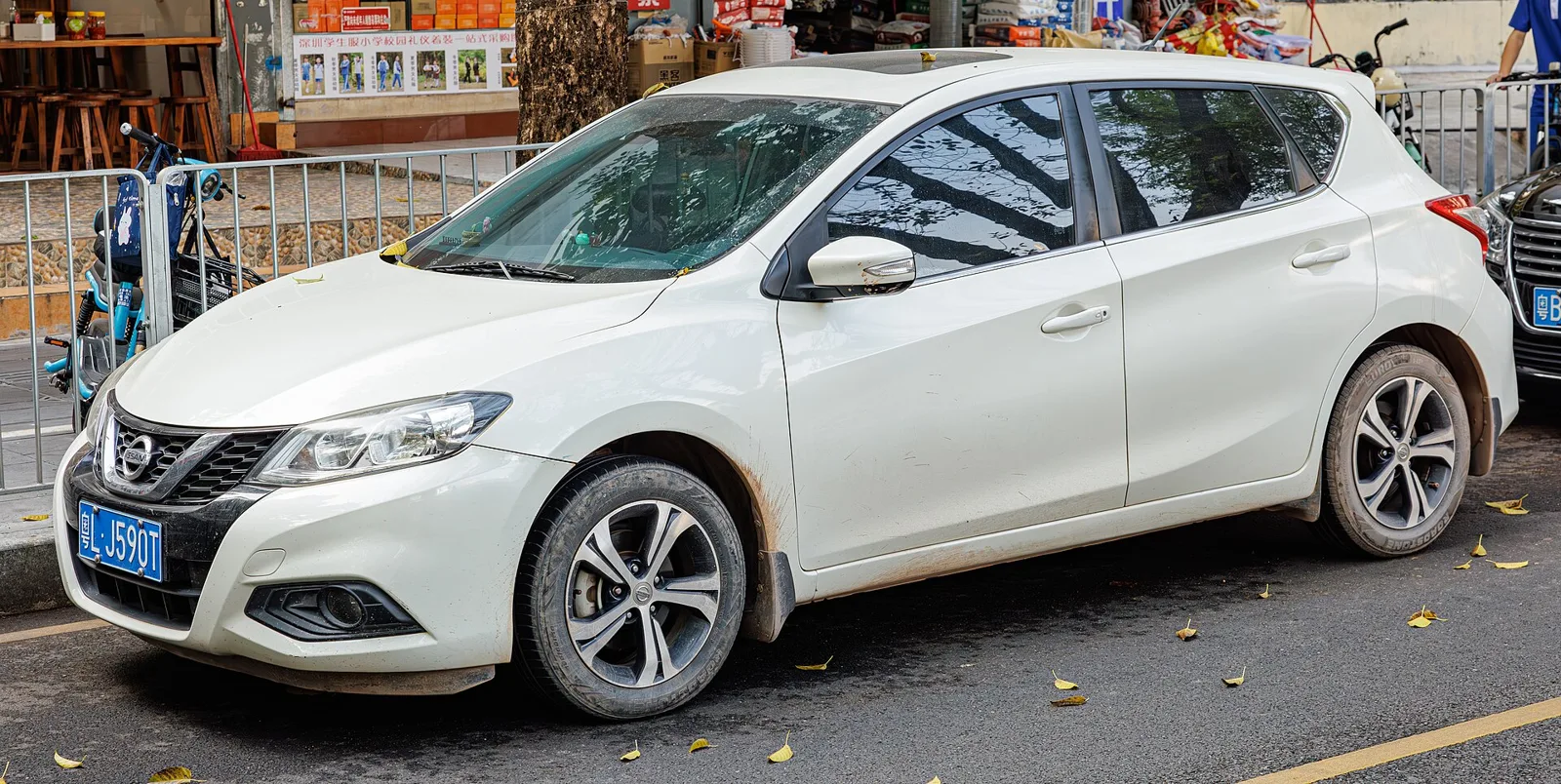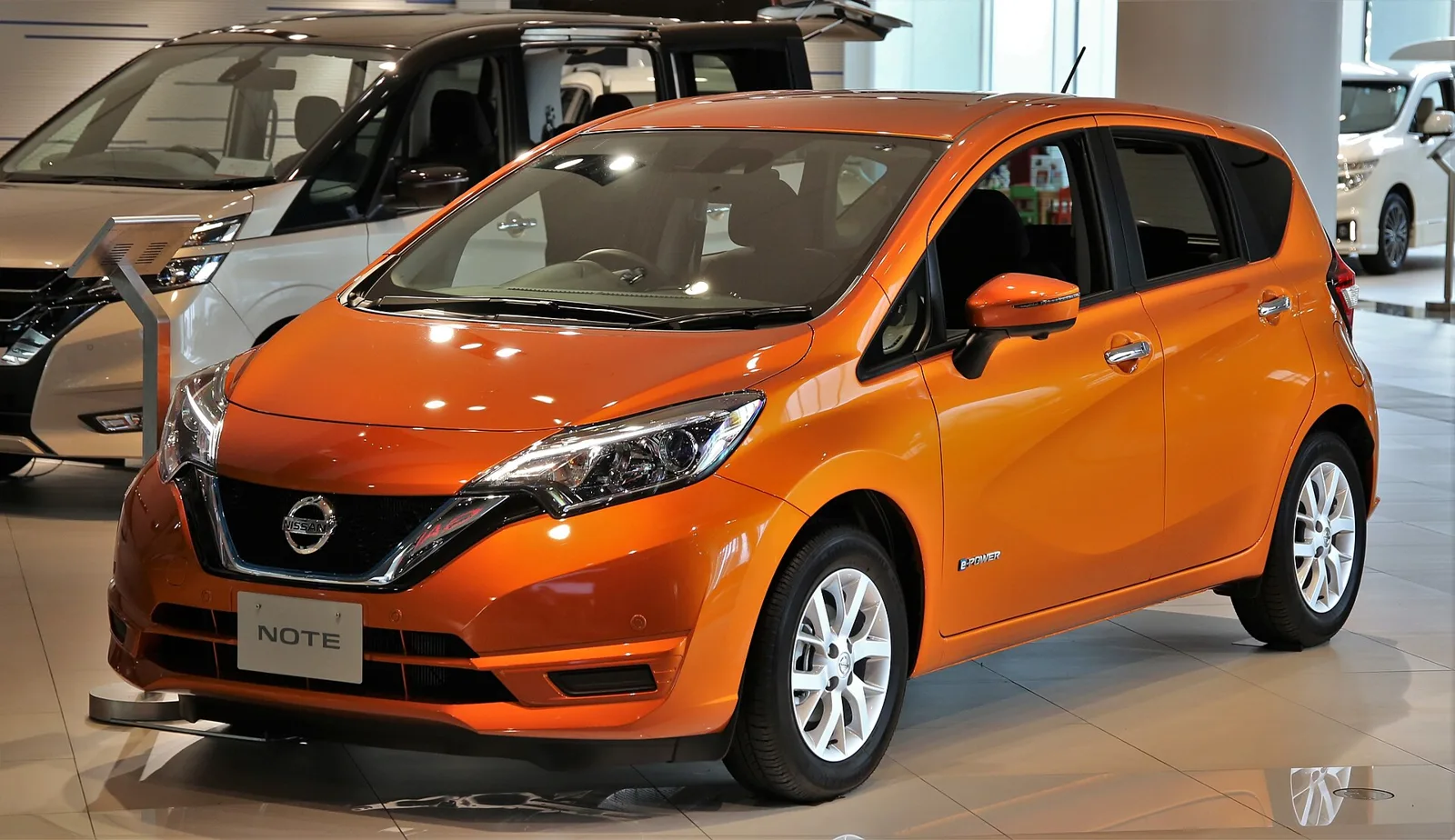
A hatchback that took over Tiida buyers in Japan, moved between the Kyushu and Oppama plants, and gained the e-POWER series hybrid in 2016.
The Nissan Note E12 was a compact hatchback built from 2012 to 2020 that took over Tiida buyers in Japan. Its engines ranged from a naturally aspirated 1.2-litre three-cylinder and a supercharged version to the e-POWER series hybrid, which Nissan added in November 2016. Production moved between Kyushu and Oppama.
Between 2012 and 2020 Nissan built a compact hatchback called the Note E12, and in Japan it inherited the customers of the Tiida. Its engine line-up ran from a naturally aspirated three-cylinder to a supercharged version and, from November 2016, the e-POWER series hybrid, which used the petrol engine only as a generator.
Where was the E12 Note built?
Production moved to Nissan Motor Kyushu with the E12 model. Until then the previous Note and Tiida had come off the line at Oppama, which also built other B-platform cars. In September 2016 production moved back to Oppama, because the Kyushu plant was running full on strong sales of the X-Trail and Rogue. Oppama also had spare capacity.
Building the car abroad had been considered, but Nissan was concerned about weakening Japan's manufacturing craft. Imported parts from China and Thailand were held at about 40-45%, and with parts from local suppliers in the Kyushu region the share reached about 85% of all parts.
Overseas production was spread across three plants. European-specification cars were planned for Nissan's Sunderland plant in the United Kingdom from summer 2013, North American cars came from Aguascalientes in Mexico, and Thai sales began in 2017 with cars built at the Samut Prakan plant in Samut Prakan province.
One compact hatchback, three powertrains, and a series hybrid that turned the petrol engine into a generator.
Where and when did the Note go on sale?
The E12 went on sale in Japan on 3 September 2012, and on 21 September it also reached Hong Kong with a specification almost unchanged from the Japanese car. Europe received it in autumn 2013, while North and South America got a partly redesigned version called the Versa Note in June 2013.
In Europe the E12 succeeded the first-generation Note, which had been sold there. In the Americas it succeeded the first-generation Versa, the North American name of the Tiida, so the model covered the markets that its predecessors had served in one continuous line of succession.
What engines did the E12 Note use?
Japanese and European cars used the HR12DE, a 1.2-litre (73.2 cu in) three-cylinder that replaced the earlier four-cylinder. Alongside it came the supercharged HR12DDR, which added direct injection and a Miller cycle, and European buyers could also choose a 1.5-litre (91.5 cu in) turbodiesel. North American cars used a 1.6-litre (97.6 cu in) HR16DE.
The HR12DDR was based on the HR12DE, but its direct injection and Miller cycle improved fuel economy. A supercharger fitted for it is engaged through an electromagnetic clutch, which makes up for the torque lost to the Miller cycle, so output and torque rise above those of the HR12DE. The same engine went into the European K13 March, which made the Note the second model to use it.
Supercharged Japanese cars run on regular petrol, just like the naturally aspirated ones. An ECO mode on the selector lever suppresses supercharger boost as far as possible. Every Japanese-specification car had a CVT with an auxiliary transmission, while European cars could also be ordered with a manual gearbox. The NISMO S was the exception, with a 5-speed manual on the HR16DE in high-octane form.
Besides normal driving, a sport mode suits climbing and descending slopes, and its switch sits on the side of the CVT selector lever.
How did e-POWER work?
e-POWER, added in November 2016, is a series hybrid. The HR12DE petrol engine is used only to generate electricity, a lithium-ion battery of 1.5 kWh stores it, and an EM57 motor alone drives the wheels.
The EM57 motor is basically common with Nissan's electric car, the Leaf, and sharing those components cut costs. The generating engine carries the same model code as the standard engine, but it was designed to emphasise low-speed torque, and its compression ratio was changed from 10.2 to 12.0.
The main battery is fitted beneath the front seats, while the auxiliary battery lives under the cargo floor. The engines and the drive motor are housed in the engine bay.
Toyota's THS, a power-split system, and Honda's SPORT HYBRID i-DCD, a parallel system, were already available in Japanese compact cars, and e-POWER made three main types of hybrid to choose from in the class. Nissan's own PURE DRIVE eco-car programme was marked on 2WD cars with a rear emblem, while e-POWER cars carried their own emblems on the front doors and the tailgate.
How did the Note meet fuel-economy targets?
Cars with the HR12DDR met the 2015 fuel-economy standard plus 20 percent, and front-wheel-drive cars with the HR12DE met the 2015 standard plus 10 percent. The S DIG-S reached 25.2 km/L on the JC08 cycle, the best figure of any petrol-registered car, excluding hybrids of 1.0 L or more.
In the July 2015 minor change, HR12DDR cars gained a pre-stop idling stop, which stops the engine once the driver has pressed the brake and the car has slowed to roughly 8 km/h (5 mph). The longer engine-off time lifted JC08 economy, and the car reached the 2020 standard plus 20 percent. The two-wheel-drive HR12DE cars were retuned in their engine and transmission and met the 2020 standard.
What changed in the body and chassis?
The E12 moved from the B platform to the V platform, one class down, which saved about 70 kg (154 lb). The parking brake changed from a foot pedal to a lever to save weight, and static torsional rigidity rose by about 10%. The front strut upper mount was fastened at one point instead of three, which cut its weight by 51%.
The suspension kept MacPherson struts at the front and a torsion beam at the rear, and its sheet-metal parts were shared with the K13 March, which also rides on the V platform. Japanese-specification cars carried 185/70R14 88S tyres, while the S DIG-S used 185/65R15 88H. The NISMO wore 195/55R16 high-grip tyres, and the NISMO S went up to 205/45R17.
European cars had their own steering, suspension and chassis settings, tuned for European roads and typical speeds. Japanese and North American cars were tuned differently again.
How did the E12 Note look?
A press line called the squash line runs along the body side and gives the car a sense of movement. The rear lamps take a boomerang shape, the same idea as the Z34 Fairlady Z and the Juke, though on the Note the boomerang faces the other way. The tail lamps have slits that vent air to cut drag.
Engineers pushed the base of the A-pillar about 100 mm further forward, which gave the windscreen a gentler slope. These changes gave the Cd value of 0.30 for most models, while the economy-focused S DIG-S reached 0.29 with an air dam and aerodynamic wheel covers. The concept car Invitation previewed the look at a show in March 2012, before sales began.
The Japanese and North American cars used a grille with horizontal bars, while the European cars had a mesh grille like the Invitation. The November 2016 change brought a V-motion grille and a boomerang signature to the rear lamps. Compared with the previous Note, the body was 80 mm (3.1 in) longer and 5 mm (0.2 in) wider, and 10 mm (0.4 in) lower. Its wheelbase matched that of the E11 Note and the C11 Tiida.
How roomy was the interior?
The effective interior length was 1,837 mm (72.3 in), 145 mm more than the previous Note and 1 mm more than the Tiida. Rear legroom reached 643 mm (25.3 in), which was 85 mm more than the previous Note and 7 mm less than the Tiida. The cargo floor length was cut by 20 mm, and capacity fell by 8 L to 330 L.
Engineers moved the accelerator pedal 20 mm forward compared with the previous Note. That gave more cabin space than the increase in overall length alone would have allowed, and it was done without giving up the cargo area that the earlier Note had been known for.
The steering wheel was redesigned in November 2016 as a D-shaped three-spoke with a flat bottom, and the MEDALIST could be ordered with full synthetic leather seats. In September 2017, Intelligent Cruise Control and Intelligent LI, a lane departure prevention system, became standard on the e-POWER MEDALIST and on the e-POWER X Black Arrow and e-POWER MEDALIST Black Arrow.
Which trims did Japanese buyers choose?
Japanese buyers chose from the budget S series, which was offered only in the early models, the mainstream X series, the top-of-range MEDALIST and the NISMO S, which was handled as a car brought in for modification. The S DIG-S was the low-fuel-consumption model, with dedicated 15-inch eco tyres and a dedicated air dam.
The X added an intelligent key, front speakers and a 6:4 split-folding rear seat to the S-series equipment. The MEDALIST, in addition to the X DIG-S specification, had auto lights and an around-view monitor as standard, together with chrome door handles. Its name came from the grade of the same name on the Laurel, and it was positioned so that former Tiida customers could see it as the successor.
A series of special editions followed. The Aero Style of July 2013 added a piano-style grille and dark aluminium wheels, the Blanc Nature Interior of November 2015 added a two-tone seat, and the V Selection+Safety II of May 2016 added a pedal-misapplication collision prevention assist. The Black Arrow arrived in September 2017, and the C-Gear in October 2017. The C-Gear Limited followed in December 2018, and the V Selection in October 2019.
At launch the body came in eight colours. The number rose to 10 in October 2013, and to 13 in November 2015 after a colour rearrangement. The November 2016 change added Galaxy Gold Titanium Metallic, Olive Green Titanium Metallic and White, and it dropped the two-tone specification. In July 2018 Sunlight Yellow Pearl replaced Sonic Blue Titanium Pearl Metallic as an option colour for the X-series and MEDALIST grades.
Specifications at a glance
| Specification | Detail |
|---|---|
| Years built | 2012 to 2020 |
| On sale in Japan | 3 September 2012 |
| Base engine | HR12DE, 1.2-litre (73.2 cu in) three-cylinder |
| Supercharged engine | HR12DDR, direct injection and Miller cycle |
| European diesel | 1.5-litre (91.5 cu in) K9K dCi |
| North American engine | 1.6-litre (97.6 cu in) HR16DE |
| e-POWER battery | 1.5 kWh lithium-ion |
| Fuel economy | 25.2 km/L on the JC08 cycle, S DIG-S |
| Interior length | 1,837 mm (72.3 in) |
| Rear legroom | 643 mm (25.3 in) |
| Cargo capacity | 330 L |
| Weight saving from platform change | About 70 kg (154 lb) |
Why did the E12 Note matter?
The E12 mattered because e-POWER gave Japanese compact cars a third main type of hybrid system, alongside the two already on sale. A buyer of a modest Japanese hatchback could choose a petrol car, a supercharged version or a series hybrid, all from the same body.
The model also shows how production moved between plants. Kyushu was chosen to protect Japan's manufacturing craft, the work returned to Oppama when the Kyushu plant was full, and overseas plants built the car for their own markets.