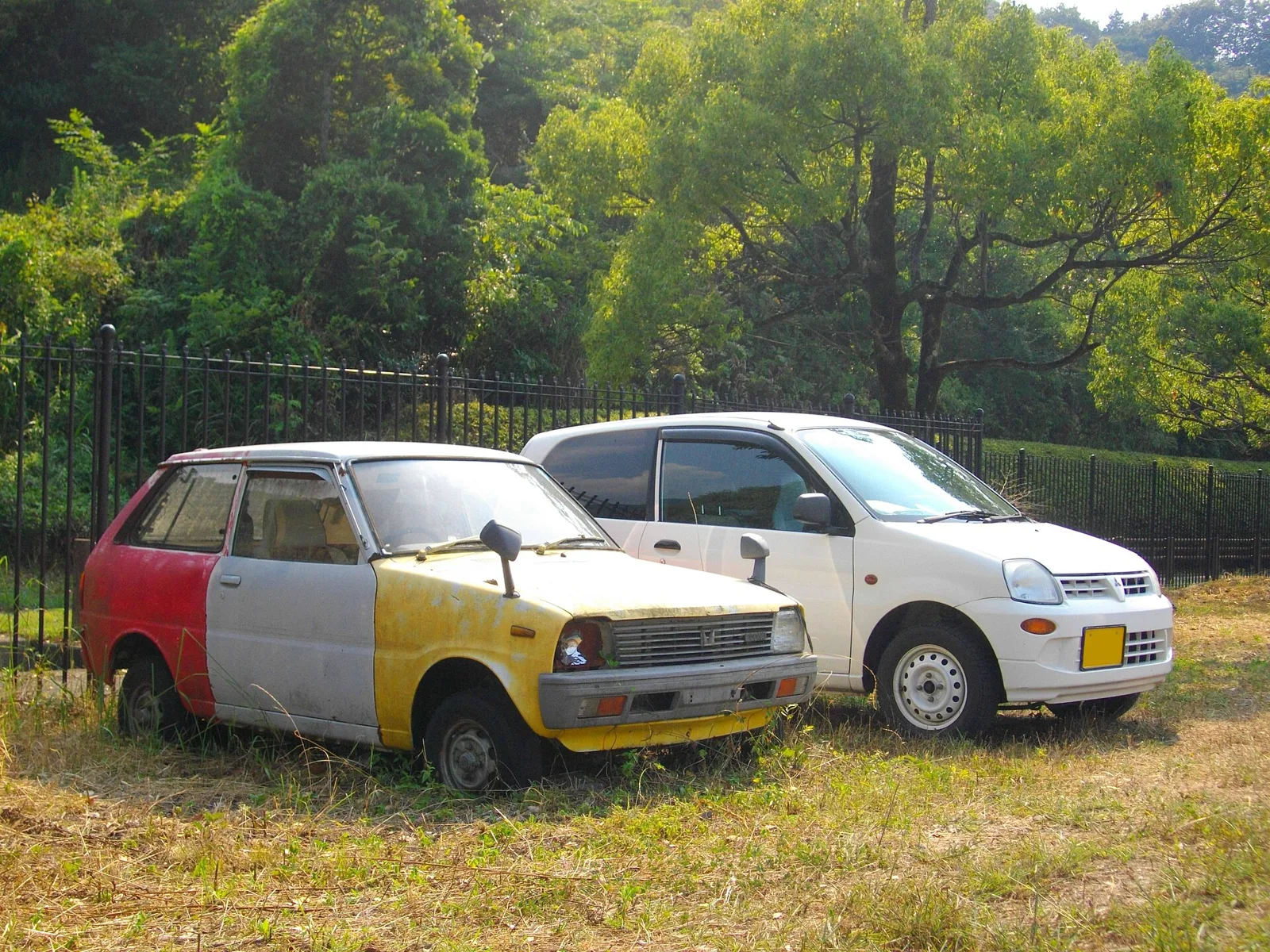
Eight generations of a small Japanese car, from a 1961 light truck to the front-wheel-drive models of the 1980s and the eK wagon that followed.
The Mitsubishi Minica was a kei car series built from 1962 to 2011, mainly for Japan. It started as a passenger version of the Mitsubishi 360 light truck and later included a hatchback, a coupe, a turbo model and a front-wheel-drive generation. It was succeeded by the eK and i.
The Minica was a kei car series that Mitsubishi built from 1962 until 2011, mostly for drivers at home in Japan. It began as a passenger version of a small light truck, and it grew over the decades into a hatchback, a coupe, a turbocharged sports model and a tall MPV. Its successors were the eK and the i.
What is the Mitsubishi Minica?
The Minica is a family of kei cars, the small vehicles that Japan's rules allow to pay lower taxes and use smaller engines. Across the generations the car changed shape and mechanics several times. Each new generation reflected new rules, new engines and new buyer habits.
Shin Mitsubishi Heavy Industries built the first cars, one of three regional companies under the Mitsubishi Heavy Industries umbrella, until the three were merged in 1964. The badge therefore predates the Mitsubishi Motors company itself. In Japan the car was sold through a retail chain called Galant Shop.
A kei car that began as a truck and ended as the eK, through eight generations of small-car engineering.
Where did the Minica come from?
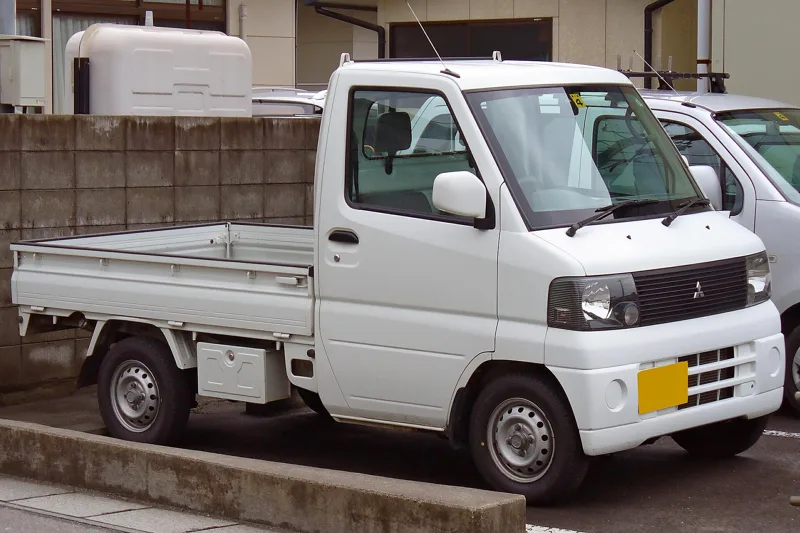
The Minica's precursor was the Mitsubishi 360, a range of light trucks introduced in April 1961. It was designed to sit in the lowest kei car tax class, and it used an air-cooled 359 cc engine making 17 PS (13 kW). That power gave a top speed of 80 km/h (50 mph), though the car came with a fully synchromesh four-speed gearbox.
After the passenger car arrived in 1962, the 360 van and pickup carried on alongside it and shared much of the same development. The pair competed with the Subaru 360, the Daihatsu Fellow Max and the Suzuki Fronte. Their unexpected success led Mitsubishi to end production of its three-wheeled vehicles.
The early 360 was a light van that was really a station wagon, registered as a commercial vehicle for tax reasons. A pickup version was added later that year. Its styling was quaint, with suicide doors and a swage line that ran over the hood. Whitewall tyres and lace curtains were standard on the Light Van DeLuxe, introduced in April 1962.
How quick was the first Minica?
The first Minica, the LA20, arrived in October 1962 as a two-door sedan based on the 360 truck. It used the front-mounted ME21 359 cc twin-cylinder air-cooled engine, which drove the rear wheels. Its top speed was 86 km/h (53 mph), just above the van.
The November 1964 facelift brought a new engine, the ME24, which gave 18 PS (13 kW). A system called Auto Mix removed the need to premix oil with the petrol. In May 1967 the car received the ME24D with 21 PS, and the top speed rose to 90 km/h (56 mph) across the 360 range.
The 1964 facelift also gave the 360 and Minica a new front clip with a pressed metal chrome grille, and the modernised car reached 85 km/h (53 mph).
What did the second-generation Minica 70 change?
The second-generation Minica 70 arrived in July 1969 as a three-door hatchback, which Mitsubishi called a sedan. It was the first hatch in the kei class, and it kept the traditional front engine and rear-wheel drive layout. The chassis used coil springs at both ends, MacPherson struts at the front and a five-link rigid rear axle.
Two water-cooled two-stroke 2G10 engines were offered. The Red unit made 28 PS (21 kW) in the Super Deluxe and Sporty Deluxe, while the Gold unit, with twin SU carburettors, made 38 PS (28 kW). The basic Standard and Deluxe kept the older air-cooled ME24E with 26 PS (19 kW), giving a top speed of 105 km/h (65 mph).
A two-door wagon was added in December 1969 and lasted until the Minica Econo replaced it in 1981. The van was a separate line and did not receive the same engine upgrade.
Was there a sporty Minica?
Yes. The Gold 2G10 engine with twin SU carburettors made 38 PS (28 kW) and was fitted to the SS and GSS sport models from December 1969. The Minica Skipper coupe followed in May 1971 with a liftable rear window.
The Skipper was a miniature version of the Mitsubishi Galant GTO hardtop. Its rearmost panel had a small window, and the top rear window opened for access to the luggage area, which had a folding rear seat. Apart from the chassis and internals, it shared its front clip and lower door panels with the sedan.
The sporty versions did not last. By the early 1970s the GSS sedan was becoming obsolete, because the focus had shifted to the coupe versions. The twin-carburettor engine later fell foul of new emissions rules.
How did the Minica evolve in the 1970s?
Mitsubishi made a series of small changes through the decade. In February 1971 the car became the Minica 71, with wider taillights and trim changes. By September 1971 it was the Minica 72, with a honeycomb grille and amber indicators in the taillights. The Minica 73 followed in October 1972 as a low-cost model.
The third-generation Minica F4 arrived in October 1972 with a 359 cc overhead-cam engine called the Vulcan 2G21. It was cleaner than the two-strokes but less smooth, and it made 32 PS (24 kW) with single carburettors and 36 PS (26 kW) with twin carburettors. Late 1973 brought the Vulcan S, fitted with a balance shaft that later became known as Silent Shaft, and the top speed reached 115 km/h (71 mph).
The Minica 5 came in April 1976 under the revised kei rules, which allowed up to 550 cc. It used a long-stroke 471 cc engine and was the first kei passenger car to meet the new regulations. The Minica Ami 55 followed in June 1977 with a larger 546 cc Vulcan 2G23 engine making 31 PS (23 kW).
Why did the fifth generation switch to front-wheel drive?
The fifth-generation Minica arrived in February 1984 as the first front-engined, front-wheel drive model. It offered three- and five-door bodies, a larger size and a torsion beam rear suspension with coil springs. Its tall design gave the cabin far more room, and the car competed with a class of one-litre cars.
The engine was the G23B, updated with a timing belt in place of the noisy timing chain. The sedan made 33 PS (24 kW), the Econo commercial version made 31 PS (23 kW), and the Turbo, which gained an intercooler, made 42 PS (31 kW). The passenger model's sales tripled year on year in its first month.
What did the Turbo and Dangan models offer?
The first kei car with a turbocharger was the Minica Ami L Turbo, launched in March 1983 with 39 PS (29 kW). It was short-lived, because production of the A107 Minicas ended in January 1984 as Mitsubishi readied a new front-drive car.
In January 1988 an aero-kit Turbo called the Turbo ZEO arrived to compete with rival kei sports cars. It used a 50 PS (37 kW) carburetted engine but sold poorly. The sixth generation later introduced the Dangan ZZ, with a turbocharged 64 PS (47 kW) engine that had five valves per cylinder.
How did the Minica sell in the late 1980s?
The sixth-generation Minica was introduced in January 1989 with front- and four-wheel-drive versions. Its engine, wheelbase and suspension were carried over, so most of the change was in the body. Sales of the fifth generation had dropped to under 27,000 cars in 1988, and almost 77,000 Minicas sold in 1989.
The Minica Lettuce was an asymmetric model with a single door on one side and two on the other, plus a liftgate. It was developed with the Seiyu supermarket chain, which also sold the car directly. The design was meant to simplify loading children and shopping, and it was reclassified as a sedan in May 1989.
The Dangan was originally a commercial vehicle, but it became a passenger car in August 1989. A walk-through van also appeared that August, using the maximum kei height of 1,990 mm (78 in). It did not sell well enough to continue into the next generation.
What happened to the Minica in the 1990s?
New kei rules for 1990 let the car grow in length and allow an engine of 660 cc. The Minica's engine became 657 cc, and the Toppo tall three-door MPV arrived in February 1990 with optional four-wheel drive. The seventh generation followed in September 1993 with a longer wheelbase and two 659 cc four-cylinder engines.
The enlarged eighth generation arrived in October 1998, with a 657 cc three-cylinder overhead-cam engine that had four valves per cylinder. A lean-burn variant using Mitsubishi's Vertical Vortex system cut fuel use and CO2 emissions by about 10 percent. A limited run of 50 Pistachio models with a 1094 cc engine was sold only to environmental organisations in December 1999.
The retro Town Bee models, with their retro-styled front ends, appeared in 1997 and again on the eighth-generation platform in January 1999. The export market was served by the Mitsubishi Towny, which was built in Taiwan by CMC from March 1985.
What replaced the Minica?
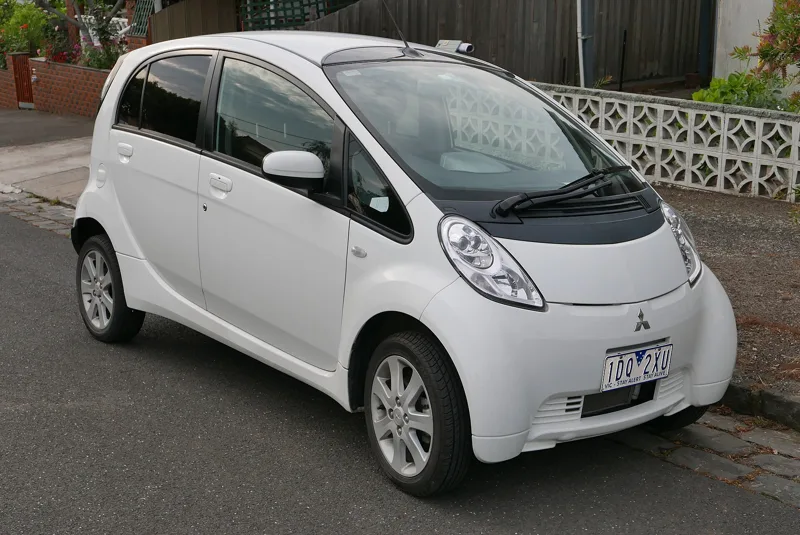
The Mitsubishi eK Wagon, a five-door wagon, arrived in October 2001 and became Mitsubishi's main product in the kei class. Passenger versions of the Minica were discontinued in 2007. The commercial models continued to be built until 2011, when the i took over.
The eK is described as the direct successor of the Minica, which means the nameplate changed while the kei formula stayed the same.
What is the Minica's legacy in the Philippines?
A Filipino tongue twister uses the car's name in its wording, built around a mechanic repairing a Minica engine. Its rough English sense is that Monico's mechanic fixed the engine of Monica's Minica. The car gained popularity in the Philippines during the Marcos dictatorship, and the phrase stuck long after.
What are the Mitsubishi Minica specifications?
| Specification | Detail |
|---|---|
| Series run | 1962 to 2011, kei cars for Japan |
| Mitsubishi 360 engine | Air-cooled 359 cc, 17 PS (13 kW) |
| 360 top speed | 80 km/h (50 mph) |
| First Minica sedan | ME21 359 cc twin-cylinder, 86 km/h (53 mph) |
| Second generation Gold engine | 2G10 two-stroke, 38 PS (28 kW) |
| Fifth generation drive | Front engine, front-wheel drive from February 1984 |
| Fifth generation Turbo | 42 PS (31 kW) with intercooler |
| Dangan ZZ | 64 PS (47 kW), five valves per cylinder |
| Eighth generation engine | 657 cc three-cylinder, four valves per cylinder |
| Lean-burn benefit | About 10 percent lower fuel use and CO2 |
| Successors | eK from 2007, i from 2011 |