A sixth-generation saloon with its own platform, Ferrari-built twin-turbo engines and a clear turn towards ride comfort and cabin finish.
The Maserati Quattroporte VI was the sixth generation of Maserati's large luxury saloon. Announced in November 2012 and on sale from 2013, it used a new in-house platform, twin-turbo V8 and V6 engines, and a design that leaned towards comfort, interior finish and luxury more than its sporting predecessors.
Maserati's sixth-generation Quattroporte went on sale in 2013 on a platform the company developed itself, with twin-turbo engines that ran from a V6 up to a V8. It marked a clear step towards comfort and luxury, away from the sporting character the nameplate had carried before.
Why did the Quattroporte move towards luxury?
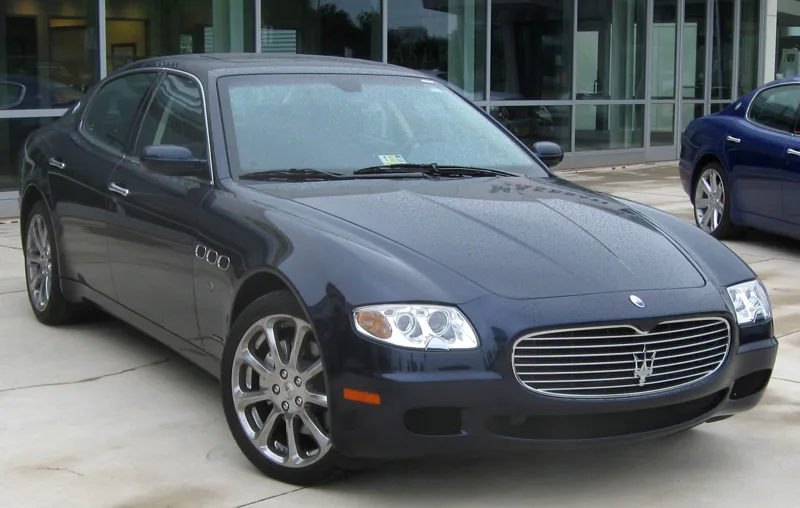
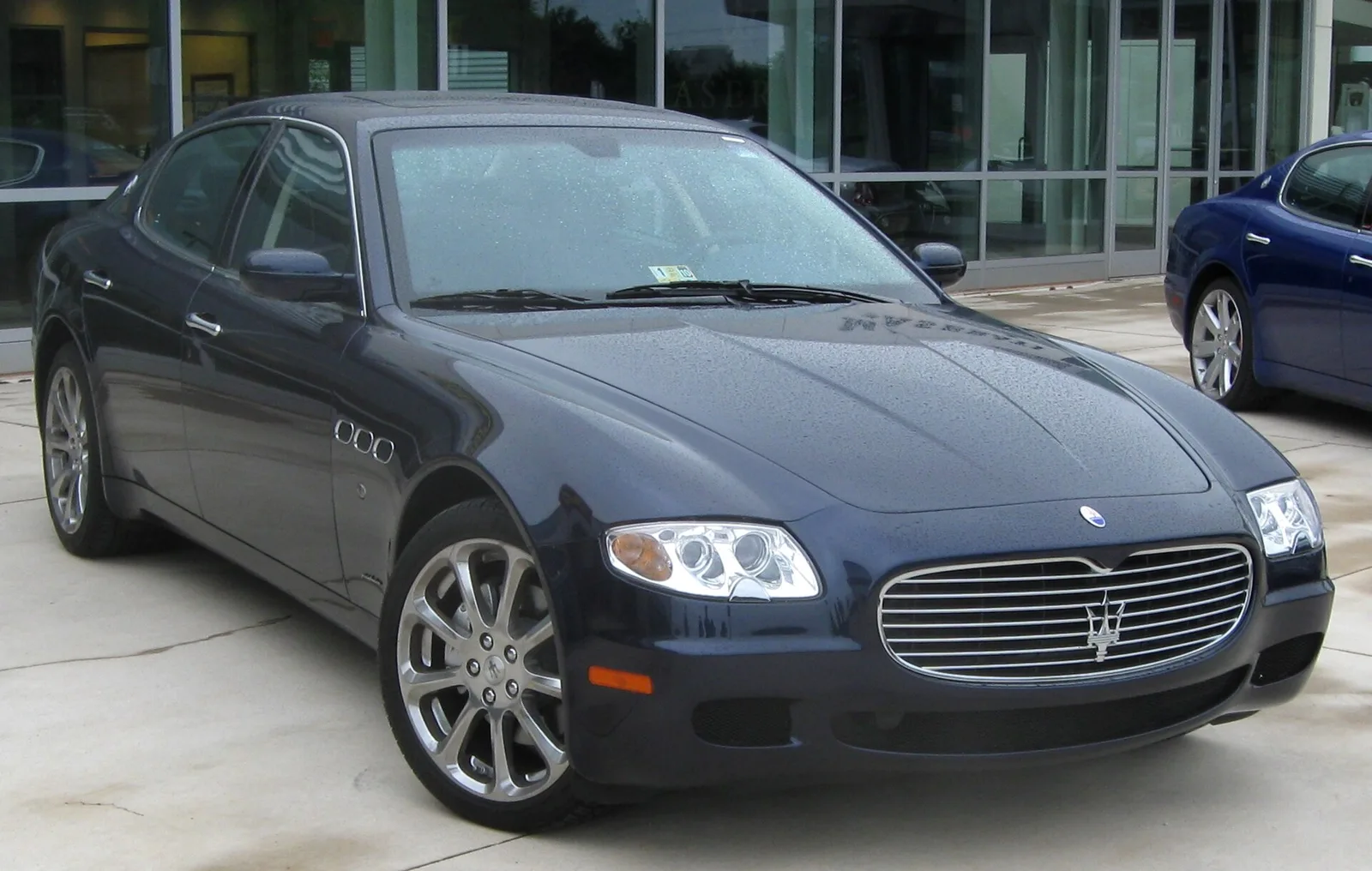
The 2003 Quattroporte was a saloon of over 5 metres that was, in effect, a sports coupe with two doors added. After almost ten years Maserati replaced it by tilting the car towards market preferences, with more comfort and luxury on board and less sportiness in the cabin.
The first generation was presented in 1963, styled by the Turin coachbuilder Pietro Frua. Over the years the car grew into a large luxury saloon with pronounced dynamic abilities and an extremely sporting character. After Maserati passed to Ferrari, the Quattroporte leaned more and more towards the sporting side. It did not dedicate itself to luxury and ride comfort in equal measure, though it did not underrate them either.
The two-thousands brought a broader change. The Quattroporte had become the precursor model of the four-door coupe segment, and by the time the sixth generation arrived Maserati had to replace a very important model. It did so by raising ride comfort and interior luxury alongside the performance and dynamic qualities the car already had. The result kept the performance while adding comfort, luxury and a more refined cabin.
Maserati's sixth Quattroporte kept the performance and added comfort and cabin luxury.
How was the sixth generation styled?
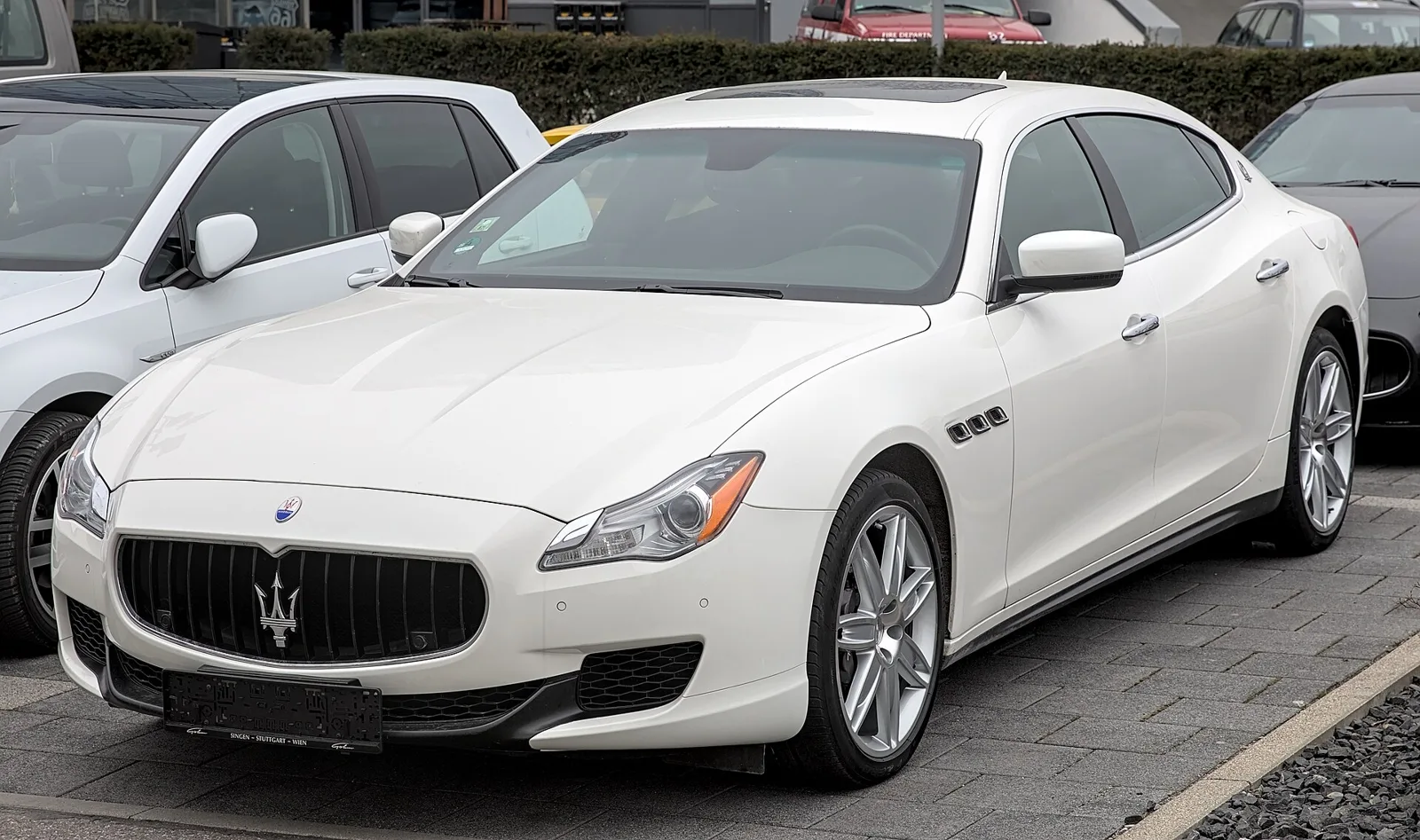
Lorenzo Ramaciotti and Marco Tencone are credited with the styling. Ramaciotti coordinated design across the group's brands, while Tencone led Maserati's own styling centre. Its flank had been previewed by the Maserati Kubang concept in 2011, and its glass sits flush with the roof.
The side glass has no frames at all, not even on the rear doors, which is a coupe feature. The flank looks slightly heavier at the height of the rear pillar, a result of the larger dimensions and a longer wheelbase, which gave rear passengers more room. A third window in the flank confirms the extra space.
The front light clusters are more aggressive but less elegant. The rear clusters sit horizontally, as on the GranTurismo, and together with the front they give the car modernity and sportiness. The classic trident cues remain in the grille, the triangular pillar and the three air intakes above the front wheel arch.
Overall the car is more dynamic than its predecessor, partly thanks to its larger size, and sportiness and lightness were pursued across almost the whole body.
Inside, clean and minimal lines show off the quality of the materials, the finishes and the handcrafted build. Classic lines recall the large American saloons, a deliberate nod to a market that Maserati saw as increasingly important. The result gives more a sense of a luxury car than of a sports car.
The Ghibli, presented in 2013, was more compact and aggressive. It filled the gap between the saloon and the coupe left by the Quattroporte V and widened the range downwards. That in turn justified the lesser sportiness and greater elegance of the Quattroporte VI.
How big was the sixth generation and where was it built?
The sixth generation is five metres and twenty-six centimetres long, twenty centimetres more than its predecessor. Its official live presentation took place at the Detroit Motor Show in January 2013, and it was assembled in Turin at the former Bertone plants in Grugliasco.
Interior room and boot capacity were the weak points of the 2003 car, and the 2013 model grew in both. The increase came partly from larger dimensions and partly from a reorganisation of the volumes. The fuel tank, which had sat under the seats, was moved under the floor.
The M156 platform was developed independently by Maserati. Set against the previous generation, the car uses 35% aluminium, weighs roughly a quintal less and distributes its weight more evenly. The chassis can also take several engine types, something the earlier layout could not do.
The model was of fundamental importance for the Italian manufacturer, even though it was never meant to lead the range in sales.
Ferrari and Maserati engineers developed the car together in Emilia-Romagna. Fiat SpA bought the former Bertone plants in 2010 to rescue the historic Turin coachbuilder from bankruptcy proceedings, and the Grugliasco site was then used for the car.
Maserati set itself a demanding target of 50,000 cars a year across all its models by 2015. The Quattroporte was not expected to be the best seller in the range, for obvious reasons of market positioning. Its job was to keep the name of its predecessors alive and to set a new benchmark for the sector.
What engines did the Quattroporte VI use?
At launch the car offered a 3,799 cc (231.8 cu in) twin-turbo V8 producing 390 kW (530 PS; 523 hp), called F154 AM, and a 3.0-litre twin-turbo V6 called F160. A detuned V6 producing 330 PS (243 kW; 325 hp) was made only for the Chinese market.
The V8 is a new-generation twin-turbo unit, completely redesigned compared with the engine it replaced. The F160 V6 is also new and was assembled by Ferrari at Maranello, sharing many solutions with the V8.
Maserati and Ferrari co-designed the V8, which draws on the Ferrari F154 engine family. It is a 90-degree V with direct injection at up to 200 bar and double supercharging from two turbochargers. Ferrari also produces it at its plant in Maranello.
The V8 delivered 710 Nm (524 lb ft) of torque between 2,250 and 3,500 rpm, and 95% of it was already available below 1,600 rpm. With these figures the car gets from rest to 100 km/h in 4.7 seconds and peaks at 307 km/h (191 mph).
The V6 produced 301 kW (410 PS; 404 hp) at 5,500 rpm, with 550 Nm (406 lb ft) between 1,500 and 5,000 rpm. It reached 100 km/h in 4.9 seconds, or 5.1 seconds with rear-wheel drive, and topped out at 283 km/h (176 mph), or 285 km/h (177 mph) with rear-wheel drive.
The engines for this car are the most powerful and efficient, measured by performance against fuel use, that Maserati has built for its road cars. The V6 is also twin-turbo and shares many solutions with the V8.
How did the Q4 all-wheel drive system work?
Q4 was the commercial name for an intelligent all-wheel drive system that sends torque to the front wheels only when it is needed. In optimal grip conditions the torque goes entirely to the rear wheels, which gives sporting behaviour with a total absence of understeer.
Alfa Romeo had used the name before, but Maserati's technology is very different. Its variable distribution adapts instantly to the grip of each wheel, which prevents any slipping. The name is shared between the two makers, but the mechanism behind it is not.
The V6 was the engine paired with Q4. From the first quarter of 2014 it was also offered with rear-wheel drive only. The V8 could be paired only with rear-wheel drive.
The eight-speed gearbox could be fully automatic or sequential, with controls on the steering wheel. Road behaviour could be set to soft, intermediate or sport, with sport making the response of the engine and gearbox more aggressive. A further mode stiffened the suspension for sharper dynamics.
The steering was new as well, with electro-hydraulic assistance of variable action controlled electronically. That is a system rare even on other cars in the same segment. It was new compared with the steering of the previous Quattroporte.
What changed in the 2016 restyling and later updates?
A mid-2016 restyling changed the grille to vertical chrome bars that close when needed for an aerodynamic benefit of 10%. It also added a sharper front bumper, new mirror caps, side sill skirts and a rear diffuser. Performance rose across all versions, including top speed.
The new grille design was similar in style to that of the Maserati Levante, and the bars close when needed to give the aerodynamic benefit described above.
Together the new front bumper, the mirror caps and the rear diffuser gave the car a sharper, more angular look, and they were part of the package that raised performance.
The restyling widened the standard equipment as well. Electronic systems such as a collision-avoidance system and a rear camera became available as new options. Inside, the infotainment system received new controls, and storage compartments were added and enlarged.
In 2018 the Quattroporte gained a set of advanced driver assistance systems. Highway Assist combined adaptive cruise control with automatic lane keeping, allowing the car to reach Level 2 autonomous driving. Adaptive matrix LED headlights and soft-close doors arrived at the same time. The 2018 update therefore added safety and convenience to a cabin that had already been refined for comfort.
Goodwood hosted the July 2018 reveal of the Model Year 2019 car. The update brought new paint choices, refreshed alloy wheels, new skirts for the GranSport version and interiors trimmed in Pieno Fiore leather. The Model Year 19 car also received a revised gear lever and multimedia system that were easier to use.
What was the Quattroporte Trofeo?
The Quattroporte Trofeo arrived in summer 2020 as the top of the range. Its twin-turbo V8, of Ferrari origin, produced 580 PS (427 kW; 572 hp) and 730 Nm (538 lb ft). That let it reach 326 km/h (203 mph) and 100 km/h in 4.5 seconds.
Visually the Trofeo changed little from the other versions. Carbon-fibre finishes appeared on the front air intakes, the rear bumpers and the side skirts, with 21-inch forged aluminium wheels and red details.
Production of the sixth generation ended with a single unique example fitted with the company's last V8 engine.
What are the Quattroporte VI specifications?
The V8, V6 and Trofeo versions differ mainly in output and in how their power reaches the road. The V8 was rear-wheel drive only, while the V6 could be had with Q4 all-wheel drive or rear-wheel drive. The car as a whole used an eight-speed gearbox.
| Specification | V8 | V6 | Trofeo |
|---|---|---|---|
| Layout | Twin-turbo 90-degree V8 | Twin-turbo 3.0-litre V6 | Twin-turbo V8 of Ferrari origin |
| Displacement | 3,799 cc (231.8 cu in) | 3.0 litres | - |
| Output | 390 kW (530 PS; 523 hp) at 6,500 to 6,800 rpm | 301 kW (410 PS; 404 hp) at 5,500 rpm | 580 PS (427 kW; 572 hp) |
| Torque | 710 Nm (524 lb ft) at 2,250 to 3,500 rpm | 550 Nm (406 lb ft) at 1,500 to 5,000 rpm | 730 Nm (538 lb ft) |
| 0-100 km/h | 4.7 seconds | 4.9 seconds, 5.1 seconds rear-wheel drive | 4.5 seconds |
| Top speed | 307 km/h (191 mph) | 283 km/h (176 mph), 285 km/h (177 mph) rear-wheel drive | 326 km/h (203 mph) |
| Drive | Rear-wheel drive | Q4 all-wheel drive or rear-wheel drive | - |
| Gearbox | Eight-speed, fully automatic or sequential | ||