A one-off running prototype, a disputed V12 and a replica built forty-five years after the original was destroyed.
The Lamborghini Countach LP500 was a one-off running prototype first shown in Geneva in 1971. Built to plans by Stanzani, Parenti and Bertone, it led to the production Countach, built from 1974 to 1990, and its claimed 5.0-litre V12 remains disputed.
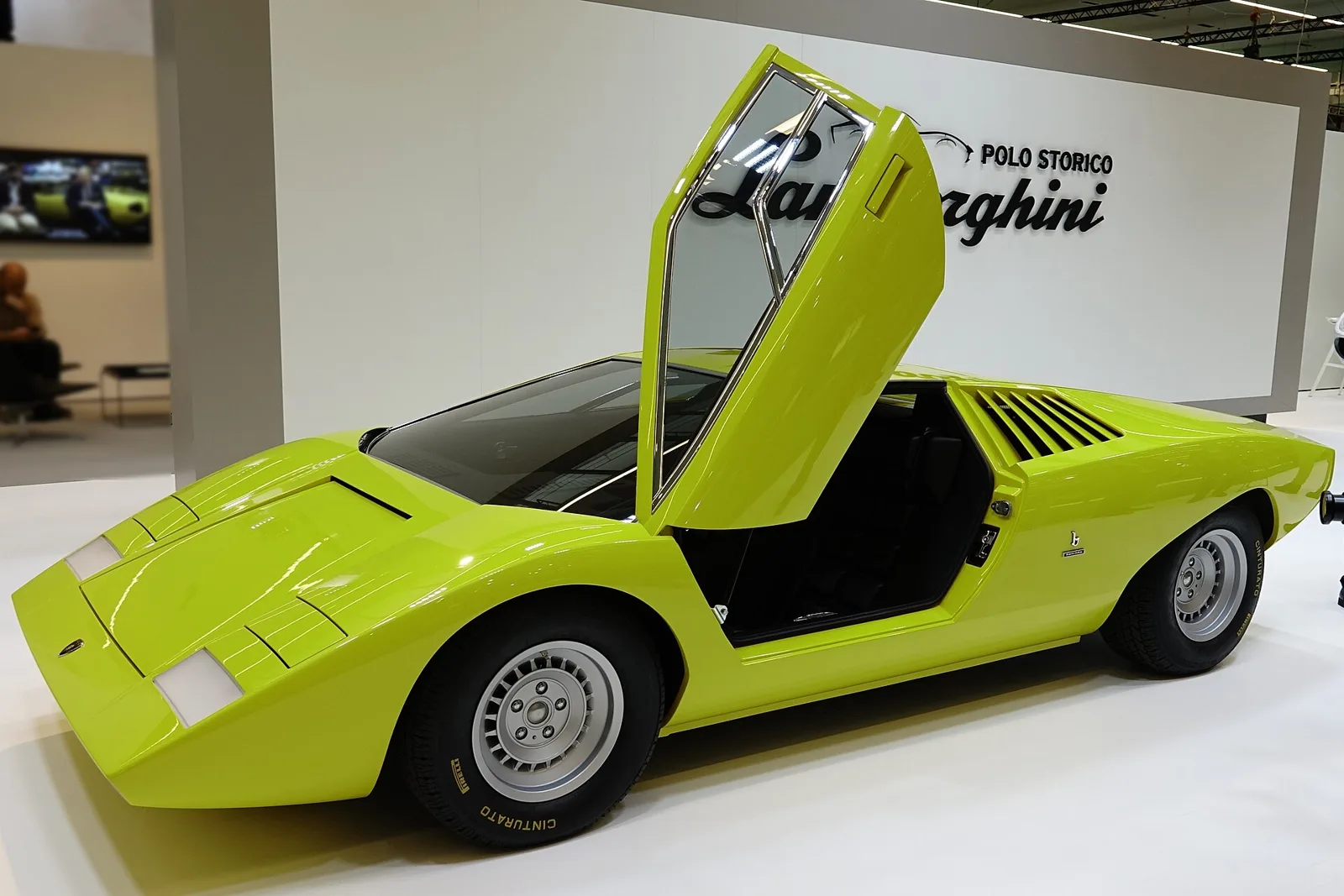
The Lamborghini Countach LP500 was a running show car that debuted at the Geneva Motor Show in March 1971, displayed on the Bertone stand rather than Lamborghini's own. Its design and technical concept were revolutionary, and it became the prototype for the production Countach, built from 1974 to 1990. The prototype itself was a one-off that ended its life in a crash test.
Where did the Countach LP500 come from?
Lamborghini built the running prototype to plans by Paolo Stanzani, Massimo Parenti and Bertone, finishing it in early March 1971. It was meant only as a proof of performance, but Ferruccio Lamborghini had it tested for production suitability, and the decision to build a production coupe came in May 1972.
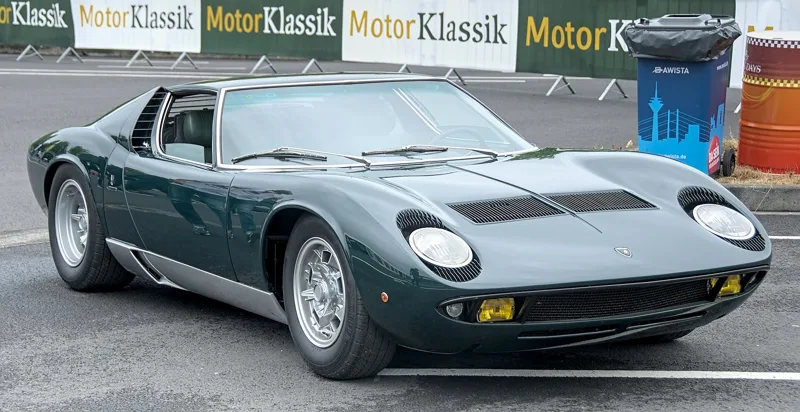
Inside the company the project was called Tipo 112, and its aim was a sports car as innovative as the Miura had been on its introduction in 1966. Giampaolo Dallara had designed that Miura, which carried a V12 installed transversely behind the seats. The Turin coachbuilder Carrozzeria Bertone was commissioned for the body, and the prototype missed its planned showing at the Turin Motor Show in autumn 1970 because it was not finished in time.
The yellow car, painted Giallo Fly Speciale, made its debut on 11 March 1971 at Bertone's stand in Geneva. It was the 'star of the show'. Contemporary commentators saw it as an extraordinary apparition, an impression that documentaries still repeat 55 years on. Half a year later it appeared with minor changes at the Paris Motor Show, and Lamborghini used it for numerous test drives on public roads.
A one-off prototype whose shape outlived the car that introduced it.
Where does the Countach name come from?
The name is widely said to come from an expression in the Piedmontese dialect, an exclamation that combines astonishment and admiration. Readings in the literature include 'fantastic', 'Wow!', 'madness' and 'Good heavens'. The story usually told is that a Bertone worker shouted it on first seeing the study, although a British author doubts both the tale and the word itself.
Some accounts call Countach a vulgar word. The LP in the prototype's name stands for longitudinale posteriore, meaning longitudinally rear-mounted, and the 500 stands for the engine's supposed capacity in centilitres, rounded. Lamborghini carried this coding over to the production car.
What made the Countach body design distinctive?
Marcello Gandini, Bertone's chief designer since 1966, drew the body during 1970. The one-box profile and scissor doors defined the look, while the angled rear wheel arches were a novelty that later became a Gandini trademark. The belt line curves, and the rest of the body follows straight lines and clear angles.
Gandini built on earlier work. In profile the LP500 follows the one-box design that Giorgio Giugiaro first showed in 1968 on the Bizzarrini Manta, an idea Gandini had already taken up on the Alfa Romeo Carabo and Lancia Stratos 0 show cars. The front end runs almost into the steeply raked windscreen, which continues into the flat-sloping roof.
Inside, an early electronic diagnostic indicator sat to the left of the steering wheel. It checked certain functions of the car and reported faults with light signals.
Did the LP500 really have a 5.0-litre V12?
Contemporary press releases claimed a purpose-built 4,971 cc V12 producing 440 PS (DIN) (324 kW; 434 hp). Broad agreement now holds that no working engine of that 5.0-litre configuration existed, and the prototype more likely carried a Bizzarrini-designed V12 of 3929 cc (239.8 cu in).
Some accounts say the prototype had the same engine as the production Lamborghini models, and one author reported in 2021 that Lamborghini had confirmed it. That engine was designed by Giotto Bizzarrini in 1963. It is a V12 with a 60-degree bank angle, two overhead camshafts per bank, and one inlet and one exhaust valve per cylinder. Its output was given as 375 DIN-PS (276 kW; 370 hp).
The claim has been widely doubted, yet Lamborghini's own website still repeats the 5.0-litre account in 2026.
Key specifications, as claimed and as likely
| Item | Figure |
|---|---|
| Claimed displacement | 4,971 cc (303.3 cu in) |
| Claimed output | 440 PS (DIN) (324 kW; 434 hp) |
| Claimed torque | 496 Nm (366 lb ft) |
| Claimed bore and stroke | 85 and 73 mm |
| Likely engine | Bizzarrini V12, 3929 cc (239.8 cu in) |
| Likely bore and stroke | 82 x 62 mm |
| Likely output | 375 DIN-PS (276 kW; 370 hp) |
| Production car | Countach LP400, 1974 to 1990 |
| Replica tyres | 245/60R14 front, 265/60R14 rear |
Mid-engined layout and chassis
The V12 sat amidships but lengthways, unlike the transverse Miura. Lamborghini turned the engine through 180 degrees, so the gearbox sat ahead of it, partly inside a tunnel between the two seats. A drive shaft ran through the oil sump to the differential. The aim was to limit overall length, concentrate weight between the axles and carry over the production engine unchanged.
Paolo Stanzani is usually credited with the layout, although Oliviero Pedrazzi, another Lamborghini engineer, is named by some as its originator. The chassis was a tubular frame with welded steel sheet panels, and the suspension and steering were taken from the Miura with only slight changes. The water radiators moved beside the engine, in front of the rear wheels.
What happened to the prototype?
In March 1974 a crash test at the British MIRA site wrecked the LP500, after Lamborghini had driven it extensively on public roads. Where the wreck went afterwards is unclear: one account has it standing for years at the factory, while another places it with a Swiss collector.
A widely told story has test driver Bob Wallace driving the car overnight from Turin to Geneva under its own power, arriving a few hours before the show opened. Other accounts question this or say it went on a lorry.
How did the production Countach differ from the prototype?
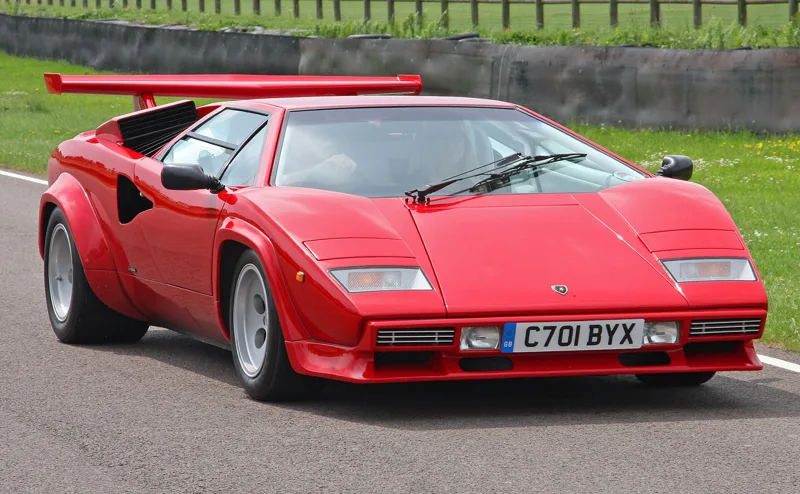
The production LP400 kept Gandini's basic form and one-box profile, but its platform frame gave way to a lattice of round steel tubes made by Marchesi in Modena. Its body moved to thin aluminium sheet, and it gained many extra air intakes because the prototype's cooling inlets were too small and its engines overheated.
The extra openings included NACA ducts running from the doors into the rear wings, box-shaped chimneys on the B-pillar and further intakes at the rear. One author said they gave the car 'a coarse and brutal appearance'. The rear lights came from the three-part Alfa Romeo Alfetta, and the water radiators were turned to run across the rear flanks.
Production ran from 1974 to 1990, and about 2000 cars were built in various versions before the Diablo replaced it.
How was the replica built?
Polo Storico, Lamborghini's classic department, built the replica forty-five years after the prototype was destroyed. Albert Spiess, a Swiss businessman who had collected Lamborghinis for years, initiated the project. Work began in 2017 and took 25,000 working hours. The company kept only a handful of records on the LP500, so its main design features had to be laboriously reconstructed.
Mechanical parts used spares of contemporary standard or were remade to the configuration of the time, and press reports say traditional craft techniques were used for the new parts. The tyre supplier also reproduced the Cinturato CN12 tyres, sized 245/60R14 at the front and 265/60R14 at the rear.
Painted in a yellow modelled on Giallo Fly Speciale, the replica made its public debut at the Concorso d'Eleganza Villa d'Este on Lake Como in October 2021. It was then driven on the supplier's test track at Vizzola Ticino and later went on loan to Lamborghini's factory museum.
Which later Lamborghinis carried its design?
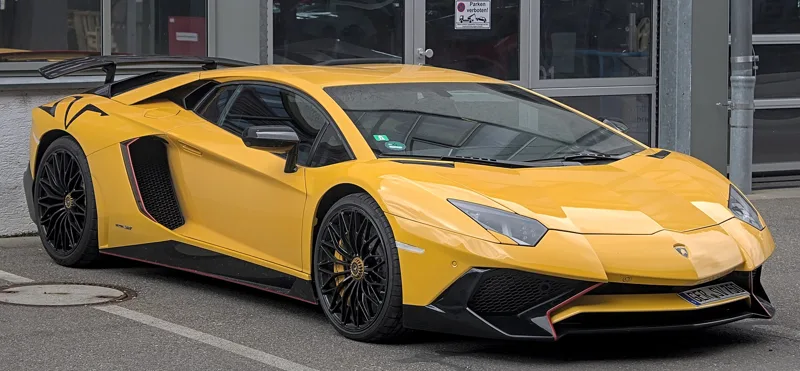
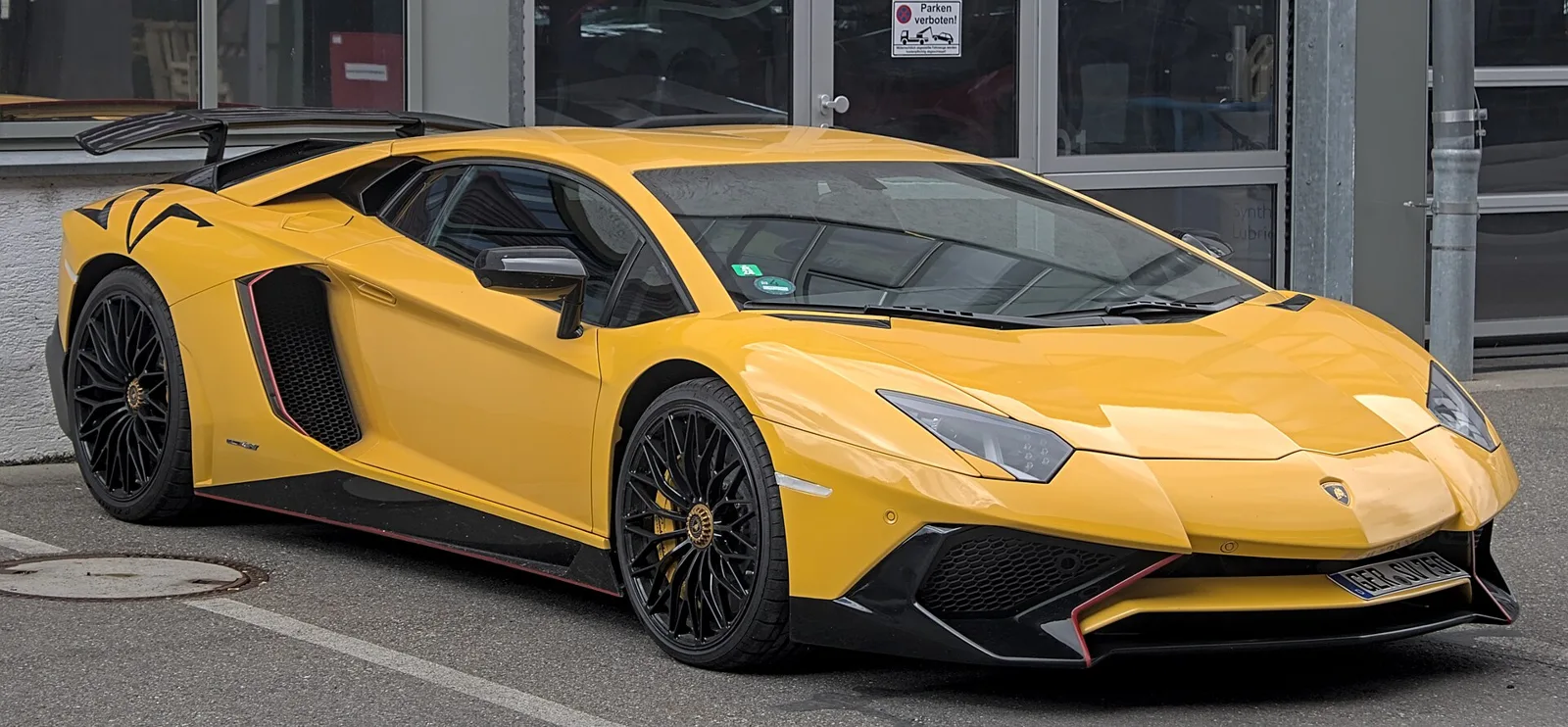
Almost every later Lamborghini mid-engined sports car inherited something from the Countach design, and its design language shaped nearly every Lamborghini production car right up to the present day. Its traits turn up on the Murcielago, Aventador and Revuelto, among others.
Milan's Iso Rivolta followed the LP500 with a show car, the Varedo, designed by Ercole Spada for Zagato. It borrowed key Lamborghini design features, yet no production model followed. In the USA, Vector Motors Corporation built mid-engined sports cars styled after the LP500 and the Bertone Carabo, in very small series until 2007.