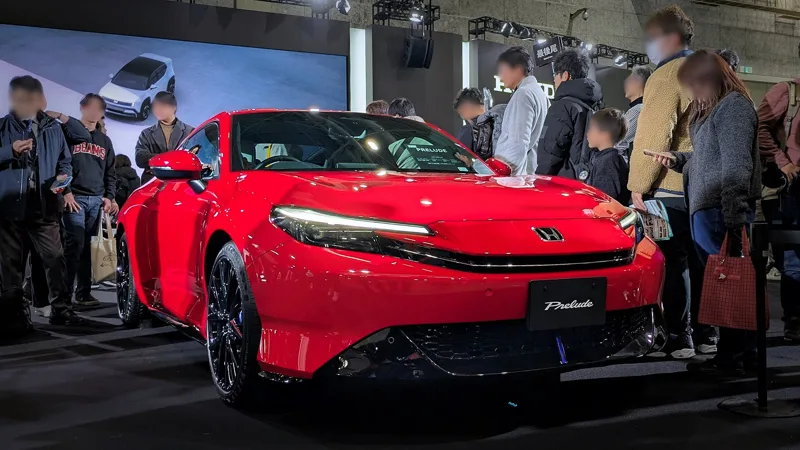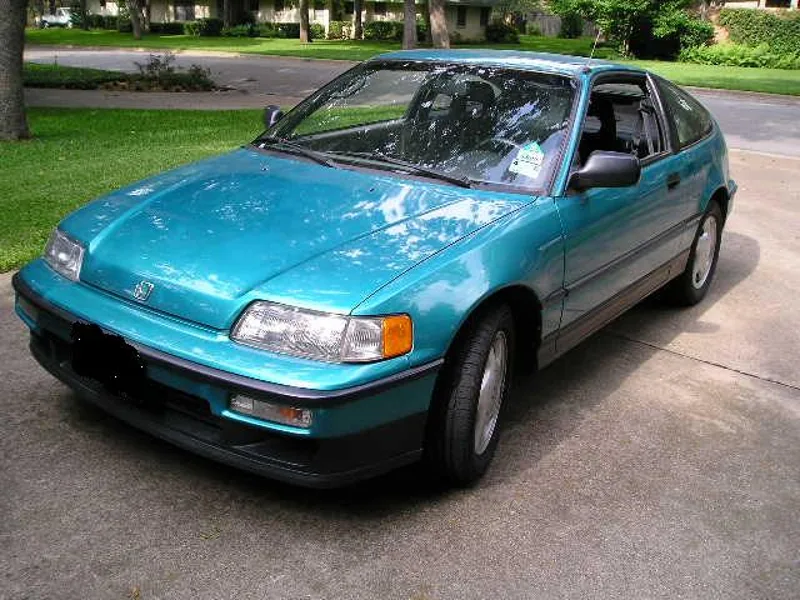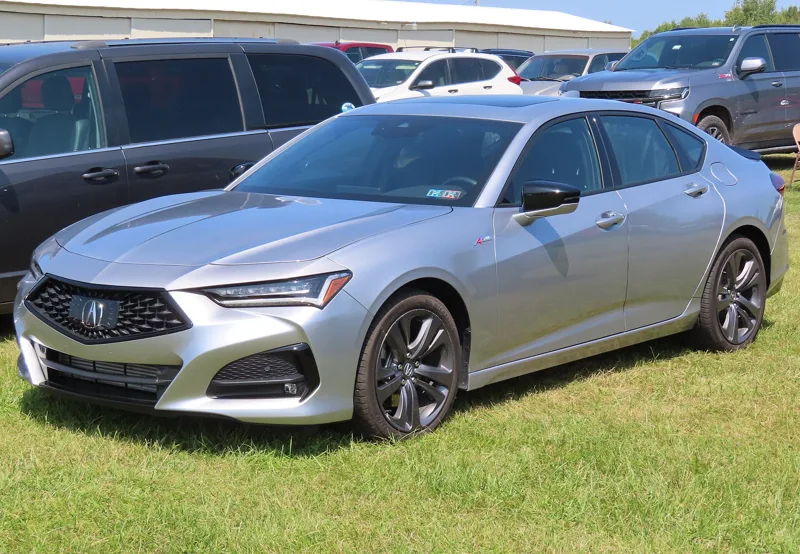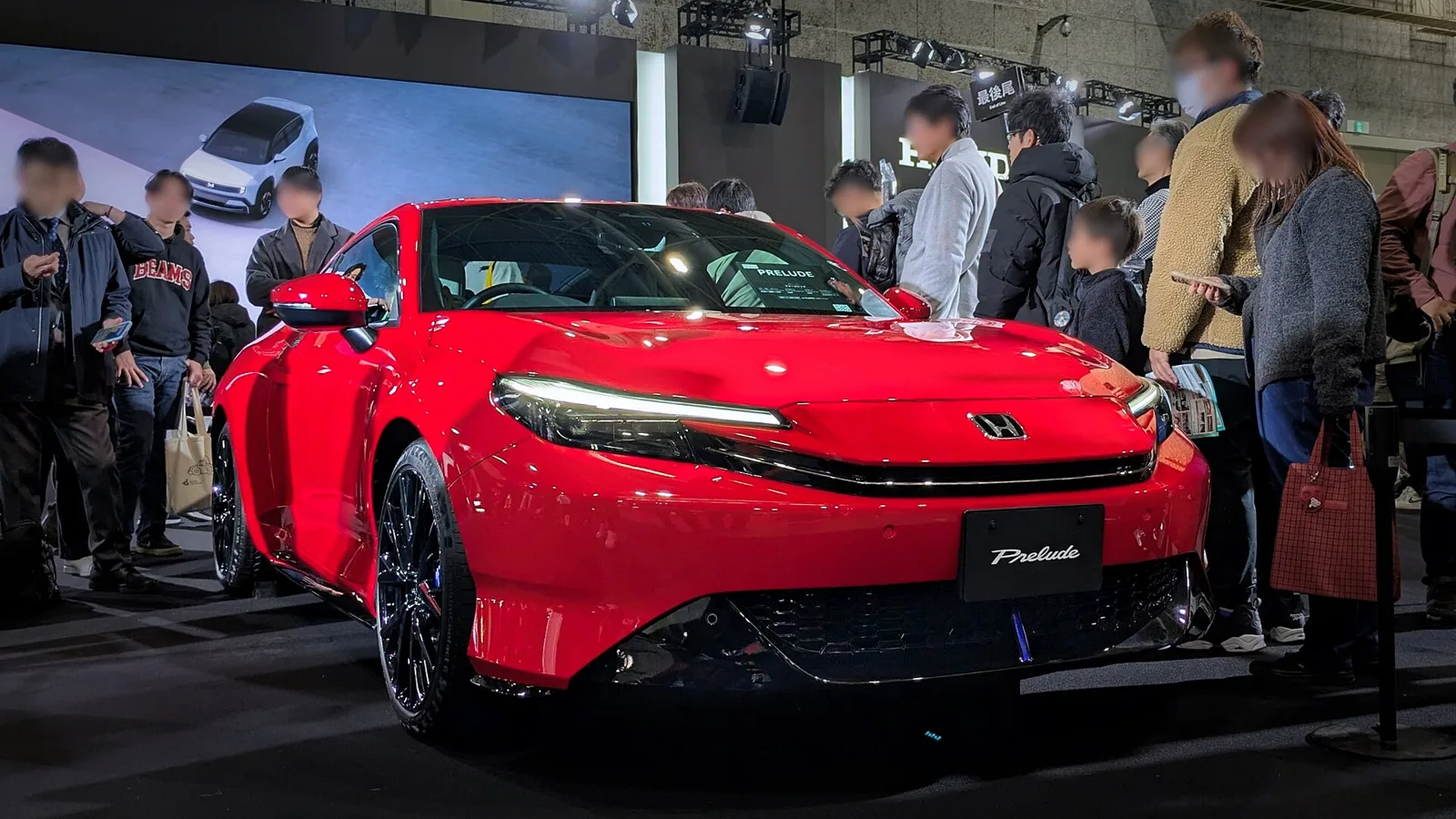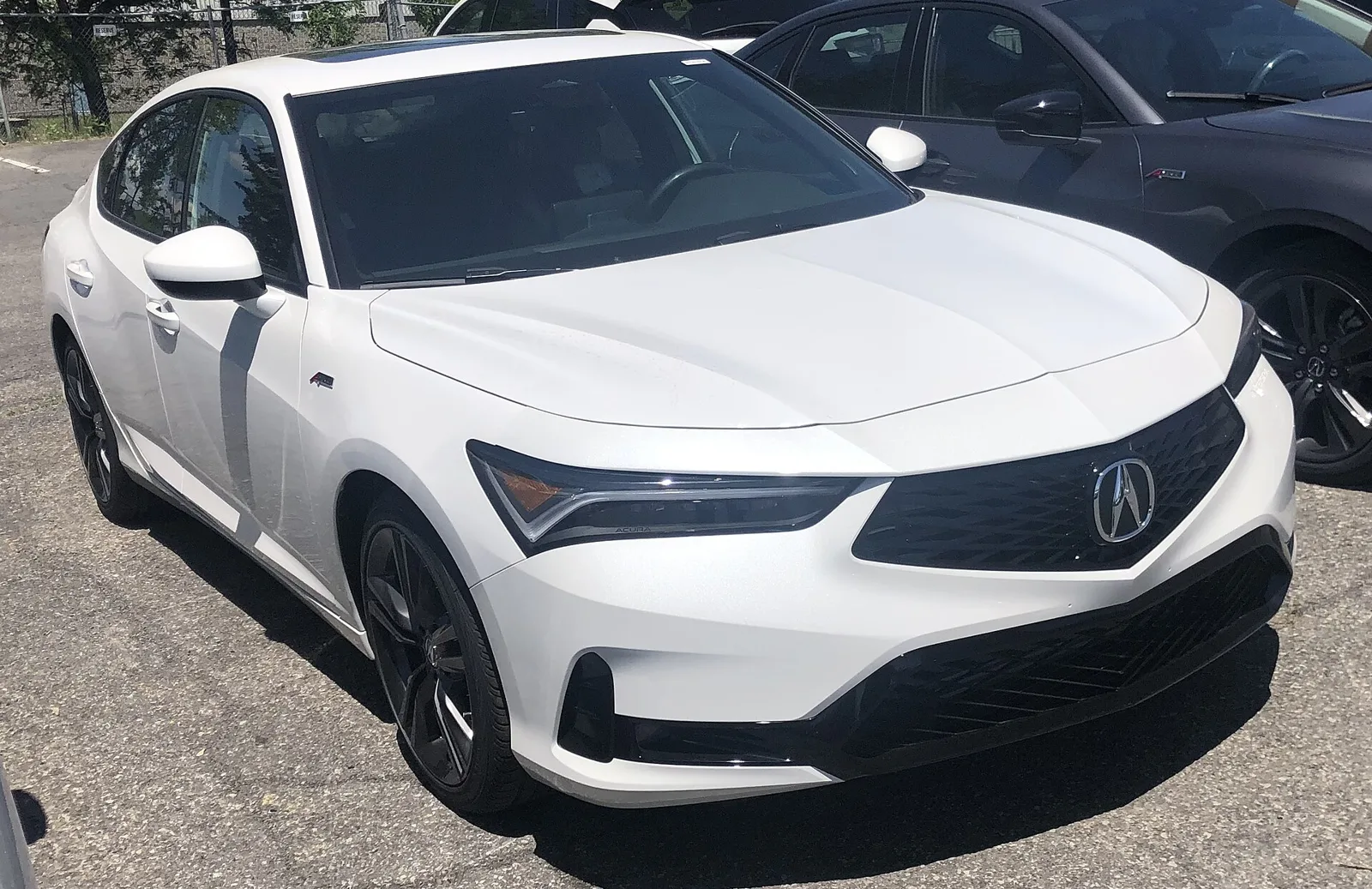
Sold in North America as the Acura Integra, the Civic-based model ran from 1985 to 2006, built a tuner following and returned in 2021.
The Honda Integra was a Civic-based sports car built from 1985 to 2006 and sold in North America as the Acura Integra and later the Acura RSX. Its Type R version became one of the most admired front-wheel-drive cars of the 1990s.
The Honda Integra is a compact sports car from Honda that was built from 1985 to 2006 and returned in 2021. It was a more luxurious and sport-oriented derivative of the Civic, and North American buyers knew it as the Acura Integra, later the Acura RSX. Its handling and performance earned it a strong reputation across its production run.
Where did the Integra come from?
The Integra succeeded the Quint and was launched in Japan in February 1985 as the Honda Quint Integra. It was sold only through Honda's Verno dealership channel in Japan, where it took the entry-level sporty position below the Prelude and the larger, luxury-focused Vigor.
A year later the Integra went on sale in North America as part of the new Acura luxury line. The Acura launch came with the Legend, and the Integra was one of the first two models. Its name and styling reflected the popularity of Honda's performance coupe, the Prelude.
A Civic-based coupe that became a tuner favourite, a Type R that road testers rated among the best front-drivers ever, and a nameplate that returned in 2021.
How did the first-generation Integra sell?
Nearly 228,000 first-generation Integras were sold over its four-year run, and most of them went to the United States. The car had been developed as a sharper choice than the Civic and CRX, with better brakes, reworked suspension and a higher-output 16-valve engine.
The first Integra began as a three-door liftback. A five-door followed in October 1985, and a four-door saloon reached Japan the next autumn. American buyers could only choose the liftback, so they saw a single body style.
What engines did the first generation use?
Most first-generation cars used a 1.6-litre DOHC 16-valve four-cylinder, which was the car's most publicised feature. Multi-valve, twin-cam engines were rare in entry-level cars at the time, so the Integra stood out in its segment. In Japan the output varied with the trim and fuel system.
Japanese cars with PGM-FI fuel injection made 135 PS (99.3 kW; 133.2 hp), while the carburettored versions were rated lower. The UK-market EX16 made 125 PS (92 kW), and European cars with the smaller 1.5-litre engine made 85 PS (63 kW; 84 hp) with four Weber carburettors. The mid-cycle update created two engine nicknames. The earlier engines are called Browntop, and the later ones with lighter rods and domed pistons are called Blacktop, which gained about 5 hp for a total of 118 hp.
What did the second generation bring?
The second-generation Integra was all new in 1989. It kept the hatchback coupe but added a four-door notchback, and the coupe's wheelbase was 3.9 in (99 mm) longer than the previous generation's. The North American coupe was 4.2 in (107 mm) longer and 1.8 in (46 mm) wider.
The second generation introduced the first Honda VTEC engine, the B16A, which engaged at 5,500 rpm. The XSi's redline sat at 8,200 rpm, and the top model reached 0-100 km/h in 7.2 seconds with a standing quarter mile in 15.1 seconds.
The four-door sedan was styled to look like a hardtop, with no window frames on the doors, and it kept a visible B-pillar. It was the first four-door sedan offered outside Japan, which widened the range for buyers who wanted a practical car.
What were the North American GS-R and 1.8-litre cars?
In North America the second-generation Integra came in three trims at first, the RS, LS and GS, with a fourth, the GS-R, added in May 1992. The coupe received a new 1.8-litre DOHC four with 130 hp as standard, and anti-lock brakes were standard on the GS.
The GS-R used the 1.7-litre B17A1 DOHC VTEC four with 160 hp. It came with a rear spoiler, alloy wheels and 195/60 tyres, and it was offered only with a five-speed manual. Fewer than 5,000 GS-R cars were produced for North America in the 1992 and 1993 model years.
What made the third generation different?
Honda debuted the third-generation Integra in Japan in 1993, with four headlights that enthusiasts called spider eyes. The style proved controversial there, so the Japanese cars received a facelift in late 1994 with more conventional flat headlights and a revised front bumper.
In North America the B18B1 DOHC engine became standard and produced 140 hp. The Japanese Si used the B18C VTEC engine, which made 178 hp, and it was rebadged as the SiR after the 1994 facelift.
The third generation also introduced the Integra Type R in 1995 for the Japanese market, and it became the model that made the Integra famous. The Type R had a close-ratio five-speed manual, a helical limited-slip differential and a strengthened chassis.
Why is the Type R so highly regarded?
The Japanese Type R came standard with a factory-tuned version of the B18C engine rated at 147 kW (200 PS; 197 hp). The North American car made 145 kW (198 PS; 195 hp). Its rev limiter was set at 8,600 rpm in Japan.
The Type R had a reworked chassis with extra spot welds, thicker metal around the rear shock towers and a lower subframe. It was lightened by reducing the sound insulation, using a thinner windscreen and lighter wheels, and its hand-built engine had polished and ported intake ports.
Weight savings were smaller than they sounded. The American Type R was only 33 lb (15 kg) lighter than the GS-R, because the extra metal and bracing offset much of the reduction. The Type R was also the sole Type R that ever carried the Acura badge in North America.
Type R road test figures
Motor Trend clocked a Type R at 6.2 seconds from 0 to 60 mph, with a quarter mile of 14.8 seconds at 96.3 mph. Sport Compact Car recorded 6.1 seconds to 60 mph.
Edmund's Insideline tested a Type R that was already 12 years old, and it still reached 60 mph in 6.8 seconds, which showed how well the car aged.
Evo described the Type R as the greatest front-drive performance car ever, and TheAutoChannel.com labelled it the best-handling front-drive car ever. In Japan the Integra was regarded as one of the best sports cars of the 1990s.
How did the Integra compare with rival sports cars?
On the Japanese programme Best Motoring, the Type R punched far above its class. It was matched against the quickest four-wheel-drive turbocharged cars of the day, including the Nissan Skyline GT-R and the Subaru WRX STI. Honda also made a four-wheel-drive version of the third-generation car, available only as a four-door sedan.
It used a version of Honda's Real Time 4WD system with a 1.6-litre SOHC engine, and it gave the range a practical all-weather option.
What was the Integra SJ?
The Integra SJ, short for Sedan Joyful, was a rebadged Civic Ferio, which was a Honda Primo product. It was sold in Japan at Honda Verno dealerships, and it used a 1493 cc D15B engine. It was made from 1996 to 2001, and it was the Honda Domani's sibling sold at Honda Clio locations.
Thai buyers knew the SJ as the Isuzu Vertex, which was Isuzu's final passenger car for that market. The SJ followed Isuzu's long practice of selling Honda models under Isuzu names, which began with the Gemini.
Why was the Integra a popular target for thieves?
A 2002 study put the Integra at 21.7 theft claims for every 1,000 vehicles, while the Jeep Wrangler, then the second most-stolen car, managed 8.5. CCC Information Services named the 1999 Integra the most stolen car in the United States in 2004.
LoJack ranked the Integra sixth most stolen in 2014, among cars fitted with its tracking service.
What was the fourth-generation Integra?
The fourth-generation Integra arrived in Japan in April 2001 and was produced until August 2006. In North America it was sold as the Acura RSX, in line with Acura's new alphabetical naming, and it was the first Integra to use the K-series engine.
The RSX came with a 160 HP K20A3 engine, which was also used in the Civic Si hatchback. The RSX Type-S had a 200 HP K20A2 DOHC i-VTEC engine from 2002 to 2004, and the 2005 and 2006 RSX-S used a K20Z1 rated at 210 HP.
In Japan the Integra Type R of this generation came with a K20A engine making 220 PS (162 kW; 217 hp), together with Recaro seats, four-piston Brembo brakes and a close-ratio six-speed manual. Its limited-slip differential and stiffer suspension completed the package.
How did the Integra end and return?
Honda discontinued the Integra in June 2006 after its final 300 cars were sold, because the coupe market had shrunk. Consumer reaction was strong enough that Honda extended production until July 2006 and built 150 more cars. The RSX was discontinued as well, which left the Acura TSX as the brand's entry-level model.
The Civic Si, introduced in 2006, filled the gap left by the RSX, and the Integra name went quiet for years. The Integra returned in 2021 after a 16-year hiatus. The Acura Integra came back in North America for the 2023 model year, as a five-door liftback that took over from the ILX. It shares its platform with the eleventh-generation Civic. The Japanese-spec Integra Type S was promised for mid-2026, alongside a mid-size crossover, the Passport Trailsport. In China the Integra name is used for a restyled Civic sedan built by GAC Honda, which reflects the wider reuse of the name.
Where the Integra won races
The Integra and RSX found a following on the track. Two IMSA International Sedan manufacturers' titles arrived for the Integra in 1987 and 1988, and Parker Johnstone took the drivers' title in both years behind the wheel of one.
Realtime Racing campaigned the Type R and then the RSX Type-S in the SCCA World Challenge touring car class, and the team took six straight titles between 1997 and 2002. In 1992 an Integra served as a Formula One safety car at the Canadian Grand Prix.
The BTC-T version of the Integra was highly successful in the British Touring Car Championship. It won 27 races and took the title in 2005 and 2006, even though it was entered only by privateer teams. Integra cars also took the Asian Touring Car Series in 2003, 2004, 2009 and 2010.
Which awards did the Integra win?
Car and Driver included the Acura Integra in its 10Best list in 1987, the first of eight appearances on the list. It returned in 1988, 1994, 1995, 1996 and 1997, and the RSX appeared in 2002 and 2003. The Acura Integra was named North American Car of the Year in 2023.
The Integra Type S was included on the 10Best list in 2024, and Road and Track named it Performance Car of the Year under $100,000 the same year.
Key Integra figures at a glance
| Item | Detail |
|---|---|
| First generation | 1985 to 1989, three, four and five-door models |
| First-generation sales | About 228,000 over four years |
| Second-generation VTEC | B16A, engaging at 5,500 rpm |
| Type R (North America) | B18C5, 195 hp (145 kW; 198 PS) |
| Fourth-generation RSX | K20A3, 160 hp |
| Final sales run | Discontinued June 2006 after its final 300 cars |
| Revival | Acura Integra liftback for the 2023 model year |