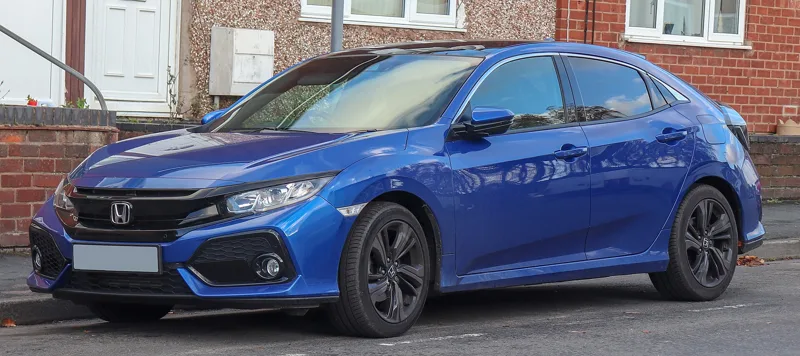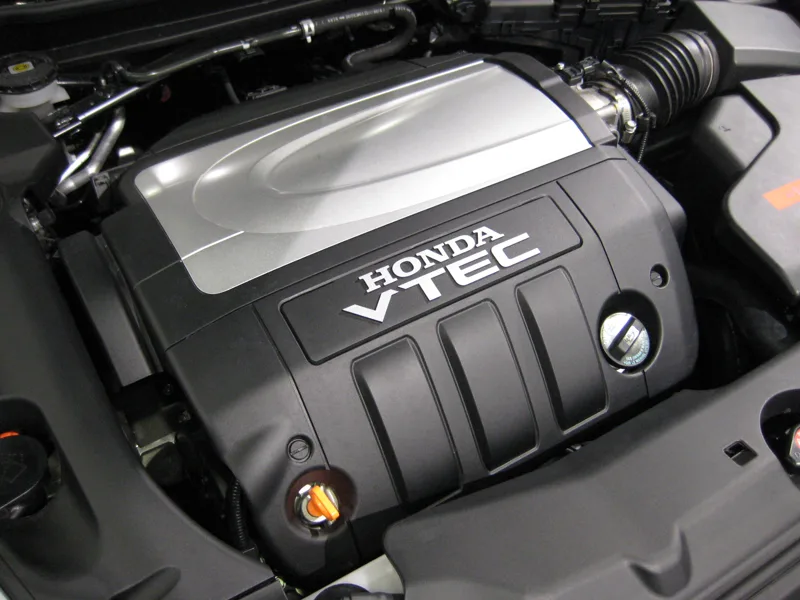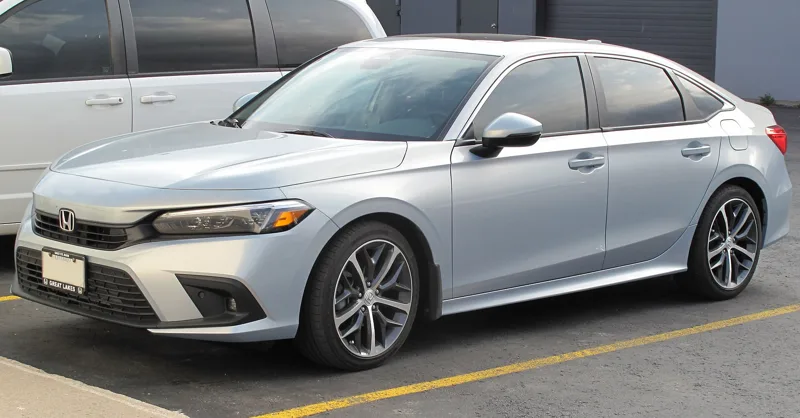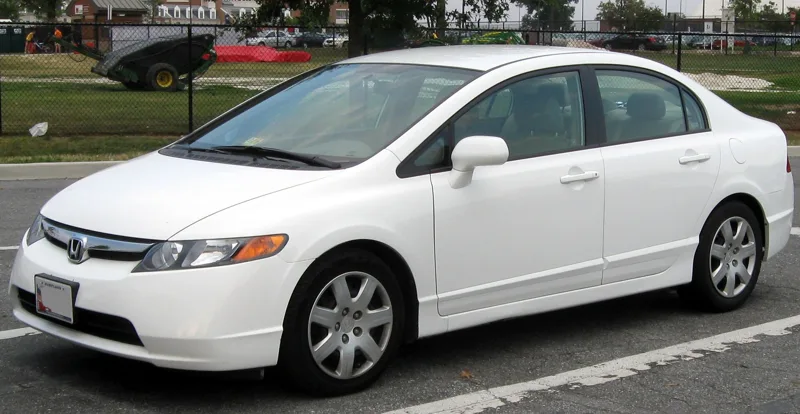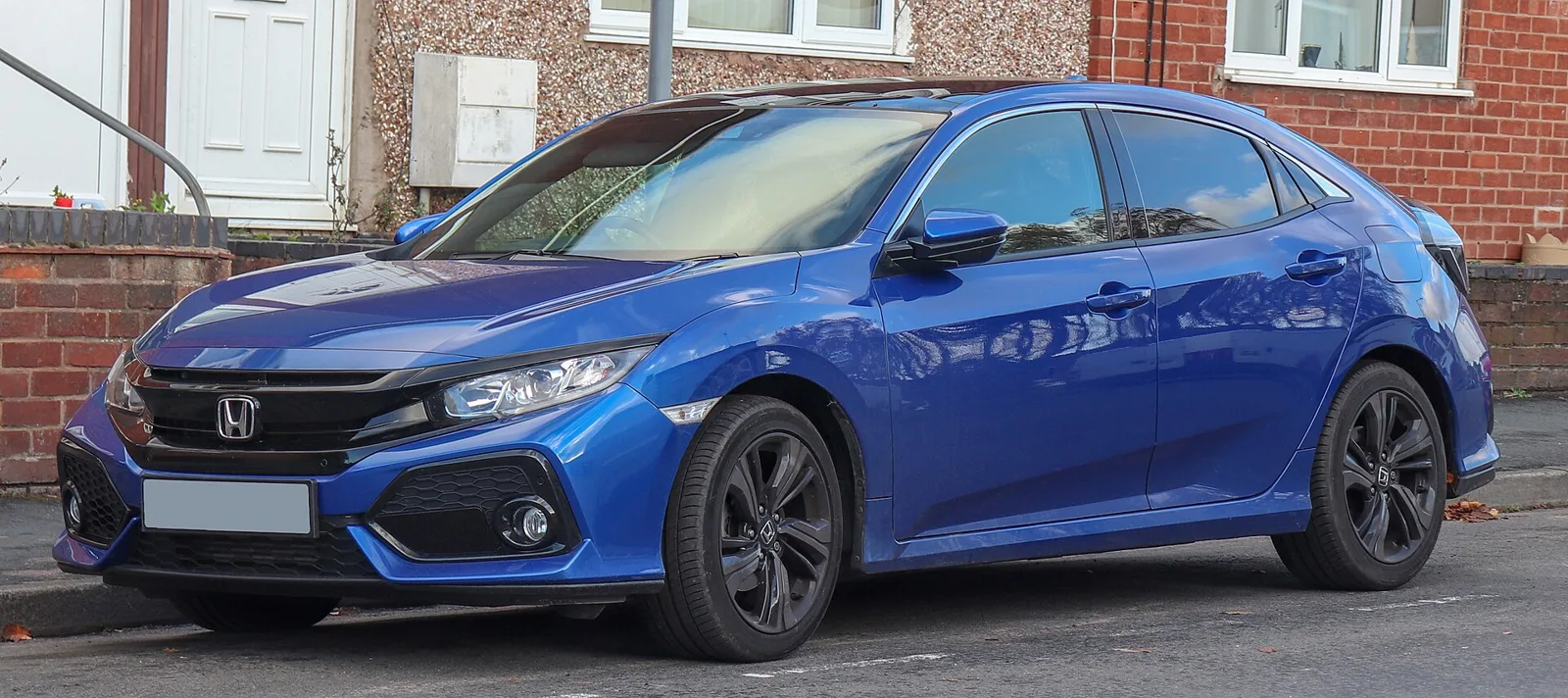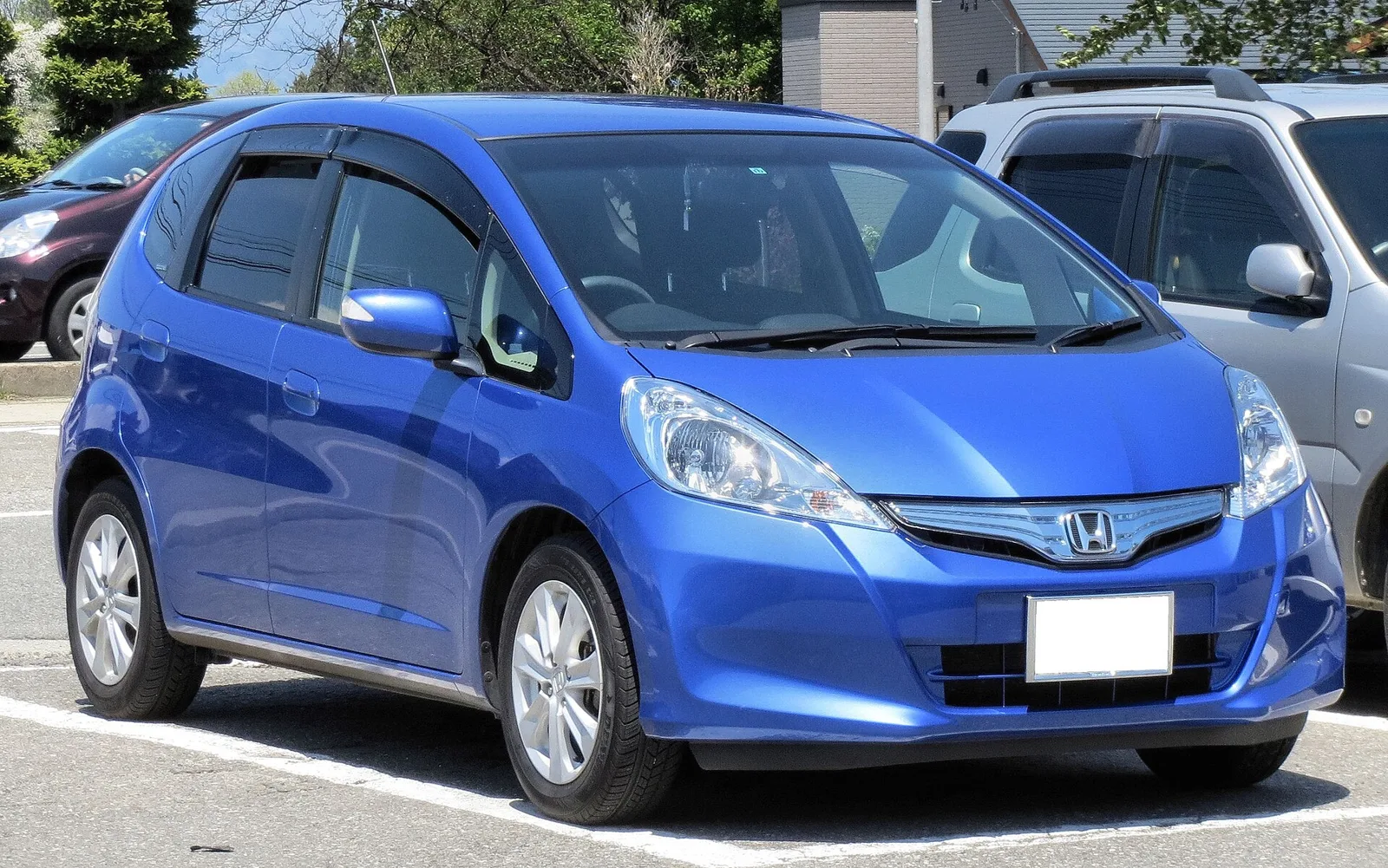
A hatchback hybrid from Honda Motor that started as the Jazz Hybrid in Paris, reached Japan in 2010 and ran in two generations until 2020.
The Honda Fit Hybrid was a hatchback hybrid from Honda Motor, sold in two generations between 2010 and 2020. The first, GP1/4, ran from 2010 to 2013 with a single-motor IMA system rated at 30 km/L, and the second, GP5/6, used a 1.5-litre SPORT HYBRID i-DCD system.
The Fit Hybrid was Honda Motor's hatchback hybrid, built on the Fit platform in two generations. The first, model code GP1/4, reached showrooms in 2010, and the second, GP5/6, replaced it in 2013 and was sold until 2020.
What was the first Fit Hybrid?
The first Fit Hybrid, model code GP1/4, was a hatchback based on the second-generation Fit. It used Honda's IMA hybrid system, and automatic idle stop and Eco Assist were fitted to every car. Honda announced it in August 2010 as the Jazz Hybrid for the Paris Motor Show, and Japanese sales began that October.
The Jazz Hybrid was to be built at Honda's Suzuka plant. European sales were to start in stages from early 2011, while Japanese sales were to follow that autumn. The launch on 8 October 2010 carried the catchphrase "It fits people", and the car was named 2010-2011 Japan Car of the Year on 28 October that year.
The standard HYBRID was the base car. HYBRID Smart Selection brought HID headlamps, a smart key and half-shade front windows. HYBRID Navi Premium Selection, a well-equipped version, included HDD Inter Navi navigation, ETC, VSA and a security alarm.
A 10th anniversary special, the HYBRID 10th Anniversary, went on sale on 13 October 2011. Built on the HYBRID, it added two smart keys, an ETC unit, a wheel wrapped in leather, half-shade front windows and a metallic-finish switch panel on the front door. Its interior was black with blue stitching, or beige with beige stitching.
A hatchback hybrid built on the Fit, with one compact motor and an engine that could be switched off on the move.
How did the first-generation hybrid system work?
The IMA system paired a highly efficient i-VTEC engine with a small, slim single motor. At times, such as electric-only running, the motor could be separated from the engine. Fuel economy was rated at 30 km/L.
The engine was an LDA unit based on the L13A family. With eight valves and I-DSI ignition control, it seems to descend from the L13A used in the first Fit, not from the 16-valve version that had single-valve deactivation in the GE model. Honda's i-VTEC served only as a variable cylinder management system, or VCM.
VCM could switch off all cylinders, allowing the car to run on motor power alone. Honda called this EV driving. Unlike the later i-DCD system, it could not fully separate the engine from the motor, so the engine still created considerable drag.
Which features taught drivers to save fuel?
ECON mode linked the engine, gearbox, air conditioning and IMA system together. It lengthened idle-stop periods and raised energy recovery, improving everyday consumption. Drivers also got feedback on their habits while they drove.
The coaching function changed the background colour of the ambient meter beside the speedometer in three steps, responding to accelerator and brake use. A bar in the multi-information display showed the energy lost during braking and acceleration, so smooth driving became a habit over time.
The teaching function scored each trip. At the end of a journey, leaf icons gave a score for eco driving, and a stage screen tracked how far the driver had come. On the HYBRID Navi Premium Selection, the Honda HDD Inter Navi system analysed eco driving in more depth and offered tips for better fuel economy.
What did the 2012 changes add?
A minor change on 24 May 2012 improved fuel economy through aerodynamic and CVT efficiency gains. Standard kit grew to include LED console lights, LED cupholder lighting, three-point ELR belts for each seat, head restraints, and a rear centre armrest. VSA was added to every grade except the base HYBRID.
That same month the line-up gained two new types. The HYBRID She's offered nearly the same kit as the petrol She's. Its grille was the hybrid-only design, and its CVT selector was leather-wrapped with pink stitching. The HYBRID RS became the first 1.5-litre Fit Hybrid. LED accessory lamps sat inside its grille, and a leather-wrapped sports wheel with piano-black console trim completed the look.
The RS came with a CVT that had a seven-speed mode and paddle shifters, matching the petrol RS, and a six-speed manual was an alternative. Its three-mode drive system let the driver choose ECON, NORMAL or SPORT. Navigation on the Navi Premium Selection became an option, and the grade was renamed HYBRID XH Selection.
In October 2012 a special edition called Fine Style arrived in four grades, all except the base HYBRID. Two grades gained a Gran Smooth and suede-style fabric combination interior, and two gained HID headlamps with auto levelling and heated front seats. The HYBRID RS took dedicated 16-inch alloy wheels and a single Honda smart key.
Generations at a glance
| Generation | Model code and years | Engine and drive | Fuel economy |
|---|---|---|---|
| First generation | GP1/4, 2010 to 2013 | LDA engine based on the L13A, with IMA hybrid | 30 km/L |
| Second generation | GP5/6, 2013 to 2020 | 1.5-litre engine with SPORT HYBRID i-DCD | 36.4 km/L in JC08 mode (HYBRID); 27.6 to 29.0 km/L in JC08 mode (4WD) |
| Second generation, 2017 update | GP5/6, from June 2017 | Retuned SPORT HYBRID i-DCD | 37.2 km/L in JC08 mode (front-drive HYBRID) |
What changed in the second generation?
The second generation was fully redesigned alongside the petrol Fit, with the aim of setting a benchmark for compact cars. It kept the first generation's design philosophy but built a new powertrain and body. The concept, EXCITING H DESIGN, stressed forward-looking technology, a premium feel and easy handling.
Where the first generation had 1.3-litre and 1.5-litre engines, the second used just one 1.5-litre unit from the EARTH DREAMS TECHNOLOGY family. It used DOHC valve gear and an Atkinson-cycle LEB design. The hybrid system was SPORT HYBRID i-DCD, with a seven-speed DCT whose main parts came from Schaeffler, an H1 motor delivering 29.5 PS (22 kW), and an IPU housing a lithium-ion battery.
Honda rated the HYBRID grade at 36.4 km/L in JC08 mode, and the car could run in engine drive, hybrid drive or EV drive, depending on conditions. An electric servo brake improved regeneration, and variable servo ratio control gave the pedal a more natural feel.
A four-wheel-drive version arrived on 26 December 2013, aimed at owners in cold and snowy regions. The engineers sought low fuel use together with strength, and the figure reached 27.6 to 29.0 km/L in JC08 mode.
What did the 2013 grades offer?
Four hybrid types were offered from September 2013: the base HYBRID and the F, L and S Packages. The F Package added comfort items such as electric folding colour door mirrors with LED turn lamps, a half-shade front window and a height adjuster for the driver's seat. The L Package added LED headlamps, cruise control and a leather-wrapped steering wheel.
The S Package was the sporty grade. It shared its seats, interior, large tailgate spoiler and rear bumper with the petrol RS, and it had paddle shifters and 16-inch alloy wheels. Nine body colours were available at launch, five of them new, including Tinted Silver Metallic and Attract Yellow Pearl as paid options.
Within two months of going on sale, the new model earned the 2013-2014 Japan Car of the Year prize on 1 November 2013.
The second generation's catchphrase urged everyone to amaze the world with cars.
How did the Fit Hybrid change from 2014 to 2018?
In December 2014 the hybrids gained infrared-cut and UV-cut glass, auto-retracting door mirrors, and the Anshin Package on the L and S grades, which had previously been optional. Premium White Pearl gave way to White Orchid Pearl, and Light Beige Metallic was replaced by Lucet Black Metallic and Gold Brown Metallic, both paid options. That brought the total to ten, and all three new colours were exclusive to the hybrid.
In September 2015 the front grille was given a more three-dimensional design, and the wheel caps were restyled. Every type except the base HYBRID received a Plasmacluster fully automatic air conditioner, and the navigation-fitting package brought a rear wide camera, a 12-segment and one-segment TV antenna, and four speakers. A Comfort View Package with hydrophilic heated door mirrors and heat-insulating front glass was also added. Premium Blue Opal Metallic and Midnight Blue Beam Metallic were added as paid colours while Gold Brown Metallic was dropped, taking the total to eleven.
In December 2015 a COMFORT EDITION was announced, based on the F Package, with the super UV and infrared-cut package used on the N-BOX and N-WGN kei cars, plus heated front seats. It went on sale in January 2016 and was offered in three exclusive colours.
In June 2017 the second generation received a minor change under the catchphrase DON'T STAY. Honda SENSING driver assistance became a maker option on the F, and standard on the L and S grades, with inline-type LED headlamps on those versions. The front-drive HYBRID's JC08 figure rose to 37.2 km/L, and the 4WD cars of the F and L grades were said to meet the 2020 fuel economy standard plus 40 per cent.
The June 2017 commercials featured the actors Tsuyoshi Ayano and Fumi Nikaido, with the song Fire Bird by MIYAVI as the theme.
The 2017 update also added support for Apple CarPlay and Android Auto to Honda Inter Navi, and the S grade gained sound-insulating front glass. A second COMFORT EDITION followed in May 2018, offered in nine colours, with a Premium Brown interior package as a maker option.
In July 2018 Honda added the Modulo style complete car, prepared by Honda Access. It had a large gloss-black mesh grille, a dedicated bumper, 15-inch alloy wheels, five-line LED fog lamps and a black interior, along with stainless-steel sports pedals.
The Modulo style came in five body colours: Platinum White Pearl, Shining Grey Metallic, Crystal Black Pearl, Premium Crystal Red Metallic and Midnight Blue Beam Metallic, with three of them paid options.
How well did the Fit Hybrid sell?
Cumulative domestic sales of the Fit range passed 2 million on 31 March 2013. Reaching it 11 years and 10 months after launch was the fastest record for Honda. First-generation production ended in August 2013, and the car left the line-up in September when the second generation replaced it.
Second-generation sales ended on 13 February 2020, when the fourth-generation Fit arrived. That car also offered a hybrid, but with a two-motor system, the first of its kind in a Honda compact, and it was renamed Fit e:HEV. The Fit Hybrid name was dropped with the second generation.
What is the origin of the name and what came later?
Fit is an English word meaning a snug, perfect fit. Honda had also applied the name to a domestic City grade and to a variant of the third-generation Dio scooter. The Fit Hybrid was one of the company's environmentally conscious models, which Honda grouped as the Green Machine series, and it was Green Machine No. 4.
The Fit Hybrid's own record notes a 3 June 2024 disclosure that some noise tests used in type designation paperwork had improper cases.