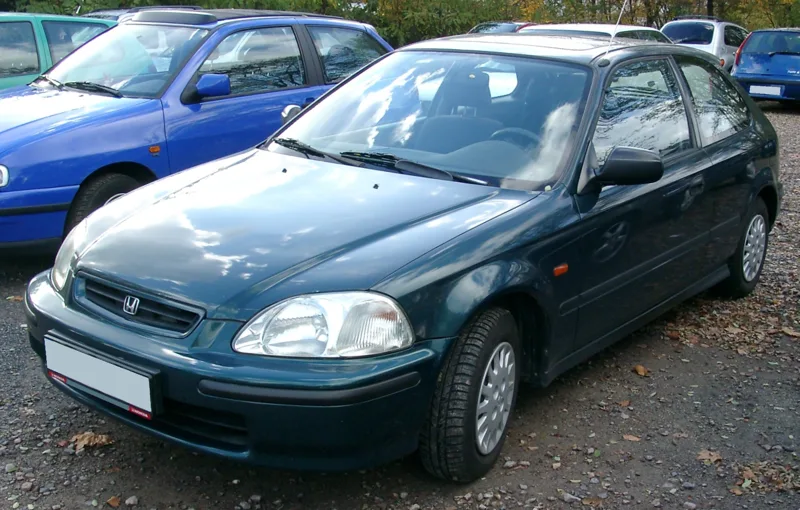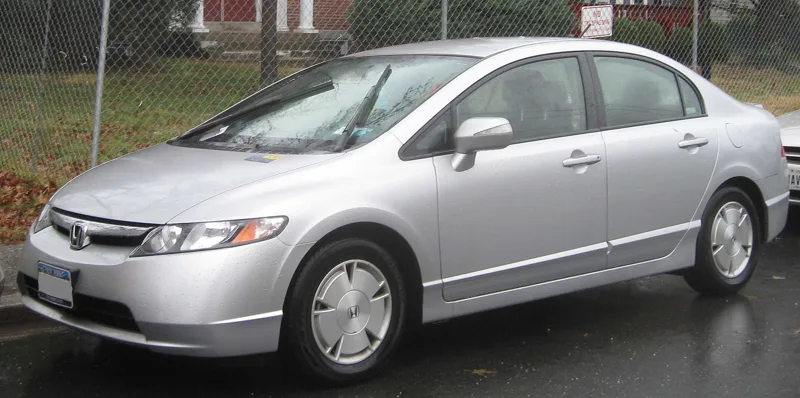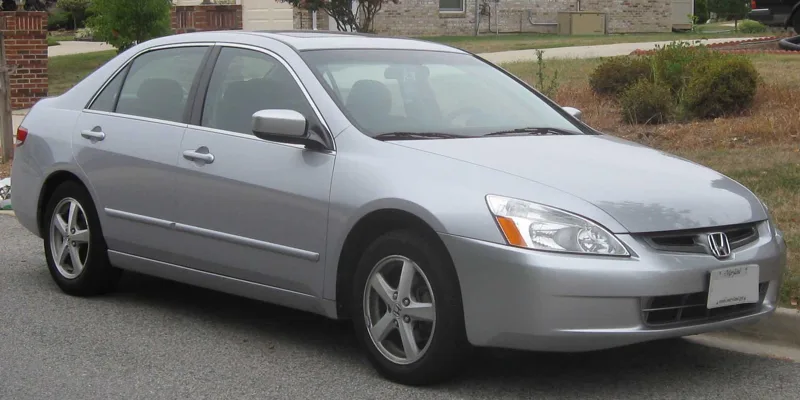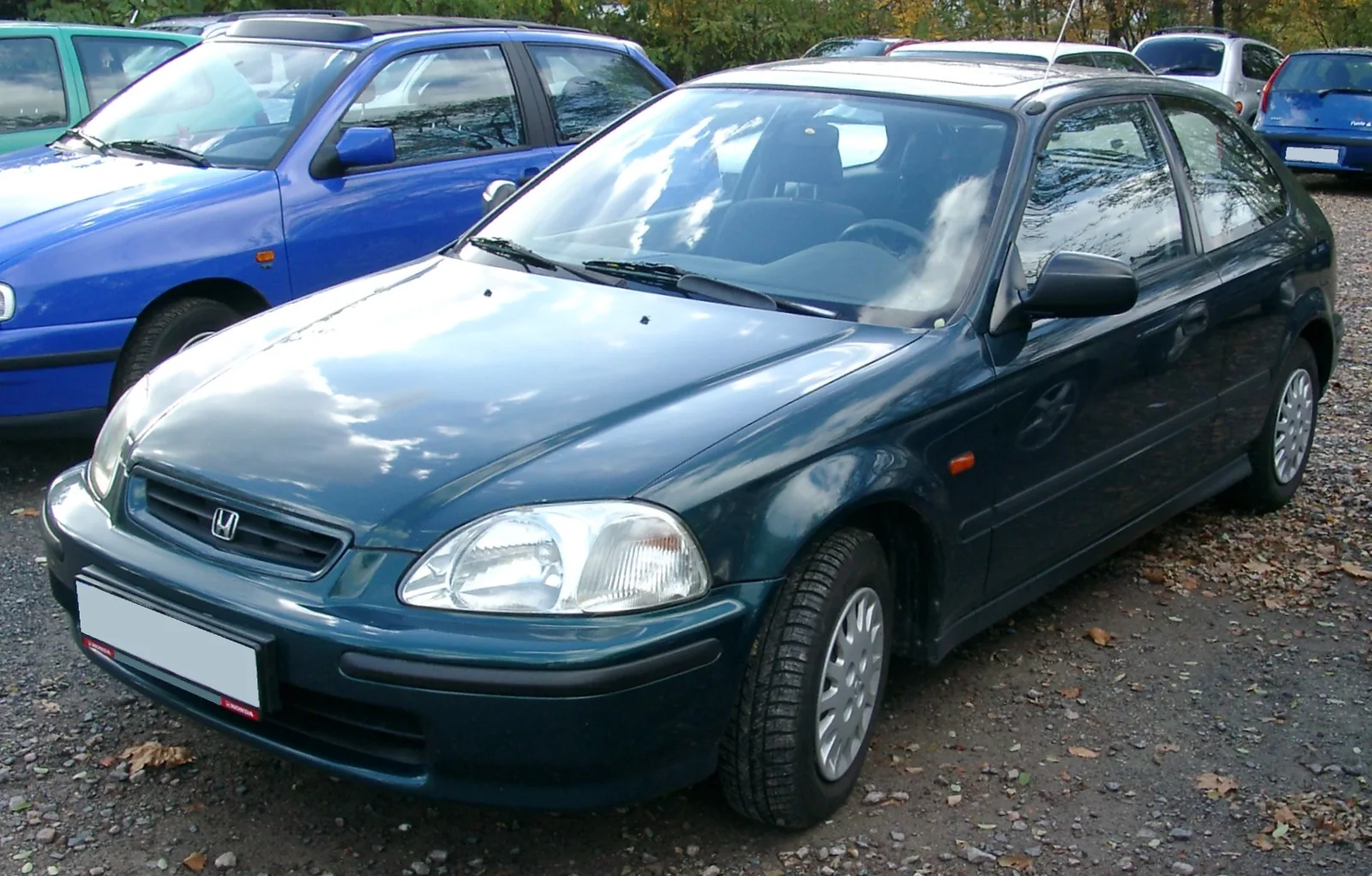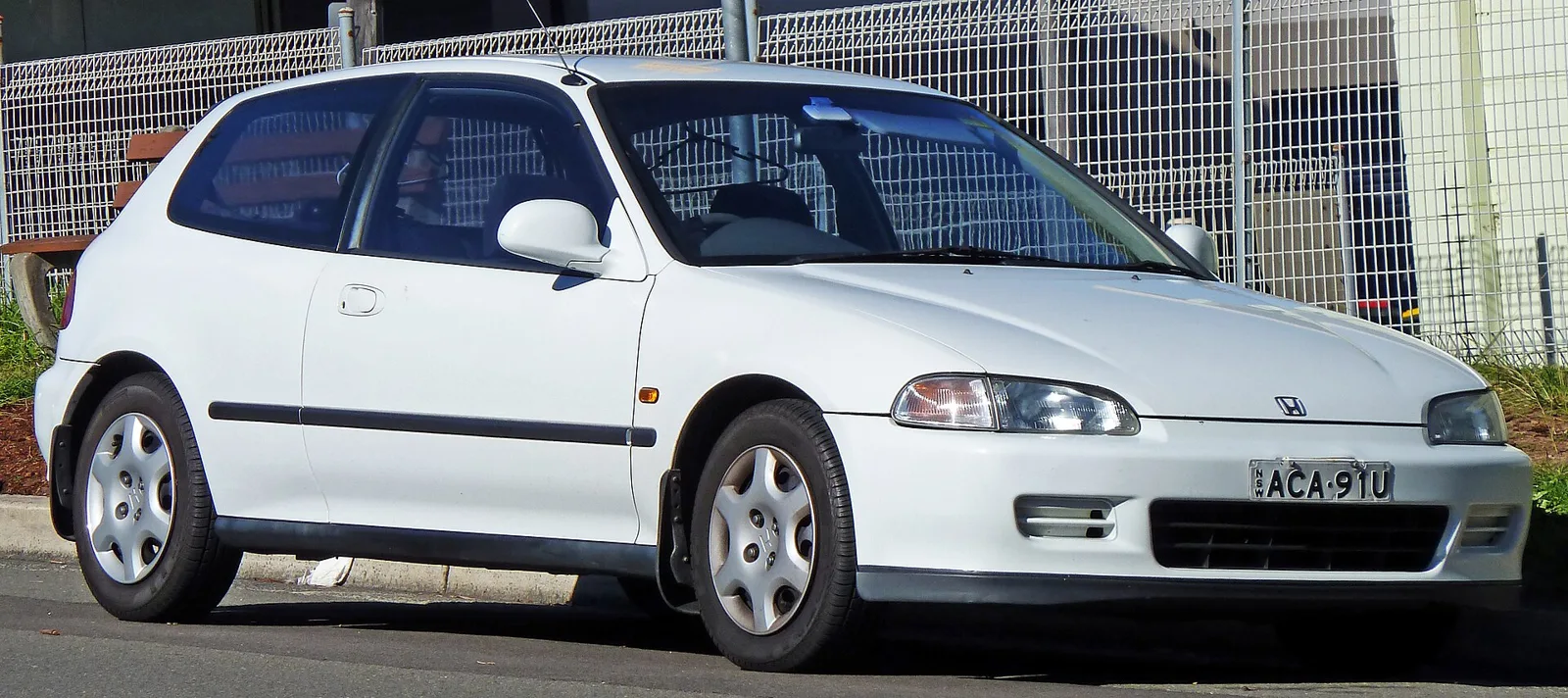
Larger and more aerodynamic than before, the fifth-generation Civic paired the frugal VX with the VTEC-powered Si across several markets.
The fifth-generation Honda Civic was produced from 1991 to 1995 in several markets, in coupe, hatchback and sedan forms. Its frugal VX and sporty VTEC Si were the best-known versions, and Pakistan built 6,480 of the sedan before production ended in December 1995.
Built from 1991 until 1995, this Civic generation launched in Japan on 9 September 1991. Larger and more aerodynamic than the cars before it, it earned Japan's Car of the Year prize for a second time at launch. Its range ran from frugal hatchbacks to the VTEC-powered Si.
When did the fifth-generation Civic arrive?
The fifth-generation Civic was built by Honda between 1991 and 1995, arriving in Japan on 9 September 1991. Its bodies were larger and more aerodynamic than the outgoing car's. The Shuttle station wagon was left out of this generation for overseas markets.
The wheelbase grew to 257 cm (101.3 inches) on the three-door hatchback and 262 cm (103.2 inches) on the four-door sedan. Lightweight materials kept the car economical, and the cowl was raised to give the suspension more travel.
That change softened the ride compared with the previous car, which gave a more compliant feel at the cost of sharper handling.
A larger, more aerodynamic Civic that paired lean-burn frugality in the VX with VTEC sportiness in the Si.
Which body styles and trims were offered?
The range comprised a hatchback from late 1991, a sedan and a two-door coupe that joined for the 1993 model year. Trim names varied from market to market, with the United States, Canada, Japan and Europe each running its own mix of DX, LX, EX, VX, Si and VTi grades.
Coupe
Coupes were sold in the United States as DX, EX and EX-S, and in Canada as DX, DX Special Edition and Si. Honda built them in both countries, and they were also exported to Europe and Japan.
Honda Primo dealers marked their tenth year in 1994 with a limited run of left-hand-drive coupes, imported from the United States into Japan.
Hatchback
The hatchback arrived in late 1991 with CX, VX, DX and Si grades in the United States and Canada. The VX and Si were dropped in Canada after the 1993 model year, and the DX went after 1994, leaving only the base CX. The hatchback was classified as a subcompact car by the EPA, with 90 cubic feet of passenger and luggage room.
Stripped to essentials, the CX came with manual features throughout and power brakes. In Canada a four-speed automatic could be ordered, and it came with power steering. The 1995 Canadian CX, sometimes called the CX-Plus, added a rear wiper and washer as standard.
What engines powered the North American cars?
Every DX and LX car in North America used the D15B7, a 1.5-litre 16-valve SOHC engine producing 102 bhp (76 kW; 103 PS). The US CX relied on an 8-valve 70 hp unit, and the VX used a 92 bhp D15Z1. The Si and the EX-V ran a 125 hp 1.6-litre engine.
The Japanese D15B used the D16Z6's head but had its own block, crank and rods. Its rods gave a rod-to-stroke ratio of 1.63, against 1.59 for the usual D15, even though the crank and bearings differed.
Japanese trims covered the basic ML, the MX and ETi, the VTi, the RTi, the Coupe and EXi, and the SiR, whose B16A DOHC VTEC was rated at 170 PS.
Why was the VX so fuel efficient?
The VX was Honda's 1992 entry in the race for fuel economy against Toyota. It used a 92 hp (69 kW) VTEC-E engine, 13-inch aluminium wheels and 165/70/R13 tyres, and it was rated at 48/55 mpg city and highway in the US before the 2008 revision.
The VX shared the base CX's manual gearbox and was otherwise much the same car. Trim reductions, moulding changes and lighter wheels cut its weight, and hypermilers still prize it.
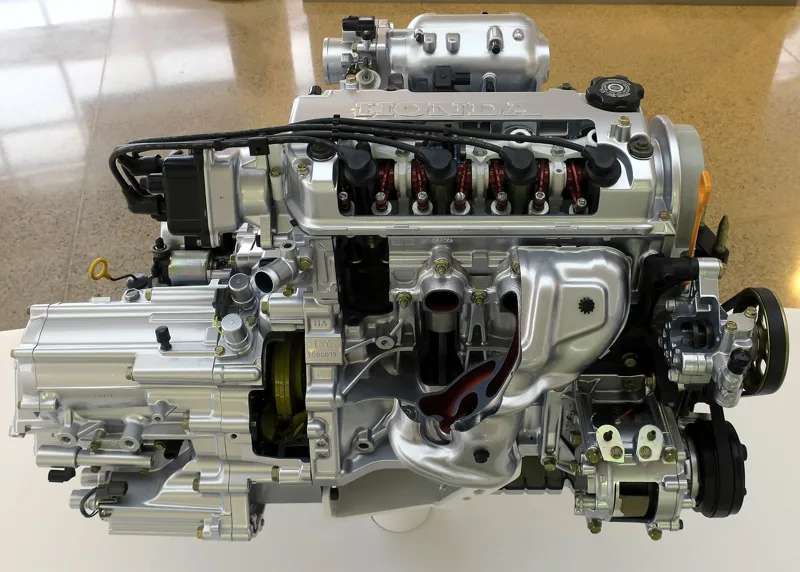
The D15Z1 engine placed cam followers at every lobe and used just two piston rings per cylinder. Below 2,500 rpm at low load it could burn an ultra-lean mixture, because only one intake valve opened during the intake stroke. The multiport injectors sat close to the intake valves.
An ultra-sensitive oxygen sensor with two measuring cells, rather than the single cell that was then standard, helped control the mixture. Racing teams later adopted the same sensor to monitor each cylinder during tuning.
The single-valve intake action made the flow turbulent, sped up flame travel and gave good resistance to knock. It also cut unburned hydrocarbons and carbon monoxide and raised low-rpm torque, so the torque and power curves sat between those of petrol and diesel engines. With reasonable aerodynamics, the VX could hold highway speeds in lean-burn mode.
Honda left one lever unpulled. The VX kept the CX's final drive ratio, so a higher ratio could have added fuel economy, even though the existing ratio made the car quick off the line. Overdrive gearing, a dual-range transmission or larger wheels paired with a wide-ratio gearbox could all have helped the car's economy.
In Canada, Transport Canada published separate city and highway fuel-consumption figures for the VX. Its 8,000 rpm tachometer had a 6,000 rpm redline, and a shift light told drivers when to change up.
Car & Driver's March 2010 issue compared a 2009 VW TDI Jetta, which managed 38 mpg, with a 1992 Civic VX at 41 mpg and a 2000 Honda Insight hybrid at 48 mpg.
What did the DX and Si offer?
The DX was the standard hatchback, with a 1.5-litre D15B7 engine rated at 102 hp (76 kW), tilt steering, intermittent wipers and a rear cargo shelf. Despite its extra power, the DX returned real-world figures of 38 mpg in town and 45 mpg on the highway. The Si replaced rear drum brakes with discs and used a 125 hp (93 kW) 1.6-litre 16-valve engine with a five-speed manual.
Other Si kit included a sunroof that tilted, cruise control, a clock on the dash, and a tachometer that read to 9,000 rpm with its redline at 7,200 rpm. Its 14-inch wheels wore plastic covers. Body-coloured mirrors arrived in 1993, and rear speakers plus optional ABS in 1994.
Honda's claim for 0-60 mph (97 km/h) was 7.5 seconds. Its quarter mile took 16.3 seconds, and it passed the line at 86 mph (138 km/h).
VTEC acted only on the intake side, because the spark plug occupied space that the exhaust cam follower would have needed.
How did the Si perform in other markets?
Outside North America the Si was not always the strongest Civic. Australia, Japan and Latin America received a 130 PS (96 kW; 128 hp) non-VTEC 1.6 DOHC engine, while Europe had the VTi, whose B16A2 made 160 PS (118 kW; 160 hp).
The Japanese SiR, SiR-II and SiR-S used a more powerful B16A engine making 170 PS (125 kW; 168 hp). Japan additionally offered a 1.5-litre VTi with 130 PS (96 kW; 128 hp).
South Africa got hatchback and saloon versions with the B18B3 engine borrowed from the Acura Integra RS, because the 1.6-litre DOHC VTEC B16A was not offered there.
In the Middle East the EX used a D16Z9 in its sedan, while the VTi, in hatchback and coupe form, ran a B16A2/3 engine.
What were the European trims and engines?
European buyers chose from DX, LSi, VEi, ESi and VTi trims. Engines ranged from a 1.3-litre 75 PS D13B2 in the DX to a 1.6-litre DOHC VTEC B16A2 producing 160 PS in the VTi, with a 1.5-litre 90 PS engine in the LSi.
The ESi used the 125 PS SOHC VTEC D16Z6 from the 1.6-litre family, while the VEi relied on a 1.5-litre SOHC VTEC-E rated at 92 PS.
How were the sedan trims and names split?
US sedans came in DX, LX and EX trims, while Canadian cars used LX, a Special Edition LX, EX and EX-V. In Japan the four-door sold as the Civic Ferio through Honda Primo dealers, and an upscale Domani was sold through Honda Clio dealers.
Ferio was used on Japanese sedans from 1992 until 2006, whatever the trim. The five-door wagon missed out on this platform's update and kept its previous form outside Japan until 21 February 1996, when the Orthia and Partner took over in Japan only.
How many Civics did Pakistan build?
Pakistan began producing the fifth-generation Civic in May 1994, as a sedan only, fitted with a carbureted 16-valve 1.5-litre engine and a five-speed manual. It was the first fifth-generation Civic built in Pakistan, and the total there reached 6,480 units before production ended in December 1995.
The first car built is now shown at the Honda Heritage Center in Lahore.
Indonesia offered two bodies: a sedan called the Genio (SR4) and a three-door hatchback called the Estilo (SR3). Both used a D16 SOHC four-cylinder that produced 120-130 HP, with a five-speed manual or four-speed automatic.
In the Philippines the DX used a 1.3-litre carbureted SOHC engine, the LX a 1.5-litre unit with power steering, and the ESi a 1.6-litre fuel-injected engine with every power amenity. Only the ESi came with a four-speed automatic.
What is the fifth-generation Civic remembered for?
The fifth generation is remembered for putting fuel economy at the centre of the range while keeping VTEC engines in its sporty trims. Its CX and VX still get praise, with commentators comparing them to modern hybrids and diesels. Car & Driver used a 1992 VX as its yardstick in 2010.
| Specification | Detail |
|---|---|
| Production | 1991 to 1995; Japanese debut 9 September 1991 |
| Wheelbase, three-door hatchback | 257 cm (101.3 inches) |
| Wheelbase, four-door sedan | 262 cm (103.2 inches) |
| Coupe | Introduced for the 1993 model year |
| D15B7 (US DX and LX) | 1.5-litre, 102 bhp (76 kW; 103 PS), 98 ft-lbf (133 N-m) |
| VX engine | D15Z1 VTEC-E 1.5-litre, 92 bhp (69 kW; 93 PS) |
| Si engine | 1.6-litre D16Z6 SOHC VTEC, 125 hp (93 kW) |
| Si performance | 7.5 seconds to 0-60 mph (97 km/h), per Honda's claim |
| VX fuel economy (US, pre-2008) | 48/55 mpg city/hwy |
| Pakistan output | 6,480 units, May 1994 to December 1995 |