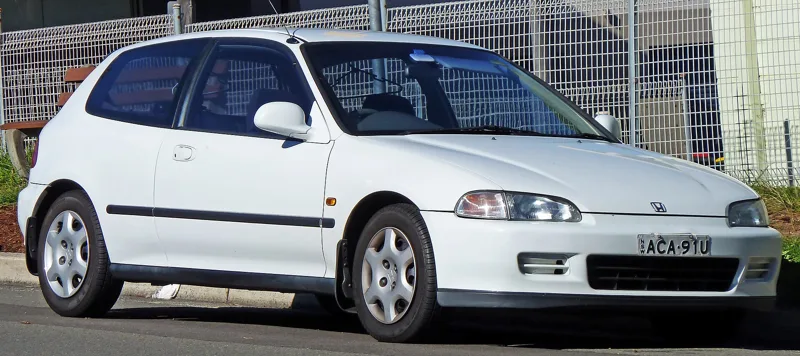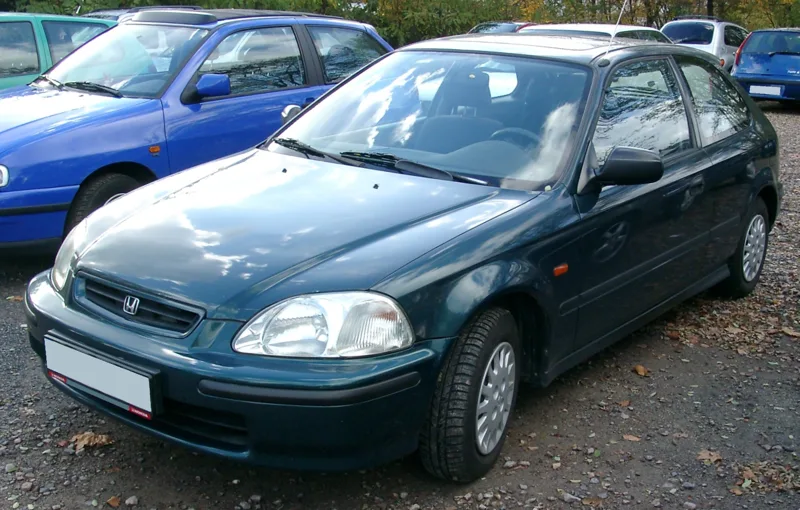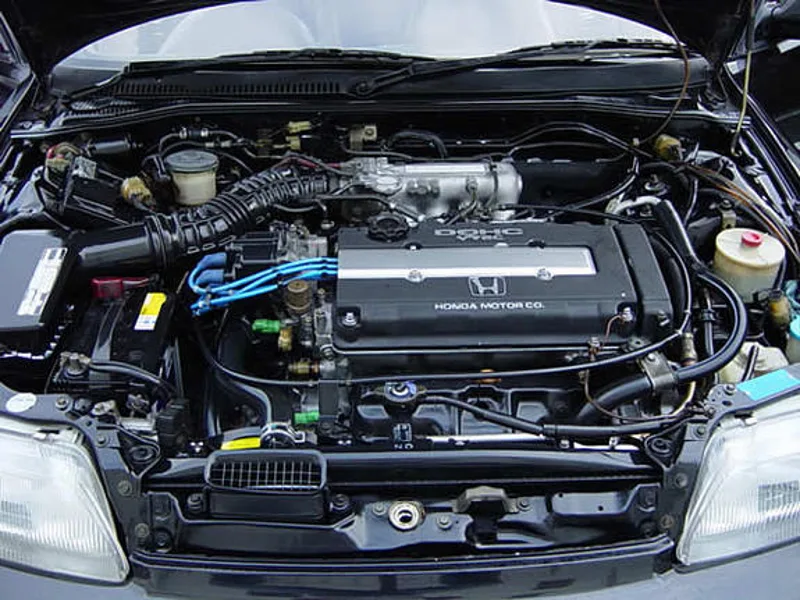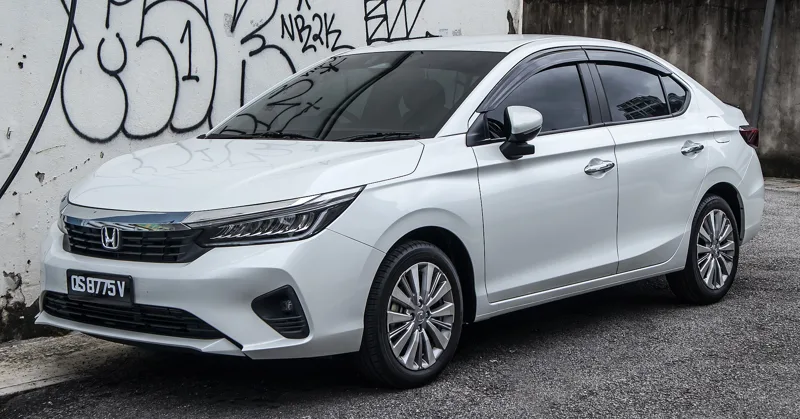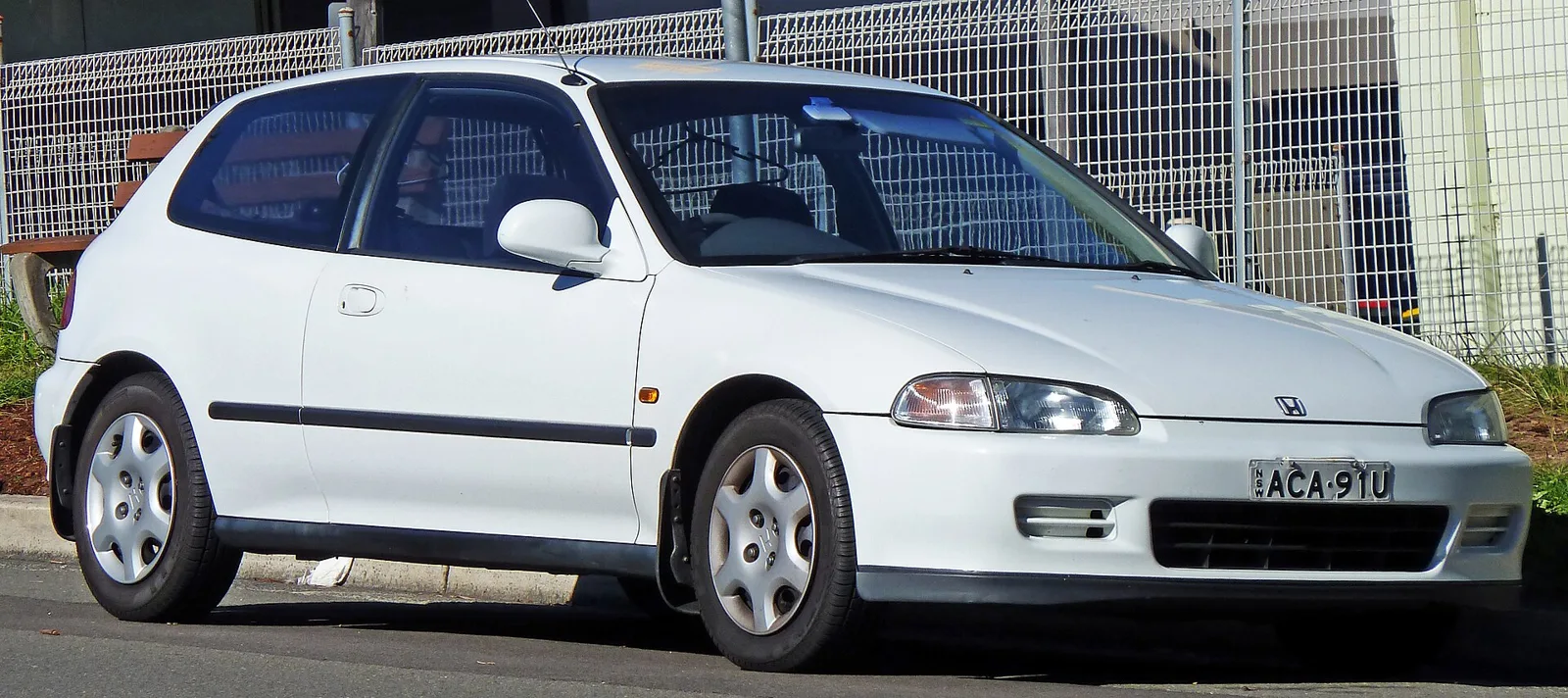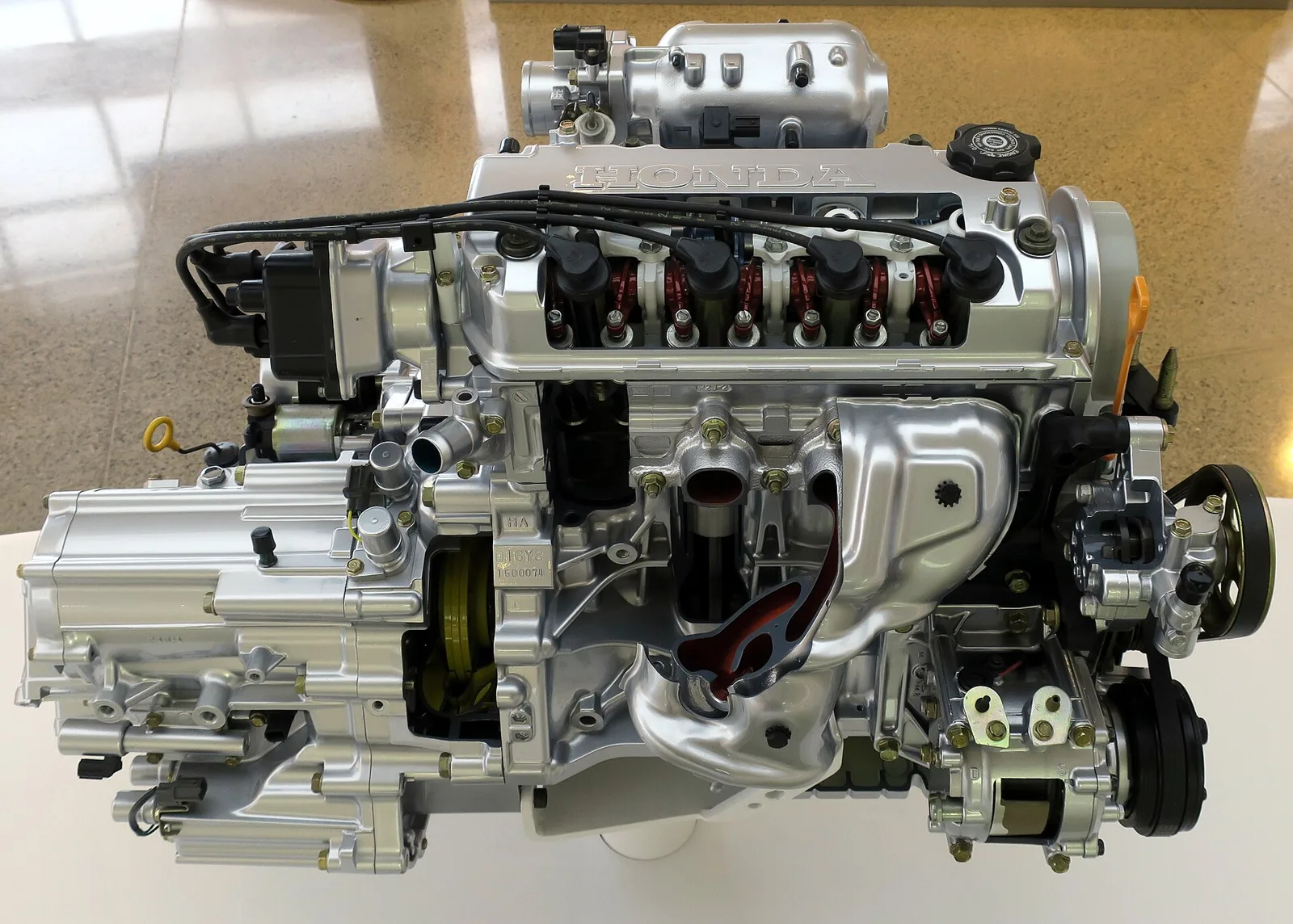
A family of small inline-fours from 1983 to 2005, spanning economy units of 1.2 litres to VTEC performance engines of 1.7 litres.
The Honda D-series was a compact inline-four petrol family built from 1983 to 2005 in capacities from 1.2 to 1.7 litres. It powered most Civics of the period and was offered with SOHC or DOHC layouts, with VTEC variable valve lift on the sportier versions.
The Honda D-series was a family of inline-four petrol engines for compact cars, built from 1983 until 2005. It powered most Honda Civics of the period, along with the CRX, Logo, Stream and first-generation Integra, and its capacities stretched from economy-minded units of around 1.2 litres to sporting 1.7 litre engines.
Its long life brought together a wide range of techniques. Carburettors gave way to fuel injection, single cams to double cams, and eventually variable valve lift arrived with VTEC, which turned some of the family's humbler units into surprisingly lively cars.
What is the Honda D-series engine?
The D-series is a compact inline-four petrol engine that Honda built in SOHC and DOHC layouts, and some versions added VTEC variable valve lift. Displacement ranges from 1.2 to 1.7 litres, and output stretches from 66 PS (49 kW) for the Logo up to 140 PS (103 kW) for the Civic sold in Japan.
Early versions used PGM-CARB, a carburettor that the engine's computer controlled, and the later units moved to multi-point fuel injection. The family's most advanced engine, the D15B three-stage VTEC whose best-known form is the D15Z7, was sold in markets outside the United States.
A compact family that ran for more than two decades, taking Honda from humble economy units to VTEC performance.
How did the D12 and D13 engines begin?
The smallest members were the D12 and D13 engines. The D12A powered the 1986 to 1988 Honda City in Japan with 1,237 cc, a 72 mm bore and 76 mm stroke, fed by a single carburettor. It made 76 PS (56 kW; 75 hp) at 6,500 rpm.
The D12B1 was a 1,193 cc unit that served the European Civic DX from 1988 to 1990 with an 8.6:1 compression ratio. The D13B1 followed with 1,343 cc, with 9.5:1 compression, and it produced 76 PS (56 kW; 75 hp) at 6,300 rpm with 102 N m of torque at 3,100 rpm.
The D13B4 marked a step forward. Its 16-valve head and PGM-FI fuel injection gave the 1996 to 2002 City 95 PS (70 kW) at 6,500 rpm, while the Civic EK2 of 1995 to 2000 made 91 PS (67 kW) at 6,300 rpm. The D13B7 in the 1998 to 2001 Logo was a more modest unit, rated at 66 PS (48.5 kW; 65.1 hp) at 5,000 rpm.
What did the D14 engines offer?
The D14 family used a 1,396 cc capacity with a 75.0 mm bore and 79.0 mm stroke. Its engines were the core of European Civic sales in the late 1980s and 1990s, and they came in carburettor, fuel-injected and VTEC-free forms depending on the market.
The D14A1 delivered 90 PS (66 kW; 89 hp) at 6,300 rpm in the Civic GL and 1990 CRX, while the Concerto made 88 PS (65 kW; 87 hp). Its torque of 112 N m (82 lb ft) came at 4,500 rpm, and it used a dual carburettor set-up. Later versions such as the D14A2 raised the torque to 117 N m (86 lb ft) at 5,000 rpm and reached a redline of 6,800 rpm.
Some D14 variants were deliberately detuned for particular markets. The D14A3 and D14A4 were identical in most respects, but the D14A3 had a small gasket under the throttle body that restricted the air intake. Some European countries used that restriction to suit local insurance categories, so the lower-powered version could be sold at a lower premium.
The D14Z5 and D14Z6 of 2001 to 2005 used 16 valves and a 10.4:1 compression ratio. The D14Z5 produced 90 PS (66 kW; 89 hp) at 5,600 rpm and 130 N m (96 lb ft) at 4,300 rpm, and Honda rated the D14Z6 at a fuel economy of 5.2 to 6.5 L/100 km (45.2 to 36.2 mpg-US).
Two Civic EJ9 engines sold in Europe, the D14Z1 and D14Z2, ran 9.7:1 compression in 1999 and 2000. The D14Z2 made 90 PS (66 kW; 89 hp) at 6,300 rpm, and its near twin, the D14Z1, differed only by a single gasket at the throttle.
How did the D15 family develop VTEC?
The D15 was the most varied branch of the family, running from carburettor economy units to the VTEC engines that Honda sold in Japan and Europe. The D15A1 of the 1984 to 1987 CRX made 76 hp (57 kW; 77 PS) at 5,500 rpm from 1,488 cc, while the D15A3 raised output to 91 hp (68 kW; 92 PS) at 5,500 rpm.
The D15B, at 1,493 cc, was the engine that carried the family into the 1990s. With 9.2:1 compression, it produced 103 hp (77.23 kW; 105 PS) at 6,800 rpm, with a rev limiter set at 7,200 rpm. The VTEC version of the 1992 to 1995 Civic VTi took that figure to 130 PS (96 kW; 128 hp) at 6,800 rpm, with VTEC engaging at 4,600 rpm.
Three-stage VTEC first appeared on the D15B, and later on the D15Z7. Its output was 130 PS (96 kW; 128 hp) at 7,000 rpm in the 1995 to 1998 Civic Ferio, and the D15Z7 reached 128 hp (95.4 kW; 130 PS) at 7,000 rpm in the 1996 to 1999 Civic VTi EK3, with a lean burn capability and VTEC switchover between 3,200 and 5,800 rpm.
| Engine | Displacement | Power | Torque | Example application |
|---|---|---|---|---|
| D12A | 1,237 cc | 76 PS (56 kW; 75 hp) at 6,500 rpm | 98 N m (72 lb ft) at 4,000 rpm | City GG, Japan, 1986-1988 |
| D13B4 | 1,343 cc | 95 PS (70 kW) at 6,500 rpm (City) | 119 N m at 4,700 rpm (City) | City, 1996-2002 |
| D14A2 | 1,396 cc | 90 PS (66 kW; 89 hp) at 6,100 rpm | 117 N m (86 lb ft) at 5,000 rpm | Civic MA8, European, 1995-1997 |
| D15B VTEC | 1,493 cc | 130 PS (96 kW; 128 hp) at 6,800 rpm | 138 N m (102 lb ft) at 5,200 rpm | Civic VTi EG4, Japan, 1992-1995 |
| D16A8 | 1,590 cc | 122 PS (90 kW; 120 hp) at 6,800 rpm | 146 N m (108 lb ft) at 5,900 rpm | Civic, CRX and Concerto, 1988-1995 |
| D16W9 | 1,590 cc | 132 PS (97 kW; 130 hp) at 6,600 rpm | 154 N m (114 lb ft) at 5,500 rpm | Civic VTi, 2001-2005 |
| D17A2 VTEC | 1,668 cc | 127 hp (95 kW; 129 PS) at 6,300 rpm | 155 N m (114 lb ft) at 4,800 rpm | Civic EX, US, 2001-2005 |
What made the D16 engines popular?
The 1,590 cc D16 was the family's sporting heart. It had a 75.0 mm bore and 90.0 mm stroke, and the early versions made use of double overhead camshafts and 16 valves. The D16A1 in the 1986 to 1989 Integra was offered in two states of tune in the US, the 113 hp (84 kW; 115 PS) Browntop and the 118 hp (88 kW; 120 PS) Blacktop.
The D16A8 and D16A9 became the European favourites. The D16A8 produced 122 PS (90 kW; 120 hp) at 6,800 rpm, and the D16A9 was rated at 125 to 129 hp (91.9 to 94.8 kW; 126 to 130 PS) at the same speed. The D16A9 had no catalytic converter, while the D16A8 used one.
The D16 family later used VTEC and three-stage systems. The D16W4 reached 126 PS (93 kW; 124 hp) at 6,600 rpm, with VTEC switching in at 5,500 rpm, and the D16W9 three-stage VTEC of 2001 to 2005 reached 132 PS (97 kW; 130 hp) at 6,600 rpm with a 10.5:1 compression ratio. Its switchovers came at 2,500 and 5,500 rpm.
Economy engines in the D16 range were quieter in tune but still useful. The D16V1 of 1999 to 2005 made 110 PS (81 kW) at 5,600 rpm with a 10.4:1 compression ratio, and the D16W1 in the HR-V delivered 105 PS (77 kW) at 6,200 rpm.
What were the ZC engines?
Honda's Japanese market label ZC covered a number of D-series variants, although the ZC is not a truly different series. It includes both SOHC and DOHC layouts, and the SOHC VTEC ZC resembled the D16Z6 of the early 1990s. The 1,590 cc SOHC VTEC ZC had 9.2:1 compression and 130 PS (96 kW; 128 hp) at 6,600 rpm.
The DOHC ZC series ran through several generations between 1984 and 1991. The 1984 to 1987 version made 115 PS (85 kW) at 6,250 rpm, the 1988 to 1989 version produced 120 PS (88 kW) at 6,500 rpm, and the later 1988 to 1991 tune reached 130 PS (96 kW) at 6,800 rpm.
Enthusiasts identify the generations by hardware. The first generation had an external coil and a small distributor, while the fourth-generation car used an OBD1 system with a grey plug and a MAP sensor on the throttle body. The rarest is the second generation, which was produced for less than one year.
What came with the D17 series?
The D17 series, with 1,668 cc, 75 mm bore and 94.4 mm stroke, arrived in 2001 for the Civic. They were the largest members of the family, and production of the D-series ended in 2005. The D17A in Japan was rated at 120 PS (88 kW; 118 hp) at 4,900 rpm in lean burn form and 140 PS (103 kW; 138 hp) at 6,750 rpm, and torque of 160 N m arriving at 4,800 rpm.
The D17A2 VTEC offered 127 hp (95 kW; 129 PS) at 6,300 rpm in North American form, with a 9.9:1 compression ratio and a VTEC switchover at 3,200 rpm. The Japanese version of the same engine made 125 PS (92 kW; 123 hp) at 6,300 rpm, and it powered the Stream and FR-V as well as Civic models.
The D17A1 served the DX, LX and VP Civics from 2001 to 2005 with a 9.5:1 compression ratio. It was rated at 122 hp (91 kW; 124 PS) at 6,400 rpm and 110 lb ft (149 N m) of torque at 4,500 rpm, with a 6,750 rpm redline and a 7,200 rpm rev limiter.
The D17A7 was a compressed natural gas version that ran at 12.5:1 compression and produced 100 hp (75 kW; 101 PS) at 6,100 rpm, for the Civic GX.