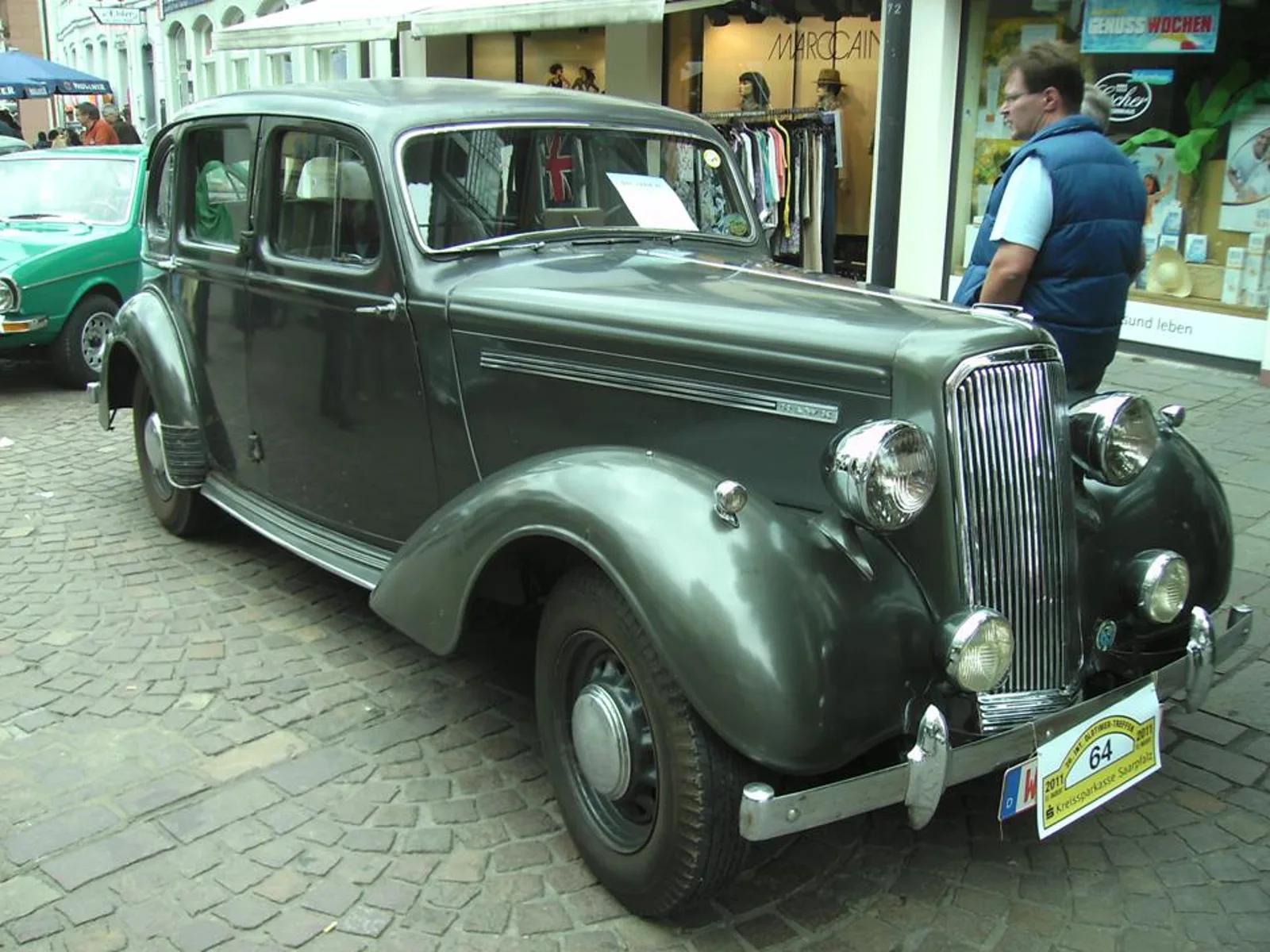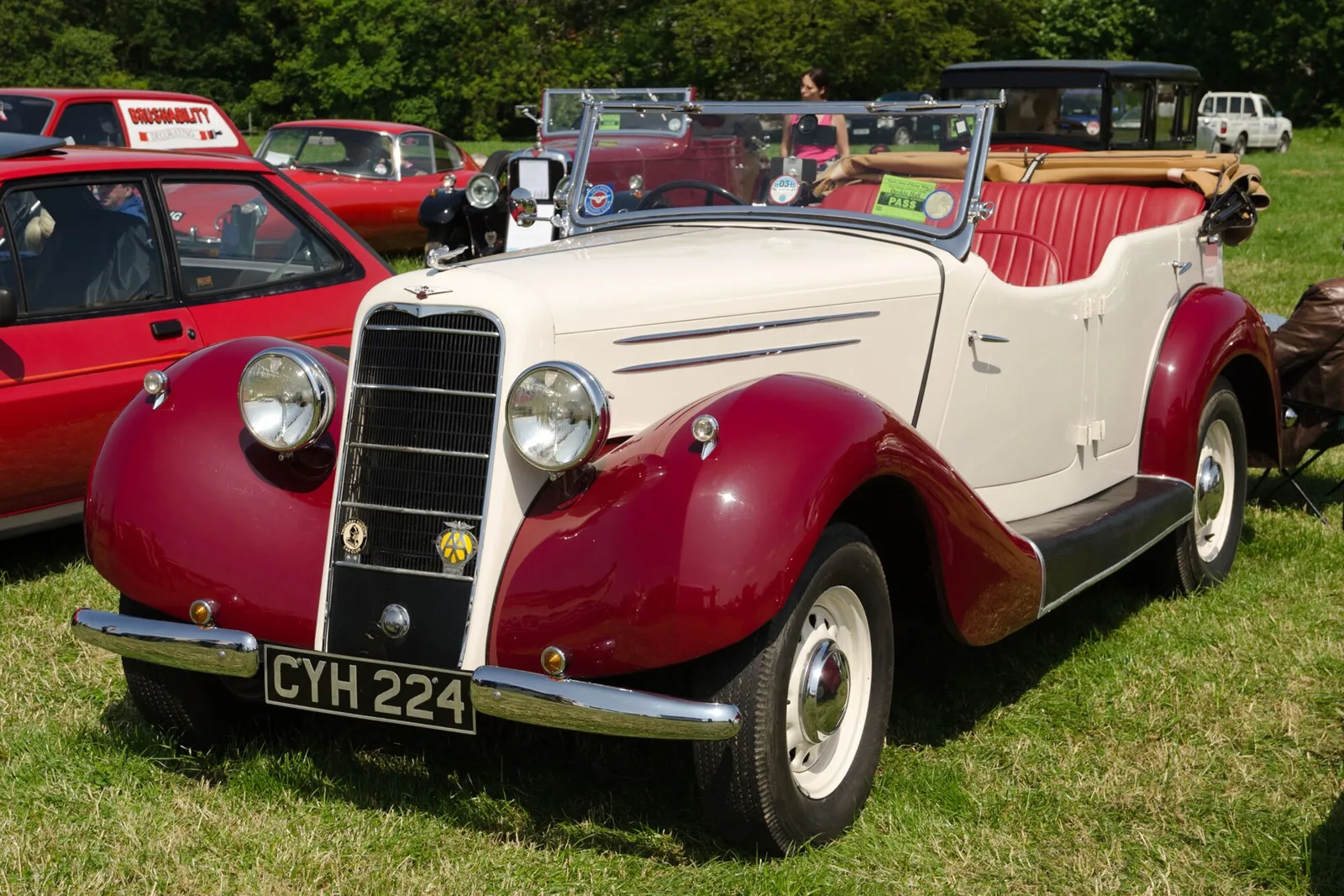
From the Wizard 75 and Twenty 70 to the 3181 cc Hawk and long wheelbase 80, with production figures and surviving cars.
The Hillman Hawk and 80 were 20 horsepower executive saloons from the 1930s, following the Wizard 75 and Twenty 70. The Hawk arrived in October 1935 with a streamlined body and a 3181 cc engine, and around 5000 Hawks were built in 1936 and 1937.
The Hillman Hawk and Hillman 80 belonged to a 1930s family of 20 horsepower executive cars that began with the Wizard 75 in 1931. The range grew through the Twenty 70 and a streamlined Hawk body in 1935, and Humber badges had replaced the Hillman ones by October 1937. The story is a useful case of export ambition meeting slow sales.
What was the Hillman Wizard 75?
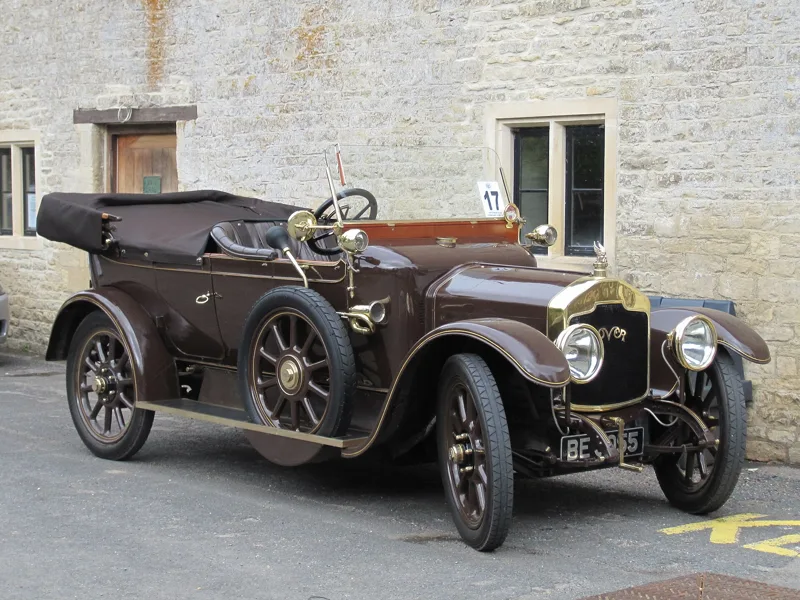
The Wizard 75 was a completely new Hillman design from 1931, created by the Rootes brothers to win export markets. It was a 20 horsepower five-seater saloon with a fixed roof, artillery wheels and a chassis built to be as rigid as possible.
The chassis frame carried five cross members and was deep and rigid. The front axle had an H section with rectangular ends. Duo-Servo four-wheel brakes, of Bendix design, worked through enclosed cables on 11 in (279 mm) drums, while half-elliptical springs and double-acting hydraulic shock absorbers controlled both axles.
A road test in The Times at the end of June 1931 found the seating comfortable, with a wide view all round. The engine pushed the car to about 65 mph (105 km/h) after running easily to 55 mph (89 km/h), and the brakes worked well except when reversing.
Steering was light and steady, and the large rear windows opened only about a third of the way. A spare artillery wheel sat in a well on the front wing, and a luggage grid was fitted at the back.
A 1930s Hillman family that moved from the Wizard to the Hawk and ended under Humber badges.
What changed on the Wizard before it was replaced?
A de luxe Wizard was announced on 1 January 1932 with walnut dashboard trim, indirect instrument lighting and a larger steering wheel. Hillman added Cyclonic Induction in March 1933, and the Twenty 70 replaced the Wizard in mid-September 1933 with an all-steel body.
The de luxe model added a luggage trunk on the rear grid, new colour schemes, de luxe carpets and a parcel net in the headlining. Its bumpers were double-barred, and three ashtrays were provided, which made it a clear step up from the standard car.
The Cyclonic Induction claim sounded dramatic, but the change appears to have been a switch from an unspecified carburettor design to a downdraught one.
The Wizard had not sold as well as planned, so Pressed Steel's tooling costs were spread across the new model. Hillman therefore kept most of the Wizard's body for the Twenty 70.
Why did the Twenty 70 have a revised body?
The Twenty 70 kept most of the Wizard's body but gained new grilles, wings and a rear valance, along with a longer, outswept tail. It was announced in mid-September 1933, and the body was all-steel with Triplex safety glass throughout. The result looked smoother than its predecessor.
The tail was now outswept with a long skirt rather than the earlier D-shape. Dual screenwipers, a roof lamp, a rear blind that the driver could operate and locks on every door completed the changes at the back and side.
Electric direction indicators were built into the body sides, invisible until in use. They were controlled from the steering wheel and cancelled themselves. The radiator shell sloped back to match the coachwork, and its chrome shutters were thermostatically controlled.
De luxe saloons added a sunshine roof, cigar lighter, parcel net and pillar pulls, while every saloon had a wireless aerial built into its roof. A Philco Transitone set could be specified as an option.
What engine and gearbox did the Twenty 70 use?
The Twenty 70 carried over a chassis little changed from the Wizard, but it mounted the engine, clutch and gearbox on rubber at three points, which Hillman called Cushioned Power. The four-speed gearbox had synchromesh between third and top, and optional Startix engine starting was available.
Synchromesh covered third and top gear, and the freewheel was fitted to every model except the cheapest Family saloon. A facia control could lock the freewheel, and every gear was described as silent.
The Times drove the Seven Seater limousine, a long wheelbase Twenty 70 that shared the engine and most of the running gear. It used the lower-ratio back axle of the smaller Sixteen, and the reviewer found it comfortable with good steering.
The car could reach 70 mph (110 km/h), but the reviewer found the rear springs too firm without a load and suggested some variable control. Overall, the reviewer judged it a notable bargain for the money.
How did the 1935 models differ?
The 1935 cars were identified by a radiator shell painted in body colour, a radiator filler cap moved under the bonnet and a chrome motif above the bonnet. A thermostatic cut-out held back water circulation until the engine had fully warmed.
The Times tested a 1935 sports saloon and called the engine one of the car's chief attractions. It reached a good 70 mph (110 km/h), though the brakes needed only light pedal pressure and sometimes grabbed, which affected the steering. That might have been a fault with that particular car.
The reviewer praised the compact appearance and the synchromesh, which worked well. The sports saloon weighed 3,304 lb (1,499 kg).
Despite the efforts of William Rootes and his sales team, the Twenty 70 and Sixteen did not sell well. Buyers still saw them as updated Wizards, and sales stayed weak.
Why was the Hawk a new model?
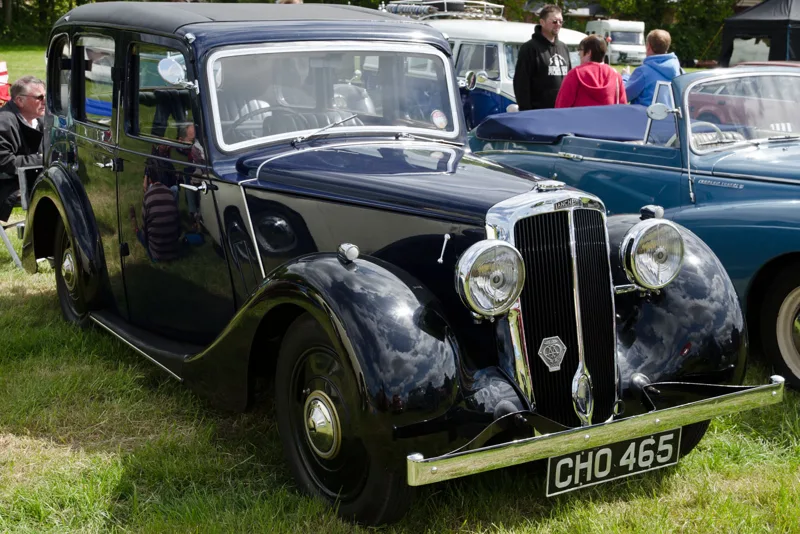
The Hawk replaced the Twenty 70 in October 1935 with a new streamlined body, a larger engine and a spare wheel housed in the tail. Chassis design was by William Haynes, assisted by Alec Issigonis, and the body came from Thrupp and Maberly.
Thrupp and Maberly, a London coachbuilder also owned by the Rootes Group, built the all-steel semi-monocoque body. Its lines were planned to run smoothly from the radiator back to the tail, with the wings blending into the whole car.
The engine grew 13 per cent after its stroke was lengthened by 14 mm. Capacity rose from 2810 cc to 3181 cc, yet the tax rating stayed unchanged because the RAC formula ignores stroke.
Other engine changes included replaceable hardened steel valve seats, improved steel-backed main bearings and a rheostat switch that varied the instrument lighting. The sloping single-piece windscreen could still be opened for better vision in fog.
What happened to the Hawk in 1937 and 1938?
In 1937 prices fell across the range and the Family saloon gave way to a Safety saloon with Triplex glass all round. Advertising cited approval by the War Office, the RAF and the police. By October 1937 the old Hawk was on Humber's stand as the Humber Snipe.
The Times tried the 80 enclosed limousine in 1937 and found the engine well balanced, smooth on its rubber mounts and quiet. The car could reach 70 mph (110 km/h) in top gear.
The Rootes brothers then moved the models to Humber badges at the end of the decade. The old Hillman Sixteen was shown as a Humber Sixteen, so the Hillman name no longer appeared on those cars.
How many Hillman Sixteens, Hawks and 80s were built?
About 700 Hillman Sixteens were built in 1936 and 1937, compared with around 5000 Hawks in the same period. An estimated 300 Hillman 80s were made between 1936 and 1938, mostly as standard and deluxe saloons, which made the Hawk the volume car of the family.
Standard and deluxe saloons made up most output, and some went to military, police and government departments. A small number of sports tourers, cabriolets and coupes were built, with bodywork converted by Thrupp and Maberly and by Wingham.
The 80 figure is an estimate, so precise totals for that model are not known. The Hawk and Sixteen figures are given as approximate counts for the same two years.
Where do surviving Hillman Hawks and 80s remain?
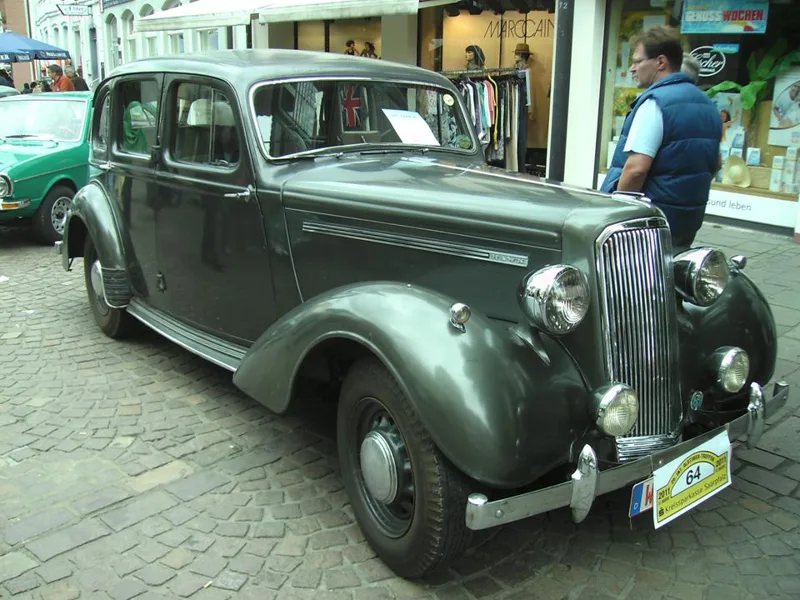
Only a few examples of each model survive in the UK today. Many cars were exported, and Australia and New Zealand still have a number of surviving Hawks and 80s. The survivors are a reminder of how far the Rootes range travelled in the 1930s.
Export was central to the Wizard's original purpose, and the surviving cars in Australia and New Zealand reflect how widely the range was sold overseas.
What were the main models in the Hillman 20 family?
| Model | Introduced | Engine or rating | Notes |
|---|---|---|---|
| Wizard 75 | 1931 | 20 horsepower RAC rating | Export-focused; de luxe from 1 January 1932 |
| Twenty 70 | Mid-September 1933 | 20 horsepower RAC rating; four-speed gearbox | All-steel body with Triplex glass |
| Sixteen | 1935 | 16 horsepower RAC rating | About 700 built 1936-37; no long wheelbase form |
| Hawk | October 1935 | 3181 cc, up from 2810 cc | Streamlined body; around 5000 built 1936-37; shown as the Humber Snipe in October 1937 |
| 80 | 1936 | Long wheelbase variant | Estimated 300 built 1936-38 |