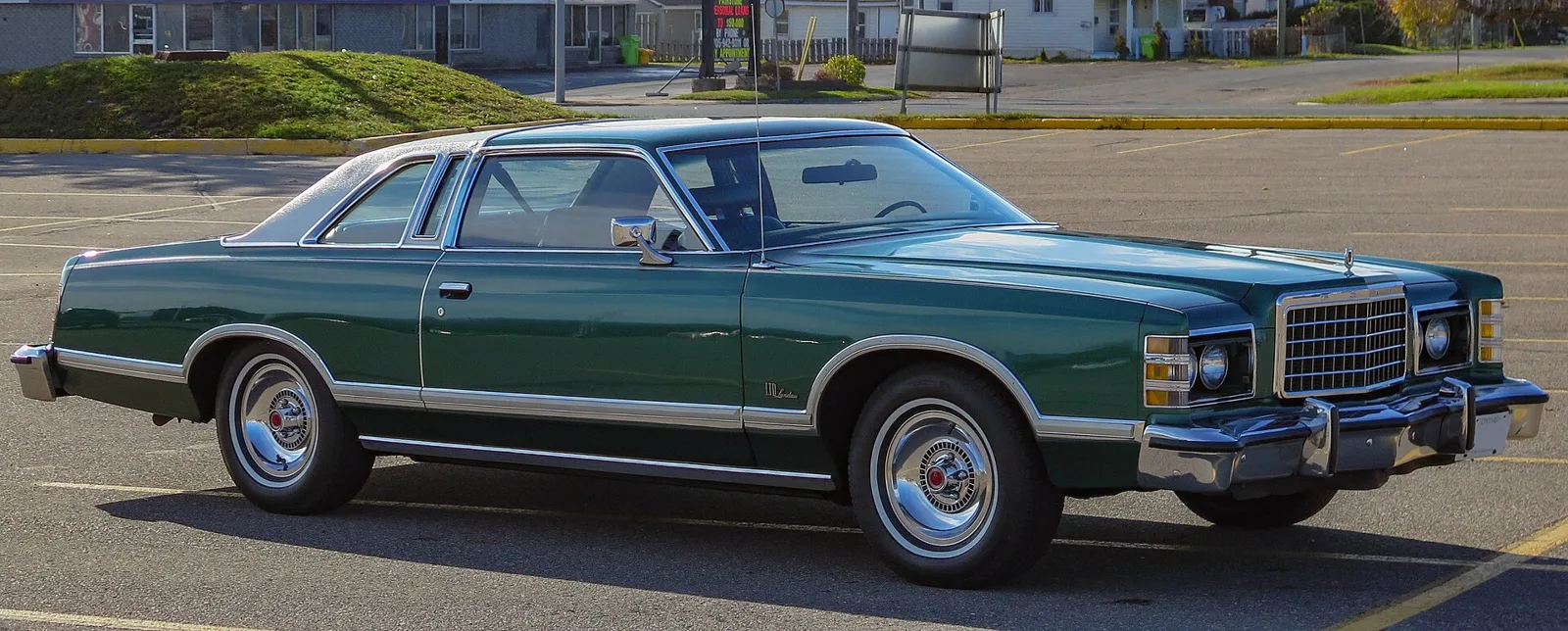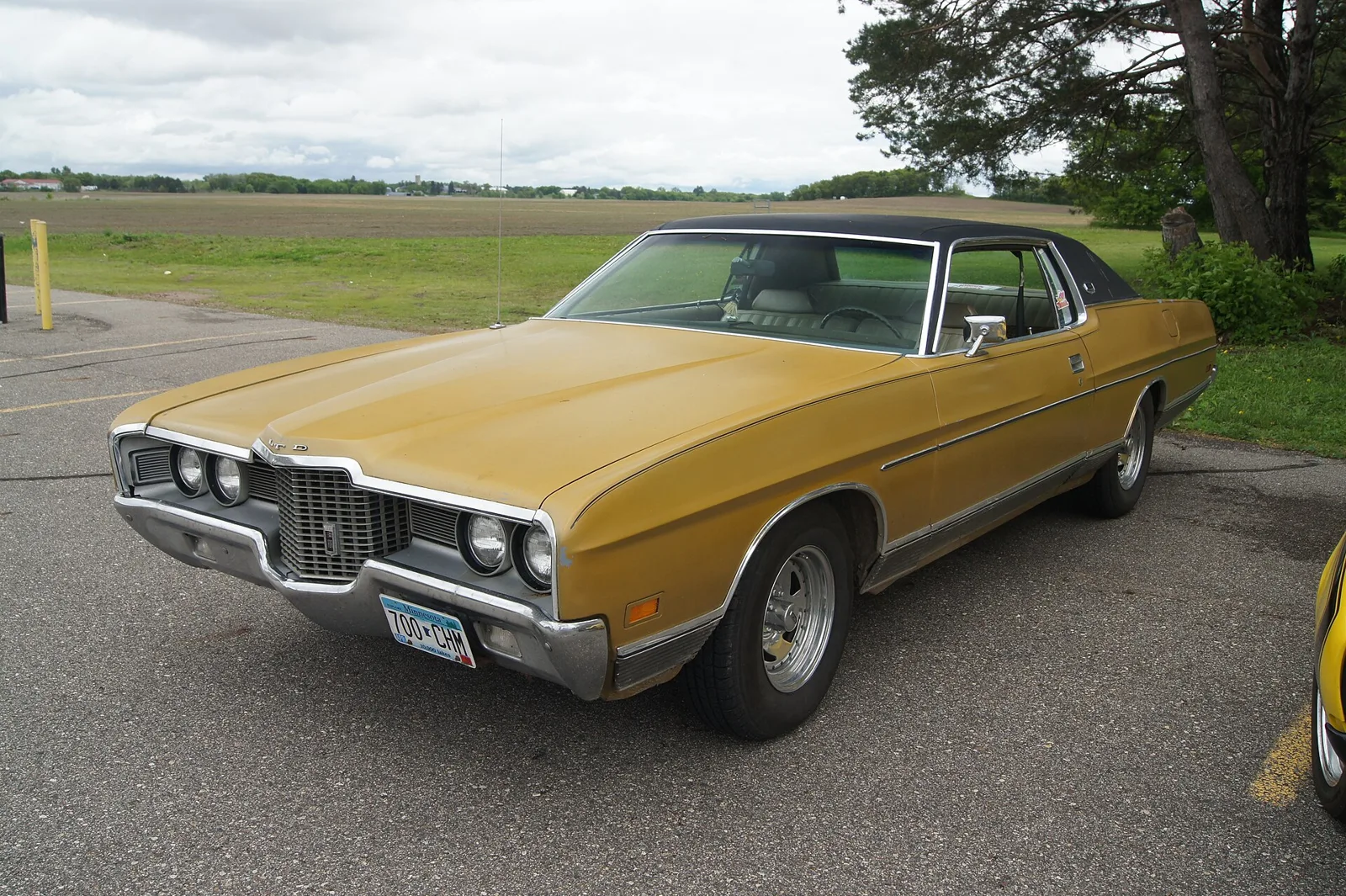
Five body styles, V8 power only, a three-speed automatic as standard and almost 1.75 million sold across four model years.
Built between 1969 and 1972, the Ford LTD was a full-size car sold in five body styles. Every version had a V8 engine and a three-speed automatic, and almost 1.75 million were sold in four years.
The Ford LTD of the 1969 to 1972 model years was the top Ford of its day, apart from the Thunderbird, and the largest and heaviest car the brand sold. It was the second generation of the LTD line in North America, and almost 1.75 million were sold over the four years. Every car ran a V8 and a three-speed automatic.
Where did the LTD come from?
The LTD began life as a luxury trim package on the Galaxie in 1965 and became a model of its own in 1967. It stood above the Custom and Galaxie, which were largely identical cars, and the 1969 redesign kept that three-tier arrangement. The Custom was the cheap base model of the three.
Some LTD variants were also built in South America and Australia, with small differences in detail.
Most documentation closes the second generation with the 1972 model year. The cars built from 1973 to 1978 kept the same technology but wore a new body, and they are counted as the third generation.
Four model years, five body styles and almost 1.75 million sales gave the LTD its place at the top of Ford's full-size family.
How was the 1969 LTD built?
In 1969 the LTD had a single trim level, so the Brougham did not yet exist. The four-door hardtop sedan was the most expensive saloon Ford sold, apart from the Thunderbird. Counting every body style together, 417,677 LTDs left the line that year.
The LTD rode on a separate frame with its body mounted on top. Its wheelbase was 51 mm (2 in) longer than that of the previous full-size generation from Ford, and its frame and suspension matched those of the contemporary full-size Mercurys.
The front wheels had independent suspension and the rear used a solid axle, with coil springs at all four wheels. Front disc brakes and rear drum brakes were standard, and power steering came as standard equipment.
There was no six-cylinder option. Only V8 petrol engines were offered, while the cheaper Custom kept an inline six, the so-called Big Six, until 1972. Every LTD had a three-speed automatic as standard.
Which sister models shared the LTD?
The Custom and Galaxie were the LTD's closest relatives in the Ford range, and the LTD sat above both. The Mercury Marquis was the better-equipped and more expensive counterpart, and the longer Lincoln Continental used the same chassis as the LTD.
The two-door and four-door Mercurys had a wheelbase 76 mm longer than the Ford, although their frame and suspension matched those of the LTD. The Lincoln ran the same chassis as the LTD and was longer still.
Which body styles could buyers choose?
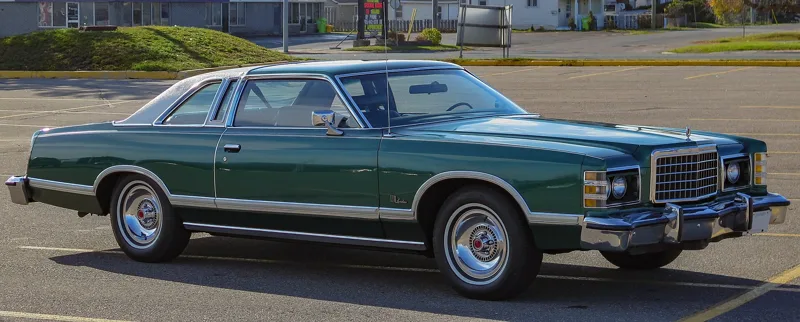
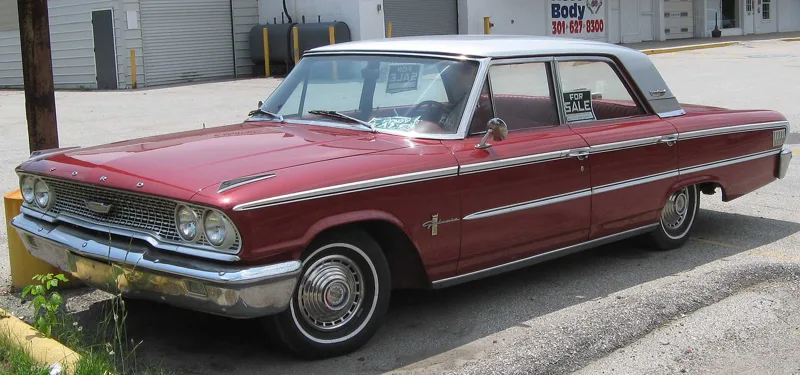
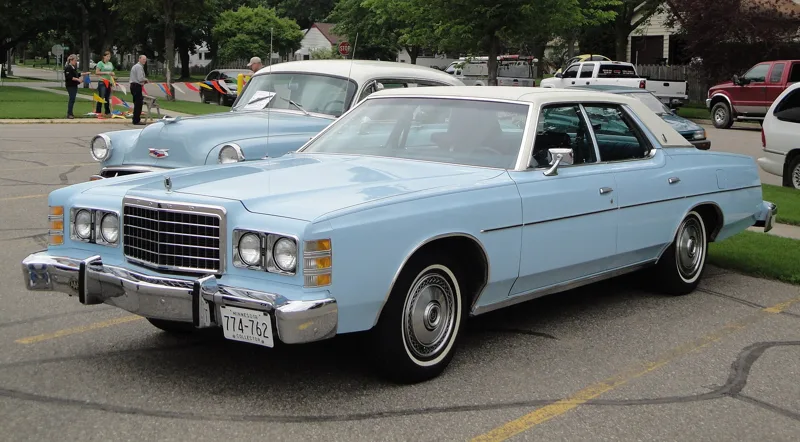
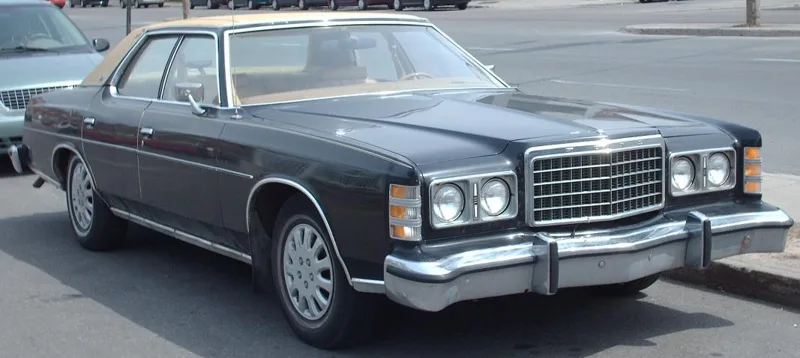
Buyers could pick a two-door hardtop coupe without a B-pillar, a four-door hardtop sedan without one, a four-door sedan with a B-pillar, or a four-door station wagon with a tailgate. Two-door convertibles arrived in 1971, after Ford moved them over from the XL line.
The bodies followed the styling of the late 1960s, which the Coke-bottle line shaped among other things. The Knudsen nose appeared in several forms, and the bodies received detail changes every year, so neighbouring model years look slightly different from one another.
Ford changed the cars almost every year. The 1969 models, which also offered station wagons with two or three rows of seats, hid their headlamps behind flaps whose trim matched the grille, which created the look of a cooling intake across the full width of the car. Those pop-up lamps were dropped for 1971, when the LTD received the open round twin headlamps of the other full-size Fords.
What changed in 1970, 1971 and 1972?
The 1970 model year kept the body styles of 1969. Ford split the range into a base LTD and the better-equipped Brougham, and the two looked alike from outside.
The 1971 facelift was larger than the yearly detail changes. The grille broke through the front bumper and tapered to a point, and the front gained a pronounced Knudsen nose. Every body style was updated, and the convertible was folded into the LTD range that year.
Stylistically, the 1972 cars stayed close to their predecessors, and the modifications were limited to the front end and the trim.
The 1972 changes were minor. The front bumper was newly designed and the side trim strips sat in different positions. The engine lineup stayed the same, but Ford switched to net power ratings, and list prices fell by about US$50 compared with the year before. The lower 1972 figure was therefore a change of measurement, not a change in the engine.
Specifications at a glance
| Item | Figure |
|---|---|
| Model years | 1969 to 1972 |
| Wheelbase | 3,070 mm (121 in) |
| Engine | V8 petrol only; base engine 5,752 cc (351 cu in) in 1972 |
| Power, 1971 base engine | 240 SAE-PS gross (177 kW; 237 hp) |
| Power, 1972 base engine | 153 SAE-PS net (113 kW; 151 hp) |
| Transmission | Three-speed automatic, standard |
| Front suspension | Independent, with coil springs |
| Rear suspension | Solid axle, with coil springs |
| Brakes | Front discs, rear drums |
| Steering | Power assisted, standard |
Station wagons weighed about 400 kg (882 lb) more than the four-door notchback, and the two-door versions sat at roughly the same weight as the four-door notchback. The weight figures refer to the base version with the base engine, and optional equipment or stronger engines could add several hundred kilograms.
What was the LTD Brougham?
The LTD Brougham arrived for 1970 as the better-equipped version of the LTD. It cost about US$120 more than the base car, and until 1974 it was the most expensive variant in the range and, apart from the Thunderbird, the priciest car Ford sold.
The Brougham stayed the most expensive LTD until 1974, which runs beyond the end of this generation.
From outside, the Brougham looked the same as the simpler LTD. It was offered for every coupe and sedan but not for the station wagons. The Country Squire, the LTD's wagon, was the most expensive and best-equipped of the large wagons, and it came only with V8 engines.
The list prices show how the range was stepped. In 1970 the Brougham hardtop sedan reached US$3,579. In 1971 the cheapest LTD was the hardtop coupe at US$3,923, while the Brougham hardtop sedan topped the notchbacks at US$4,140.
How many LTDs were built?
Ford built almost 1.75 million LTDs in the four model years. Five plants in the United States and one in Canada shared the work. The busiest year was 1971, with about 478,000 cars, and 1972 came close behind at 475,112.
The 1969 model year produced 417,677 LTDs across all body styles, and 1970 fell to 373,940 vehicles. In 1971 the convertible was the rarest body style at 5,750 units, while the six-seat Country Squire wagon, at 130,644 cars, was the most built variant. Output in 1972 reached 475,112 cars, nearly level with 1971.
The yearly totals cover every body style together, so a single figure includes sedans, coupes, convertibles and station wagons. Production was spread across the United States and Canada, and the 1969 model year was the first of the new generation.
Why did the LTD matter to Ford?
In 1969 the LTD was the most successful version of Ford's full-size models, and that year's run alone totalled 417,677 cars. Its position above the Custom and Galaxie made it the top line of the family. Ford kept the three-tier structure for 1969, with the Custom as the cheap base model and the LTD above both sister models.
Within the family the order was clear: the Custom at the bottom, the LTD above both sister models, and the Brougham as the priciest step inside the LTD itself. Until 1974 the LTD Brougham stayed the most expensive Ford apart from the Thunderbird. For buyers of the period, the LTD name therefore marked the top of the brand's range, and the cars sold in very large numbers while doing so.