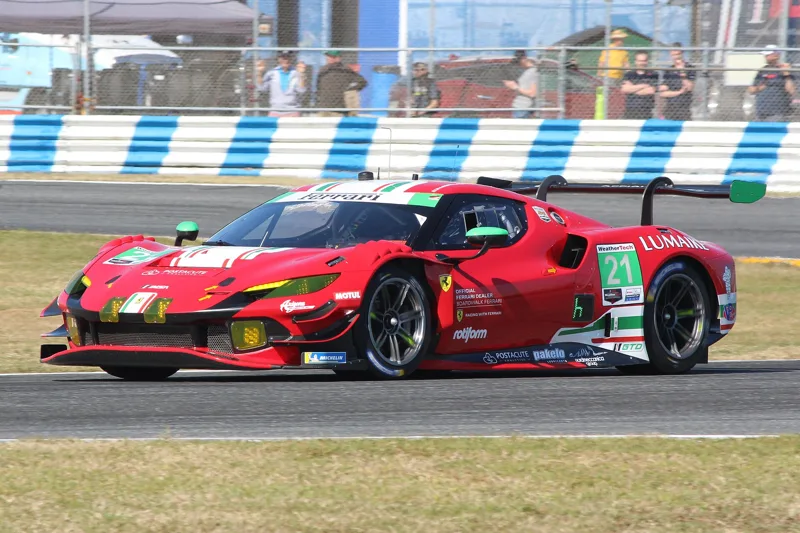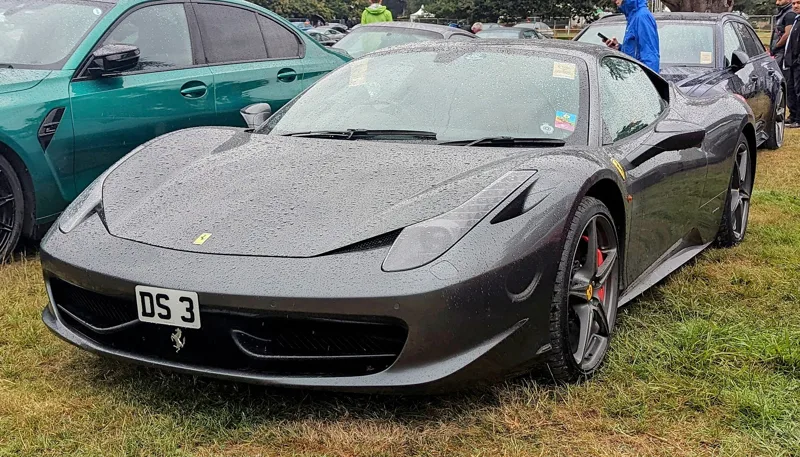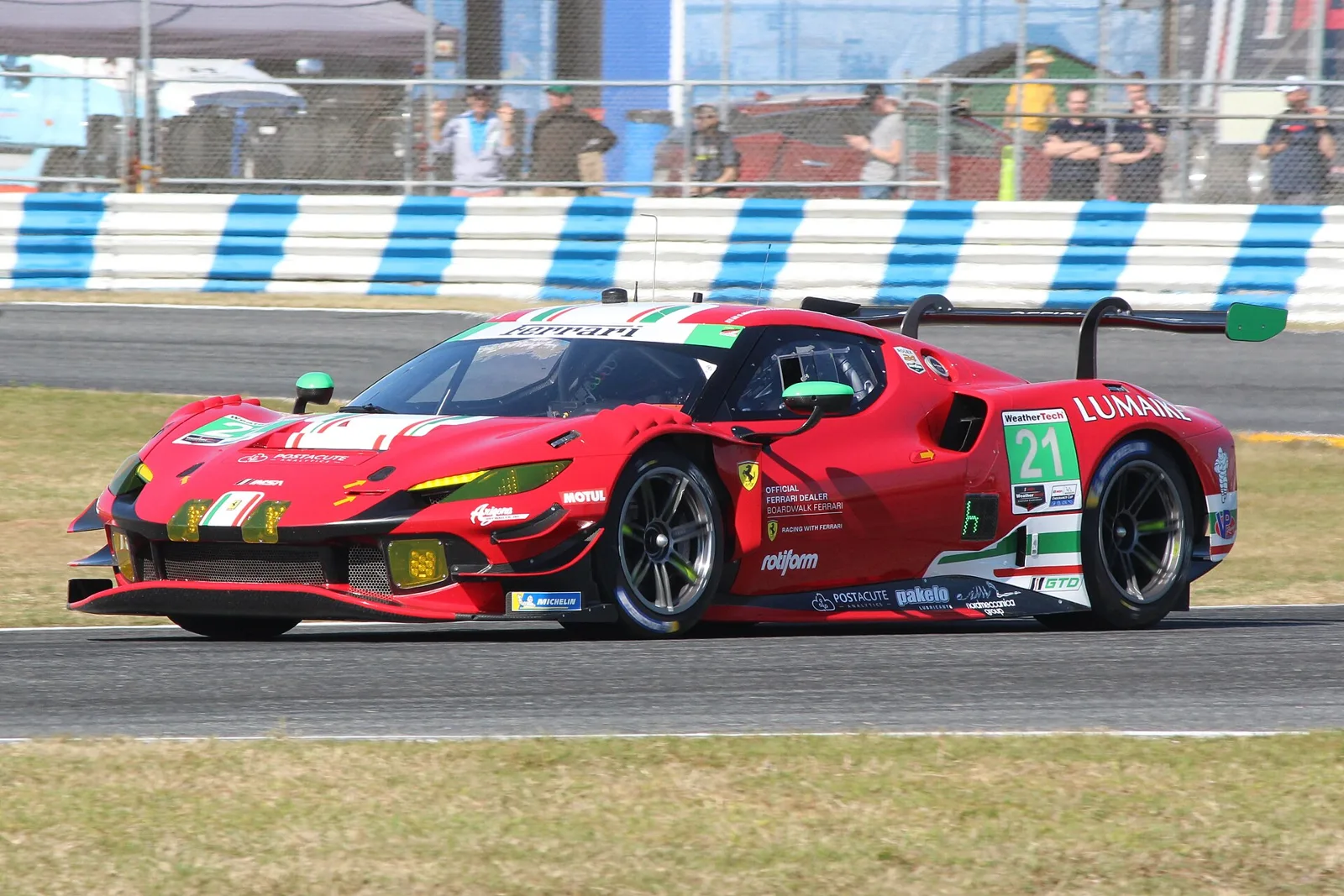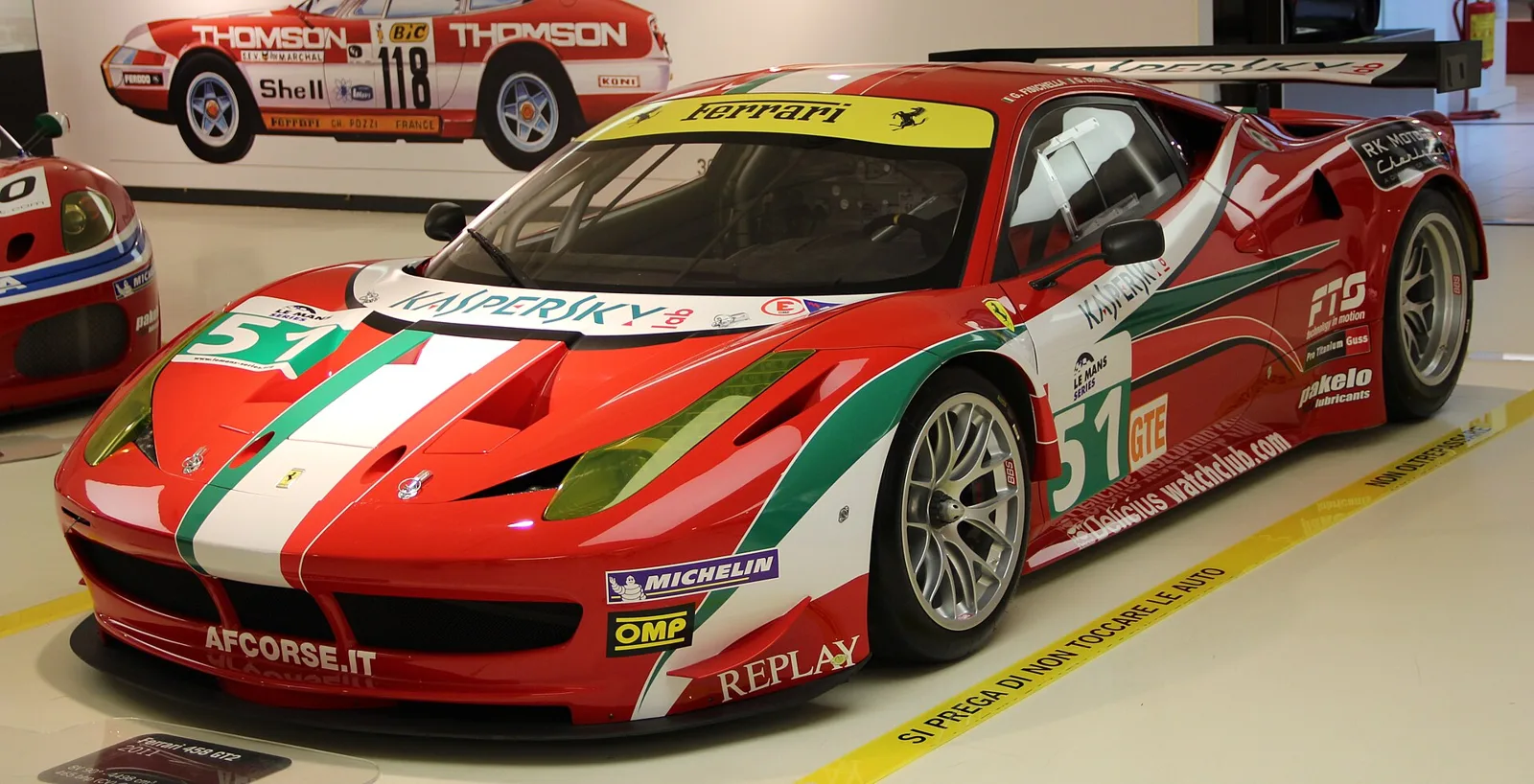
A race version of the 458 Italia berlinetta, built for GTE endurance racing, with Le Mans wins and team titles across several championships.
The Ferrari 458 Italia GTC is a GTE race car built on the 458 Italia berlinetta and introduced in December 2010. Its 4,498 cc V8 produced 465 PS in race trim, and the car won at Le Mans in 2012 and 2014 in GTE Pro, with team and manufacturer titles in the World Endurance Championship.
The Ferrari 458 Italia GTC was a competition car built for endurance racing in the GTE class, based on the 458 Italia berlinetta. Ferrari introduced it at Fiorano in December 2010 to supply its teams. Over the next few seasons it won Le Mans twice in the GTE Pro class and collected world and European titles.
What was the 458 Italia GTC built from?
The GTC was built by Ferrari Corse Clienti with a specialist race-car builder, using the road-going 458 Italia berlinetta as its starting point. Ferrari had already had success in the GTC category with the 360 Modena GT, 360 Modena GTC and F430 GTC, and the new car followed on from them.
The car was presented to Ferrari's teams in December 2010 as a GTE-compliant machine. Besides the GTC, the 458 Italia spawned three other racing versions: the Challenge for the Ferrari Challenge series, the GT3 for championships reserved for GT3 cars, and the Grand AM car, built for the American Grand AM series and for Daytona's 24-hour race.
A road-car berlinetta turned into a GTE racer that won at Le Mans and took team titles across several championships.
How was the racer changed from the road car?
Compared with the road version, the GTC picked up NACA ducts, a bigger nose splitter, side skirts, a diffuser that generated more downforce and a rear wing. Weight came down by 250 kilograms (551 lb). Power took a hit of more than 100 PS, since the intake was reworked to satisfy international rules.
The seven-speed gearbox of the road car gave way to a sequential six-speed unit. The racer also used smaller-diameter wheels with wider tyres than those on the road car.
What did the engine and chassis deliver?
The 4,498 cc V8 had a bore and stroke of 94 x 81 mm and an aluminium block set at 90 degrees, mounted at the rear. It produced 346.75 kW (465 PS; 459 hp) at 6,250 rpm and 520 Nm (50 kgm; 384 lb ft) at 5,750 rpm, with rear-wheel drive through the sequential gearbox.
The chassis was a monocoque in aluminium, with front double wishbones and a rear multi-link arrangement. Its brake discs measured 380 x 35 mm at the front and 332 x 32 mm at the rear, and it ran 18-inch light alloy wheels all round.
The mid-mounted V8 gave the car better balance, and that balance showed in how well it used its tyres at high temperatures.
How big was the car?
The GTC measured 4,518 mm (177.9 in) long, 2,036 mm (80.2 in) wide and 1,160 mm (45.7 in) high. Its wheelbase was 2,650 mm (104.3 in), and its front track was 1,720 mm (67.7 in), against a rear track of 1,688 mm.
The dry weight was 1,245 kg (2,745 lb), and the fuel tank held 90 litres.
When did the 458 Italia GTC make its debut?
The 458 Italia GTC took to the track in March 2011 at the 12 Hours of Sebring, the opening round of both the Intercontinental Le Mans Cup and the American Le Mans Series. It was competitive straight away, although its set-up was not yet perfect.
In the ALMS it won twice, at Road America with Risi Competizione and at the Petit Le Mans with AF Corse. BMW took the GT manufacturers, team and drivers titles and the Sebring win. In the rest of the Intercontinental Le Mans Cup the Ferrari dominated, winning four of the seven races on the calendar.
How was the World Endurance Championship structured?
In 2011 the ACO and the FIA unveiled a new World Endurance Championship, due to start in 2012 on the foundation of the Intercontinental Le Mans Cup. It was reserved for prototypes and GT cars racing over 6, 12 and 24 hours, and it was the first world-titled series since the World Sports Prototype Championship was dropped in 1992.
The FIA devised Balance of Performance to level the field, handicapping the strongest cars with technical limits. The 458 Italia GTC was entered in LMGTE Pro, a class for professional drivers, and in LMGTE Am, open to amateurs too.
How did the 2011 season go?
AF Corse won the 6 Hours of Spa, the 6 Hours of Imola and the 6 Hours of Silverstone, all counting for both the ILMC and the European series. The Spa and Silverstone wins were taken by Gianmaria Bruni and Giancarlo Fisichella, while Imola went to Toni Vilander and Jaime Melo.
In the European Le Mans Series the car won all five races it contested. At the 6 Hours of Le Castellet it took its first career win, with three Ferraris leading the field: JMW Motorsport first, then AF Corse and Farnbacher Racing. JMW triumphed again at the 6 Hours of Estoril.
In the European series, Ferrari finished the season top of the GTE Manufacturers classification, with Porsche and Aston Martin in second and third. AF Corse took the GTE Pro team classification, and the pairing of Gianmaria Bruni and Giancarlo Fisichella won the GTE Pro drivers classification.
How did the 2012 season unfold?
AF Corse, Krohn Racing and Luxury Racing fielded the 458 Italia GTC in 2012. Their rivals in LMGTE Pro and LMGTE Am included Porsche, Chevrolet and Aston Martin machinery. At Sebring, the season opener, Bruni took pole position, but that car was disqualified and never started. Bertolini, Cioci and Beretta crossed the line first for the team-mates.
During practice for the 24 Hours of Le Mans, Fisichella crashed heavily and caused irreparable damage to the chassis. The team rebuilt the car on a fresh chassis brought from Italy, which the organisers allowed, so Vilander could prepare it for qualifying. The AF Corse crew of Bruni, Fisichella and Vilander won the French marathon, ahead of the Luxury Racing sister car that had started from pole.
Five wins in the season delivered the GT Manufacturers World Cup to Ferrari, and the LMGTE Pro team trophy to AF Corse.
Did the Balance of Performance hold the car back?
The 2013 season brought important technical restrictions for the 458 Italia GTC, the dominant car of the previous seasons. The Porsche 997 GT3 RSR and Aston Martin V8 Vantage GTE received weight and aerodynamic advantages, plus intake flanges that added power. The Ferrari was given a smaller fuel tank, which cancelled out the benefit of direct injection for fuel consumption.
For 2013 five 458 Italia GT2 cars were entered: numbers 51 and 71 from AF Corse in LMGTE Pro, number 61 also from AF Corse, number 57 from Krohn Racing, and number 81 from 8 Star Motorsports in LMGTE Am. The mid-engined balance made the most of the tyres at high temperatures, and Bruni and Fisichella were AF Corse's lead drivers, with Vilander and Kobayashi in support.
Aston Martin won clearly at Silverstone, and the official Ferraris took second and fifth. The Italian crew won at Spa despite penalties, and Potolicchio, Malucelli and Aguas took the LMGTE Am class. At Le Mans, dominated by Porsche, the Ferrari crews finished fifth and sixth. A violent typhoon stopped the 6 Hours of Fuji after a few laps, with Ferraris classified second and eighth.
For the final round at Bahrain, AF Corse swapped crews, pairing Vilander with Bruni and Kobayashi with Fisichella. The two official Aston Martins retired and some Porsches had problems, so the two Ferraris finished first and third. Bruni won the race and took the LMGTE drivers' World Cup, ahead of Fisichella.
Which wins came at Le Mans?
The GTC won the 24 Hours of Le Mans in 2012 and 2014 in the GTE Pro class. Both winning crews were built around Gianmaria Bruni, Giancarlo Fisichella and Toni Vilander. In 2011 the car had finished second, behind the Chevrolet Corvette.
In 2015 and 2016 Le Mans wins came in the GTE Am class. The 2015 crew included Andrea Bertolini, Viktor Shaitar and Alexey Basov, and the 2016 crew was Townsend Bell, Jeff Segal and Bill Sweedler.
What titles did the car take in the World Endurance Championship?
The car won three GT Manufacturers titles in the FIA World Endurance Championship, in 2012, 2013 and 2014. AF Corse took the same number of GTE Pro team titles, all won consecutively. The drivers' GT title first went to Gianmaria Bruni in 2013, when the classification was introduced.
Bruni repeated the drivers' success in 2014 with Toni Vilander. Ten GTE Am races were won in the championship, and Am team trophies came in 2013, 2015 and 2016 with 8Star Motorsports, SMP Racing and AF Corse. The Am drivers' title followed in 2015 and 2016.
In 2013 AF Corse won at Spa and Interlagos with Bruni and Fisichella in the car, and the Bahrain round went to the same team with Bruni and Vilander. In 2014 the Spa, Fuji and Bahrain rounds all went to the AF Corse crew, which also won Le Mans, and Bruni and Vilander took the drivers' World Cup.
Where else did the GTC win?
The 2011 Intercontinental Le Mans Cup added GT manufacturers and GTE Pro team honours to the tally. Across Europe, it took team and drivers honours in its class over five consecutive seasons in the European Le Mans Series, and in 2011 it also took the manufacturers classification, which was abolished after the 2012 season.
The car also won the Asian Le Mans Series team and drivers GTE crowns in 2013. In the International GT Open it took the overall title and the Super GT drivers' title three times. The GT3 version won its GTD class at the 2014 24 Hours of Daytona and the overall result at the 12 Hours of Bathurst.
Where did the 458 Italia GTC race in North America?
In America the car raced in the American Le Mans Series until 2013, and then in the Tudor United SportsCar Championship in 2014 and 2015. Its North American results began with a Road America win in 2011, and the Petit Le Mans fell to the car in 2011 and again in 2012 in the GT class.
In 2014 Risi Competizione won two IMSA GTLM races, at Road America and at the Virginia Oak Tree Grand Prix. Those wins came with Giancarlo Fisichella and Pierre Kaffer in the crew, and they showed that the car was still competitive in 2014.
Career totals at a glance
| Achievement | Total |
|---|---|
| 24 Hours of Le Mans, GTE Pro class | 2 (2012, 2014) |
| 24 Hours of Le Mans, GTE Am class | 2 (2015, 2016) |
| FIA WEC GT Manufacturers World Cup | 3 (2012, 2013, 2014) |
| FIA WEC GT Drivers World Cup | 2 (2013, 2014) |
| FIA WEC races won, GTE Pro | 13 |
| FIA WEC races won, GTE Am | 10 |
| Intercontinental Le Mans Cup races won, GTE Pro | 4 |
| European Le Mans Series races won, GTE | 14 |
| Petit Le Mans wins, GT and GTE classes | 2 (2011, 2012) |