A Pininfarina-bodied Ferrari coupe built on the Tipo 209 twelve-cylinder, sold in two series, and the one-off bodies that later cars received on its chassis.
The Ferrari 330 GT 2+2 was a Pininfarina-bodied coupe presented in 1964 as the successor to the 330 America. It used the 3,967 cc Tipo 209 twelve-cylinder and was built in two series until 1967.
The Ferrari 330 GT 2+2 was a road coupe from Ferrari, presented in January 1964 as the successor to the 330 America. It carried the 3,967 cc (242 cu in) Tipo 209 twelve-cylinder, and Pininfarina styled its body. Though often counted in the 330 model family, it differed from its namesakes in appearance and in many technical details.
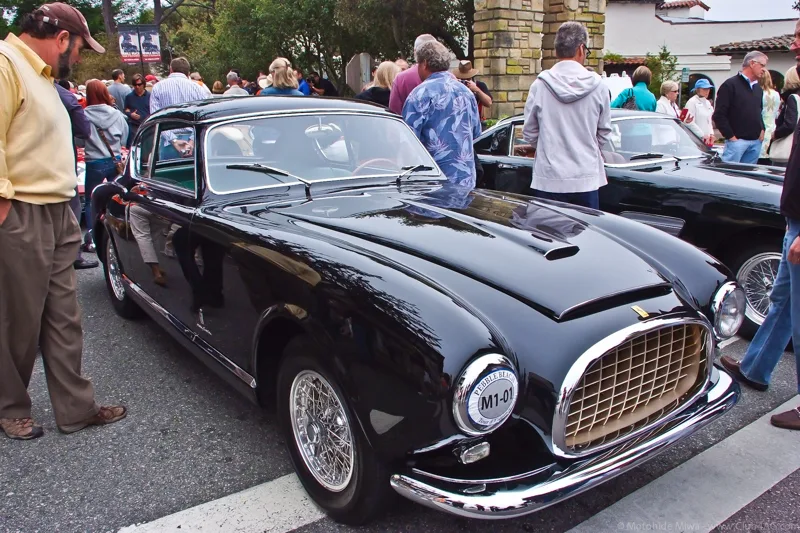
The 250 GTE 2+2 that came before it had been, until then, the most successful single model Ferrari had produced. Factory cars were coupes with a Pininfarina body only. A few individual cars received custom bodies by other designers at the request of their owners, and those one-offs form a separate part of the car's story.
Where did the 330 GT 2+2 come from?
The 330 GT 2+2 grew out of the 250 GTE 2+2, a fastback coupe built in almost 1,000 examples before its production ended in 1963. Ferrari developed a new twelve-cylinder that took over features of the Colombo engine, with the bore pitch enlarged from 90 mm to 94 mm to improve cooling. The new engine went into the 330 America first and then into a new coupe.
The Tipo 209 went into series production in autumn 1963. The first 50 engines went into cars with the 250 GT/E 2+2 chassis and unchanged body, and those cars were called 330 America. The 330 GT 2+2 followed as the Pininfarina-bodied successor to them.
The block grew roughly 50 mm longer, and mass climbed 25 kg (55 lb). The model designation of every car with the Tipo 209 came from the volume of one cylinder, which was close to 330 cc.
A Pininfarina-bodied Ferrari coupe whose name came from the volume of a single cylinder.
What did the Tipo 209 engine offer?
The Tipo 209 had a displacement of 3,967 cc (242 cu in) and produced 220 kW (300 PS; 296 hp) at 7,500 rpm. It used three downdraught twin carburettors by Weber, and from the factory it came only with manual gearboxes.
The Colombo engine it replaced, at 3.0 litres (183 cu in) in the 250 GT/E 2+2, produced about 240 PS (237 hp; 177 kW). The new unit kept the cylinder bank angle and valve timing of its predecessor, but the engine block was a new design.
The North American importer Luigi Chinetti fitted some cars with a three-speed automatic from General Motors after delivery.
How were the chassis, suspension and brakes arranged?
The wheelbase exceeded the 250 GTE 2+2 by 5 cm (2.0 in), and so the 330 America too. At the front each wheel was suspended individually on double wishbones, while the rear had a rigid axle with longitudinal leaf springs.
Ferrari fitted hydraulic telescopic dampers at both ends. The brake system worked with two hydraulic circuits and disc brakes on all four wheels.
As with its predecessors, Ferrari used a tubular steel frame. The body was mostly steel, while the doors and bonnets were aluminium.
How was the body styled?
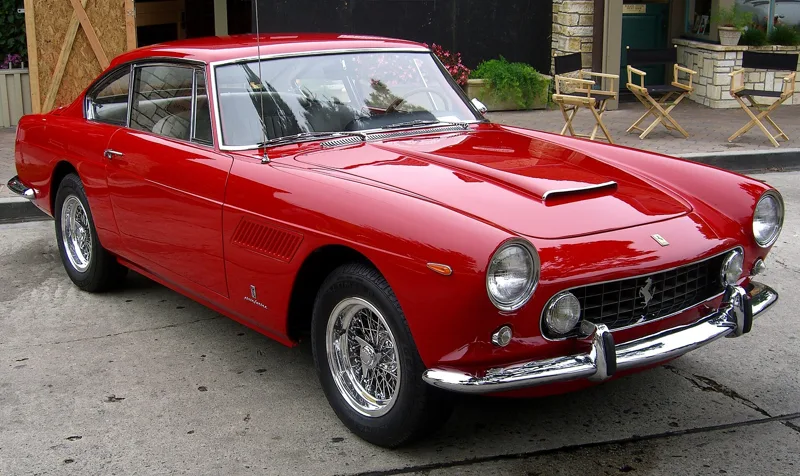
Pininfarina designed the body, as was usual at Ferrari, and the lead designer was the American Tom Tjaarda. The car was a notchback coupe, and in profile it was reminiscent of the Ferrari 250 GT Coupe, which Pininfarina had also designed.
The factory body is regarded as harmonious and timeless. Unlike the 330 GTC, the 330 GT 2+2 had two emergency seats in the rear.
How did the two series differ?
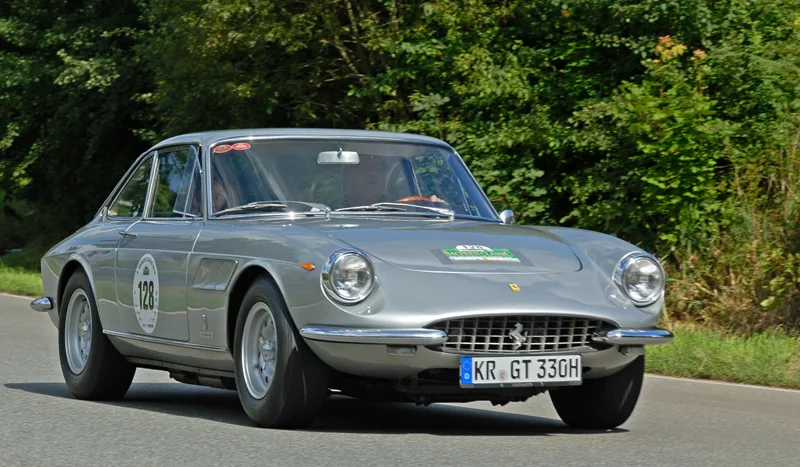
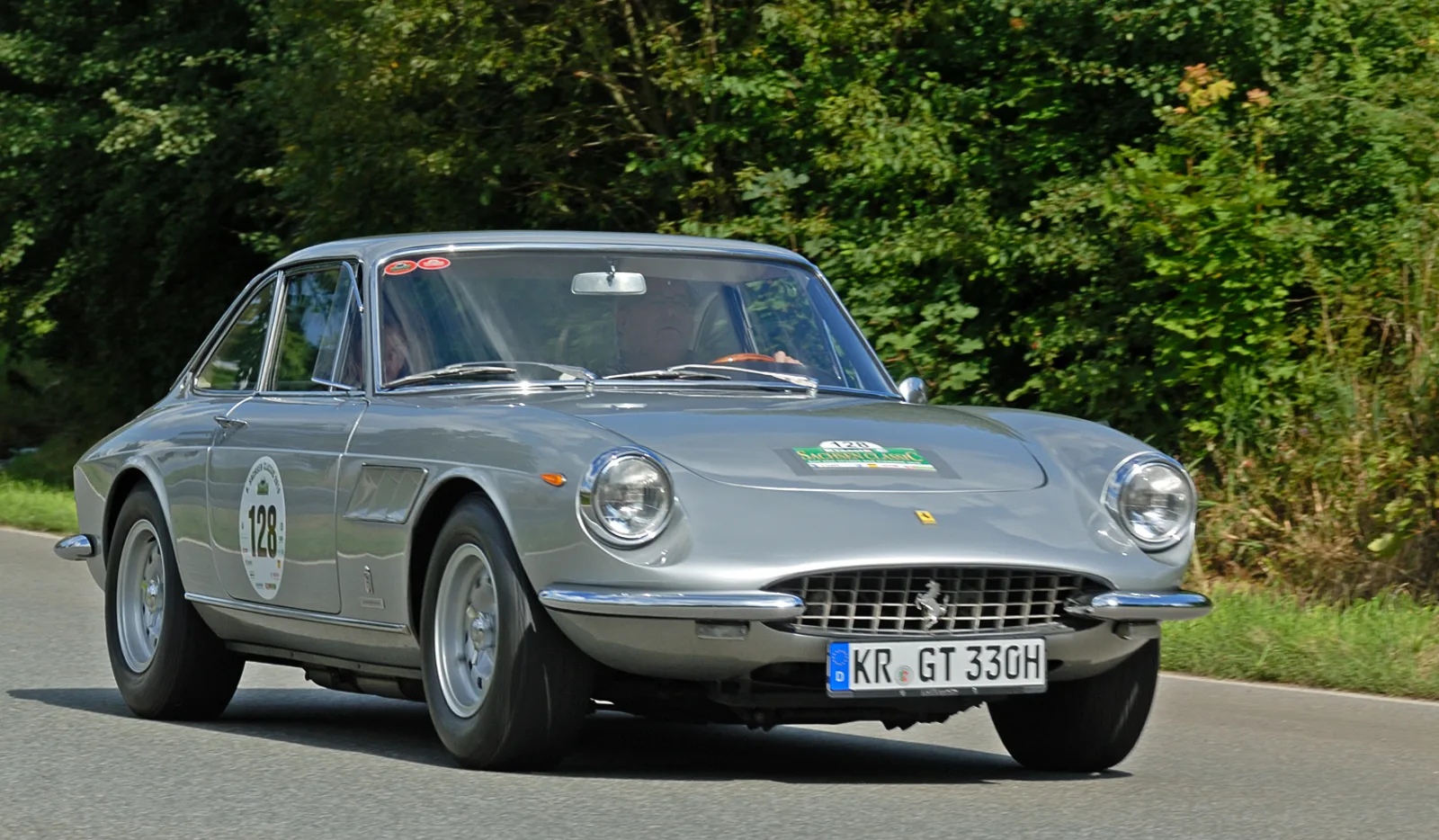
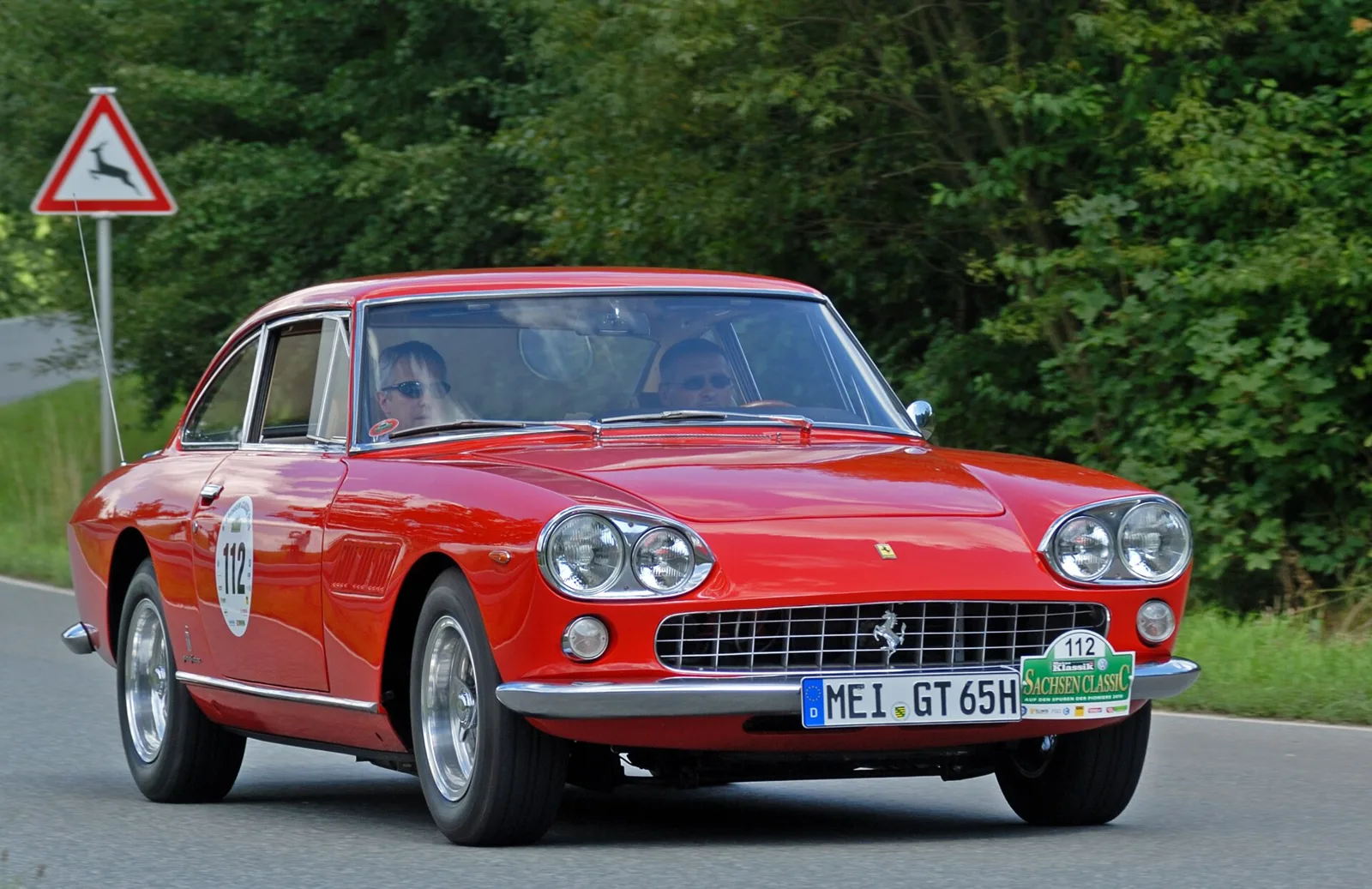
Series 1 was built from January 1964 to summer 1965, with 625 examples in total. Its cars had oval-framed twin headlamps of different sizes, a shape known as Chinese Eyes, and a manual four-speed gearbox with overdrive. The styling was meant to suit American tastes, though European customers found it unsuitable.
Series 2 ran from summer 1965 to 1967, with either 460 or 474 vehicles, as figures differ. It dropped the Chinese Eyes for round single headlamps set into the front wings, and added large side vents between the front wheel arches and the door edges.
It also received a five-speed gearbox in place of the four-speed unit with overdrive, along with light-alloy wheels, an air conditioning system at extra cost, and power steering on request.
The change between the series was gradual, and the two shared the same basic car, differing mainly in front styling and gearbox. About 125 vehicles in an interim series already had the second series' technical changes and side vents, but still carried the Chinese Eyes of the first.
What were the Chinetti one-offs?
Chinetti Specials are one-off cars with individual bodies by other designers, built in the 1960s at the initiative of the North American importer Luigi Chinetti. Three of them were based on the 330 GT 2+2 chassis. Ferrari otherwise supplied its production models with standardised Pininfarina bodies from the late 1950s.
How did Michelotti's cars come about?
In 1965 and 1967 Giovanni Michelotti clothed two first-series 330 GT 2+2 chassis. The first was a targa coupe called Spyder, built on chassis 6109, a rolling chassis with no factory body. Its B-pillar served as a roll-over bar, and the roof section could be removed.
Two years later Michelotti derived an enclosed coupe from that design, chassis number 9083. The car survives. It has been based in the USA since it was new, has had three owners so far, and was restored extensively in 1987.
What is the Vignale Shooting Brake?
The Shooting Brake was based on one of the first chassis of the second series, number 7963. Delivered in 1965 to a customer in the United States, it was driven in standard form for about two years. In 1967 'Coco' Chinetti, son of the importer, took it over.
'Coco' Chinetti had the idea of a two-door sports estate on the Ferrari chassis. Bob Peak, an American illustrator, drew up an estate body with no formal links to the standard Pininfarina body, working to those specifications. No outer panel was identical to the factory body. Its front wings were sharply contoured, its headlamps sat low behind horizontal bars, and the B-pillar was very wide, housing the fuel filler necks. At the rear there were large expanses of glass.
A Turin coachbuilder built the body in 1967, and it was the last Ferrari that coachbuilder made. The car was shown at the 1968 Turin motor show on the coachbuilder's stand. It then returned to the USA, where owners used it for about 20 years. In the 1990s a Paris collector had it restored extensively, and today it is shown occasionally at classic car exhibitions.
What is the Nembo Spyder replica?
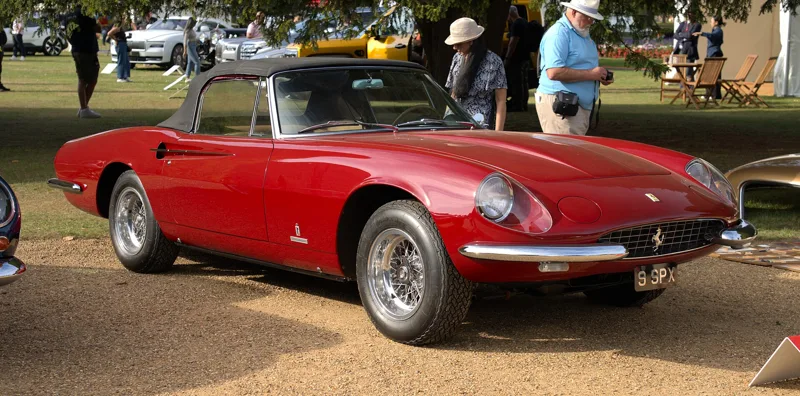
In the 1990s chassis 5805 GT, a right-hand-drive 330 GT 2+2 built in 1964, received a new body modelled on the so-called Nembo Spyder of the 1960s. Neri e Bonacini of Modena clothed two or three older Ferrari chassis with Spyder bodies between 1965 and 1967, to a design by the Californian Tom Meade.
Many observers consider the Nembo Spyders the most beautiful Ferraris ever built with special bodies, and they fetch prices in the seven-figure euro range. The factory, however, does not recognise them as classic Ferraris.
In 1990 the British owner of chassis 5805 GT hired Giorgio Neri, one of the owners of the now dissolved Nembo maker, to build a new body. It largely matched the original Nembos, and the car passed through several hands and workshops before it was finished in 1998. Classic car circles still dispute whether it is a third Nembo Spyder alongside the two originals of 1965 and 1966, or only a less valuable sanctioned replica.
Key specifications
| Specification | Detail |
|---|---|
| Engine | Tipo 209, 3,967 cc (242 cu in) twelve-cylinder |
| Output | 220 kW (300 PS; 296 hp) at 7,500 rpm |
| Earlier Colombo engine | 3.0 litres (183 cu in); about 240 PS (237 hp; 177 kW) |
| Engine block | About 50 mm longer; bore pitch from 90 mm to 94 mm |
| Engine weight | 25 kg (55 lb) heavier |
| Wheelbase | 5 cm (2.0 in) longer than the 250 GTE 2+2 |
| Series 1 | 625 examples; four-speed manual with overdrive |
| Series 2 | 460 or 474 vehicles; five-speed manual |