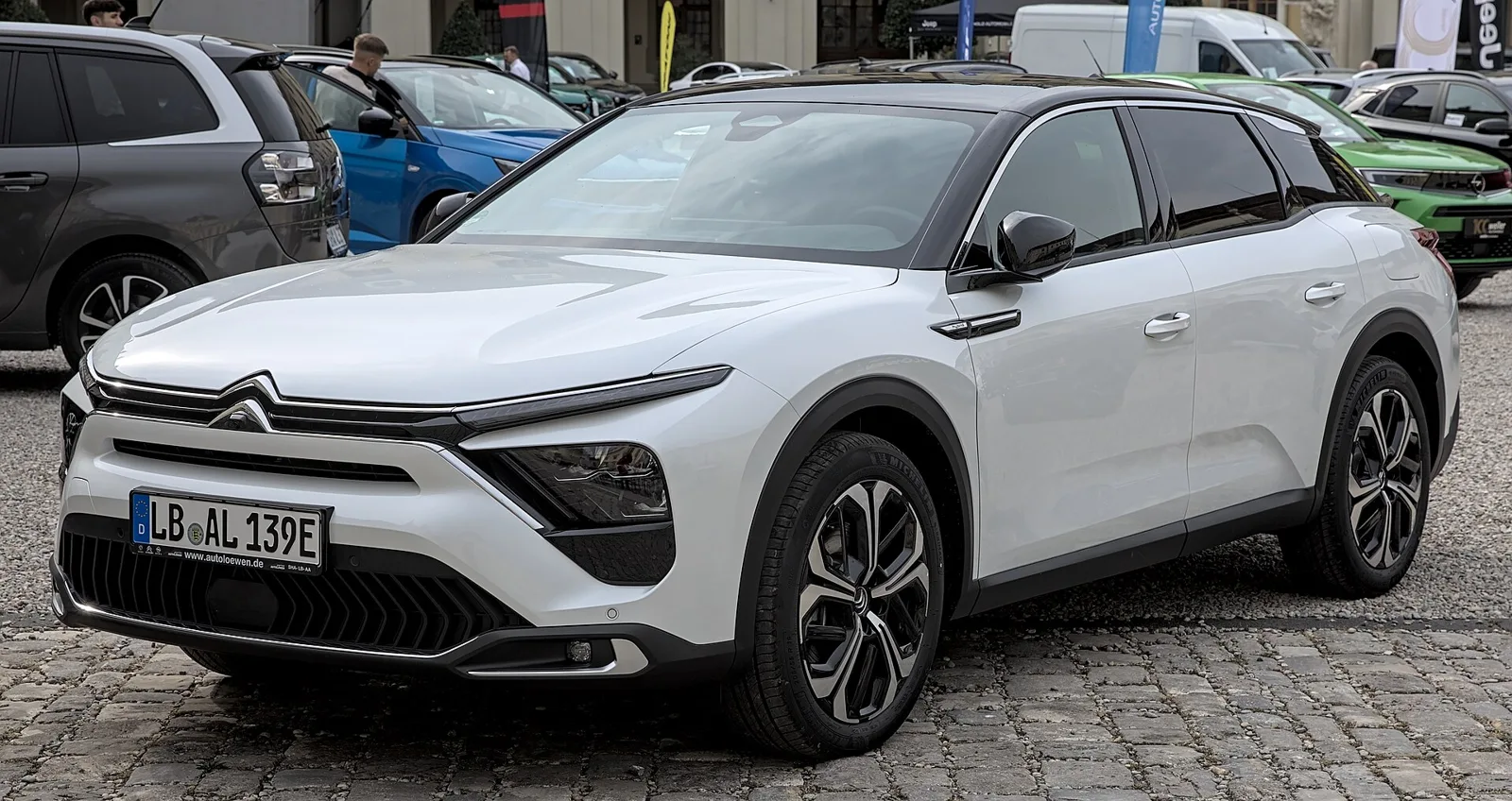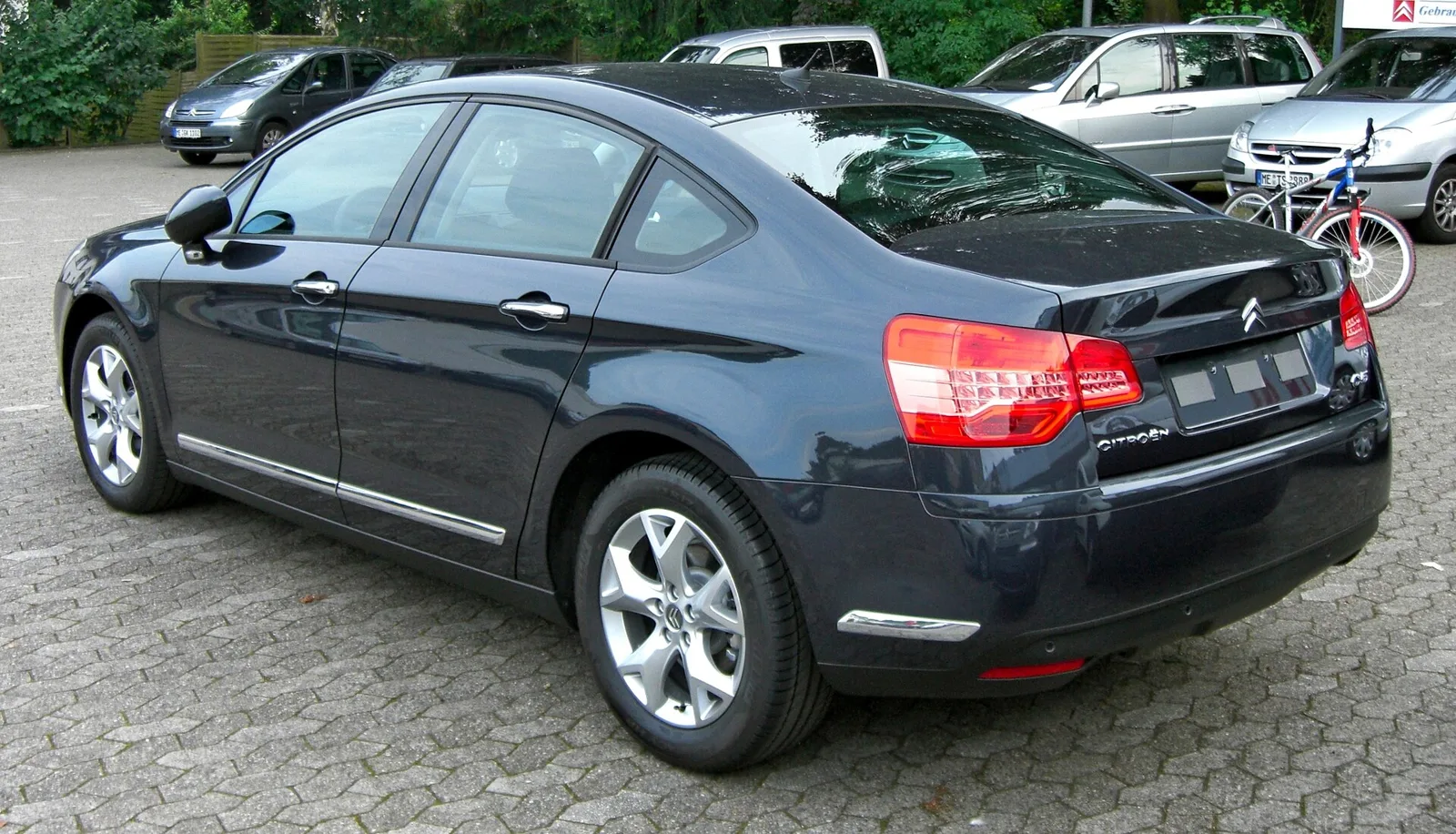
A 2007 family saloon that offered a choice of suspension, a four-trim price ladder and a Chinese restyle that carried it past the end of European production.
The Citroen C5 II was a 2007 family saloon offered as a saloon or Tourer estate, with a choice of hydropneumatic or metallic-spring suspension. Production in Europe ended on 8 June 2017, and the model was restyled and built in China until 2021.
The Citroen C5 II was a large family saloon that Citroen introduced in 2007 and built until 2021. European production stopped on 8 June 2017, but a reworked version carried on in China. Buyers were offered a choice between hydropneumatic suspension and conventional metal springs, a first for the large saloon segment.
Where did the C5 II come from?
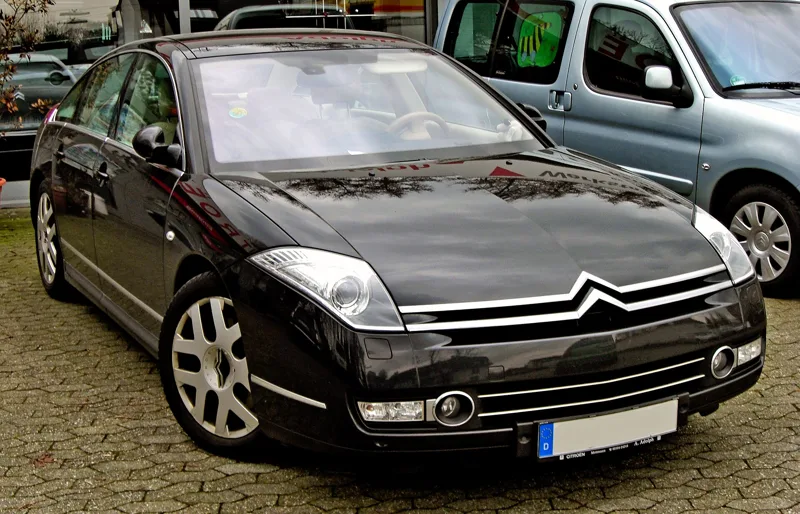
Citroen treated the second C5 as a fresh start. Its designers began with a blank sheet because the previous car's style had failed to convince. The new car was presented at the Brussels Motor Show on 15 January 2007, and the C5 Airscape concept, a large convertible with a retractable roof, previewed its lines at Frankfurt that year.
The new body was larger and lower than the first generation. It grew by 3.4 cm (1.3 in) in length and 8 cm (3.1 in) in width, while the height dropped by 1.8 cm (0.7 in). Those changes gave it more dynamic proportions, but the base weight rose by 133 kg (293 lb).
Buyers could pick a three-box saloon or a Tourer estate with a tailgate. The Tourer offered 505 litres of luggage space against 439 in the saloon, and a maximum of 1,462 litres against 1,315. Both sets of figures fell short of the first generation, although the finish and equipment improved.
Buyers could choose between hydropneumatic comfort and conventional metal springs in a large family saloon.
How did the suspension choice work?
Buyers could choose between Hydractive III+ hydropneumatic suspension and a conventional metallic setup with springs and dampers. The metal-spring set-up was the one the Peugeot 508 shared, because the two cars used the same platform. The Exclusive listed Hydractive as standard.
Entry-level versions dropped the hydropneumatic system in this generation, so the line-up was split. The Exclusive combined its hydractive suspension with an underinflation detector, a feature the cheaper trims did not list.
The first generation had gone further, with features rare in the car world. A button chose a normal or sport setting, and the car could be lowered or raised for wheel changes and rough tracks. At motorway speeds it lowered itself to improve its drag figure. Some of these carried over into the second generation.
The estate had a boot button that adjusted the rear height only. The car also had no headlight height adjustment, because the hydropneumatic suspension kept the body level whatever the load.
Which trim levels and prices applied?
The range ran from the Attraction at 21,500 euros to the Exclusive at 29,150 euros, with the Dynamic and Confort both starting at 23,600 euros. Higher trims added comfort and safety kit. Engines varied by trim too, and the cheapest cars were limited to the smaller units.
| Trim | Price from | Wheels | Notable equipment |
|---|---|---|---|
| Attraction | 21,500 euros | 16-inch steel | ABS, ESP, ASR, airbags, metallic suspension |
| Dynamic | 23,600 euros | 17-inch alloy | Dual-zone air conditioning, driver lumbar adjustment |
| Confort | 23,600 euros | 16-inch steel | Rear parking aid, mono-tuner CD MP3 audio |
| Exclusive | 29,150 euros | 17-inch alloy (19-inch on Exclusive +) | Hydractive suspension, electrochromic mirror, memory driver seat |
The Attraction offered metallic paint and a puncture repair kit, while the Exclusive added an electric sunroof, a panoramic roof and 18-inch alloy wheels.
What safety equipment came with the Attraction?
The entry Attraction carried ABS, REF, AFU, ESP and ASR, front and side airbags, curtain airbags front and rear, and knee airbags for the driver. It also had thorax airbags at the rear, rear seatbelts with load limiters, and ISOFIX anchorages on the rear side seats.
Other entry-level features included automatic hazard lights, a speed limiter, electric child locks that disable the rear window switches, and warning chimes for unbuckled front and rear seatbelts. Central locking with an HF plip completed the list.
What changed in the facelifts?
The first facelift came three years after the launch, two years after the first deliveries. LED lights went in at the front and crystal-style surfaces on the rear lights, to take on the facelifted Renault Laguna III and the new Peugeot 508. The change was discreet.
The later phase brought a brown shade called Guaranja and new chevrons on the grille. Rounder and smoother, they gave the front a younger and more expressive look. New 17-inch alloy wheels arrived, along with the eMyWay navigation system, priced at 990 euros on Confort and standard on the Exclusive.
eMyWay came with full connectivity, including a jack, USB and Bluetooth, and the Tourer could link it to its reversing camera.
What engines did the C5 II use?
The launch line-up combined the 1.8i 127 and 2.0i 143 petrol units with a 3.0i V6, and diesels from the 1.6 HDi 110 to the 2.7 V6 HDi 204. Engine changes came in most years. The 3.0 V6 HDi 240 left in November 2013, and by 2015 the car was diesel only.
- 2009: the 2.7 V6 HDi 204 gave way to the 3.0 V6 HDi 240.
- 2010: the 2.0i 143 was replaced by the 1.6 THP 155, and the 3.0i V6 210 was dropped.
- 2011: the 1.8i 127 gave way to the 1.6 VTi 120, and the 2.2 HDi 204 arrived.
- 2015: the 1.6 VTi 120 and 1.6 THP 155 petrol engines were dropped, and the 2.0 BlueHDi 150 and 2.0 BlueHDi 180 replaced the 2.0 HDi engines, and the 1.6 e-HDi 115 was dropped without a replacement.
The 2.0 BlueHDi 150 came with a six-speed manual gearbox, while the 2.0 BlueHDi 180 used the EAT6 automatic. The 3.0 V6 HDi 240 disappearing in 2013 marked the end of V6 engines at PSA.
When did production end in Europe?
Citroen announced in March 2017 that European production would end on 8 June 2017, the date of the production run-out of the last Citroen fitted with hydropneumatic suspension. Its daily rate in this period was 66 units. Those dates mark the end of European production only, not the end of the car.
In 2016 Citroen built 10,085 C5s, and French sales stood at 2,197, a fall of 39.1%. The fall in French sales was steep.
How did the C5 II do in China?
China kept the car going after Europe. The Chinese C5 was built at Wuhan in the Dongfeng Peugeot-Citroen Automobiles plant and launched in September 2009, and in 2017 it became a Chinese-only model with a restyle, conventional suspension and a new interior. Production there ran to 2021.
The 2013 facelift also changed the light signatures, enlarged the chrome grille and added the new brand logo. Cabin materials were upgraded, and the top trims gained a new infotainment screen.
The 2017 restyle drew on the 2016 C6, with a very horizontal dashboard, fully digital instrumentation and a front grille whose bars run into the headlights. The rear lights echoed the C5 Aircross with four rectangular elements. The estate body was not offered in China. The Hydractive system was replaced there by conventional metal springs.
Two petrol engines powered the 2017 car: a 1.6-litre THP 164 PS (162 hp; 121 kW) with 245 Nm (181 lb ft) of torque, and a 1.8-litre THP 204 PS (201 hp; 150 kW) with 280 Nm (207 lb ft). Both were paired with the BVA6 Tiptronic automatic. Citroen said the car carried the latest driving and safety aids, including lane-keeping help, a pre-collision alarm, 360-degree vision, blind-spot detection and auto braking.
Did the C5 II compete in motorsport?
The car's competition record is one line: TRV6/TTA. No championship, result or date is given, so no racing claim is made for the C5 II here. Readers looking for rally or circuit results will find nothing more here, and the car is better understood through its suspension, its trims and its run in China.
Did the C5 II appear in films?
The C5 appeared in four films. It was a Roman taxi in Jumper, a taxi in Superstar, Michel Blanc's family car in Les Souvenirs, and a Tourer driven by the BAC officers in BAC Nord. Each role placed the car in a working or family setting.