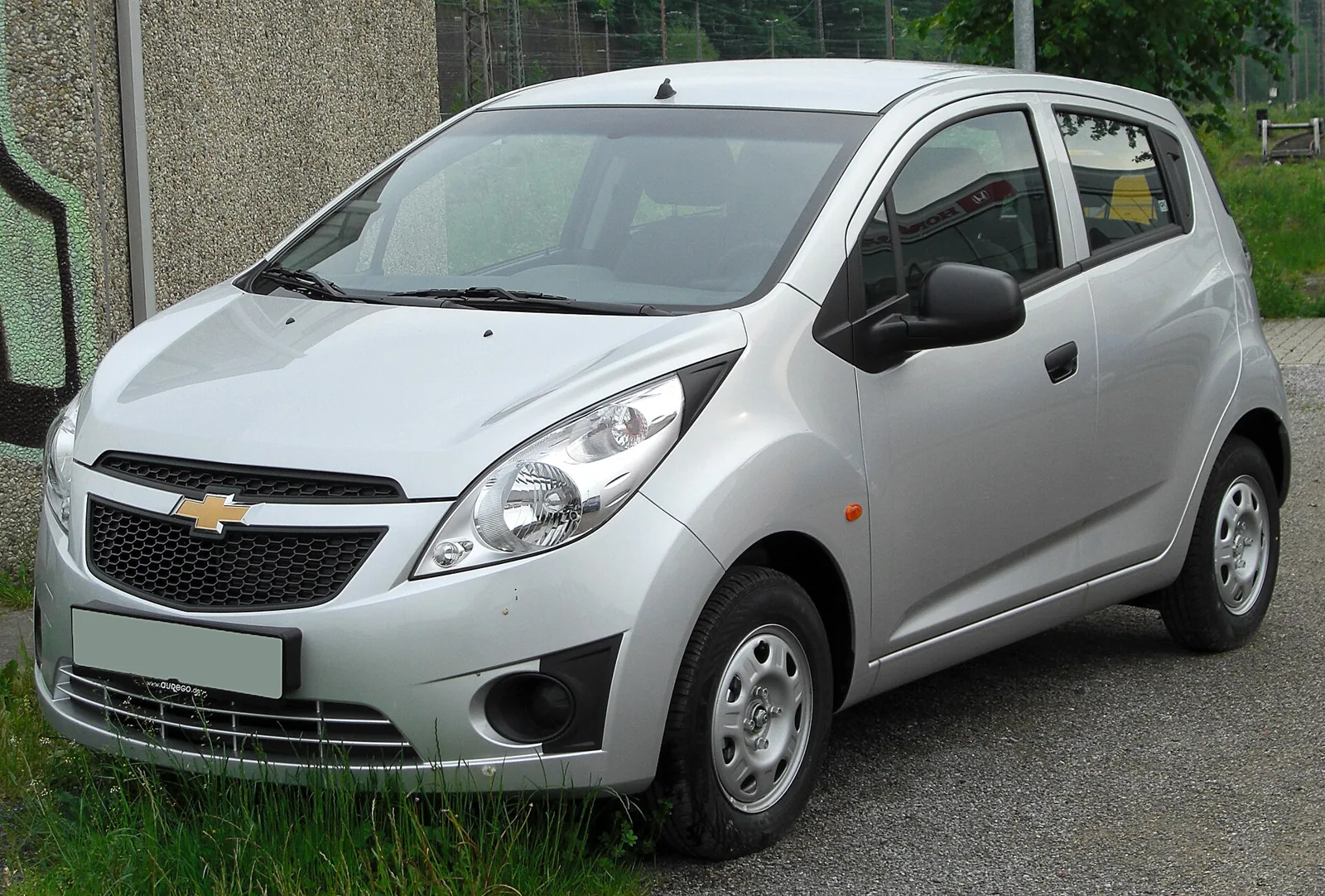
A 2009 city car from GM Korea with Beat concept roots, a four-star Euro NCAP rating, a 2012 facelift and several names around the world.
Built by GM Korea from 2009 to 2016, the Chevrolet Spark was a city car that succeeded the Matiz. Other markets knew it as the Chevrolet Beat or Holden Barina Spark, and a 2012 facelift redesigned its front and rear.
The Chevrolet Spark was a small city car that GM Korea built from 2009 to 2016 as the successor to the Matiz. It was sold under other names in several countries, including the Chevrolet Beat in India and the Holden Barina Spark in Australia.
Where was the Spark built and sold?
The European Spark came from GM Korea's Changwon plant in South Korea, formerly GM Daewoo. In India it was the Chevrolet Beat built at Gujarat, and small CKD assembly ran in Colombia and Uzbekistan. Australia sold it as the Holden Barina Spark.
In Korea the car was sold from 2009 to 2011 as the Daewoo Matiz Creative, before the global Chevrolet name took over.
A small city car that carried the Matiz's job into a new design.
How big was the planned output?
Changwon was planned to produce more than 200,000 Sparks a year, of which over 29,000 would go to the Italian market. The car was meant to be the sales spark of the European Chevrolet line-up. The Matiz had sold strongly in Europe and Asia, so its heir needed public support.
The Spark name had already been used for the previous Matiz, but only in a few markets in Eastern Europe.
How did the Beat reach India?
The Spark was presented as the Chevrolet Beat at the New Delhi Motor Show in January 2010, after its Geneva debut. In India the car was renamed Beat and was to be produced for the local market.
Why was the car called Spark?
The name Spark was chosen because the car had no family ties to the Matiz. In Italian it means scintilla, and GM hoped the car would spark sales across the European Chevrolet range.
How did the Matiz shape the Spark?
The Matiz had sold strongly in both Europe and Asia, so a worthy successor needed public backing. GM asked Matiz customers which concept best matched their needs, and that polling steered the project.
Nearly everything in the new car was new. The only Matiz carry-over was the 1.0-litre engine, now an evolution of the unit from the old car.
Which concept cars led to the Spark?
In 2007 GM showed three concepts at the New York show: the Trax, the Groove and the Beat. Matiz owners were polled, and the Beat, a three-door with a turbo 1.2 petrol engine, won the most public support, so GM took it toward production. It moved straight on to the design of the definitive model.
The Trax had a mini-crossover body with curved lines, four-wheel drive and a 1.0 petrol engine. Protective shields sat on the lower bumpers, and round headlights framed a bold front grille. The Groove was a squared-off, retro-style MPV with a wide front inspired by American pick-up trucks, vertical rear lights, a 1.0 turbodiesel and front-wheel drive. The Groove and Trax were built at the GM Tech Center in Warren, Michigan, while GM India developed the Spark concept.
The M in the code M300 stood for microcar, and the 300 identified the model. GM DAT developed the car in South Korea, while the design came from the American Chevrolet styling centre.
Why did the Spark lose its turbo engine?
Engineers first planned a single turbocharged 1.2 from the S-Tec family, producing around 100 horsepower. That engine was dropped in favour of less powerful units, because the turbo would have pushed production costs too high.
What did the Spark look like and how roomy was it?
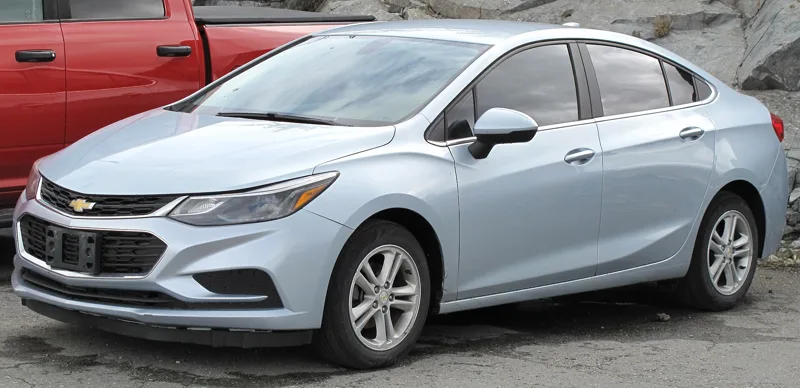
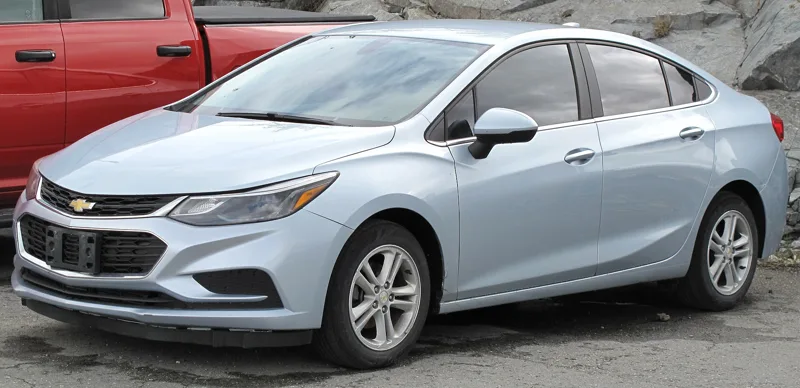
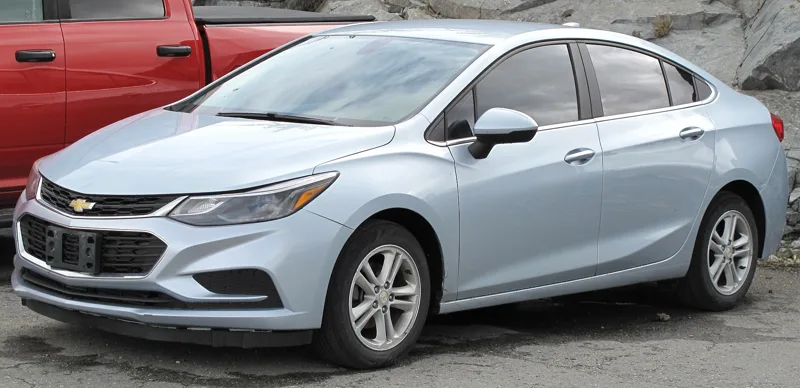
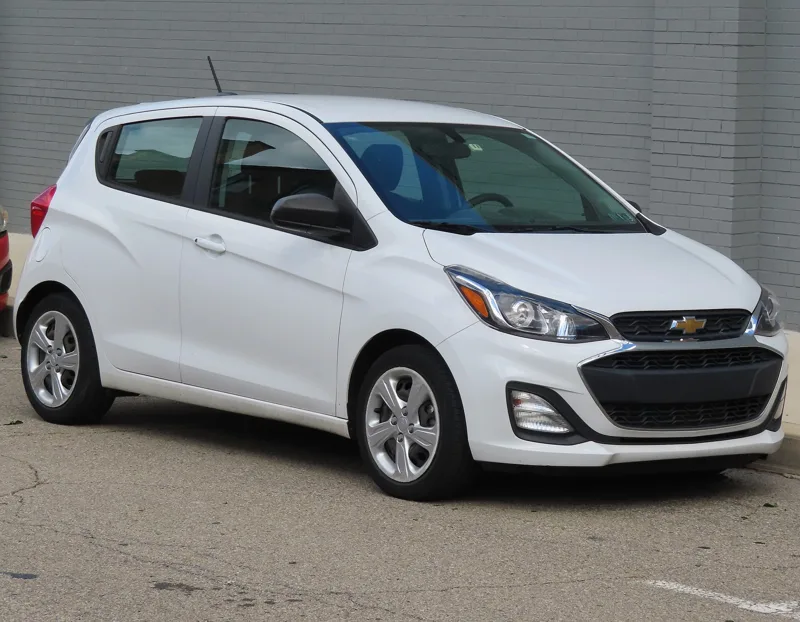
The Spark was 14 cm (5.5 in) longer than the Matiz at 3.64 metres (11.9 ft). Its split grille, large headlamps and hinged rear door handles gave it a sporty, angular profile that set the look for future Chevrolets.
The flank had raised wheel arches, and the tail carried double-oval lights with an LED brake light. A deep rib in the lower bumper housed the chrome exhaust outlet on the top versions. The body was made of high-strength steels with programmed deformation in an impact.
Four adults fit comfortably, even though the car was homologated as a five-seater. The boot holds 170 litres and expands to 578 litres with the rear seat reclined. Seats were fabric-covered, but some Asian markets also had leather upholstery.
What was inside the Spark?
The dashboard followed the body's V-shaped profile and sloped toward the centre. Climate controls, a manual or single-zone automatic system with an LCD, and a CD radio with MP3 and AUX input sat in the middle.
Plastic inserts imitating aluminium ran to the ends of the dashboard, where the air vents were. Above sat the on-board computer screen with a digital clock.
The instruments were motorcycle-inspired: a circular speedometer that held some warning lights, and a rectangular LCD screen with the rev counter and other minor functions.
How was the Spark built underneath?
The car used the Gamma II platform, designed for compact cars and adaptable to several transmissions. The engine was mounted transversely and drove the front wheels. Front suspension used transverse arms with MacPherson struts and an anti-roll bar, while the rear used a torsion beam with longitudinal arms.
Hydraulic dampers were fitted throughout, with ventilated discs at the front and drums at the rear.
What engines did the Spark use?
Two four-cylinder DOHC engines from the S-Tec II family covered the range, both with cast-iron blocks. The 1.0 16v produced 68 PS (50 kW; 67 hp) and 93 Nm, while the 1.2 16-valve made 81 PS (60 kW; 80 hp) and 111 Nm.
The 1.0 was also sold as the Eco Logic, able to run on petrol or LPG from a toroidal tank fitted at the factory. CO2 ran at 119 g/km for the petrol 1.0 and 110 g/km for the Eco Logic. The 1.2 emitted 119 g/km on petrol and 113 g/km on LPG.
Consumption figures were 19.6 km/l for the 1.0, and the 1.2 managed 15.1 km/l on petrol and 11.6 km/l on LPG. Both engines were Euro 5 homologated, and both were matched with the 5-speed manual gearbox.
Key specifications
| Specification | Detail |
|---|---|
| Production years | 2009 to 2016 |
| Platform | Gamma II |
| Length | 3.64 metres (11.9 ft) |
| Boot | 170 litres; 578 litres with rear seat reclined |
| Engines | 1.0 16v 68 PS (50 kW; 67 hp); 1.2 16-valve 81 PS (60 kW; 80 hp) |
| Gearbox | 5-speed manual |
| Euro NCAP (2009) | 4 stars |
| Italian range after 2012 | 1.0, 1.0 LPG, 1.2 and 1.2 LPG |
| Seats | Five-seater homologation; room for four adults; fabric, leather in some Asian markets |
| Body | High-strength steel with programmed deformation in an impact |
| Front suspension | Transverse arm, MacPherson strut and anti-roll bar |
| Rear suspension | Torsion beam with longitudinal arm |
| Brakes | Ventilated front discs; rear drums |
| Exhaust | Chrome tailpipe on top versions |
What did the 2012 restyle change?
The mid-life facelift was unveiled at the 2012 Paris Motor Show. It brought a new front grille that integrated the number plate, a redesigned front bumper, slightly altered rear lights and a new rear bumper. Italy received four versions: the 1.0, the 1.0 LPG, the 1.2 and the 1.2 LPG, so LPG was offered on both engine sizes.
On the LPG versions the Electronic Stability Control could not be fitted.
How did the Spark score on safety?
Euro NCAP gave the Spark four stars in 2009 and rated its protection for front and rear passengers as good. Pedestrian protection earned only a fair rating. The tests took place in 2009, the year the car debuted. Standard kit included four-channel ABS with EBD, front, side and curtain airbags, and ISOFIX mounts.
Intermediate versions added a height-adjustable steering column, steering-wheel audio controls, and electronic stability and traction control.
What was the Woody Wagon?
The Chevrolet Spark Woody Wagon was presented at the Boardmasters festival in Cornwall from 4 to 8 August 2010. The young designer Ian Cook created its highly original look, taking his inspiration from American cars of the fifties and sixties.