Built between 1927 and 1933 around a 12.763-litre straight-eight, the Royale was meant for royalty, but the Great Depression left half the run unsold.
The Bugatti Type 41 Royale was a huge luxury car built from 1927 to 1933 around a 12.763-litre straight-eight. Only seven were made, and six survive. The Great Depression undermined Ettore Bugatti's plan to sell them to royalty, and the car was about 20% longer than a Rolls-Royce Phantom VII.
The Bugatti Type 41, usually called the Royale, was a large luxury car built by Bugatti from 1927 to 1933. It used a 12.763-litre straight-eight, and it was about 20% longer and more than 25% heavier than a Rolls-Royce Phantom VII. Only seven were made, and six of them survive today.
What was the Bugatti Type 41 Royale?
The Royale was a car of enormous size, with a 4.3 m (169.3 in) wheelbase and an overall length of 6.4 m (21 ft). It weighed approximately 3,175 kg (7,000 lb). Ettore had hoped to produce twenty-five examples for royal customers, but the plan did not survive the economic downturn.
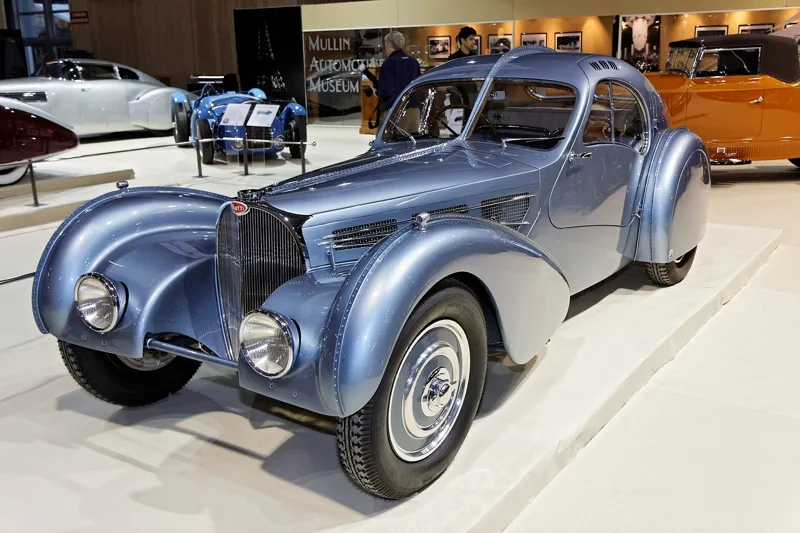
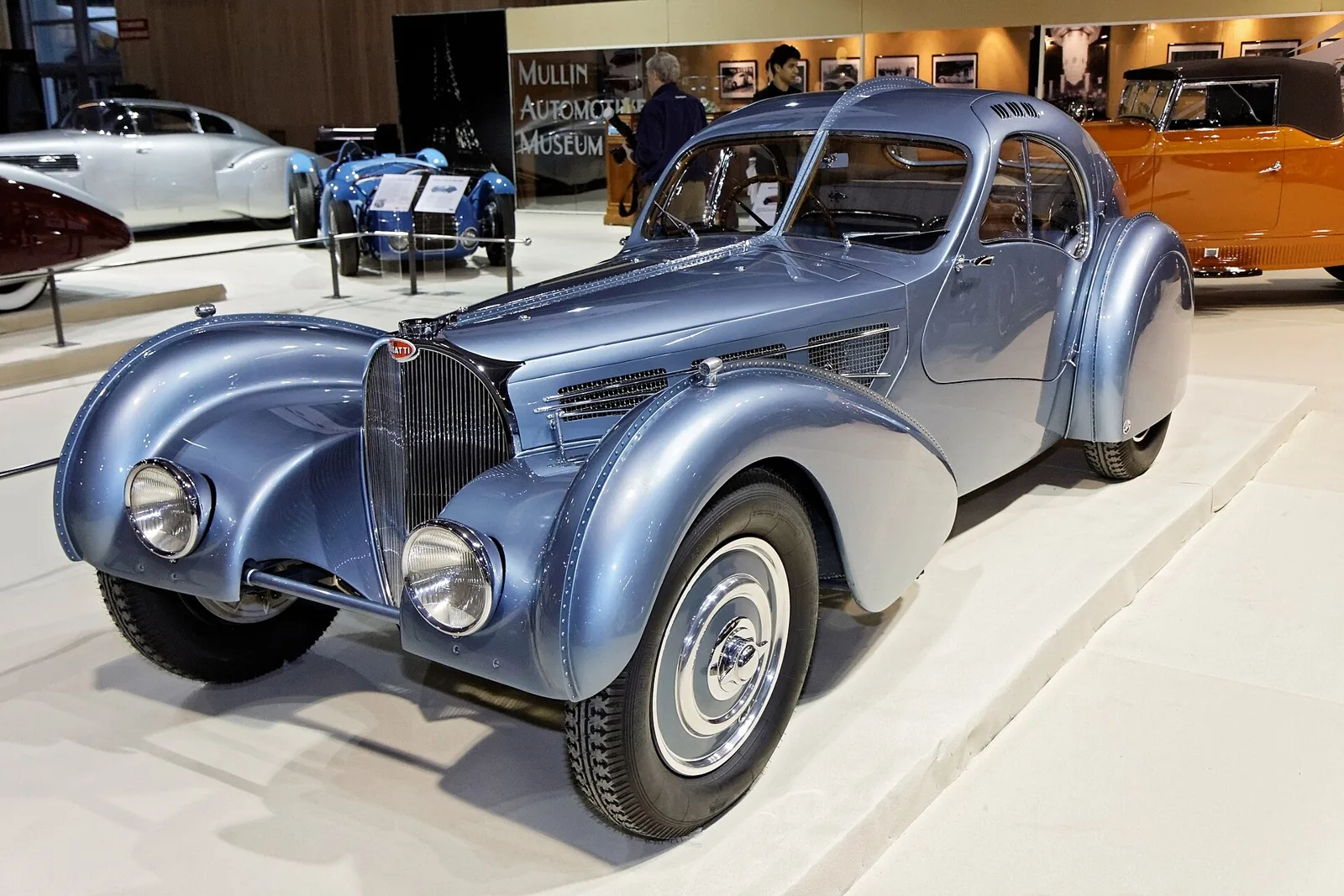
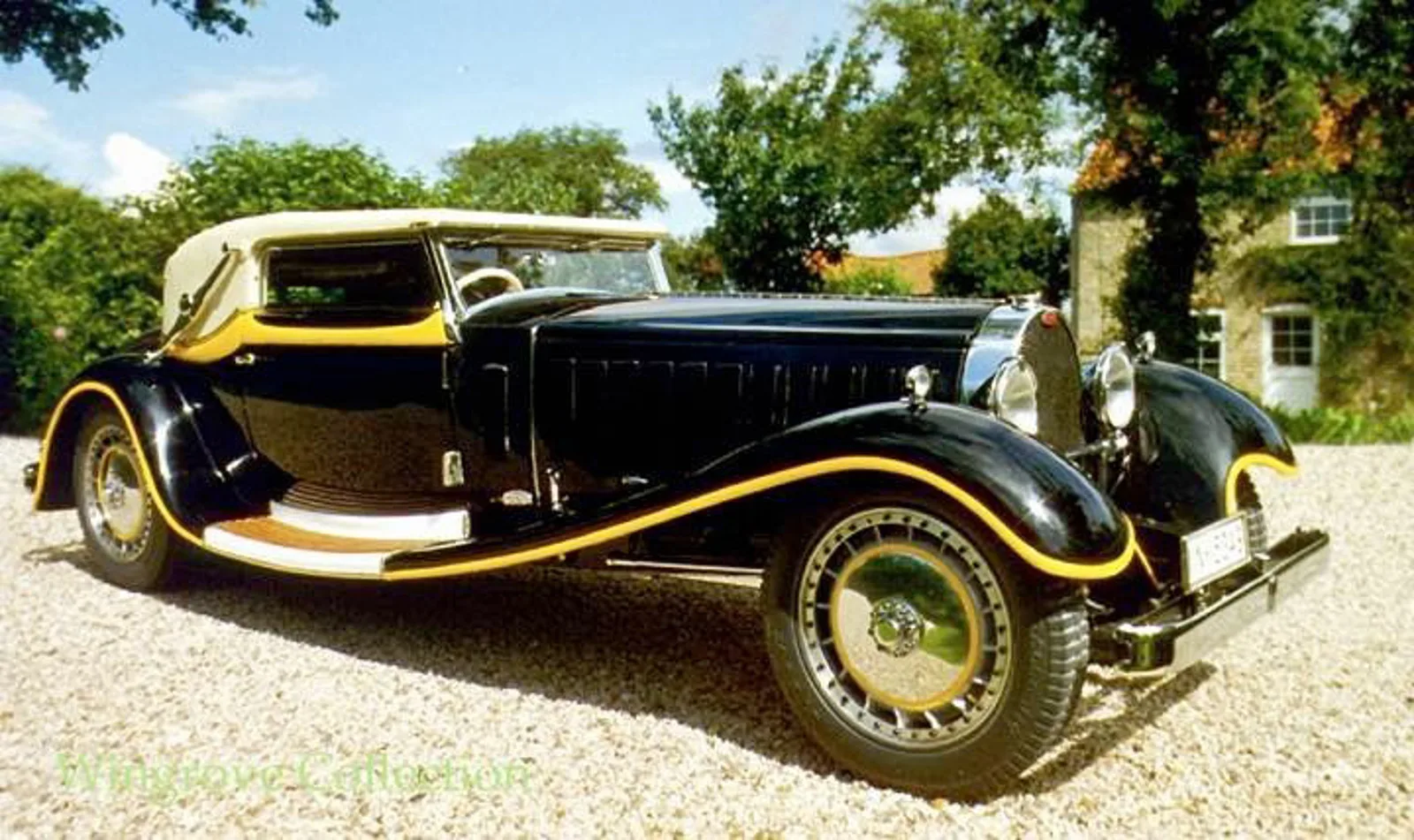
Every Royale was individually bodied, so the survivors look very different from one another.
Built for royal buyers who never arrived, the Royale survives in six cars, each with its own body.
Why was the Royale built?
The Royale is said to have come about because Ettore Bugatti took exception to an English lady's comparison of his cars with Rolls-Royce. He planned to sell twenty-five of them to royalty, but the Great Depression undermined the effort. King Alfonso of Spain was one of the intended buyers.
Ettore asserted that the king would receive his Royale, but King Alfonso was deposed in April 1931 without taking delivery of one. Bugatti also reportedly refused to sell a car to King Zog of Albania.
How was the Royale's engine built?
The 12.763-litre straight-eight was an overhead camshaft design based on an aero engine developed for the French Air Ministry, although that engine was never produced. Its block was cast in one unit with an integrated cylinder head, and it had three valves per cylinder driven by a single overhead camshaft.
The engine was physically huge, about 1.4 m (4.6 ft) long and 1.1 m (3.6 ft) high. Its displacement of 12.7 L (775 cu in) made it one of the largest ever fitted to a passenger car, and each cylinder alone was larger in capacity than the complete engine of the Type 40 touring car from the same period.
The bore was 125 mm (4.9 in) and the stroke was 130 mm (5.1 in). The engine had only three main bearings and a single custom carburettor. Output was 205 to 224 kW, or 275 to 300 hp, at 1800 rpm, with 875 lb ft (1,186 Nm) of torque.
Maintenance was demanding. Grinding the engine valves was a regular requirement, and removing them meant taking apart the large monobloc engine, which made routine work a significant task for any owner or mechanic.
How did the chassis and brakes work?
The front suspension used semi-elliptic leaf springs, and the rear used forward and rear-facing quarter-elliptic springs. An aluminium clutch box was mounted on the chassis rather than the engine to reduce noise, and the aluminium gearbox sat at the rear as a transaxle to balance the engine's weight.
The brakes were massive manual units operated by cable. They were effective, but they demanded considerable leg strength from the driver. The light alloy Roue Royale wheels measured 610 mm (24 in) across and were cast in one piece with the brake drums.
The interior reflected the car's price. The dash controls used whalebone, and the wheel rim was wrapped in walnut. The radiator cap was a posed elephant sculpted by Rembrandt Bugatti, Ettore's brother.
A road test carried out in 1926 by W. F. Bradley, at Ettore's request, found balanced handling at speed, similar to the smaller Bugatti sports cars, despite the car's weight and size.
Why did so few Royales sell?
The Royale launched with a basic chassis price of $30,000, just as the world economy began to deteriorate into the Great Depression. Six were built between 1929 and 1933, and only three were sold to outside customers. The plan to sell twenty-five cars to royalty never came close to succeeding.
The first car to find a customer was not delivered until 1932. That delay came late for a plan built around royal buyers.
What happened to the six surviving cars?
Six of the seven production Royales still exist. The prototype was destroyed in an accident in 1931, and the survivors each carry a different body, with some rebodied several times over their lives. Their histories are traced car by car below.
Chassis 41100, the Coupe Napoleon, was the first car built. It originally had a Packard body and was later rebodied by Weymann as a two-door fixed-head coupe. Ettore crashed it after falling asleep at the wheel in 1930 or 1931, which forced a major rebuild.
During the Second World War, chassis 41100 was bricked up with 41141 and 41150 at the Bugatti family home in Ermenonville, to keep it from being commandeered by the Nazis. It stayed in the family until financial difficulties forced its sale in 1963, and it later passed to the Bugatti collector Fritz Schlumpf.
Chassis 41111 was the second car built and the first to find a customer. It was sold in April 1932 to Armand Esders and was later rebodied as the Coupe de ville Binder. The car was sold to Volkswagen AG, the new owner of the Bugatti brand, in 1999 for a reported US$20 million.
In 1996 the car was refused an offer of US$11 million, because the reserve had been set at US$15 million.
Chassis 41121, the Cabriolet Weinberger, was sold in 1932 and later came to Charles Chayne found the car in a New York scrap yard and bought it in 1946 for US$75.
Chayne spent over US$10,000 through 1947 on the car. He fitted four carburettors in place of the single original unit, and in 1957 he donated the car to the Henry Ford Museum in Dearborn, Michigan. The original price was $43,000, and the museum placard lists 300 horsepower and 7,035 lb (3,191 kg).
Chassis 41131, the Limousine Park-Ward, was sold in 1933 to Captain Cuthbert W. Foster, who had a limousine body made by Park Ward. John Shakespeare paid 3,500 pounds for it in 1956, a substantial price for a collector car at the time.
Shakespeare sold his collection to Fritz Schlumpf in 1963 for $85,000. The car became part of the Schlumpf Collection and resides in the National Automobile Museum at Mulhouse, alongside chassis 41100.
Chassis 41141, the Kellner car, and chassis 41150, the Berline de Voyage, were both unsold and kept by Bugatti. Both were bricked up during the war with chassis 41100. In 1950 Briggs Cunningham bought the pair for 200,000 francs (US$571) plus two refrigerators, which were then unavailable in post-war France.
The cars reached the United States in January 1951. The Kellner car sold at Christie's in 1987 for US$9.7 million.
Who owned the Royales over the years?
The Royales passed between a small circle of collectors, including the Schlumpf brothers, Briggs Cunningham and Charles Chayne. Their ownership moved the cars from private families into museums and collections in Europe and the United States. The Schlumpf brothers were among the best-known Bugatti collectors.
They admired the original Esders coupe body on chassis 41111, so they had a copy of it made using original Bugatti parts. That copy now sits alongside the two originals they bought at the Mulhouse museum. Briggs Cunningham bought the two unsold cars, 41141 and 41150, in 1950. He sold 41150 to Cameron Peck in early 1952 for about $6,500, and the car later passed to Tom Monaghan, who sold it for US$8,000,000 in 1991. Charles Chayne was the owner who rescued 41121 from a New York scrap yard in 1946 for US$75. He restored it, altered it and then gave it to a museum, so the car reached a public collection rather than another private garage.
What happened to the unused engines?
Unused Royale engines were installed in railcars for the French National Railway, known as the SNCF. The engines were derated to about 200 hp, and even in that form they provided strong performance. The railcar project helped turn the Royale from an economic failure into a commercial success for the company.
One of the railcars set a world average speed record of 122 mph (196 km/h) over a distance of 43.9 miles (70.7 km). That record shows what the engine could do, even after it was tuned down for railway work.
Where are the surviving cars today?
Several of the survivors are on public display or in private hands, and the record is clearer for some than for others. The Coupe Napoleon and chassis 41131 are kept at the Mulhouse museum, where they sit side by side.
The Henry Ford Museum keeps chassis 41121, and Volkswagen AG owns chassis 41111, which the company has used to promote the brand. The Kellner car and the Berline de Voyage have passed through several owners since the 1950s, and their current whereabouts are less certain than the others.
Because the cars are so valuable, the surviving examples are rarely driven in public. Their display in museums and at gatherings such as the Goodwood Festival of Speed has kept the Royale visible to enthusiasts for decades.
How has the Royale been replicated and shown?
Because the cars are rare and expensive, replicas have been built. Tom Wheatcroft commissioned an exact replica of the Coupe Napoleon from Ashton Keynes Vintage Restorations for his collection in England. The replica was so good that the owners of the Kellner car later asked the same specialists for a replacement piston.
On 24 May 2008 Prince Joachim of Denmark used a Wheatcroft replica on his wedding day, and the car carried the newly married couple. In 2011 a reconstruction of the 41100 Packard prototype was shown at the Molsheim festival. In 2016 a replica of the Royale Esders Roadster was unveiled at RETRO CLASSICS in Stuttgart.
A replica of the Coupe Napoleon, made for the 1968 film Rebus, is displayed at the Sinsheim Auto and Technik Museum. The far smaller Panther De Ville, built from 1974 to 1985, was styled to recall the Type 41.
All six surviving cars appeared together at the 1985 Pebble Beach Concours d'Elegance. In 2007 five of them were on display at the Goodwood Festival of Speed to mark the Royale's eightieth anniversary.
How did the Royale compare with a Rolls-Royce?
The Royale was about 20% longer than the Rolls-Royce Phantom VII, which was produced from 2003 to 2017, and it was more than 25% heavier. Those figures make it one of the largest cars built. Its proportions are easy to picture.
The wheelbase alone measures 4.3 m (169.3 in), and the 6.4 m (21 ft) overall length defines the car's shape, while the 1926 road test showed that the handling did not suffer for the scale. No racing record is listed for the Royale. Its reputation rests on its engineering and its coachwork rather than on any motorsport result.
Bugatti Type 41 specifications at a glance
| Specification | Detail |
|---|---|
| Built | 1927 to 1933, seven made, six built 1929 to 1933 |
| Engine | 12.763 litre (778 cu in) straight-eight, overhead camshaft |
| Output | 205-224 kW (275-300 hp) at 1800 rpm |
| Torque | 875 lb ft (1,186 Nm) |
| Wheelbase | 4.3 m (169.3 in) |
| Length | 6.4 m (21 ft) |
| Weight | Approximately 3,175 kg (7,000 lb) |
| Launch price | $30,000 basic chassis |
| Chassis numbers | 41100, 41111, 41121, 41131, 41141, 41150 |
| Railcar engines | Derated to about 200 hp |
| Railcar record | 122 mph (196 km/h) average over 43.9 miles (70.7 km) |