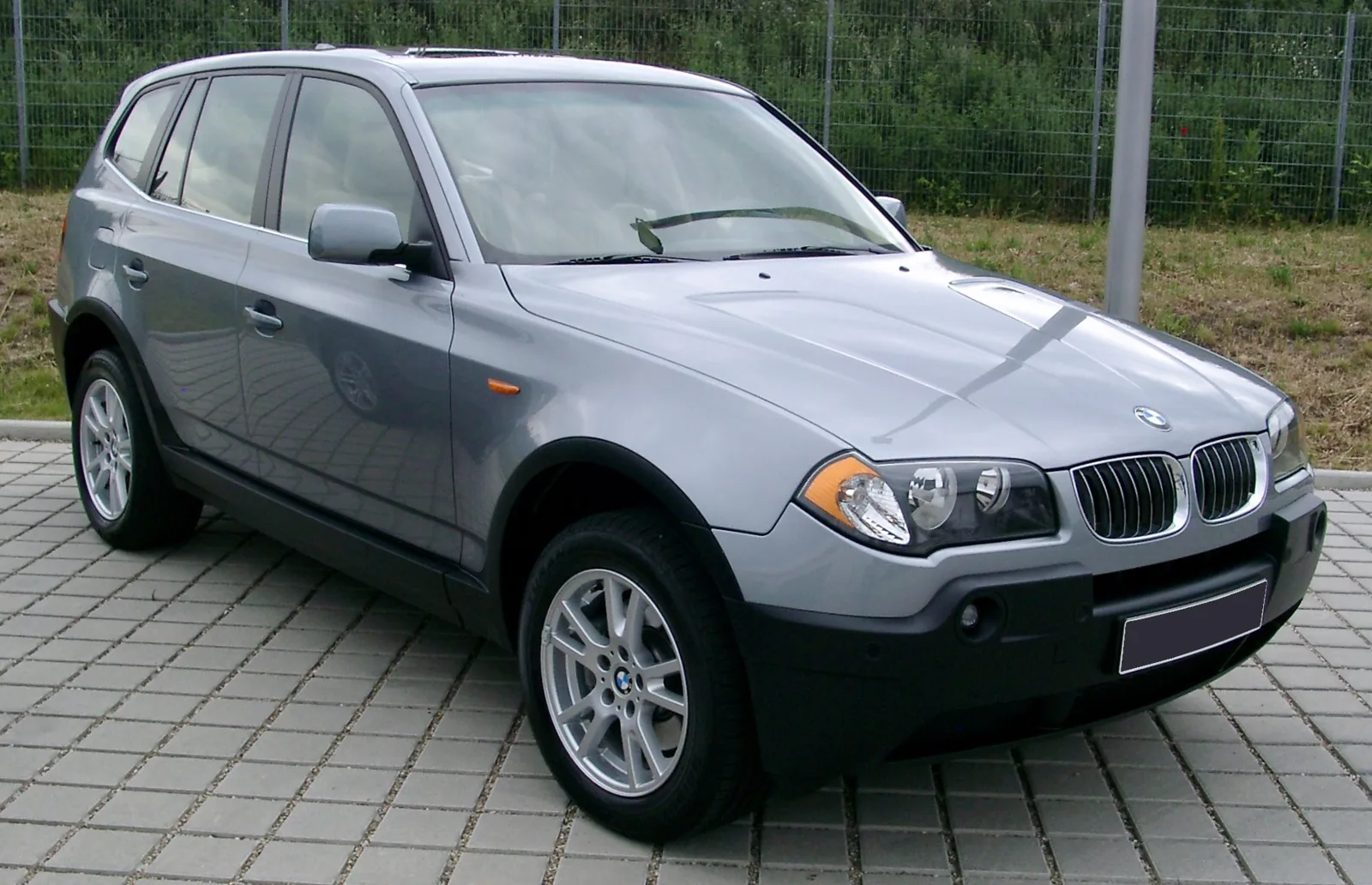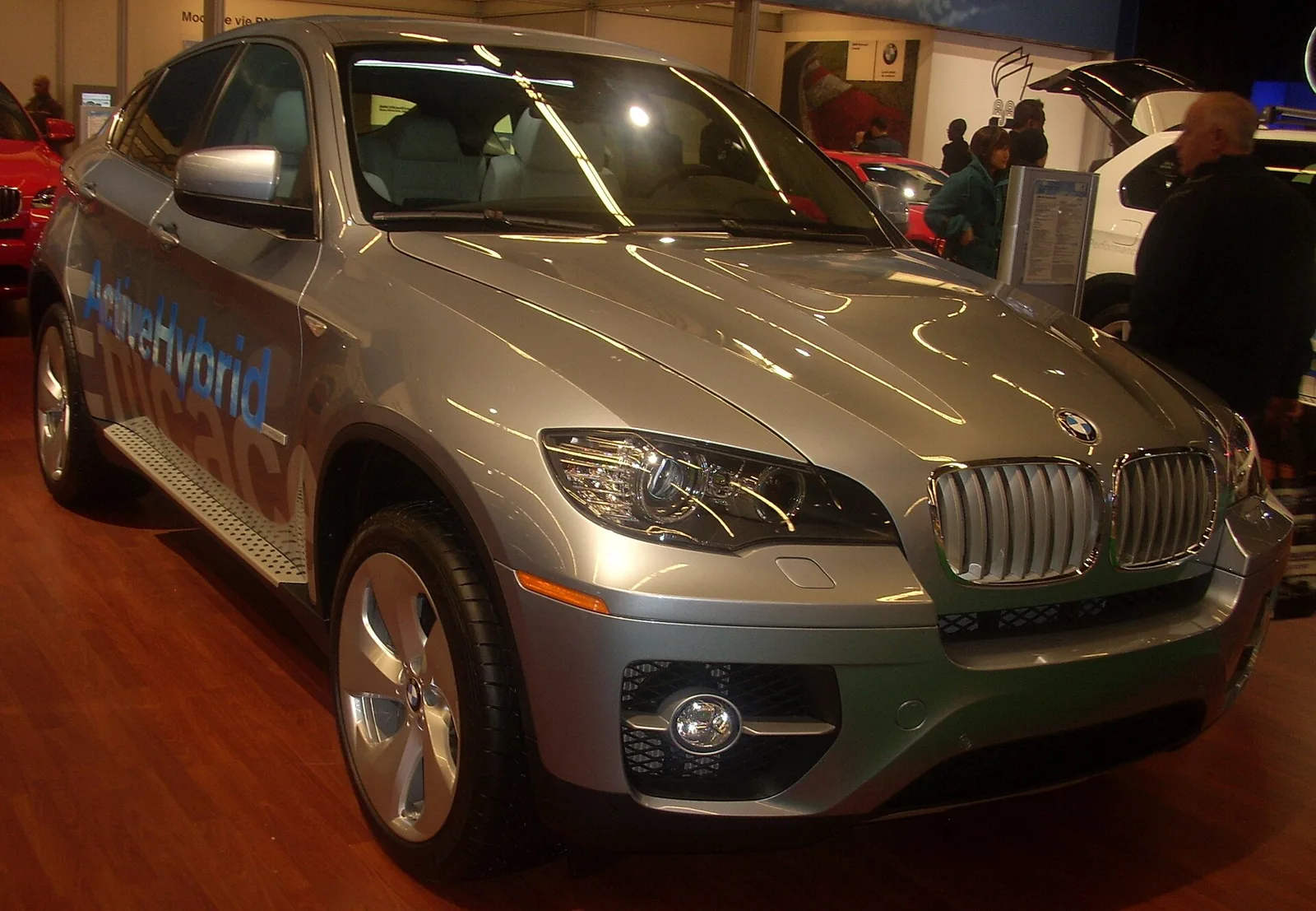
The first BMW X6 began life as a sportier, coupe-styled X5 with a steeply sloping roof, xDrive all-wheel drive and a range of supercharged engines.
The BMW X6 E71 was the first generation of BMW's coupe-styled crossover, a segment E SUV built from late 2007 to 2014. Sharing its floor pan with the X5, it used xDrive all-wheel drive, a DPC system and a range of supercharged engines, and later gained an X6 M and an ActiveHybrid version.
The BMW X6 E71 was a crossover that looked like a coupe, built on the mechanics of the X5 but given a sloping roof and a tail that rose towards the back. Its public debut came after production had already started, which makes its 2008 date somewhat unusual for a car of its kind.
Where did the X6 E71 project come from?
The E71 project started in 2003, two years after the E70 project for the second generation of the X5. Chris Bangle led design, and Pierre Leclercq, a Belgian collaborator, drew the body, with proposals approved in the first half of 2005.
The idea was to combine coupe styling elements with the familiar features of a high-end SUV, and the approval came quickly. Little time passed between the proposal and the go-ahead for the SUV-coupe.
Peter Tunnermann supervised the project. Bangle had come under fire from more conservative customers over the fourth generation of the 7 Series, whose breaks with the past were hard for the public to digest, and he gave the new body to one of his most prolific collaborators.
The test mules that began running in the summer of 2005 were also used to check the mechanics planned for the future X5. The first prototypes close to the final version were tested in 2006, and from the second half of that year the press spoke of a possible coupe-like derivative of the X5.
Concepts appeared before the production car. In Frankfurt and at the Bologna show, a nearly definitive X6 Concept and an X6 ActiveHybrid prototype were presented, the hybrid carrying two engines, one electric and one petrol. The hybrid concept also hinted at a less polluting model derived from the production X6.
A coupe version of the X5, shaped by marketing, that won a devoted following and a few sharp critics.
Why was the X6 treated as a coupe version of the X5?
BMW's numbering gave even numbers to sporty bodies and the odd number just below them to less sporty bodies on the same mechanical base. The X6 was therefore treated from the outset as a coupe version of the X5, in the way the 6 Series was a coupe version of the 5 Series.
The designation was chosen to respect that rule. In all four models, the 5 Series, the 6 Series, the X5 and the X6, the starting mechanical base was the same, so the family logic held together.
Attention kept building through 2007. Motor shows and the press continued to draw notice to the imminent debut, so the car was widely expected long before buyers could see it.
From the very first day the X6 had practically no competitors. The only car that could come close was the Porsche Cayenne of its first generation, which was also a rival to the X5. The car had been designed according to the laws of marketing and bent to them completely, so success came fast.
The X6's unusual shape drew attention from the start. The Korean SsangYong Actyon had arrived two years earlier with a similar coupe-like body, but it sat in a much lower market segment, so the X6 was not an absolute novelty in the strict sense.
When did the X6 go into production and reach buyers?
Production began on 3 December 2007 at the Spartanburg plant in South Carolina. The car was presented publicly at Detroit and Montreal in January 2008, which is why it is generally considered a 2008 model. Sales began in March 2008, after a European preview at the Geneva Motor Show.
The two North American shows made the target markets clear.
The Detroit and Montreal shows were held at the same time in January 2008, so the two presentations shared a single moment.
Production started in the last days of 2007, before the public presentation. That is why the X6 is described as a model whose official debut came after its production had begun.
How was the X6 styled compared with the X5?
Most of the body below the belt line came from the X5, with refinements such as different bumpers, a slightly rounder front and a belt line that leans further forwards. The roof and the tail were the distinguishing parts, with a steeply sloping roof and a completely redesigned rear.
The tail was not a slight variation of the X5's rear but a completely different design, chosen to sit better with the sloping roof.
The tail rose upwards to match the sloping roof, which moved the loading sill higher and made access to the boot less practical. The boot held 570 litres in standard form, against the 620 litres offered by the contemporary X5.
Inside, the X6 borrowed almost everything from the X5. The sloping roof, however, gave rear passengers a decidedly lower level of room than the X5 offered, and that was the price of the coupe-like profile.
The car was technically and stylistically related to the X5. The upper part of the body was the most characterising feature. The roof sloped steeply towards the rear, and the side glass surfaces were redrawn to suit it. Its arrival set the tone for a car that drew a large following as well as a sizeable group of detractors.
What engines and drive systems did the X6 E71 offer?
The X6 E71 was first planned with four supercharged engines, from the twin-turbo 3.0 N54 and 4.4 N63B44 to two 3.0-litre turbodiesels. All four were supercharged, and the turbodiesels used common-rail injection with one or two turbochargers.
The xDrive system was an electronically managed self-locking rear differential that distributed drive torque between the rear and front axles according to driving conditions. BMW put the xDrive name into the official designation of every X6 model, and soon afterwards into every all-wheel-drive BMW.
BMW believed so strongly in this layout that it extended the name to all of its all-wheel-drive models soon afterwards. The electronically managed differential made the car more agile and safer in an emergency.
DPC, Dynamic Performance Control, was tied to the xDrive layout and worked closely with it. Its job was to limit understeer. The all-wheel drive reached the engine through a six-speed sequential automatic.
Sharing the floor pan with the X5 meant the new model inherited the wheelbase and the whole suspension.
The front axle used transverse wishbones and the rear used multiple arms. The wheelbase and the whole suspension came from the less sporty X5, which was the sister model on the same floor pan.
How powerful were the X6 E71 engines?
The 3.0 N54 produced 306 PS (225 kW; 302 hp) at 5,800 rpm and could reach 240 km/h (149 mph). The 4.4 N63B44 made 407 PS (299 kW; 401 hp) at 5,500 rpm, with a top speed of 250 km/h (155 mph) that was electronically limited.
The 3.0 M57TUD30 is a common-rail turbodiesel rated at 235 PS (173 kW; 232 hp) at 4,000 rpm, and it tops out at 210 km/h (130 mph). The 3.0 M57TU2D30 is a bi-turbodiesel with 286 PS (210 kW; 282 hp) at 4,400 rpm and a top speed of 236 km/h (147 mph).
Later the xDrive35i replaced its twin-turbo 3-litre engine with a unit of the same displacement that had a single turbocharger, twin-scroll technology and Valvetronic. Power and torque stayed the same at 306 PS (225 kW; 302 hp).
What were the X6 M and the ActiveHybrid like?
The X6 M reached European buyers in 2009 with a particularly boosted version of the 4.4-litre V8 using twin-scroll turbo technology. It produced 555 PS (408 kW; 547 hp) and was paired with a six-speed automatic and sequential gearbox with paddles on the steering wheel.
The ActiveHybrid arrived at the end of 2009, and Chrysler and General Motors had a hand in developing its motors. It kept the powerful 4.4-litre twin-turbo V8 of 407 PS from the xDrive50i and fitted two electric motors, one at 86 PS (63 kW; 85 hp) and one at 91 PS (67 kW; 90 hp). The combined maximum output was 485 PS (357 kW; 478 hp), with 780 Nm (575 lb ft) of torque.
Around the same period the xDrive30d's output rose from 235 PS to 245 PS, one of several changes made to the range in its early years.
The motors did not work in series, so the maximum output was not the sum of the three units, though it was still far from reduced. The seven-speed automatic used four clutches, linked through gears to the two electric motors, which made the transmission unconventional.
Performance was impressive. The top speed was 236 km/h (147 mph), and it could be raised to 250 km/h (155 mph) by reprogramming parameters in the control unit. The car reached 100 km/h in 5.6 seconds, and the electric motors could drive it alone at up to 60 km/h (37 mph) for 2.5 km.
What changed in the 2012 update and when did production end?
At the start of 2012 the X6 received a mid-life restyle. The front light clusters integrated bi-xenon technology and could be specified with high-brightness LED lights, and the rear light clusters became LED. A third rear seat also became available from that point.
The front fog lights changed as well, and the rear light clusters became LED.
The colour range was updated for both body and interior trim, and the engine range stayed the same apart from the BluePerformance option. The xDrive30d could be obtained with BluePerformance, which uses AdBlue to turn polluting emissions into harmless gases, the same additive used in the BlueTEC versions of Mercedes-Benz models. It allowed the car to meet the Euro 6 standard due in 2014.
In the summer of 2012 the xDrive M50d arrived as the first production engine with triple supercharging. Its 3-litre diesel and three turbochargers gave a maximum output of 381 PS (280 kW; 376 hp). It was initially planned only for some European markets, including Germany, and reached Italy at the end of 2012.
The M50d marked the final important change to the E71 range, after which the car saw nothing of note. In mid-2014 production was ended in favour of the second generation, which was due to debut in the autumn of the same year.
What are the BMW X6 E71 specifications?
The range ran from the twin-turbo engines of the early cars to the two diesels, the X6 M and the ActiveHybrid. Each version is set out below with its displacement, output and top speed where the figures are known.
| Specification | Detail |
|---|---|
| Production | Late 2007 to mid-2014 |
| Plant | Spartanburg, South Carolina |
| Gearbox | 6-speed sequential automatic with xDrive |
| 3.0 N54 | 2,979 cc (181.8 cu in), 306 PS (225 kW; 302 hp) at 5,800 rpm, 240 km/h (149 mph) |
| 4.4 N63B44 | 4,395 cc (268.2 cu in), 407 PS (299 kW; 401 hp) at 5,500 rpm, 250 km/h (155 mph) electronically limited |
| 3.0 M57TUD30 | 2,993 cc (182.6 cu in), 235 PS (173 kW; 232 hp) at 4,000 rpm, 210 km/h (130 mph) |
| 3.0 M57TU2D30 | 2,993 cc (182.6 cu in), 286 PS (210 kW; 282 hp) at 4,400 rpm, 236 km/h (147 mph) |
| X6 M | 4.4-litre V8, 555 PS (408 kW; 547 hp) |
| ActiveHybrid | 485 PS (357 kW; 478 hp), 780 Nm (575 lb ft), 236 km/h (147 mph) |