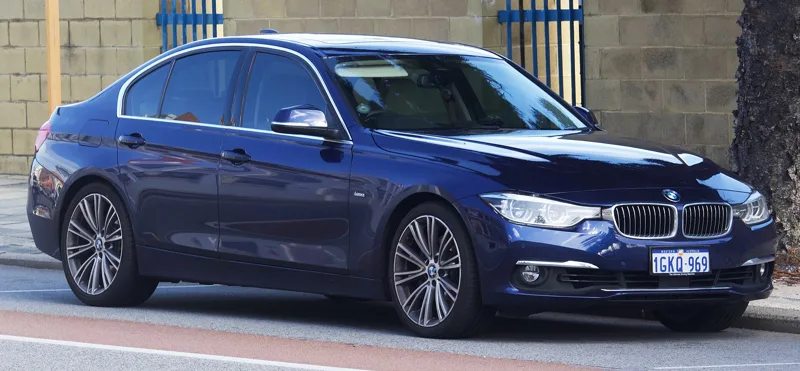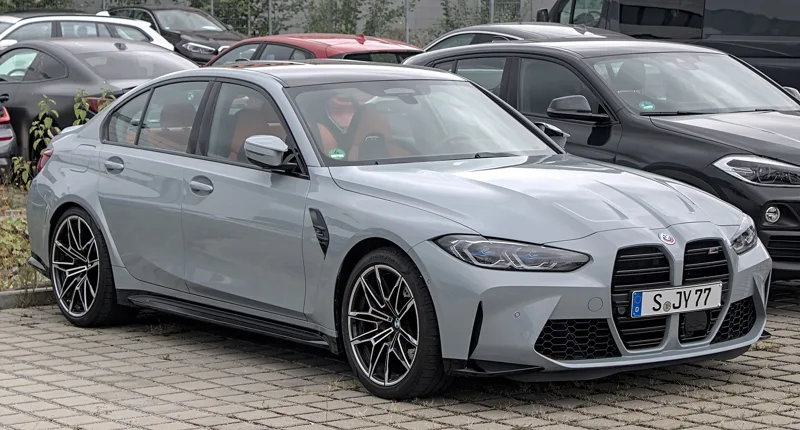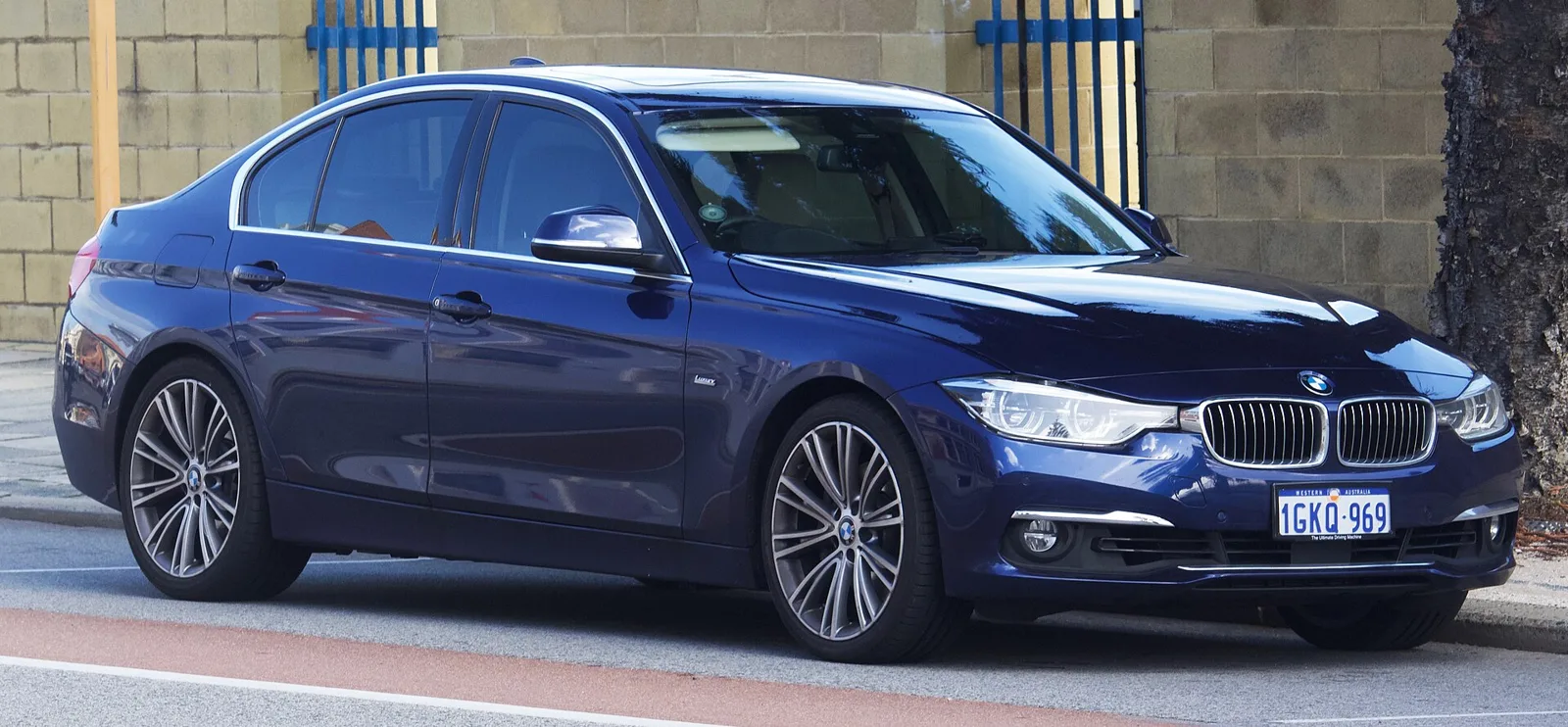
BMW's rear-drive compact hatch and its coupe, convertible and M Coupe siblings, built from 2004 to 2013 as the entry-level range.
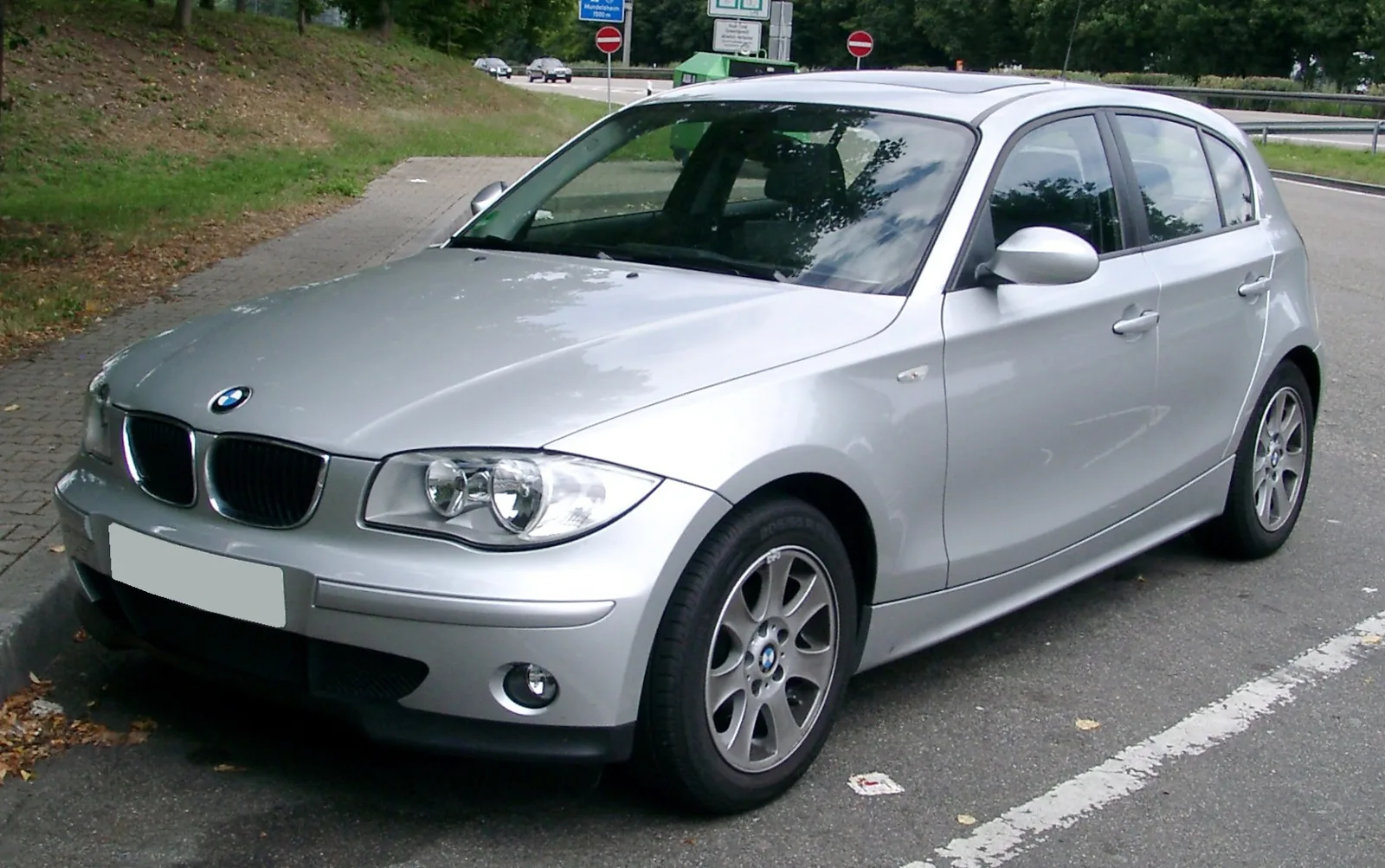
The five-door E87 formed part of BMW's first 1 Series, sold in four body styles from 2004 to 2013. It belonged to the E8x family and took over the entry-level slot from the 3 Series Compact, with rear-wheel drive underneath.
BMW's first 1 Series reached the market in four body styles, all with rear-wheel drive, between 2004 and 2013. The hatchback that opened the range is the E87, while the M Coupe at the top of the line is the family's most famous member.
What is the BMW E87?
The E87 was the five-door hatchback of BMW's first 1 Series. Alongside the E81 three-door, E82 coupe and E88 convertible it made up the E8x family, built between 2004 and 2013, and it took the place of the 3 Series Compact as the brand's entry point.
Collectively the four bodies are known as the E8x. The five-door arrived first, and the other bodies followed in the years after.
BMW's rear-drive compact hatch, built from 2004 to 2013, and a family whose M Coupe gave the range its sharpest edge.
How was the first 1 Series developed?
Development began with BMW weighing up the Rover R30 design programme before opting to develop the E8x in tandem with the E90 3 Series. The two cars share roughly 60% of their parts, from suspension and structure to engines and electronics. Both lines therefore shared a good deal of engineering.
Chris Bangle led the design team. The look was first previewed by the CS1 Concept at the 2002 Geneva Motor Show, and Christopher Chapman headed the exterior work on the hatchbacks.
The E87 debuted in Paris in September 2004, and it went on sale around the world that year.
A 2005 television advert showed Kermit the Frog driving a 1 Series through a desert, carving figures of eight to show off its agility.
In 2012 thieves in the United Kingdom stole several 1 Series cars by programming blank key fobs through the on-board diagnostics port. BMW later patched the flaw for existing cars and for those built afterwards.
How did the body styles arrive?
The E87 hatchback came first, followed by the E81 three-door in 2007, the E82 coupe later that year and the E88 convertible soon after. The coupe and convertible stayed in production until 2013, and the hatchbacks were phased out once the F20 and F21 1 Series appeared in 2011.
Critics were divided on the exterior styling, and the hatchback's unusual proportions drew most of the criticism.
The five-door was built from 2004 to 2011, and its range ran from the 116i to the 130i across eight variants. It weighed 1,340 kg (2,954 lb) at the kerb.
The three-door E81 had been designed before the five-door, but it was held back until 2007, when it was unveiled at Geneva. It shared the five-door's range and length, and it was built from July 2007 until 2012. Its kerb weight was 10 kg (22 lb) lighter.
The coupe was unveiled at the 2007 Frankfurt Motor Show, with sales from 24 November 2007. Its range ran from the 118d to the 135is and the M Coupe, and North American buyers first got the 128i and 135i in October 2007.
The convertible ran from 2007 until June 2013 and used a fabric roof, not the folding metal roof of the E93 3 Series convertible.
What made the 1 Series chassis unusual?
The 1 Series sat on an aluminium multi-link suspension with rear-wheel drive and a longitudinally mounted engine. That combination produced a 50:50 weight split, which was uncommon in a hatchback when most rivals were front-wheel drive. Few rivals offered that balance in a small hatch.
Buyers could choose a turbo-diesel four, a naturally aspirated four or six, or a turbocharged six. Only the coupe and convertible could take the turbocharged six.
The range topper was the 1 Series M Coupe, which had the N54 turbocharged inline-six and a six-speed manual. It was offered only as a coupe, and it is seen as the forerunner of the BMW M2.
The 1 Series was replaced in 2011 by the F20 and F21, while the coupe and convertible continued until 2013, when the F22 and F23 2 Series arrived.
Which engines and gearboxes did the 1 Series use?
The 135i's engine changed in 2010, when a single-turbo N55 replaced the twin-turbo N54. Its gearbox options included a six-speed manual, a six-speed automatic and, from 2010, a seven-speed dual-clutch unit. The 135i was the most powerful model in most markets.
Up to 2010 the 135i relied on a twin-turbo N54 of 3.0 litres, linked to a six-speed manual or automatic. The 2010 upgrade swapped it for a single-turbo N55 of the same displacement, paired with a six-speed manual or a seven-speed twin-clutch.
Its final drive uses double-helical bearings, which run cooler because less lubricant is needed. Front brakes had six pistons per caliper and rear brakes had two, and the discs measured 338 mm at the front and 324 mm at the rear.
Early in 2006 BMW replaced the five-speed manual with the six-speed Getrag GS6. Automatics came from ZF, with the 6HP for the 135i, and from General Motors, with the 6L50 for the 128i and the 6L45 for the 116i.
In North America the 128i used a 170 kW (228 hp) tune of the 3.0-litre N52 inline-six, a version sold in no other market. The 130i sat at the top of the hatchback range with a naturally aspirated N52, arriving in September 2004.
What performance upgrades did BMW offer?
BMW offered a two-stage performance kit for the N55. Stage one remapped the engine control unit to lift output from 225 kW to 240 kW and add thirty newton-metres, which took peak torque to 430 Nm. Both stages were sold as options for the N55.
Stage two added cooling, through a supplementary radiator and a larger fan, to keep the engine cool under load.
Automatic cars such as the 135i gained a further twenty newton-metres, taking peak torque to 450 Nm.
A modified rear bumper and a sporty rear muffler were optional, and both were standard on the US-specification 135iS.
What changed in the 2007 and 2010 updates?
In March 2007 the five-door received a facelift, usually called the LCI. The N43 four-cylinder took over from the N45 and N46 engines, and electric power steering replaced the hydraulic system. BMW also added fuel-economy measures under the EfficientDynamics name.
The E81 hatchback followed in May 2007, the E82 coupe in November 2007 and the E88 convertible soon afterwards.
In 2010, for the 2011 model year, the coupe and convertible were facelifted with new headlights, taillights and bumpers, plus interior tweaks. The N55 replaced the N54 in the 135i, while fuel use rose slightly on some models and fell on others.
What was the 1 Series M Coupe?
The 1 Series M Coupe, known as the 1M, was the high-performance version of the E82 coupe, sold under BMW's M sub-brand. It was sold under the M name rather than as a regular trim. BMW passed over the name M1 to avoid confusion with the 1970s supercar of that name.
At the 2007 Tokyo Auto Show, BMW showed a 1 Series tii Concept, seen as a preview of an M version. The 1M that followed four years later differed in several ways, most notably with six cylinders rather than four.
The N54 was only the second turbocharged engine BMW M had built, following the S63 V8 found in the X6M. Originally fitted to the Z4 sDrive35is, it made 335 bhp (250 kW) at 5,900 rpm, with 450 Nm (332 lb-ft) between 1,500 and 4,500 rpm.
Overboost added a further 50 Nm (37 lb-ft), so peak torque reached 500 Nm (369 lb-ft). A six-speed manual was the only gearbox.
Its front track grew by 74 mm (2.9 in) and its rear by 46 mm (1.8 in), and it had a limited-slip differential. The car measured 1,803 mm (71.0 in) across and weighed 1,495 kg (3,296 lb).
BMW planned 2,700 cars but built 6,309. The 1M finished third in Evo Magazine's 2011 Car of the Year voting and was recognised by Top Gear magazine. It was the sharpest model in the family.
What was the ActiveE trial?
The ActiveE was an electric E82 coupe built in small numbers for testing and demonstration. The US Environmental Protection Agency gave it a 151 km (94 mi) range, with energy use of 33 kWh per 161 km (100 mi). It was never a mass-market car.
Customers leased the cars for a two-year period, after which they left the road. Of the 1,100 produced, 700 went to US customers from January 2012.
How did the 1 Series race?
In 2006 a 120d with a BMW customer racing kit finished fifth at the Nurburgring 24 Hours, out of 220 entries. The car was entered by a team called Schubert Motors, and the result was fifth place in a crowded field.
In 2007 an E87 120d became the first diesel in the British Touring Car Championship, with Rick Kerry driving. It was uncompetitive yet narrowly missed points at Rockingham. Nick Leason returned it in 2009, but it lasted only three meetings.
Beric Lynton took the 2014 Australian Production Car Championship in a BMW 1M. The ex-BTCC car later raced with the Belgian Gentlemen Drivers Club and won its class in 2016 and 2019.
The UK-based 750 Motor Club has run a mini endurance series since 2019. Its cars are 2004 to 2006 116i models in 90-minute multi-driver races, and the grids had more than 25 cars by 2020.
The club added the Coupe Cup, aimed at the 120i E82, in 2023, and it runs a 116 Sprint Trophy alongside the endurance series. Tim Harvey, the 1992 British Touring Car champion, raced the endurance series in 2022 and the Coupe Cup in 2023.
Matt Neal, a three-time BTCC champion, appeared in the endurance series in 2023, while Steve Soper, the 1993 runner-up, tested a 116i in 2022 and joined the Coupe Cup in 2023. The Irish Rallycross Championship also launched a single-make class for 120ds built to the 2004-2013 specification, starting in 2025.
What was the 135is?
The 135is coupe and convertible was offered only for the 2013 model year, and only in the United States and Canada. Elsewhere the F20 generation had replaced the E82 and E88, and its top M135i shared the 135is's engine. It was sold only in North America in its single model year.
The 135is used an upgraded N55 with 240 kW (322 hp) and 430 Nm (317 lb-ft), which was 20 hp and 17 lb-ft more than the 135i. It also had firmer sports suspension, M Sport bodywork and 18-inch wheels.
How well did the E8x sell and where was it built?
The E8x was built in Regensburg and Leipzig in Germany, and it made up nearly one-fifth of BMW's total sales in 2008. That share made the range central to BMW's volume that year. Sales figures for the range appear in BMW's annual reports.
The E87 was built from 2004 to 2011, and the E82 coupe continued until August 2013. The E88 convertible ran from 2007 until June 2013 on its fabric roof.
BMW 1 Series specifications
| Model or engine | Detail |
|---|---|
| E8x family | Built 2004 to 2013; four body styles; rear-wheel drive |
| E87 five-door kerb weight | 1,340 kg (2,954 lb) |
| E81 three-door kerb weight | 10 kg (22 lb) lighter than the five-door |
| 135i N54 (2007 to 2010) | 3.0-litre twin-turbo; six-speed manual or automatic |
| 135i N55 (from 2010) | 3.0-litre single-turbo; six-speed manual or seven-speed dual-clutch |
| 128i (North America) | 170 kW (228 hp) 3.0-litre N52 inline-six |
| 1 Series M Coupe | 5,900 rpm: 250 kW (335 bhp); 450 Nm (332 lb-ft) |
| 1M overboost | Peak torque 500 Nm (369 lb-ft) |
| 1M curb weight | 1,495 kg (3,296 lb) |
| 135is (2013, US and Canada) | 240 kW (322 hp); 430 Nm (317 lb-ft) |
| ActiveE range (EPA) | 151 km (94 mi) |