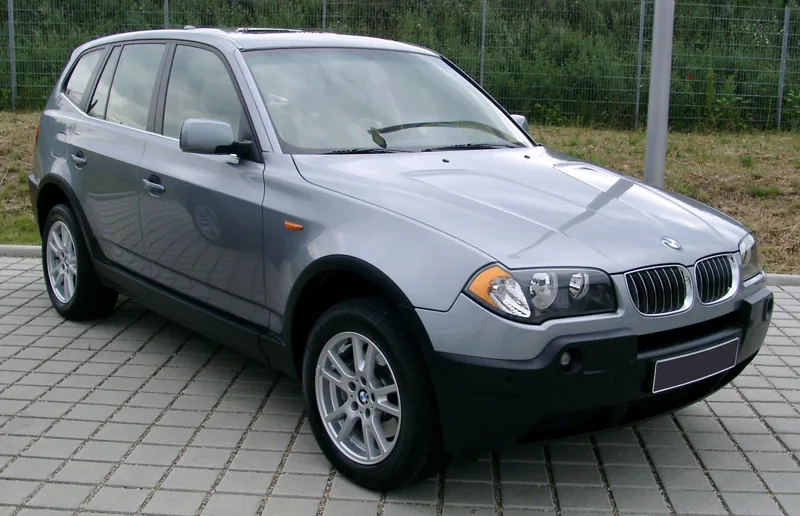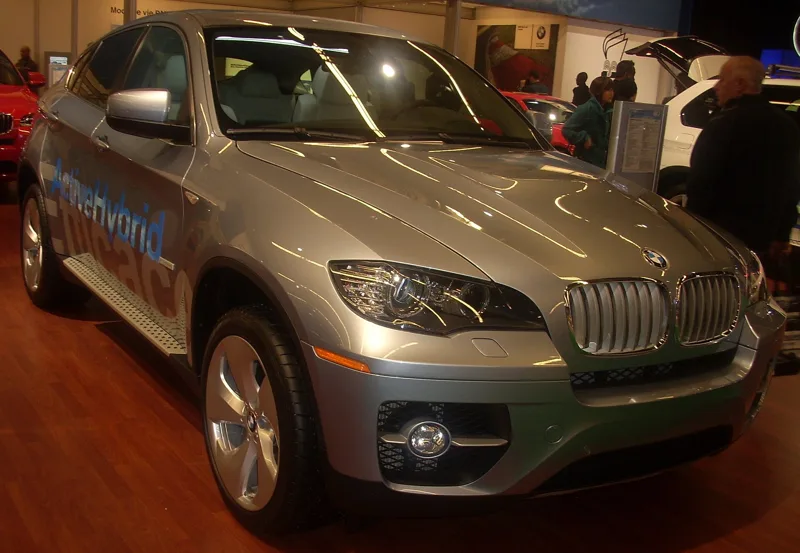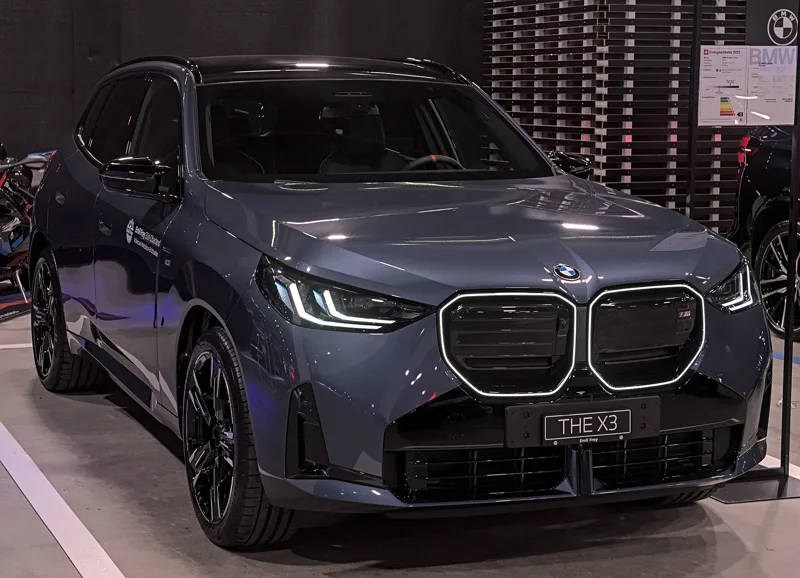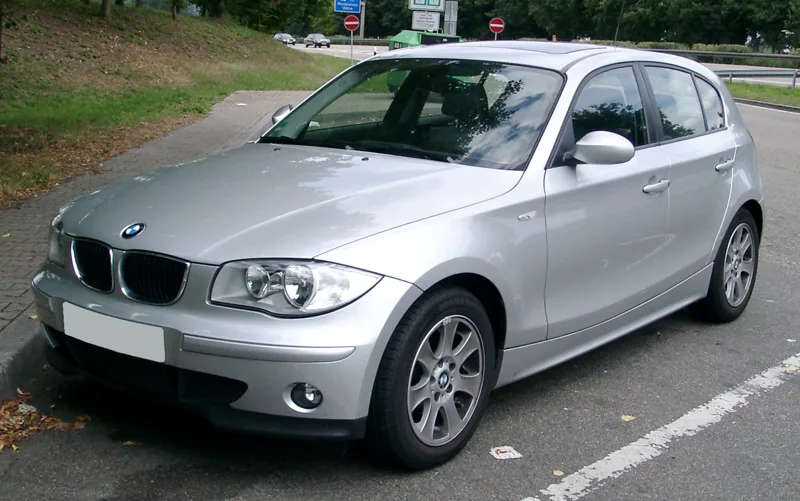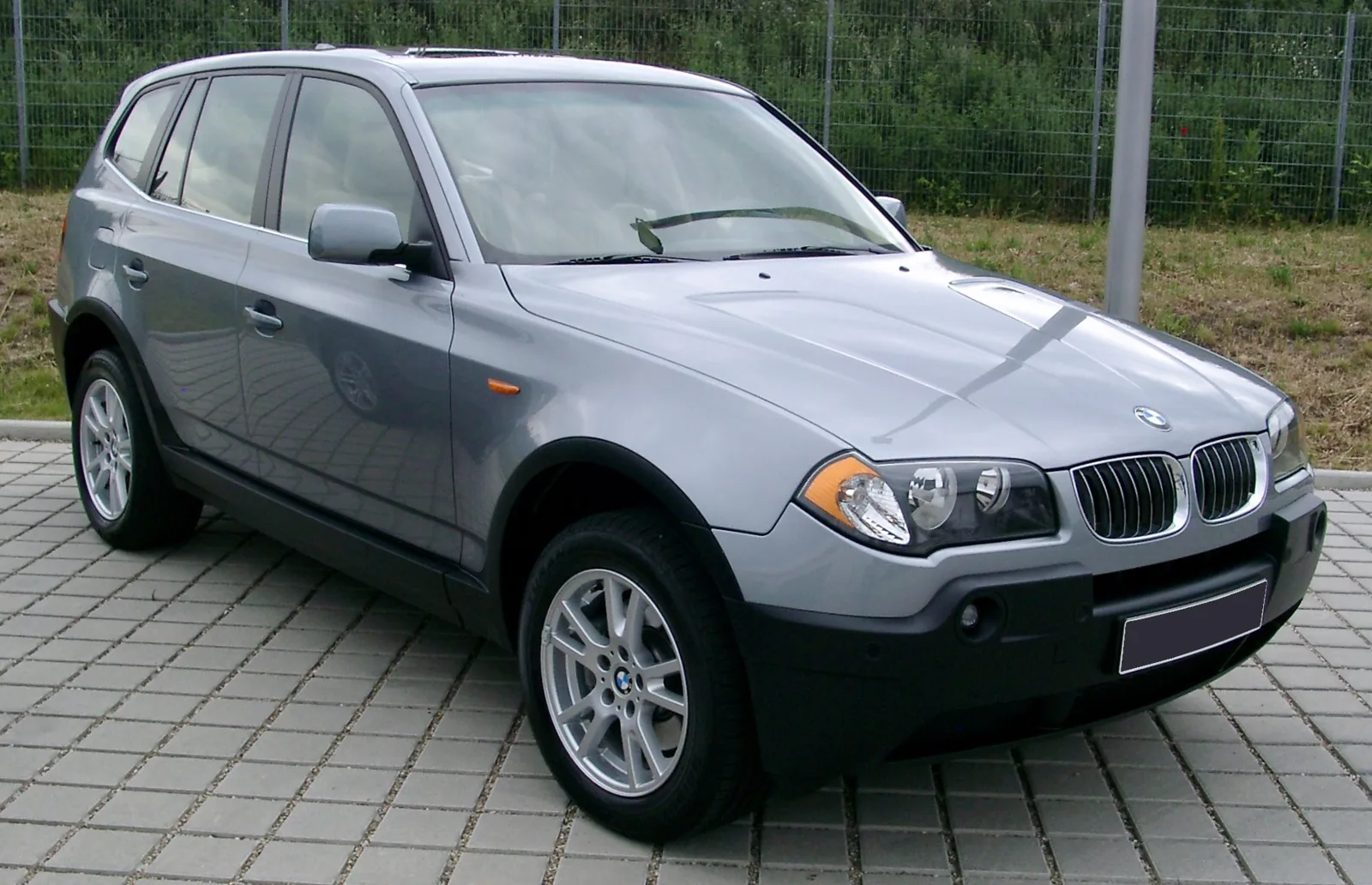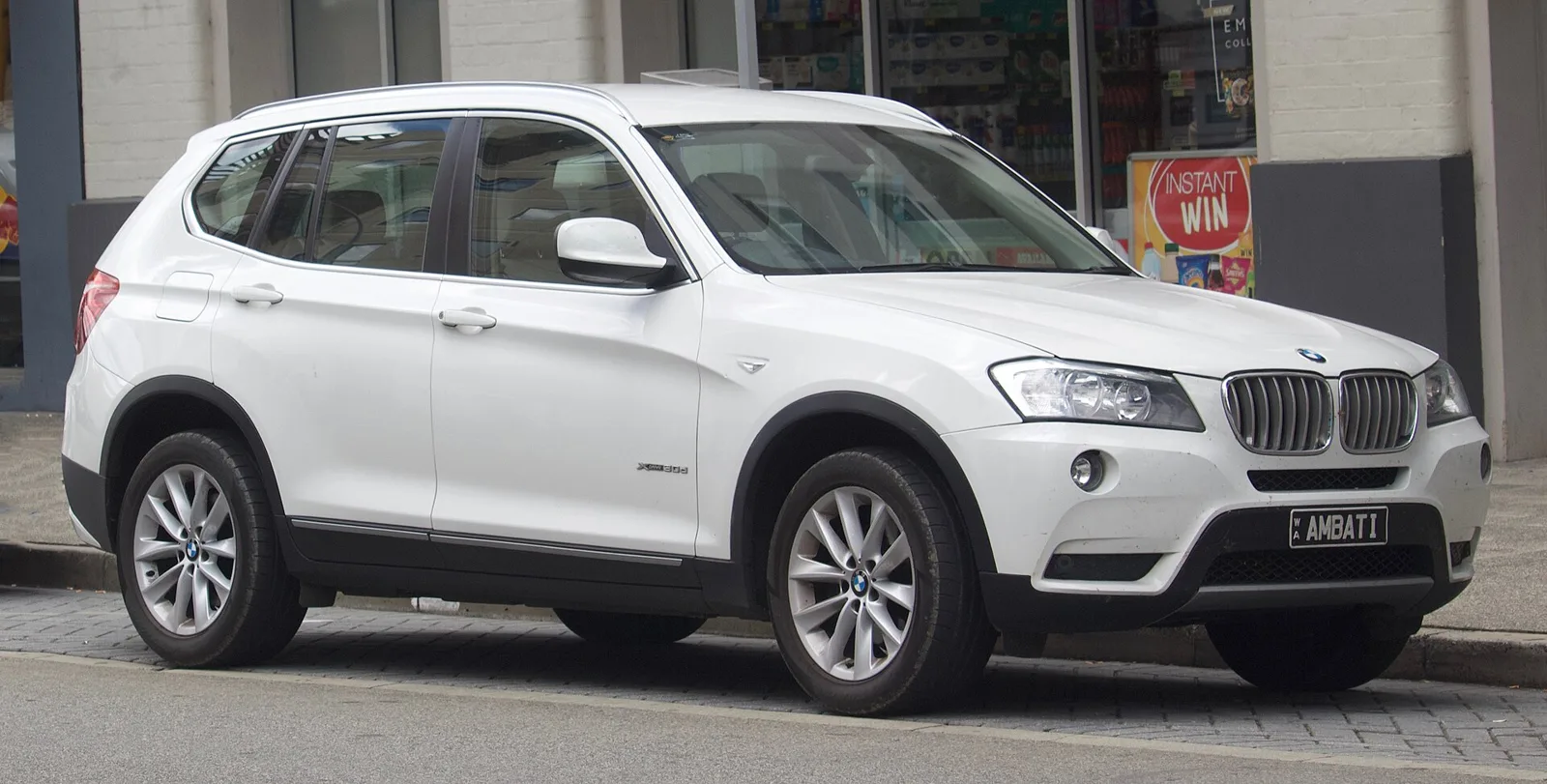
The second-generation X3, built from 2010 to 2017, with xDrive all-wheel drive, a 3-litre petrol and an engine range that grew with later updates.
The BMW X3 F25 was the second generation of BMW's premium SUV, built from 2010 to 2017. It launched with a 306 PS 3-litre petrol and a 184 PS 2-litre diesel, both with xDrive all-wheel drive.
The BMW F25 was the X3's second generation, a high-end SUV from the German maker that ran from 2010 to 2017. Its debut came at the Paris show in autumn 2010, with more modern and elegant lines that looked closer to the larger X5.
It came with xDrive all-wheel drive as standard, a new suspension layout and electromechanical steering.
How did the F25 differ from the earlier X3?
The F25 had cleaner, more modern lines than the earlier E83 and dropped the unpainted plastic trim that the older car carried. It was slightly longer and wider than its predecessor, which put some distance between it and the smaller X1 and moved it nearer the X5.
The front looked more substantial, with large rectangular headlights and a more linear design. A longitudinal rib ran along the flank, and L-shaped rear light clusters linked it to the X5 E70, whose second generation was restyled the same year.
Seen from the side, the F25 looked most like the X5, almost as a scaled-down version of it.
BMW presented the F25 as a grown car, not only a bigger one, with more content as well as more size.
A bigger X3 with styling close to the X5 and its platform from the 3 Series.
How much luggage space did the X3 F25 offer?
Luggage capacity was 550 litres with the rear seats in place, and it grew to 1,600 litres with the rear backrest fully folded. The rear bench split 40-20-40, and the boot was roomier than that of the earlier X3, which already had record figures.
Practicality was a clear aim inside the car, with a long list of equipment chosen to make everyday use easier. A roomy boot and a split rear bench made the car versatile for carrying loads.
What safety and chassis features did the F25 have?
Crumple zones were built into the body. Bumpers soak up impacts up to 4 km/h, and in a pedestrian collision the bonnet rises a little. By 2010 such crash design was expected on premium cars of this class. Drive went to all four wheels through the xDrive system, which shares torque between the axles according to need and the grip of the road.
The platform came from the 3 Series E90, but the suspension was new. The front used double joints with a tie rod, and the rear had five links. Ventilated discs sat on all four wheels with ABS, and the steering used an electromechanical servo, a first on a BMW SUV.
Which engines did the X3 F25 launch with?
At launch the petrol choice was the xDrive35i, with a turbocharged 3-litre (183 cu in) twin-scroll unit making 306 PS (302 hp; 225 kW). The diesel was the xDrive20d, a 2-litre (122 cu in) common-rail turbodiesel producing up to 184 PS (181 hp; 135 kW). Both engines could be paired with an 8-speed Steptronic automatic or a 6-speed manual gearbox.
The xDrive28i could be ordered at launch even though it was missing from the official price list. This naturally aspirated 3-litre (183 cu in) made 258 PS (254 hp; 190 kW) and came with the eight-speed automatic.
In March 2011 the xDrive30d arrived with a 3-litre turbodiesel based on the 245 PS (242 hp; 180 kW) unit fitted to many other BMW models. In this version it was tuned to deliver 258 PS (254 hp; 190 kW) at 4,000 rpm.
What are the BMW X3 F25 specifications?
| Specification | Detail |
|---|---|
| Generation | Second (F25), built 2010 to 2017 |
| Debut | Paris Motor Show, autumn 2010 |
| xDrive35i | 3-litre (183 cu in), 306 PS (302 hp; 225 kW) |
| xDrive28i | 3-litre (183 cu in) naturally aspirated, 258 PS (254 hp; 190 kW) |
| xDrive20d | 2-litre (122 cu in) turbodiesel, 184 PS (181 hp; 135 kW) |
| xDrive30d | 3-litre (183 cu in) turbodiesel, 258 PS (254 hp; 190 kW) |
| Luggage | 550 litres, up to 1,600 litres |
| Trim levels | Base, Eletta, Futura |
What trim levels and equipment did the X3 F25 have?
The F25 launched in three trim levels. Base was limited to the 2-litre turbodiesel, while Eletta and Futura could be had with either engine. Standard kit across the range was long and covered safety, comfort and convenience.
Every model came with front airbags that recognise an empty passenger seat, side and head airbags, central locking with an immobiliser, active head restraints, a tyre puncture warning and energy recovery during braking. The hi-fi had five speakers.
Run-flat tyres and 18-inch alloy wheels came on both petrol models, which also had a leather steering wheel, two-zone climate control and cruise control as standard. Start/Stop came on the whole range except the xDrive28i, and the xDrive20d was the only model with single-zone air conditioning.
What options could buyers order for the F25?
Buyers could order 19-inch alloy wheels, sport suspension and a towing hitch, along with a windscreen with an anti-glare strip. Leather or a leather and fabric mix could replace the standard cloth, and the cabin could be trimmed in wood veneer or finely worked aluminium.
Dynamic Driving Control let drivers choose damper settings across Normal, Sport and Sport+ modes, a first for a BMW SUV. The High-Beam Assistant adjusted the high beams automatically when another car approached, and Adaptive Light Control swivelled the beam in bends and adjusted it to brightness.
Comfort options covered heated and electrically adjustable seats, front seats with lumbar support, a glass panoramic roof and a TV function. The iDrive system came with a 6.5 or 8-inch navigation display, and the hi-fi could have 6, 12 or 16 speakers.
Driver aids included parking sensors, a rear camera, a head-up display and variable-sensitivity power steering, while xenon headlights were available for both main and dipped beam.
How did the F25 fit into BMW's range?
The F25 sat between the smaller X1, launched a year earlier, and the larger X5. It borrowed its platform from the 3 Series E90, and its styling pointed towards the X5, which had its own second-generation restyle in 2010.
The 2014 restyle brought the front in line with the look BMW had introduced on the sixth-generation 3 Series in 2012. That tied the X3 more closely to the 3 Series in its front styling.
What changed in the 2012 and 2014 updates?
The 2012 range added a 2-litre turbo petrol, the xDrive20i, at the base of the line-up. The xDrive35d, with a twin-turbo 3-litre diesel making 313 PS (309 hp; 230 kW), arrived with the 2012 range at the Frankfurt show. A new 2-litre turbo petrol with 245 PS (242 hp; 180 kW) replaced the 258 PS naturally aspirated 3-litre.
Some of these novelties reached Germany first, while Italy received them during 2012. In autumn 2012 the sDrive18d came with the N47 2-litre turbodiesel of 143 PS (141 hp; 105 kW), extending the range downwards.
The spring 2014 restyle lengthened the headlights to meet the central grille and gave the front bumper larger side air intakes. Black Panel instruments arrived inside, and the twin circular projectors under the new reflectors could be had with LED technology on request. The sDrive18d rose to 150 PS (148 hp; 110 kW), the xDrive20d to 190 PS (187 hp; 140 kW), and the 2-litre petrol could now be paired with rear-wheel drive, though only with the automatic.
Late in 2015 an xDrive30d detuned to 249 PS (246 hp; 183 kW) joined the 258 PS version for Italy. Italian tax rules added a surcharge to cars above 250 PS, and the lower-output model was built to avoid it.
When did the X3 F25 end its run?
The third-generation X3 was revealed on 26 June 2017 at BMW's Spartanburg plant in the United States. Its formal presentation was planned for the Frankfurt show later that year, which put the F25's commercial career on a path to its close by summer 2017.