Five-cylinder power, a 220 PS turbo 20V with quattro all-wheel drive, and record cars built on the same base.
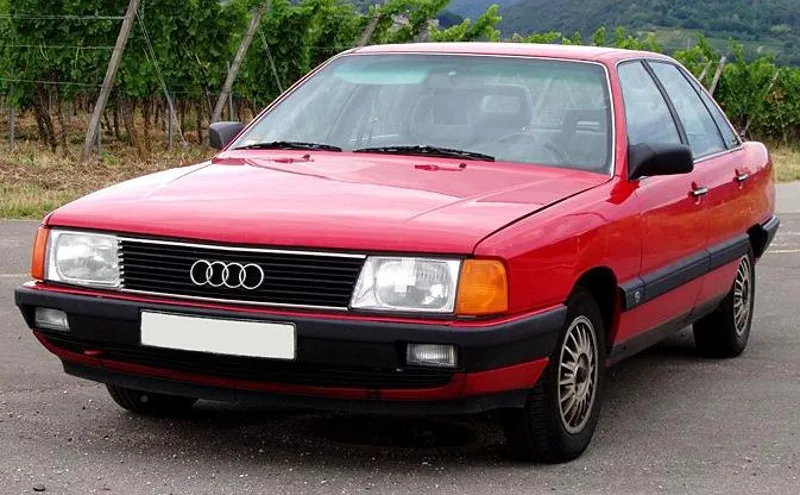
The Audi 200 C3, internal type 44, was a five-cylinder saloon from Audi, presented in 1983 and the top model of the range until the V8 arrived in 1988. Its quattro 20V version, with 220 PS, sat at the top of the range.
The Audi 200 C3, internal type 44, was Audi's top model from its September 1983 launch until the V8 arrived in 1988. It used the body shell of the Audi 100 C3, but its five-cylinder engines, a turbocharged 20-valve version and an optional quattro all-wheel drive gave it a character of its own. Modified versions built on the same base also set long-distance speed records.
What made the Audi 200 different from the Audi 100?
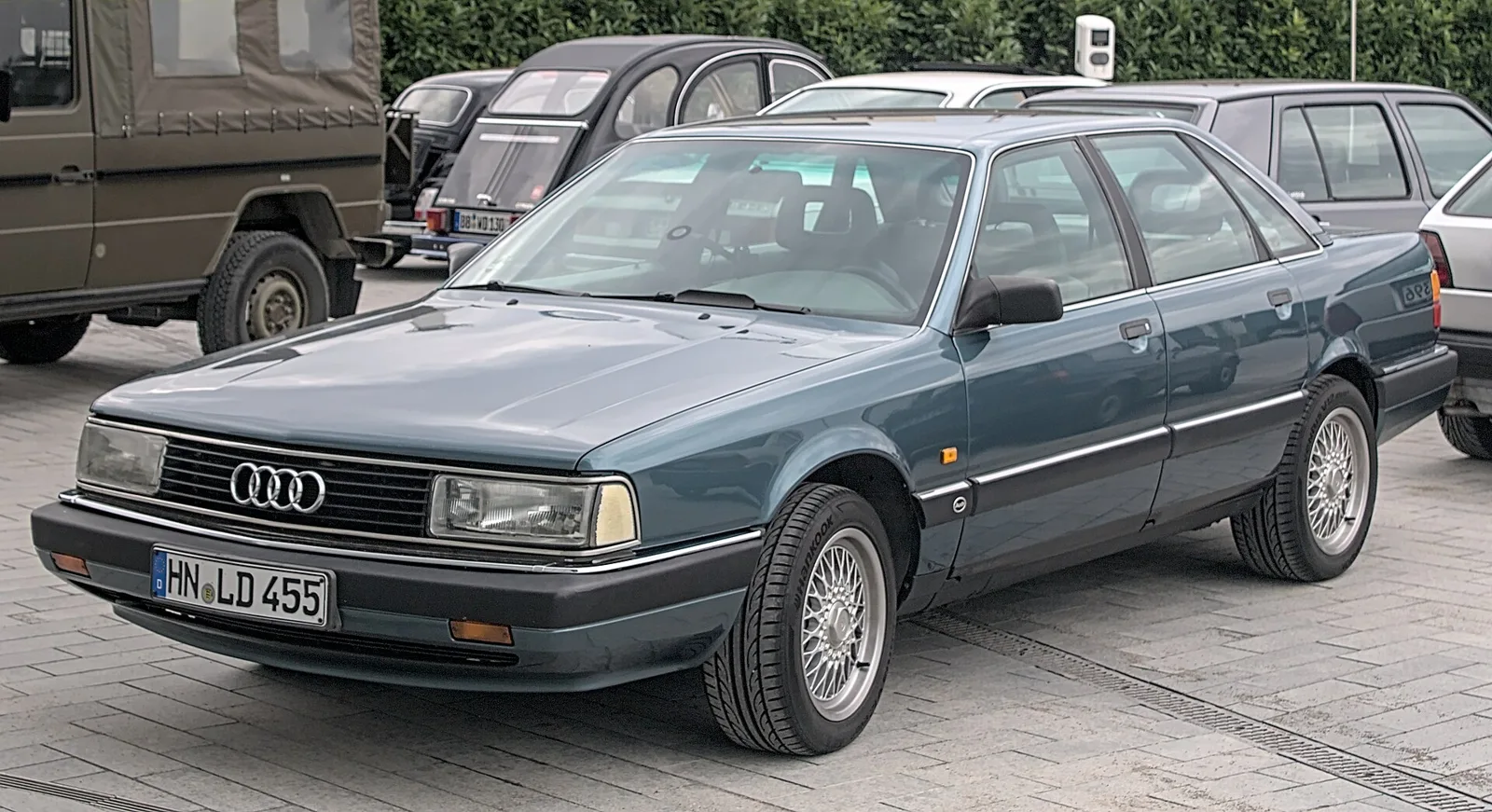
The 200 used the Audi 100 C3's body shell but wore its own front end, with wider twin headlamps, standard fog lamps and a large front spoiler in body colour. Its drag coefficient of 0.33 was slightly worse than the 100's 0.30, because of those add-on parts.
The Audi 100 C3 and its flatly inclined window panes also brought the problem of interior heating into public discussion for the first time. Until the early 1988 update, the 200 also had its own dashboard, special door trims and more elaborately padded seats.
The front indicators are set into the bumper, as on the predecessor 200 Type 43, and the trim between the rear lamps runs continuously in the colour of the rear lamps.
The Audi 100 C3 had caused a stir with its 0.30 figure, and the 200 could not reach it despite sharing the same shell.
A five-cylinder saloon that became a record-breaker's base, with a 220 PS quattro 20V at the top of the range.
Which engines did the Audi 200 use?
The naturally aspirated line-up was 2.1 litres at 100 kW (136 PS), 2.2 litres at 101 kW (137 PS) and 2.3 litres at 100 kW (136 PS). Turbocharged five-cylinder engines of 2.1 and 2.2 litres produced between 121 and 162 kW.
On request an official-use version was offered at first, using the 98/100 kW five-cylinder petrol engine the Audi 100 already had. From 1988 to 1990 more powerful engines followed: 140 kW with automatic only, and 147 kW.
Both front-drive and quattro cars could be had with a five-speed manual, whereas the three-speed automatic was front-drive only. This generation was also the first to offer the permanent quattro with a manual gearbox.
The early 1988 update also brought an upgraded interior and recessed door handles, and in the last production year a driver's airbag could be ordered for a surcharge.
How fast was the Audi 200 20V?
The Audi 200 quattro 20V became the top model in March 1989. Its turbocharged 2.2-litre five-cylinder had four valves per cylinder and produced 220 PS (162 kW; 217 hp) at 5,700 rpm, enough for 242 km/h (150 mph) and 0 to 100 km/h in 6.6 seconds.
Round, flared wings and wide bumpers for the US market set the 20V apart visually. Its chassis came from the Audi V8 D11, and the new engine management controlled the ignition, fuel injection and boost pressure.
Maximum torque of 309 Nm (228 lb ft) arrived at 1,950 rpm. The car was built only with all-wheel drive, and it ran on 215/60 VR 15 tyres on 7.5x15-inch rims.
The estate version was slightly slower, at 238 km/h (148 mph) and 6.7 seconds to 100 km/h, both figures from the manufacturer.
How many Audi 200 20Vs were built?
Only 4,767 saloons and 1,616 Avant estates were built during the short production run, so few originals survive today. The 20V was shown at the 1989 Geneva Motor Show and built until 1990, with extras such as leather, seat heating and forged alloy wheels.
What was the Audi 200 exclusive?
The 200 exclusive was a special model with flared wheel arches and more equipment, including electrically adjustable leather seats and automatic climate control. It was the most expensive Audi built in series until the V8 arrived, and it cost about 79,000 DM in 1987.
When did the Avant estate arrive?
The Avant estate was added in mid-1984 to the second Audi 200 series, which had been built since 1983. Like the saloon, the estate used only five-cylinder petrol engines. Avant production continued until the end of 1990, while the saloon ran until mid-1991.
Which record cars were built from the Audi 200?
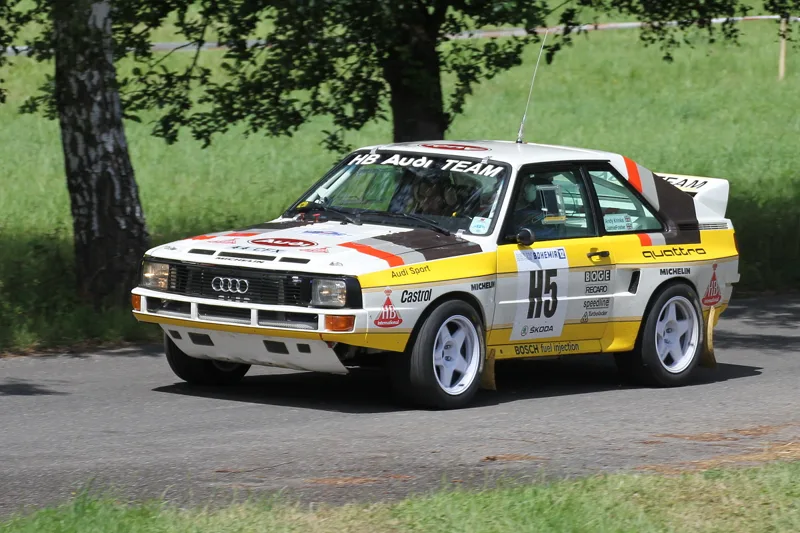
Audi planned a speed-record promotion in the United States because its rally successes had drawn little attention there, and used modified 200 C3 cars for it. The Talladega car set an all-wheel-drive record in March 1986, and three Nardo cars were built in 1987 for sustained speed records in Italy.
For the Talladega attempt, several 200 C3 cars were altered in 1985 and given name plates from the American Audi 5000 CS Turbo quattro. They had a 2.2-litre 25-valve five-cylinder engine producing 650 PS (478 kW; 641 hp), a partly aluminium body and aerodynamic changes.
The Talladega car had a 2.2-litre five-cylinder with 25 valves, a maximum boost pressure of 3 bar, a kerb weight of 1,072 kg (2,363 lb) and a drag coefficient of 0.33, with a top speed of about 330 km/h (205 mph).
Bobby Unser took an all-wheel-drive speed record at Talladega Speedway on 24 March 1986. He covered the oval in 46 seconds, an average of 322 km/h (200 mph).
The Nardo cars ran on a 12.6 km test track in southern Italy, aiming for sustained top-speed world records. Each weighed about 1,500 kg with fluids, including 340 litres of petrol. A high-performance braking system and a quick-refuelling system were fitted to cut time at stops.
The Nardo cars were lightened further, with aluminium doors and plastic wings, and their exterior mirrors were omitted. Their engines had titanium connecting rods and gave 650 PS at 6,100 rpm, with boost pressure up to 3 bar.
A change of oil and driver with refuelling took 25 seconds. The first record attempts came in April 1988, with speeds above 345 km/h (214 mph).
The Nardo runs produced several sustained records: an average of 324.509 km/h over 500 miles, 326.403 km/h over 1000 km, and 358.923 km/h, set in South Africa in 1988 by one of the cars.
What happened to the Audi 200 after production ended?
Type 44 was the last Audi 200 offered in Germany, and its production ended in mid-1991. Up to 1991 Audi built 94,000 units of the second generation. As of 1 January 2015 the KBA still reported at least 521 vehicles registered with the Type 200 C3 key numbers.
In China the Audi 200 L, a longer version made for that market, was offered from February 1996 by FAW-Volkswagen. Its production was discontinued in summer 1999.
Which films and series featured the Audi 200?
Audi placed the 200 in product placement deals. In the ZDF series Die Schwarzwaldklinik the head doctor, Prof. Dr. Brinkmann, was seen in an Audi 200, and the 1987 James Bond film Der Hauch des Todes also featured one.
What was the Audi V8 and how did it sell?
The Audi V8 (Type 44/4C) arrived in autumn 1988 alongside the 200 as a separate upper-class model, with a 3.6-litre V8, quattro and an automatic gearbox. Sales stayed far below expectations, and production ended in mid-1994 when the Audi A8 replaced it.
Audi wanted to sell the V8 as a separate upper-class car, and it spent heavily on advertising to do so.
The V8 was originally meant to carry the name Audi 300 and cost more than the 200. Buyers still perceived it as an Audi 100, so rivals such as the Mercedes-Benz S-Class and the BMW 7 Series kept their lead. From mid-1992 a 4.2-litre V8 with 206 kW (280 PS; 276 hp) was available.
Specifications
| Specification | Detail |
|---|---|
| Launch | September 1983 |
| Engine (20V) | 2.2-litre turbocharged five-cylinder, four valves per cylinder, code 3B |
| Displacement (20V) | 2,226 cc (135.8 cu in) |
| Output (20V) | 220 PS (162 kW; 217 hp) at 5,700 rpm |
| Torque (20V) | 309 Nm (228 lb ft) at 1,950 rpm |
| Top speed (20V) | 242 km/h (150 mph) |
| 0 to 100 km/h (20V) | 6.6 seconds |
| Drag coefficient | 0.33 (Audi 100 C3: 0.30) |
| Tyres (20V) | 215/60 VR 15 on 7.5x15-inch rims |
| Production (20V) | 4,767 saloons; 1,616 Avant estates |