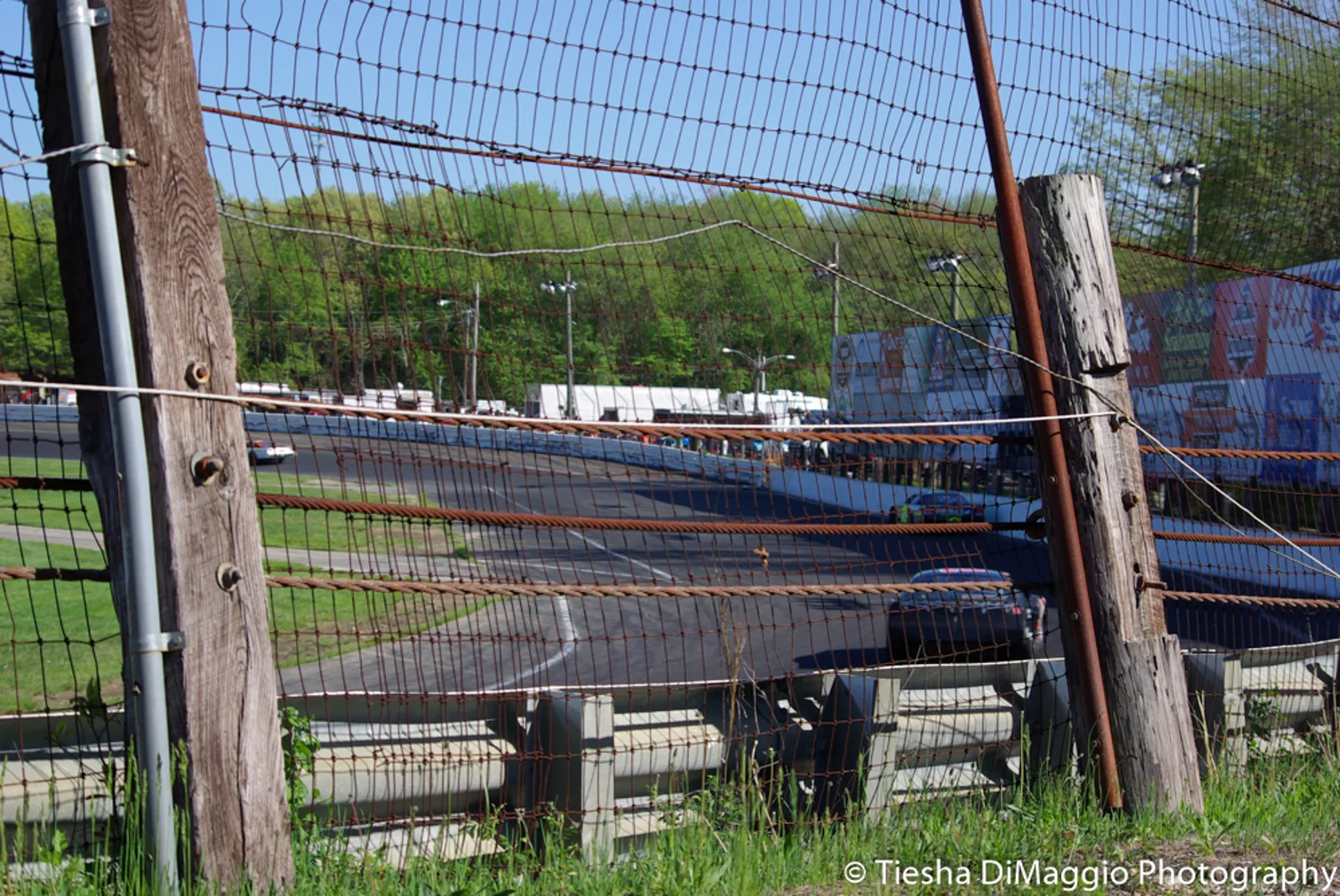
A 0.333 mi asphalt oval on U.S. Route 6 that has been run by one family since 1946 and still fills its grandstands every summer.
Seekonk Speedway is a 0.333 mi asphalt oval in Massachusetts, run by the Venditti family since 1946. Its Saturday NASCAR Whelen All-American Series racing is the main attraction, and Friday nights add lower-budget classes for younger and newer drivers.
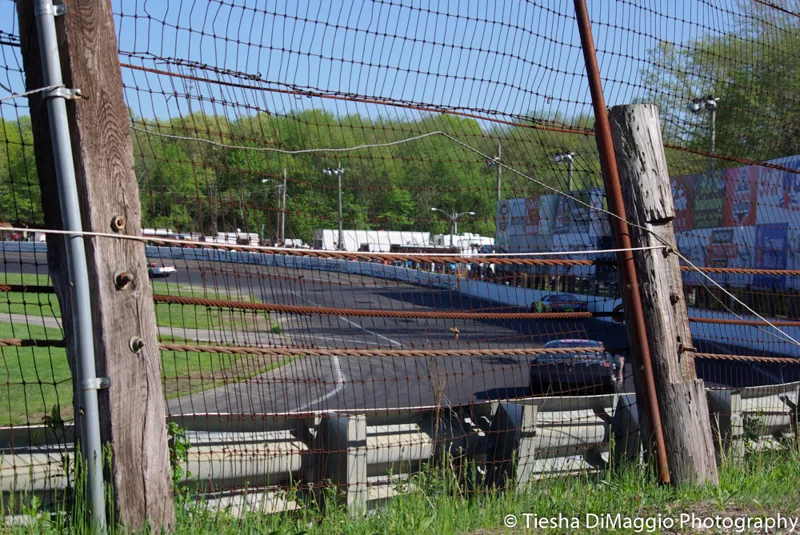
Seekonk Speedway is a family entertainment venue in Seekonk, Massachusetts, on U.S. Route 6, with racing of every kind on a semi-banked 0.333 mi (0.536 km) asphalt oval. The track claims to be the United States' longest-running family-owned speedway, operated by the Venditti family since it opened on 30 May 1946.
When and how did Seekonk Speedway open?
Dominic Anthony Venditti began building the track in 1945, during a post-war racing boom. It opened on 30 May 1946 as a paved oval of 0.250 mi (0.402 km), first laid out with midgets in mind, and stock car racing has been part of the program from the start.
Midgets and modifieds were the staples at first, and modifieds carried the track for nearly twenty years. Venditti used the speedway to promote his own ideas about American auto racing, and the speedway was once flooded for boat races inside its walls.
Seekonk grew to 0.333 mi (0.536 km) in 1980, and its 72 feet of width make it the broadest surface in New England.
One family, one oval, and a Saturday night that has kept Massachusetts racing since 1946.
How did the weekly divisions change over the years?
Modifieds and midgets dominated until 1987, when modifieds were phased out of weekly racing. Pro stocks replaced modifieds as the headline class in 1984, while late models, which began in 1960 as the charger class, have raced at the track ever since.
The late model class has used many names, including the cadet division, the charger class and late model sportsmen, before it settled back on late models in 2003. It was renamed late models in 1978, but it went back to cadet division the following year. In 2010 the rules were aligned with American Canadian Tour rules, so Seekonk late model drivers could race at any ACT event, and visiting ACT drivers could race at Seekonk.
The all-pro division, later the pro stocks, came from a visit by Venditti to the Midwest, where he saw a series he hoped would replace the modifieds. The speedway says it originated the super late model class, a claim that is widely disputed.
Street stock racing first ran in 1971, then returned from 1974 to 1980 and again from 1985, when it became a weekly staple. At the end of 2016 the street stocks were renamed sportsmen at the request of a new sponsor. Sport trucks joined the card in 1995 as a secondary division for Saturday nights.
| Division | Years | Notes |
|---|---|---|
| Modifieds | To 1987 | Track staple; phased out of weekly racing in 1987 |
| Midgets | To 1987 | Early identity of the track |
| Mini modifieds | 1982 to 1987 | Short-lived division |
| Pro stocks | 1984 onward | Headline class from 1984; began as the all-pro division in 1979 |
| Late models | 1960 onward | Began as the charger class |
| Street stocks | 1971; 1974 to 1980; 1985 onward | Renamed sportsmen at the end of 2016 |
| Sport trucks | 1995 onward | Secondary Saturday division |
How do Saturday night NASCAR races run?
Saturday racing starts at 6 PM Eastern under the Whelen All-American Series banner, and the weekly drivers compete for points on a national scale. Phil's Propane sponsors the Triple Crown Series, which runs 12 races a year, three per division. Caution flags do not count toward the race total, except during touring events.
Racing is split into heats and features. Each heat pays points to its top five, with 5 for a win and 4 for second. Heats are 10 laps for sport trucks, sportsmen and late models, but 12 laps for pro stocks.
Feature lengths vary by division. Sport trucks and sportsmen run 25-lap features, rising to 35 laps in Triple Crown races. Late models run 30 laps, or 50 in Triple Crown races, and pro stocks run 40 laps, or 65 in Triple Crown races. The first Triple Crown race each year is 75 laps, in memory of Brad Scott.
Everett's Auto Parts sponsors victory lane and also backs the late model division.
During touring races the series sets caution laps that count toward the race total. Weekly competitors therefore fight their point battles against drivers from tracks across the country.
What cars run in each NASCAR division?
The four NASCAR divisions run different chassis, engines and tyres. Pro stocks use 358 cubic inch crate engines of 400 to 450 horsepower, late models use similar crate engines at 350 to 370 horsepower, sportsmen run American stock chassis from 1970 to the late 1980s, and sport trucks use small-displacement engines.
| Division | Chassis and tyres | Engine |
|---|---|---|
| Pro stocks | Tube frame or straight rail on 10-inch slicks | 358 cubic inch crate, 400 to 450 horsepower |
| Late models | Tube frame on 8-inch slicks | 358 cubic inch crate, 350 to 370 horsepower |
| Sportsmen | Stock American chassis, 1970 to late 1980s, on 7-inch treaded slicks | 358 or 366 cubic inch, 300 to 350 horsepower |
| Sport trucks | Compact pickups, such as the Ranger, S-10, Sonoma, Frontier or Tacoma, on 7-inch treaded slicks | Four-cylinder or V8 |
Pro stocks use either a tube frame or a straight-rail chassis, wrapped in 10-inch American Racer slicks. Their 358 cubic inch crate engines come from General Motors and Ford. Minimum weights are set by engine type, with open engines carrying the heaviest rule and GM crate engines the lightest.
Late models use tube frame chassis on 8-inch slicks, with rules close to the American Canadian Tour. Bodies include Monte Carlo, Impala, Charger, Grand Prix, Taurus and Camry shells, all made of fibreglass with steel quarter panels.
Sportsmen may use almost any American car built between 1970 and the late 1980s, running treaded slicks of 7 inches. Their engines are 358 or 366 cubic inch units, and the rules check only the right-side weight.
Sport trucks run 25-lap races on 7-inch Hoosier treaded slicks, and their bodies must be steel sheet metal. Four-cylinder trucks are capped at 2,300, 2,400 or 2,500 cubic centimetres by make. V8 trucks may use a GM crate engine or one of three older blocks: a Chevrolet 305, a Ford 302 or a Dodge 318.
What is Open Wheel Wednesday?
Open Wheel Wednesday has been held once each summer since 2005, and it features NEMA lights and midgets alongside the Tri-Track Modified Series race. The Boston Louie Memorial, a NEMA race, is the headline event of the night. It is the only open-wheel night on the schedule.
The modified race is a 100-lap event worth $10,000 to the winner, and it is the feature of the night. Drivers who miss the main race run consolation heats, and the B-main pays $1,000 or the last starting spot. Positions 16 to 26 take $800 each.
The Tri-Track rulebook is close to the rules of two touring modified series, so competitors from those series can race with minimal changes. Doug Coby and Matt Hirschman are among the past winners.
NEMA heats run 10 laps, and engines range from 140 cubic inch DOHC inline fours to 195 cubic inch push-rod Mopar inline fours.
How does the Fast Friday program work?
The track throws open its gates each Friday in season, offering cheap racing for children and newcomers who are building experience for Saturday. Phil's Propane also sponsors three races a year for each division in the Triple Crown series, and a spectator drag series visits from time to time.
Seekonk Youth Racing Association races run 20 laps, while sport 4s, legends and pure stock races run 25 laps. The youth program is split into a 600 class for roughly ages 10 to 14 and a 750 class for ages 14 to 18, both using scaled-down Nextel Cup style bodies on Honda engines.
Bandoleros replaced the 750 division for the 2017 season. Sport 4s are close to showroom condition, with four-cylinder front-drive engines and changes made only for safety. Any front-wheel-drive, four-cylinder car built from 1980 to 2004 is eligible, and the class mainly teaches new drivers.
Legends cars run under INEX sanctioning, so Seekonk competitors can race at other INEX Legends events. The cars use sealed 1250cc Yamaha engines, which make about 132 horsepower. The class joined Fast Friday in 2012, and Nicks Pit Stop became its title sponsor in 2013.
Pure stock entries are rear-drive American V8 machines with only safety changes, limited to hardtops built between 1970 and 1992. Mustangs and two-seat cars are barred, and only stock transmissions are allowed. Crown Vic Cruisers debuted on Fast Fridays after appearing at the thrill shows during the 2025 season.
Thrill shows and crowds
On select Saturdays Seekonk hosts thrill shows to mark holidays such as Memorial Day. They usually include the spectator drag series, in which street-legal machines race a single lap, along with enduro cars, enduro trucks and sometimes monster trucks.
In recent years the track held demolition derbies twice a year, with up to 200 cars competing at once. Seekonk is also known for figure-eight racing, and its enduros of 50 laps can take up to 100 cars.
Other thrill-show events have included backwards races and trailer races, plus enduro drag contests.
Crowds of 15,000 have been drawn to these events, particularly on the Fourth of July and Labor Day.
Seating, pit passes and the paddock
Every seat gives a view of the whole track, because the facility has seating all round. Patrons can buy optional pit passes, which admit them to the paddock to meet drivers and look at their cars.
Who are Seekonk's notable alumni?
Former competitors include Ron Bouchard, Ken Bouchard, Richie Evans, Bugs Stevens, Dale Shaw, Reggie Ruggiero, Gio Ruggiero and Tyler Tomassi. Allen Bestwick, the former track announcer, is also listed among the notable alumni. The list covers drivers who raced at the track at different stages of its history.
George Summers and 'Radical' Rick Martin, both of Westport, Massachusetts, hold the track's most wins.
The track has recorded three deaths, all in 1947 within a three-month span. The track closed for the rest of that season after the death of Frank Facenda.