A Connecticut asphalt oval that has raced since 1951, survived ownership upheavals and produced some of the Northeast's most decorated Modified and Late Model drivers.
This Connecticut oval has run every season since 1951, when it opened on a crushed blue stone surface. Its featured division has been Modified stock car racing from the first year, and Keith Rocco won 12 Speedbowl championships by 2018.
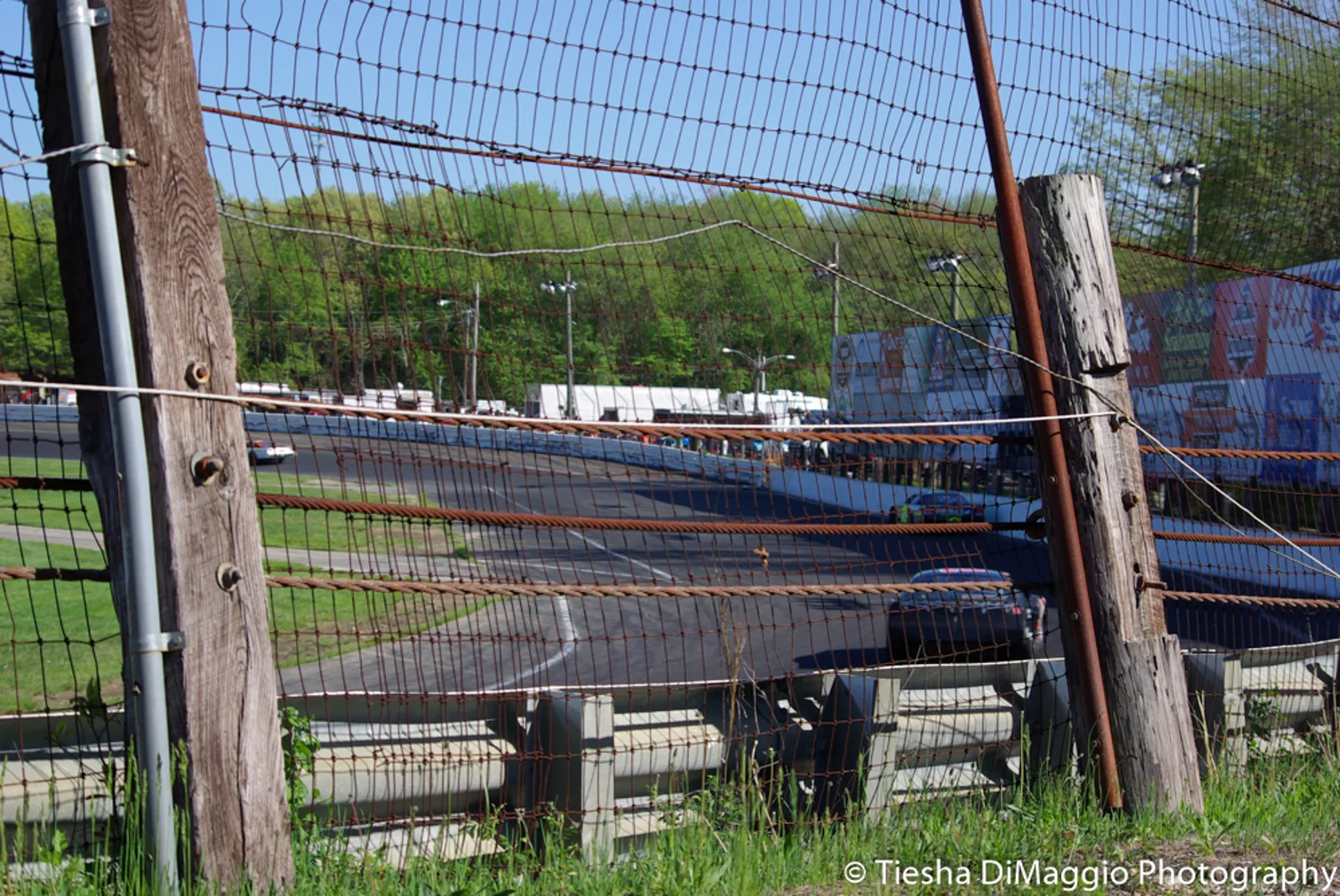
The New London-Waterford Speedbowl, a 3/8 mile asphalt oval on CT 85 in Waterford, Connecticut, sits just off Interstate 395. It has operated every season since it opened in 1951, and Modified stock car racing has been its featured division from the start.
When and how did the Speedbowl open?
The track opened on 15 April 1951 as a crushed blue stone oval one-third of a mile around. Dust from the green flag laps became such a nuisance to spectators that the speedway closed for about a month and reopened as asphalt, which is how it has run ever since.
The first event was won by Bob Swift, and the early cars were called Sportsmen Stock cars. The ownership group was made up of local businessmen, including brothers Fred and Frank Benvenuti, and Anthony Albino and Conrad Nassetta were among the partners, alongside William Hoffner and J. Lawrence Peters.
The first Race Director was John Whitehouse, who held the post through most of the original group's tenure. The first Modified champion was Dave Humphrey, a NEAR Hall of Famer who also took the title at Seekonk Speedway that same year.
A 1951 asphalt oval that has outlasted foreclosures, sanction changes and a 2014 auction.
How did the early racing calendar work?
Through the 1961 season the track ran events on Saturdays and Wednesdays, so each division could earn championship points twice a week. From 1962 the primary weekly divisions raced once a week on Saturdays, while separate divisions later filled other nights.
Fatal accidents shaped the early rules. Jack Griffin, aged 41, died in the early hours of 2 August 1954 after his car flipped about 10 times down the straightaway. It was the only fatality from a race incident at the track, and his cut-down style of car was banned from the Speedbowl and, in time, from tracks across the northeast.
Who owned the track through the 1960s and 1970s?
Jack Brouwer and Lou Esposito bought minority stakes about a year after the 1960 season. By the early 1970s the owners were Brouwer, Esposito, Don Benvenuti and Bob Albino, who held the majority, and the group sold the track after the 1974 season, ending a 24-year run.
Tattersall, Williams and the Yankee All-Star years
Harvey Tattersall Jr. bought the Speedbowl before the 1975 season. He had led the United Stock Car Racing Association and had once run Riverside Park Speedway, and he was one of the Northeast's leading promoters over two decades.
Tattersall renamed the supporting Late Model division the Grand Americans in 1975. He leased the Speedbowl to Dick Williams twice, and by 1983 Williams was focused solely on the Waterford Speedbowl. Ed Flemke joined as Chief Steward in 1983, the last position he held in auto racing.
The Yankee All-Star League held events at the Speedbowl between 1975 and 1978, with winners that included Geoff Bodine, Ron Bouchard, Ken Bouchard and Carl 'Bugsy' Stevens. NASCAR Hall of Famer Richie Evans raced there in those events but never won at the Speedbowl.
The Arute and Korteweg years
The Arute family, who owned Stafford Motor Speedway, leased the track from 1985 for three seasons. They switched the headline division from Modifieds to the SK Modified, a lower-budget car, and secured NASCAR sanction for the first time at the Speedbowl.
In 1988 the Korteweg family took over, led by George and his sons Dan and Wayne. They repaved the track, the only repaving of its racing surface, put in steel barriers and catch fencing, and created the Strictly Stocks, a beginner class of eight-cylinder stock cars.
Noise complaints from residents led to mandatory mufflers in 1991. That July, state budget cuts threatened the holiday weekend event until the Connecticut DMV agreed to send officials on the condition that the track paid them directly. The DMV has had no governing power over events there since.
Which drivers defined the track's champion era?
Phil Rondeau, Dennis Gada and Keith Rocco are the names most often linked with the Speedbowl's championship history. Rondeau won six Late Model titles, Gada won five straight SK Modified championships from 1999 to 2003, and Rocco won 12 titles across divisions by 2018.
Phil Rondeau of Baltic, Connecticut, won a record six Late Model championships in an eight-year span starting in 1985. He recorded more than 100 victories at the track during a career that lasted into the early 2000s.
Dennis Gada was the dominant SK Modified driver of the early 2000s, and the track's record for SK wins belongs to him with 62 career victories. His 2003 season also brought the Northeast Regional title in the NASCAR Dodge Weekly Racing Series.
Rocco won a NASCAR national title at the Speedbowl on 14 August 2010, and he was the first driver to win one while racing weekly at the track. In 2013 he became the first driver to win two track championships in two divisions, and he repeated the feat in 2014, 2016 and 2017.
Rocco's total reached 12 Speedbowl championships by 2018: seven in the SK Modifieds, four in the Late Models and one in the Street Stocks.
In 2012 the Speedbowl was the home track of three national champions. Ken Cassidy Jr. won his fourth Mini Stock title with a record 12-win season and also took the NASCAR Division III Asphalt national title. Matt Pappa, of New York, won 11 times at the Speedbowl that year and took the INEX Pro Asphalt title in the Legends Car class, while Dave Garbo Jr. won the Legends Car Semi-Pro national title.
How did ownership pass after 2006?
Washington Mutual began foreclosure proceedings against Terry Eames in 2006, but in July 2007 two Connecticut businessmen bought the mortgage note, and the refinancing was arranged with Eames directly. Jerry Robinson then leased operations for two seasons, and Eames took back control in 2009.
Eames formed a new board that year, with former competitor Tom Fox as Race Director. Fox resigned after the 2010 season, Scott Tapley took the role in 2011, Terry Eames ran it in 2013, and Patrick Williams took over in 2014. Foreclosure disputes dragged through the courts, and each season from 2006 ended with doubt over the facility's future.
Harvey Industries took eight of the track's 39 acres from Eames and put a distribution center on the northern edge of the parking lot.
What happened after the 2014 auction?
Bruce Bemer, a Glastonbury businessman, won the foreclosure auction on 18 October 2014 with a bid of $1.75 million, and his group said it would keep the site as a racetrack. The total debt behind the sale was over $2 million, so not every creditor was paid in full.
Shawn Monahan became general manager, and the track returned to its original name, The New London-Waterford Speedbowl. Scott Tapley came back as Race Director.
The later years were less settled. NASCAR withdrew its sanction for the Saturday divisions in 2017, and INEX pulled sanction for the Legend Cars and Bandoleros. George Whitney ran day-to-day operations until he ended his lease in September 2018, and Mike Serluca leased the track for the rest of that season.
The track did not open in 2019. Serluca resigned as general manager in July 2020, and the operators then announced a plan to open by August 2020.
How did the Speedbowl appear in national media?
The track featured in several high-profile productions. Funkmaster Flex staged a Spike TV race event there on 5 August 2004, drawing an estimated crowd of about 8,000. The race was among the most attended events in the facility's history, and a Discovery Channel show later covered a 2006 wreck.
The Funkmaster Flex Super Series Invitational featured 60 late model drivers and a purse billed at $100,000. Allen Coates took home $10,000 plus a vintage 1969 Camaro, with Woody Pitkat second and Phil Rondeau third.
NESN's Inside Line used footage from 25 June 2005, when Ted Christopher ran both the SK Modified and a NASCAR Whelen Modified Tour race. Discovery's Destroyed in Seconds later covered a Late Model wreck on 8 July 2006 in which Jay Lozyniak's car barrel-rolled down the front straight.
The race was red-checkered after 18 of 30 laps, and only five cars continued. Glenn Colvin, the best-placed car to avoid the wreck, was declared the winner.
Documentaries and web series
Tom 'Sid' DiMaggio, the track's historian, produced Sid's View, a weekly web series from 2010 to 2016 filmed from a fan's point of view with several cameras around the facility and on board cars. It won Best Social Media at the 2013 Speed51 awards.
Vault Productions also made a six-part documentary on the track's history. Parts 1 to 5 appeared between 2015 and 2019, and part six, covering 2005 to 2014, was still in production.
A 2011 film, 3 Weeks to Daytona, was shot partly in Connecticut and used the Speedbowl as one of its locations. Bret Stern wrote and directed it, and he said Saturday night racing at the track inspired the story.
Divisions and recent champions
Today the program covers the SK Modifieds, the Late Models, the SK Lights, the Street Stocks and the Mini Stocks, with Legend Cars racing sporadically on Saturdays. Wild N' Wacky Wednesday runs a mid-week summer series with Legends Cars, Bandoleros for drivers as young as six, Super-X cars and X-cars. Through the 2010s, visiting touring classes included ISMA Super Modifieds, Valenti Modifieds, NEMA Midgets, NETS trucks and Pro4 Modifieds.
| Division | Notes | 2021 champion |
|---|---|---|
| SK Modifieds | Headline weekly division | Todd Owen |
| Late Models | Saturday division | Jason Palmer |
| SK Light Modifieds | Modified class | Paul Charette |
| Street Stocks | Stock-car class | Doug Curry |
| Mini Stocks | Four-cylinder class | Tom Silva |
| Legend Cars (Saturday) | Sporadic Saturday class | John O'Sullivan |
| Legend Cars (Wednesday) | Wild N' Wacky Wednesday | Jacob Burns |
| X-cars (Wednesday) | Wild N' Wacky Wednesday | Chuck McDonald |
| Super X-cars (Wednesday) | Wild N' Wacky Wednesday | Eddie Ryan Jr. |
| Bandoleros (Wednesday) | Wild N' Wacky Wednesday | Joel Newcomb |