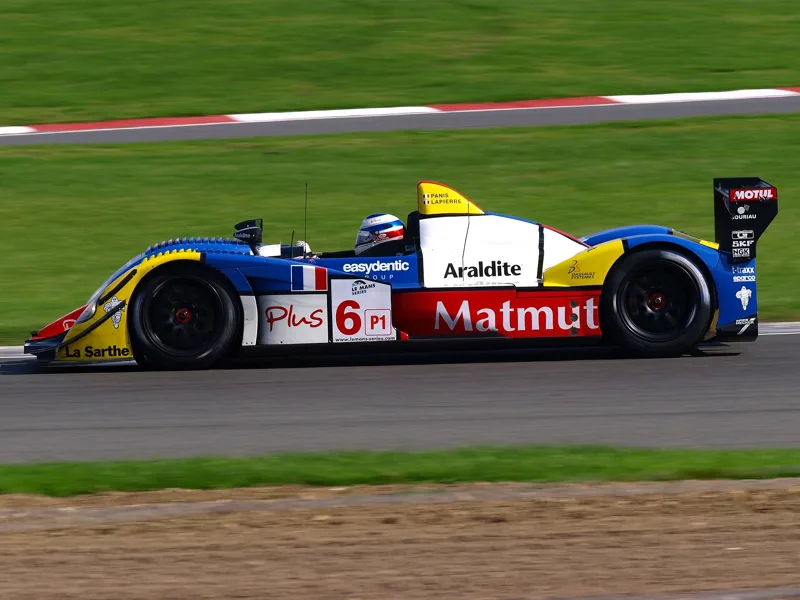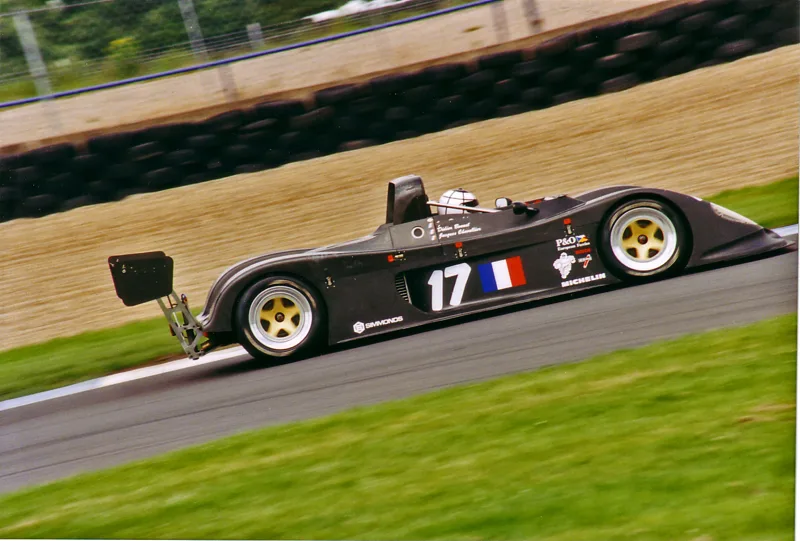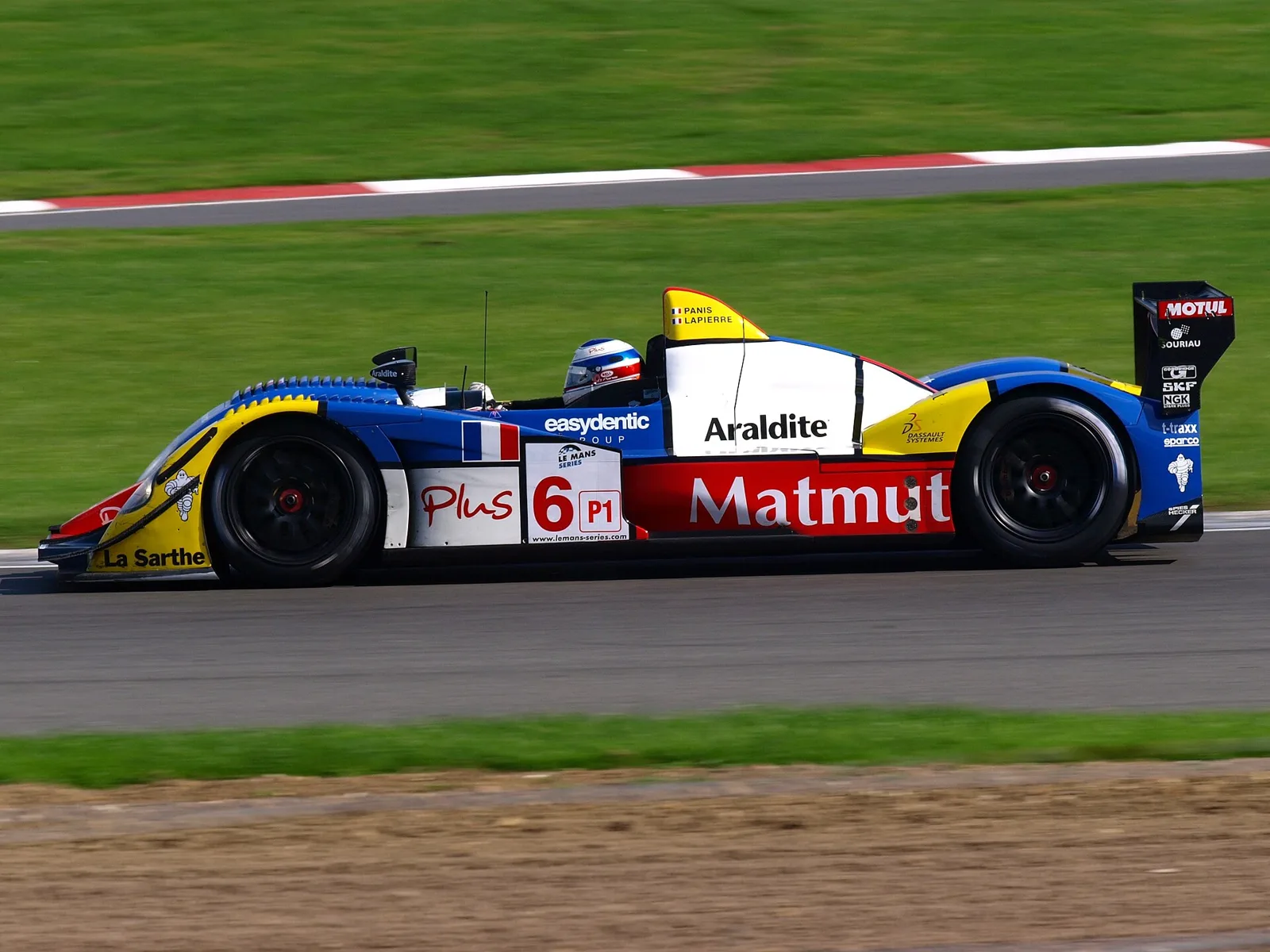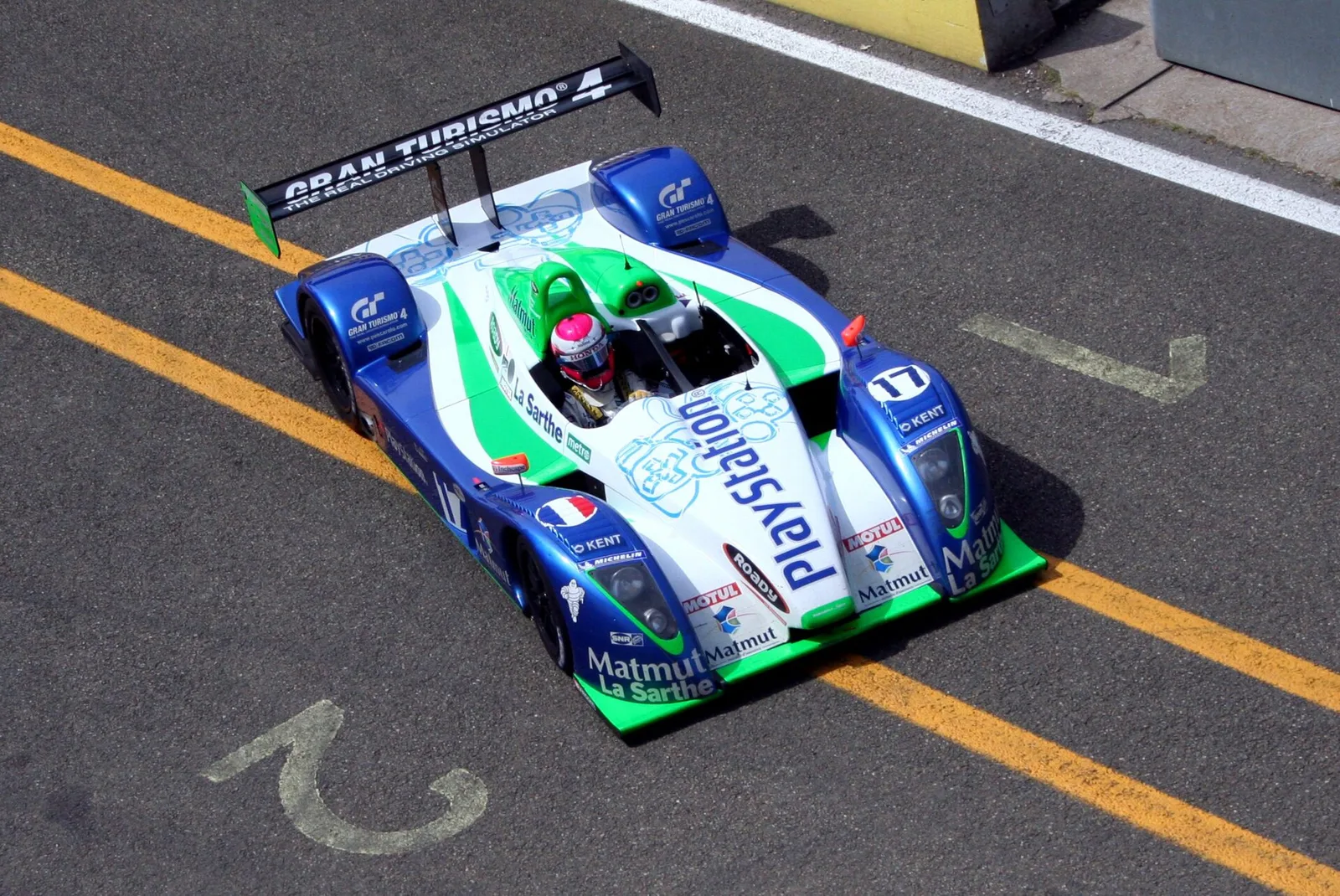
A clean-sheet design from Courage Competition with Judd and Peugeot power, the C60 raced across Europe and America and gave Pescarolo two Le Mans runner-up finishes.
Courage Competition built the C60 in 2000 as a clean-sheet Le Mans Prototype. With Judd V10 and Peugeot turbo V6 engines, it won Le Mans Series races for Pescarolo and finished second at Le Mans in 2005 and 2006.
Courage Competition built the C60 as a Le Mans Prototype in 2000, and the car raced in international events until 2006. It replaced the Courage C52 and was the company's first all-new prototype since the C41 of 1994.
Its engines changed across its life, from a Judd V10 to a Peugeot turbo V6 and back to Judd power. The most successful versions were the Peugeot-engined cars run by Pescarolo Sport, which produced the team's Le Mans results and its championship success.
What was the C60 designed to replace?
The C60 was a clean-sheet replacement for the Courage C52, designed by Paolo Catone, who had also designed the earlier car. It used a carbon fibre and aluminium honeycomb monocoque, with double wishbones, pushrod suspension and horizontally located dynamic dampers.
The car was the first all-new Courage design since the C41 was introduced in 1994. Rather than updating an existing chassis, the team started again, so the C60 carried its own design logic from the start.
Because Catone had worked on the C52, the new car kept a familiar approach to the layout and suspension, even though the chassis was entirely new.
A clean-sheet Courage design that spent its life between Judd V10s and a Peugeot turbo V6, ending with two Le Mans runner-up finishes for Pescarolo.
Which engines did the C60 use?
SMG Competition was the first team to run the C60, using a 4-litre naturally aspirated Judd GV4 V10. From 2001 Pescarolo Sport fitted a 3.2-litre V6 with twin turbochargers, developed by Sodemo as the Peugeot A32, and the team claimed 550 hp (410 kW; 558 PS) for it.
In 2002 Andre de Cortanze redeveloped the car into the C60 Evo, which had an unusual brake duct system at the front and redesigned rear wing endplates. The Peugeot engine was then claimed to produce 580 hp (433 kW; 588 PS).
For 2003 the engine's air restrictors were reduced from 32.4 to 30.7 mm. That change cut the claimed output to 510 hp (380 kW; 517 PS).
In 2004 Pescarolo ran the car as the Pescarolo C60 with a 5-litre Judd GV5 V10, after Henri Pescarolo had further developed the design. For 2005 both teams created Hybrid versions of the C60 for the new LMP1 regulations, and Pescarolo's car kept the GV5, with a claimed 630 hp (470 kW; 639 PS).
The Courage version of the 2005 Hybrid used the smaller Judd GV4, which was claimed to produce 600 hp (447 kW; 608 PS). That car featured a noticeably different rear wing from the Pescarolo version, which was a visible sign of the two teams' separate development paths.
How did the C60 perform in 2000 and 2001?
The car first raced at the 2000 Silverstone 500 USA Challenge, where SMG Competition's Gary Formato and Philippe Gache took tenth place overall. The car then reached Le Mans that year, but suspension failure after 219 laps ended the team's race.
In 2001 Pescarolo Sport replaced its C52s with the C60, and its first race with the new car was the 12 Hours of Sebring. Engine problems ended that race, and the team finished 25th overall and seventh in class.
The Donington Park round of 2001 gave Jean-Christophe Boullion and Laurent Redon fourth place, the best result by a non-Audi entry at that event. Later that year, the C60 scored its first ever victory at the Estoril 1000 km, a result that followed an initial disqualification for ignoring blue flags.
Boullion and Redon then followed the Estoril success with another win at the Magny-Cours race. In the American Le Mans Series Courage ended the season sixth, while the FIA Sportscar Championship gave it fifth and the European Le Mans Series third.
At Le Mans in 2001 three C60s started. Only the Boullion, Bourdais and Redon car finished, in 13th place overall, while the other Pescarolo car crashed out and SMG's car suffered engine problems.
What happened to the C60 in 2002 and 2003?
In 2002 Courage ran a factory team again with a Judd-engined C60, while Pescarolo kept its Peugeot-engined car. Boullion and Sebastien Bourdais won at Catalunya for Pescarolo, and the team later took the season's final victory at Spa.
At Le Mans in 2002 three C60s were entered. Pescarolo's car finished tenth overall and ninth in class, while Courage's car finished 15th overall and 11th in class.
On 97 points, Courage finished 2002 level with Dome in the SR1 standings. Dome took the title because it had won one more race, which meant Courage ended the season as the runner-up.
Pescarolo opened 2003 with a win at Estoril, with Boullion partnering Stephane Sarrazin. At Le Mans the year brought three C60s, which finished seventh, eighth and ninth, and Pescarolo's win at Nogaro helped Courage finish second in the SR1 standings.
A non-championship 1000 km at Le Mans closed the season, and Sarrazin, Lagorce and Bourdais finished second in it. That result came at the end of a demanding 2003 for the car.
How did the Pescarolo years play out?
In 2004 Pescarolo Sport was the only team to use the C60, which it ran as the Pescarolo C60. Its first race came at the 1000 km of Monza, part of the new Le Mans Endurance Series, and at Le Mans that year Ayari, Comas and Treluyer finished fourth overall.
The 2005 season was Pescarolo's best. Collard and Boullion won the Monza race, and at Le Mans Collard, Boullion and Comas took second overall, while Courage's version of the Hybrid placed eighth.
Pescarolo also won the 1000 km of Istanbul at the end of 2005, which gave the team its first ever team championship. That result came after a season in which Courage finished seventh in the team standings.
In 2006 Pescarolo was the only team running the C60 in the Le Mans Series. Montagny, Helary and Loeb finished second at Le Mans, beating one of the brand-new Audi R10 TDIs, while the team's second entry ended fifth overall, with fourth place in the LMP1 class results.
Pescarolo won the Nurburgring, Donington and Jarama rounds in the final part of 2006, and the team retained the LMP1 team championship with the maximum score possible. The C60 was then made obsolete by the 2007 LMP1 regulations.
How was the C60 replaced?
Courage introduced the Catone-designed LC70 in 2006 as the C60's replacement. Pescarolo replaced its C60 with the Pescarolo 01 for 2007, which ended the car's run in top-level sports prototype racing.
What were the Courage C60 specifications?
| Specification | Detail |
|---|---|
| Constructor | Courage Competition |
| Designer | Paolo Catone |
| Chassis | Carbon fibre and aluminium honeycomb monocoque |
| Suspension | Double wishbones, pushrods, horizontally located dynamic dampers |
| Initial engine | 4-litre naturally aspirated Judd GV4 V10 (SMG Competition, 2000) |
| Peugeot engine | 3.2-litre twin-turbo Sodemo Peugeot A32 V6, 550 hp (410 kW; 558 PS) claimed |
| C60 Evo | 580 hp (433 kW; 588 PS) claimed for 2002 |
| Pescarolo 2004 | 5-litre Judd GV5 V10 |
| 2005 Hybrid | Pescarolo 630 hp (470 kW; 639 PS); Courage 600 hp (447 kW; 608 PS) |
| Years in service | 2000 to 2006 |
| Best Le Mans result | Second overall, 2005 and 2006 (Pescarolo) |
| Successors | Courage LC70 (2006); Pescarolo 01 (2007) |
What were the C60's best results?
The C60's best results came in the Pescarolo years, when the car took a run of Le Mans Series and sports car wins. Its strongest season was 2006, when the team finished the year with a clean sweep of its final rounds.
- 2001: first victory at the Estoril 1000 km, then Magny-Cours
- 2002: Catalunya win for Boullion and Bourdais, then the final Spa victory
- 2003: Estoril and Nogaro wins for Pescarolo
- 2005: Monza and Istanbul wins for Pescarolo, plus second at Le Mans
- 2006: Nurburgring, Donington and Jarama wins, plus second at Le Mans
Did Courage win a team title with the C60?
Courage did not win a team title with the C60. The company finished second in the SR1 constructors' championship in 2003, and it was seventh in the 2005 team standings, while Pescarolo collected the team titles.