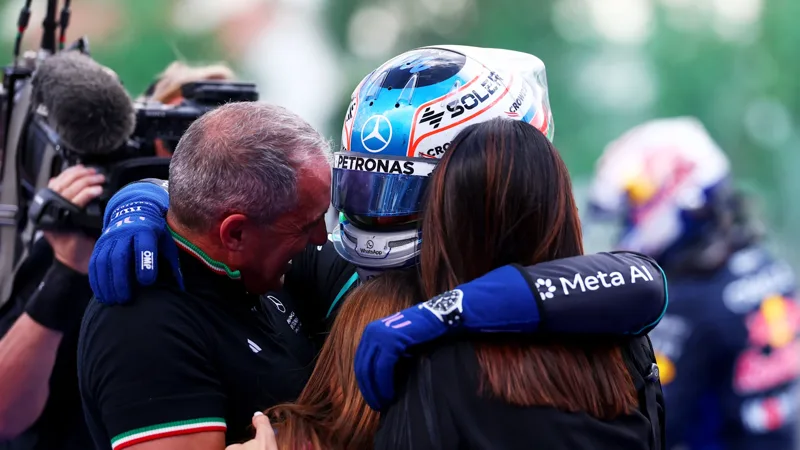
Kimi Antonelli converted pole into a sixth win of 2026 after George Russell's first-lap retirement, with Hamilton's penalty and two virtual safety cars shaping the afternoon.
Antonelli won the 2026 Belgian Grand Prix at Spa-Francorchamps on 19 July after starting from pole. Leclerc finished just under two seconds behind in second, Verstappen took third, and Antonelli's victory lifted him to a 45-point lead over Hamilton.
Kimi Antonelli won the 2026 Belgian Grand Prix from pole position, his sixth victory of the season and of his Formula One career. George Russell retired after an opening-lap collision with Lewis Hamilton, and the afternoon was then shaped by two virtual safety cars that changed the pit strategy. Antonelli's win extended his championship lead to 45 points over Hamilton.
What was the background to the Belgian Grand Prix?
The race was held at the Circuit de Spa-Francorchamps for the 59th time, across the weekend of 17 to 19 July. It was the tenth round of the 2026 season and the 71st running of the Belgian Grand Prix as a world championship round.
Antonelli led the drivers' standings with 179 points, 25 ahead of his teammate Russell and 32 ahead of Hamilton. Mercedes led the constructors with 333 points, ahead of Ferrari on 255 and McLaren on 179.
Pirelli brought its C2, C3 and C4 compounds, designated hard, medium and soft. Fernando Alonso was replaced in the first practice session by Jak Crawford, who had not raced in more than two Grands Prix, as the regulations require when a driver is substituted.
A pole, a sixth win and a 45-point lead made Spa the afternoon Antonelli took firm control of the 2026 title race.
How did practice unfold at Spa?
Three free practice sessions were held. Verstappen topped the first session on 17 July, while Antonelli was fastest in the second session that same day and again in the third on 18 July. Norris and Verstappen followed Antonelli in both of those later sessions.
The third session ended badly for Hamilton, who crashed near the end at Les Fagnes and broke his right-rear suspension. Ferrari repaired the car in time for qualifying, although the suspension, floor and rear assembly all needed work.
The grid was also complicated by power unit penalties. Norris, Hadjar, Stroll and Alonso were all due to receive grid drops for exceeding their permitted allocations of components, and Sainz was later added to that list with a ten-place penalty.
How did qualifying set the grid?
Qualifying was held in dry conditions on 18 July, and Antonelli arrived as the favourite after his practice pace. Mercedes had taken pole at each of the opening nine rounds, so the team's record was on the line as the cars went out.
In the first segment Perez set the first representative time, and Verstappen then led the session before Norris went fastest. Colapinto escaped elimination in thirteenth, while Albon dropped to seventeenth, his sixth first-segment exit in ten events. Ocon was eliminated in eighteenth, behind Bottas, Perez and the two Aston Martin drivers.
The second segment began with a queue of cars on the track. Colapinto set the first benchmark before Antonelli moved to the top. Lindblad placed sixth after the first runs, and Bortoleto secured the final place for Q3 ahead of Lawson, who was eliminated in eleventh. Hulkenberg was stopped on the circuit with a hydraulic leak, which delayed the start of the third segment.
In the final segment Hadjar used his own pace to slipstream Verstappen through the last sector, and Verstappen initially moved to the top. Antonelli then went quickest, and the session was red-flagged after Piastri ran through the gravel at Stavelot and left debris on the racing line. When the cars returned, Antonelli improved in all three sectors to beat Verstappen, while Norris ran through the gravel at turn thirteen and abandoned his final run.
Antonelli took his sixth pole of the season, with Verstappen second and Russell third after the penalties were applied. Leclerc was fourth on the grid and Hamilton fifth, while Piastri and Lindblad moved up behind them. Stroll had qualified last but was placed twentieth on the provisional grid, because the larger penalties for Hadjar and Alonso were applied to them.
What happened at the start?
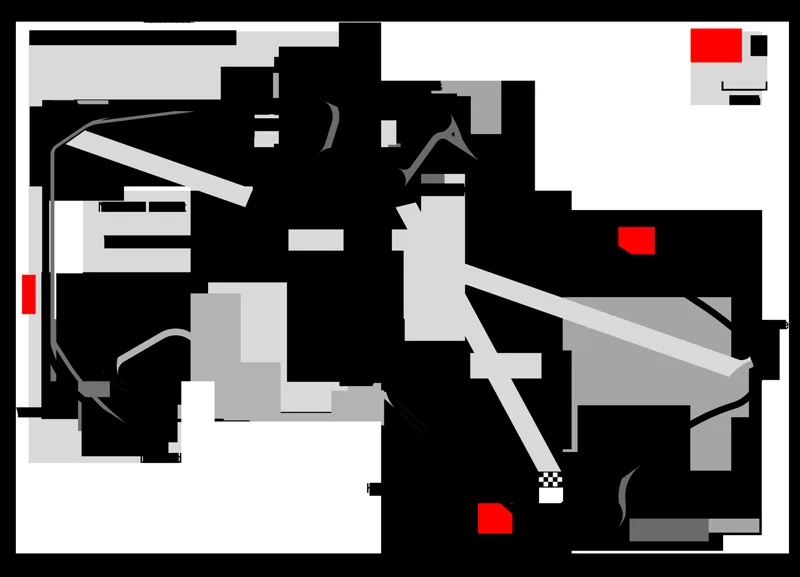
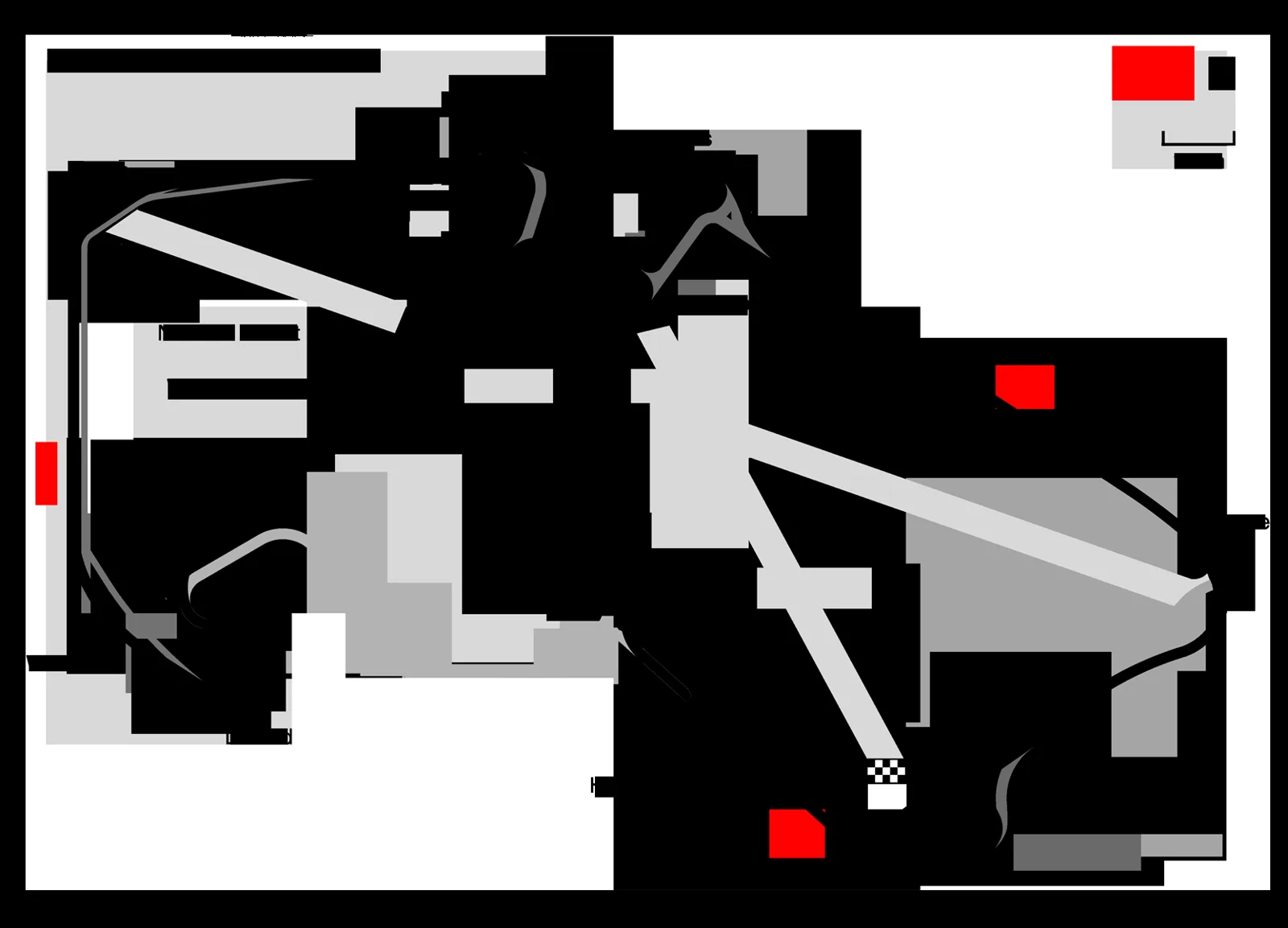
Antonelli led away from pole with Verstappen alongside, but Verstappen had the better run towards Eau Rouge and briefly moved ahead. Antonelli used the slipstream and the straight-line speed of his Mercedes to regain first along the Kemmel Straight, while Leclerc also passed Verstappen for second.
Russell lost electrical deployment after La Source and was passed by both Ferrari drivers. He tried to recover a place from Hamilton around the outside at Les Combes, but Hamilton understeered into him. Their wheels touched, Russell spun into the gravel, and the safety car came out on lap two.
The stewards decided that Russell had established enough overlap and remained within the available racing room. Hamilton was judged wholly responsible, but the stewards noted his loss of front-end grip and his attempt to avoid contact. He was given a five-second penalty rather than the standard ten, with no penalty points.
Ocon was also caught up in the opening lap, making contact with Sainz and then Bearman and suffering a front-left puncture that dropped him to the back of the field. Several cars pitted under the safety car, including Hadjar, who had started twenty-first on hard tyres and was cycled onto mediums and then back onto hards by Red Bull.
How did the middle of the race unfold?
Racing resumed at the start of lap five, with Antonelli accelerating early and keeping the lead ahead of Leclerc and Verstappen. Hamilton passed Piastri at La Source, but Piastri took fourth back through Eau Rouge and Raidillon. Verstappen used the tow down the Kemmel Straight to pass Leclerc for second at Les Combes on lap six.
Piastri then tried to pass Leclerc around the outside at Les Combes on lap eight. The two cars touched as Leclerc moved towards the racing line, and the contact dislodged a piece of bodywork from the McLaren. The stewards took no action, ruling that Piastri had no realistic chance of completing the move from the outside and that Leclerc had simply followed the normal line.
Norris used the durability of his hard tyres to climb from thirteenth to seventh by lap eleven, and he went past Lindblad for sixth shortly afterwards. Perez retired on lap fourteen after a suspension failure, and Sainz made an early stop for a new front wing after the damage he took in the opening-lap contact with Ocon.
Verstappen was the first leader to stop, switching from mediums to hards. A brief virtual safety car followed for debris, which ended before Antonelli could take advantage. Mercedes brought Antonelli in on the next lap to cover Verstappen's strategy, and he rejoined fifth but kept the net lead over Verstappen.
A second virtual safety car came out around lap twenty while marshals were on the track. Ferrari used it to pit both of its drivers. Leclerc's quick stop let him rejoin ahead of Antonelli, but Hamilton was released early while a mechanic was still beside his front-right corner. The wheel made low-speed contact with the mechanic, who was uninjured, and the premature release stopped Ferrari from completing the front-wing change Hamilton had asked for. The incident was referred for a post-race investigation.
Who led the race and when did the lead change?
Norris had not yet stopped and led at the halfway point, from Leclerc, Antonelli, Verstappen, Piastri and Hamilton. Leclerc passed him along the Kemmel Straight on lap 23, and Antonelli initially lost time behind the McLaren before passing it three laps later. Verstappen, struggling for grip on his hards, moved past Norris into third on lap 29.
Norris kept his opening hards until lap 31, since the second virtual safety car had arrived before mediums could comfortably last to the flag. His stop was then delayed by a left-rear wheel problem, which dropped him to eighth before he passed Bortoleto for seventh. Piastri closed on his teammate, so McLaren told both drivers not to lose time battling one another.
Leclerc had about a three-second lead over Antonelli early on, but he found his front axle short of grip on the hards and complained of harsh downshifts. Antonelli caught him on lap 33, and traffic involving Bottas reduced Leclerc's advantage further. On lap 34 Antonelli pulled alongside Leclerc on the Kemmel Straight and took the lead back, helped by his car's top speed.
Leclerc stayed within about a second for several laps and kept up the pressure, but he could not find a way past. Mercedes warned Antonelli that he had already exceeded the track limits twice, so he had to avoid another infringement over the closing laps. He did so, and his sixth win of the season was confirmed at the flag.
How did the final order settle?
| Position | Driver | Team | Note |
|---|---|---|---|
| First | Kimi Antonelli | Mercedes | Pole, win and sixth win of 2026 |
| Second | Charles Leclerc | Ferrari | Pressure through the closing laps |
| Third | Max Verstappen | Red Bull | Lacked grip on hard tyres late on |
| Fourth | Lewis Hamilton | Ferrari | Five-second penalty served, passed Piastri |
| Fifth | Oscar Piastri | McLaren | Held off the closing pack |
| Sixth | Isack Hadjar | Red Bull | Three-stop strategy from twenty-first on the grid |
| Seventh | Lando Norris | McLaren | Set the fastest lap on the final lap |
| Eighth | Gabriel Bortoleto | Audi | Passed by Norris, held off Lindblad |
| Ninth | Arvid Lindblad | Racing Bulls | Points finish |
| Tenth | Franco Colapinto | Alpine | Final point after a three-way fight |
Antonelli led the top ten, with Leclerc and Verstappen on the podium behind him. Ferrari had two cars in the top four, while McLaren and Red Bull shared the points in the middle of the order. The final point was decided by a three-way battle, which Colapinto won on the Kemmel Straight.
How did Russell's retirement affect the title race?
Russell retired after the opening-lap collision, which left Antonelli 50 points ahead of him in the drivers' standings. Hamilton moved into second on 159 points, while Russell dropped to third on 154 points. Leclerc remained fourth on 126 points and Norris fifth on 103.
Russell said after the race that the electrical system had failed to recharge after La Source. His battery was approximately 35 per cent below its expected level by the top of Eau Rouge, and he had no usable deployment on the Kemmel Straight. He criticised the charging fault but did not blame Hamilton for the contact, which he regarded as a racing incident.
Mercedes retained the constructors' lead with 358 points, 73 ahead of Ferrari on 285. McLaren stayed third on 195 points and Red Bull fourth on 151, while Alpine and Racing Bulls were level on 61 points in the fight for fifth.