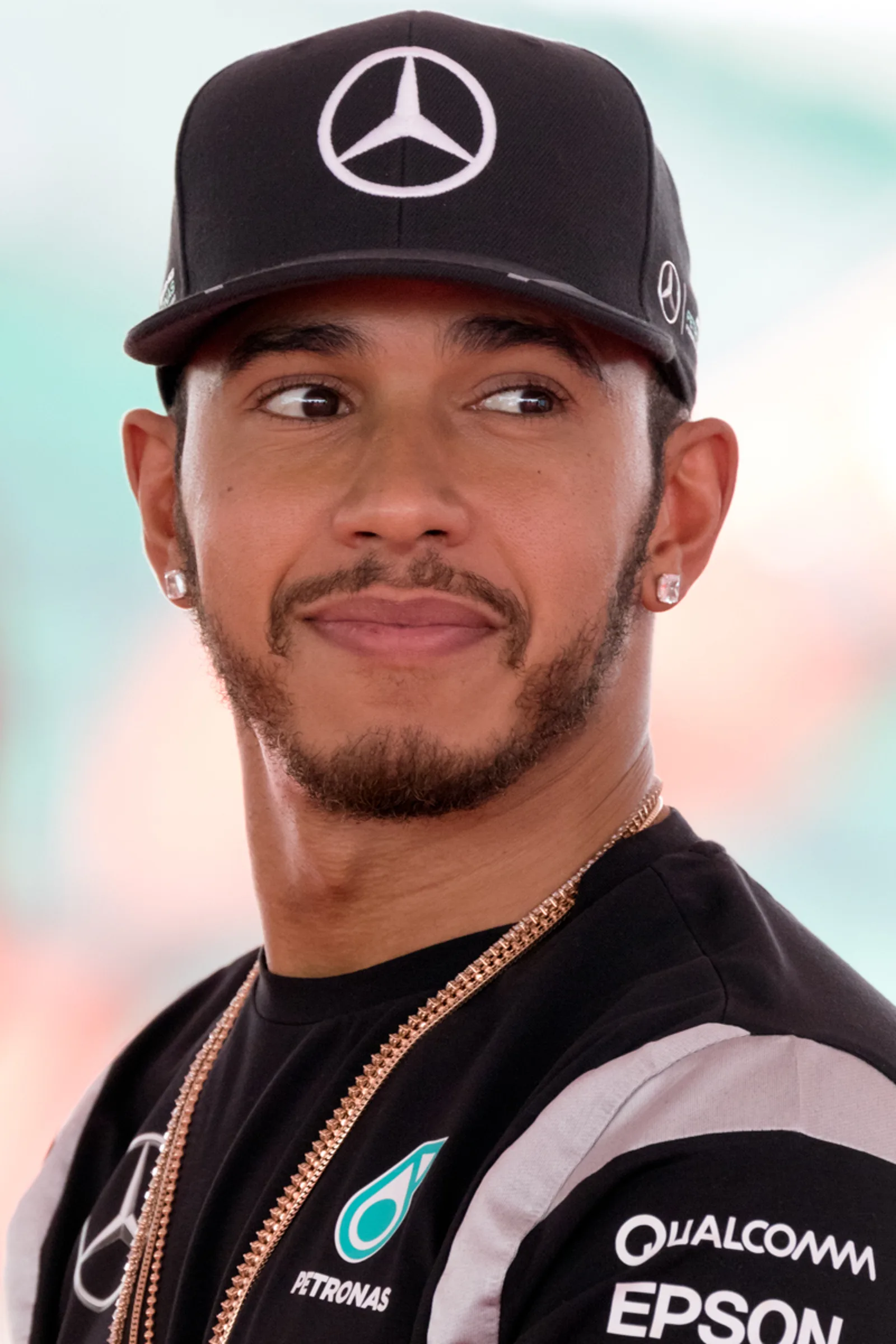

A season planned for 22 races ran to 17, started in July and gave Mercedes a seventh straight constructors' title, with the first eight rounds run behind closed doors.
The 2020 Formula One World Championship was disrupted by COVID-19, cutting the planned 22 races to 17. Lewis Hamilton won his seventh title, Mercedes took its seventh consecutive constructors' championship, and Ferrari finished outside the top five in the constructors' standings.
The 2020 Formula One World Championship was the 71st running of the title and the 70th anniversary of the first drivers' championship. Originally planned for 22 Grands Prix, it was reduced to 17 races, starting in July at the Red Bull Ring and ending in December at Abu Dhabi.
Why did the 2020 season start so late?
The COVID-19 pandemic pushed the season's start from March to July. McLaren withdrew from the Australian Grand Prix three days before it was due after a team member tested positive, and the race was cancelled altogether the following morning. Azerbaijan's postponement came days after Monaco's cancellation.
The Dutch, Spanish and Monaco Grands Prix were postponed in March, and Monaco was in effect cancelled. The Monaco cancellation was the first gap in the race's history since 1954, and Azerbaijan's race was postponed days later.
The annual shutdown, when factories closed for a fortnight, moved from August into March and April. Competitors were then given nine weeks off, and power unit makers seven.
A season that began in July with closed doors finished with Mercedes on top again.
How was the rescheduled calendar built?
The rescheduled calendar had 17 races, nine from the original 2020 calendar and eight new additions, while 13 original races were cancelled. Teams agreed the season could run into early 2021, so that eight Grands Prix could be held across three continents, the minimum for a championship.
The opening rounds were held at the Red Bull Ring, and the Styrian and 70th Anniversary Grands Prix were named as one-off events at Spielberg and Silverstone. The Eifel and Emilia Romagna Grands Prix returned to the calendar in late July, and the Portuguese Grand Prix came back for the first time since 1996.
Bahrain hosted two races, and the outer circuit at Sakhir was used for the second. Those races were added to the schedule in August, along with the first Turkish Grand Prix since 2011, which brought the calendar to 17 events.
Which races were cancelled or postponed?
Azerbaijan, Singapore and Japan were cancelled in June, and Brazil, Canada, Mexico City and the United States were formally cancelled in July. Organisers of the Brazilian race disputed the decision, because they had not been consulted. The Dutch race had been cancelled in late May, and the Chinese race followed in August.
The Dutch race was dropped entirely in late May, since its organisers wanted to stage the revived event in 2021 with fans present. The Chinese race was scrapped in August, and the debut Vietnamese race fell away in October.
What new rules and protocols applied in 2020?
Teams were allowed an additional MGU-K compared with 2019, and drivers could earn Super Licence points from free practice if they completed 100 km without an infringement. The drivers' parade and the pre-race national anthem were dropped, and the number of team personnel allowed on the grid was limited.
Some technical rules were tightened. The final 50 mm of the front wing had to be free of metal, brake ducts had to be designed and built in-house, and the fuel allowed outside the tank fell from 2 litres to 250 millilitres.
Pirelli was required to give every team the same tyre allocation, and it had to announce compounds two weeks in advance instead of several weeks, which let it respond to calendar changes.
What were the protests about car legality?
Red Bull protested Mercedes' dual-axis steering before the Austrian Grand Prix, but the system was found legal for 2020 and was banned from 2021. Renault then protested Racing Point's brake ducts, claiming they had been copied from Mercedes' 2019 car.
The ruling found Racing Point had illegally copied the brake ducts, and it was penalised 15 Constructors' Championship points and fined 400,000 euros. Racing Point, Ferrari and Renault confirmed appeals, while Williams and McLaren pulled out. Renault later withdrew its appeal, and Racing Point and Ferrari did the same around the Italian Grand Prix.
| Protest | Target | Outcome |
|---|---|---|
| Red Bull, before Austria | Mercedes dual-axis steering | Found legal for 2020, banned for 2021 |
| Renault, after Styria | Racing Point brake ducts | Racing Point penalised 15 points and fined 400,000 euros |
Who won the early rounds?
Valtteri Bottas won the Austrian opener from pole, and Lewis Hamilton finished fourth after a five-second penalty for a collision with Alexander Albon. Hamilton then won the Styrian race, with Bottas and Verstappen behind him. That race was the first of the restarted season, and the second came at the same venue the next weekend.
Hamilton went on to win the Hungarian Grand Prix ahead of Verstappen. He also took the British Grand Prix despite his left-front tyre delaminating on the last lap, and Verstappen won the 70th Anniversary race for the first non-Mercedes victory of the year.
Hamilton won the Spanish round and then the Belgian Grand Prix, where he led every lap and finished eight seconds ahead of Bottas. Pierre Gasly won the Italian Grand Prix after a red flag, which gave AlphaTauri its first race victory.
What did pre-season testing and the early races look like?
Pre-season testing in Barcelona went ahead, and all teams and drivers completed six days of running. Ferrari and AlphaTauri were concerned about the spread of the virus, because Italy had been badly hit and their staff needed to leave a quarantine zone to reach host nations.
Ross Brawn, the sport's managing director, said races would be dropped if a team could not enter a host nation, though events could still run if a team chose to stay away. Bahrain's organisers announced a participants-only event, with no spectators.
How was the We Race As One campaign used?
That June the sport started a campaign called We Race As One, aimed at racism, inequality and the pandemic's effects. It used a rainbow logo in the colours of all ten teams, the hashtag WeRaceAsOne, and branding on vehicles including the safety car.
Several teams launched projects or fundraising in support, and the branding also appeared on signage around the circuits.
How did the Russian and Eifel races go?
At Russia Hamilton started from pole, but two five-second penalties for practice starts beyond the designated area sent him down to third. Bottas took the win, with Verstappen behind him in second. Those penalties cost him his place at the front of the field.
The Eifel Grand Prix was the first race at the Nurburgring since 2013. Bottas locked up at turn one on lap 13, Hamilton took the lead, and Daniel Ricciardo claimed his first Renault podium in third. Kimi Raikkonen also passed the record for most race starts.
Who replaced drivers who missed races in 2020?
Sergio Perez tested positive for COVID-19 before the British Grand Prix and was replaced for both the British and 70th Anniversary races by Nico Hulkenberg, who had raced for the team's predecessor Force India in earlier years. Hulkenberg had raced for Force India in 2012 and again from 2014 to 2016.
After Romain Grosjean's Bahrain crash, Haas moved test driver Pietro Fittipaldi into the car for his Sakhir debut. When Lewis Hamilton tested positive before Sakhir, George Russell took his seat at Mercedes, and Jack Aitken replaced Russell at Williams.
What did the Sakhir races bring to the championship?
Russell led for 59 laps at the Sakhir Grand Prix before a tyre mix-up by Mercedes took him out of contention. Hamilton returned for the season-ending Abu Dhabi Grand Prix after testing negative, and Russell went back to Williams. It was Russell's first race as a stand-in for Mercedes.
What did the Turkish Grand Prix bring?
Lance Stroll claimed his maiden pole position at the Turkish Grand Prix in rainy conditions. Hamilton won the race to equal Michael Schumacher's record of seven world titles, with Sergio Perez and Sebastian Vettel on the podium. It was his first pole in Formula One.
Vettel's third place in Turkey was his only podium of a difficult season for Ferrari, and it came from a race that rewarded the drivers who handled the wet conditions best.
What happened at the Austrian double-header?
The season opened with two races at the Red Bull Ring. In the Austrian Grand Prix Valtteri Bottas took pole, but Lewis Hamilton was handed a three-place grid penalty for failing to slow sufficiently under yellow flags, which promoted Max Verstappen to second.
The race featured three safety car periods and nine retirements, and Bottas won ahead of Charles Leclerc and Lando Norris. Hamilton finished fourth, having been hit with a five-second time penalty after tangling with Albon, who retired soon afterwards.
How did the Tuscan and Emilia Romagna races go?
The inaugural Tuscan Grand Prix at Mugello was Ferrari's 1000th Grand Prix start, and it ended in a Mercedes one-two. A collision at the second turn removed Verstappen and Gasly, a safety car period followed, and then a large pile-up on the pit straight brought out a red flag.
Hamilton won the Emilia Romagna race at Imola from Bottas and Daniel Ricciardo, who collected his second podium of the season. It was the first race at Imola since 2006, and Mercedes took its seventh consecutive constructors' title there.
What was the plan for the calendar before 2020?
Liberty Media bought the sport's commercial rights in January 2017 and planned to expand the calendar with destination races modelled on Singapore. The inaugural Vietnamese Grand Prix was the first new race under Liberty, with a provisional April 2020 date in Hanoi, before it was cancelled.
The Dutch Grand Prix was also due to return at Zandvoort, while a planned Mexican race was to be rebranded as the Mexico City Grand Prix before it too was cancelled.
What did Racing Point's penalty mean for the table?
Racing Point lost 15 Constructors' Championship points after the stewards' ruling, which was published between the British and 70th Anniversary Grands Prix. The team was also fined 400,000 euros, and it appealed the decision while trying to clear its name.
Which drivers came into the 2020 grid?
Esteban Ocon returned to Formula One after a year away, signing for Renault in place of Nico Hulkenberg. Robert Kubica left Williams at the end of 2019 to become a reserve driver at Alfa Romeo, and Nicholas Latifi, the 2019 Formula 2 runner-up, took Kubica's seat at Williams.
Scuderia AlphaTauri replaced Toro Rosso as the team's name, a change that took its name from Red Bull's AlphaTauri fashion brand.
Who drove in free practice during 2020?
Four drivers took part in free practice as test or third drivers across the season. Jack Aitken and Roy Nissany drove for Williams, Robert Kubica raced for Alfa Romeo at five Grands Prix, and Mick Schumacher took one session for Haas.
Schumacher and Callum Ilott were entered for the first practice session of the Eifel Grand Prix, driving for Alfa Romeo and Haas respectively. That session was cancelled because of bad weather.
How did the championship finish?
Hamilton's Turkish Grand Prix win gave him a seventh world title, matching Michael Schumacher's tally. Mercedes wrapped up its seventh straight constructors' crown at Imola, and at Portugal Hamilton had passed Schumacher's career total of 91 wins. That win came at Istanbul Park, the first Turkish race since 2011.
Sebastian Vettel had a difficult year with Ferrari. He finished thirteenth in the standings with 33 points and one podium, third in Turkey. Ferrari ended the constructors' year lower than fifth, its first such finish since 1980.
Hamilton's 11th victory of the year came at Bahrain, with Verstappen and Albon completing the podium. Romain Grosjean suffered burns to his hands in a crash at the start, which ended his season and his time with Haas.