Jean-Eric Vergne converted pole into a win in Chile, with Lotterer second, after a first-lap crash, a safety car and a seat belt row that followed the race.
On 3 February 2018 the fourth round of the 2017-18 Formula E Championship was held in Santiago, Chile. Jean-Eric Vergne of Techeetah won the 37-lap race from pole, Andre Lotterer took second and Sebastien Buemi finished third.
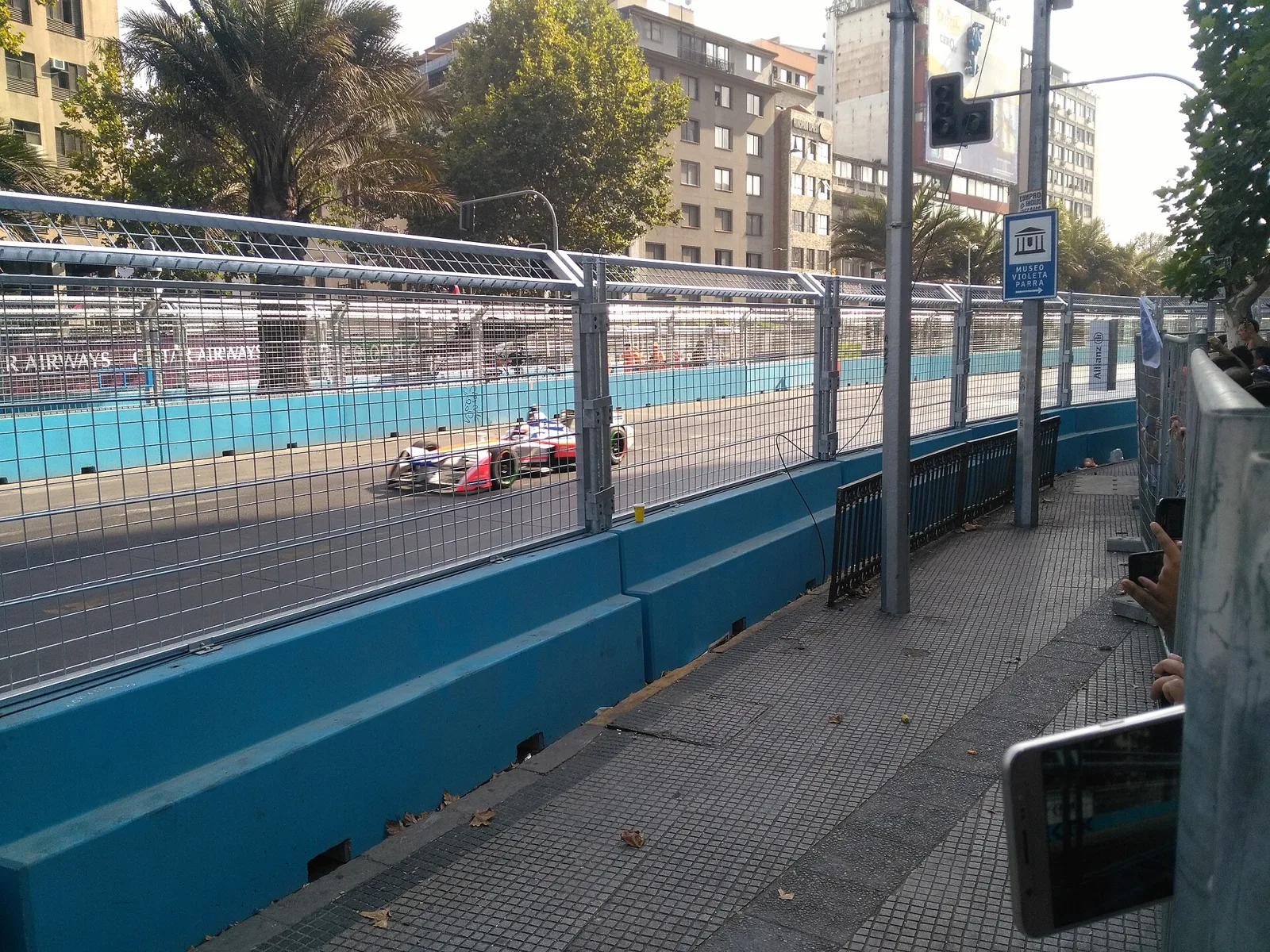
Jean-Eric Vergne started from pole at the 2018 Santiago ePrix and won it, giving Techeetah its first one-two in Formula E history with Andre Lotterer second. The race was held in the Chilean capital on a hot, sunny street circuit that was new to the championship.
Why did Santiago get a Formula E race?
Santiago joined the 2017-18 calendar after a diplomatic committee led by former driver Eliseo Salazar opened talks with Formula E chief Alejandro Agag in Buenos Aires in February 2017. The FIA confirmed the race that June. The race was added to the calendar three months after the FIA confirmed it.
The race was the fourth of twelve single-seater electric car rounds that season. Chile already had a motorsport history on its streets, including a non-championship Formula One race won by Juan Manuel Fangio in 1950, plus the Copa America and the Dakar Rally.
Coverage in the press called it the largest sporting occasion Chile had seen since the 1962 FIFA World Cup, and the organisers planned for 20,000 visitors. Ten teams with two drivers each, twenty competitors in total, were entered.
A pole sitter who saved energy late in the race, and a teammate in second, gave Techeetah its first one-two.
What changed in the rules for Santiago?
The minimum pit stop time, in place since the championship began in 2014, was discarded for Santiago. The FIA had deferred the ruling at Marrakesh three weeks earlier after teams raised concerns over safety. The FIA also allowed spotters, which gave drivers more guidance at the pit stops.
Chassis maker Spark Racing Technology designed an endurance-style seat belt to make the change safer, and some teams were given samples to practise with. The FIA also allowed spotters behind the pit wall and opposite each garage, guiding drivers into their correct stopping positions.
Someone holding a sign to direct a driver into the garage was allowed to step outside the boundaries of the pit box.
What was the Santiago circuit like?
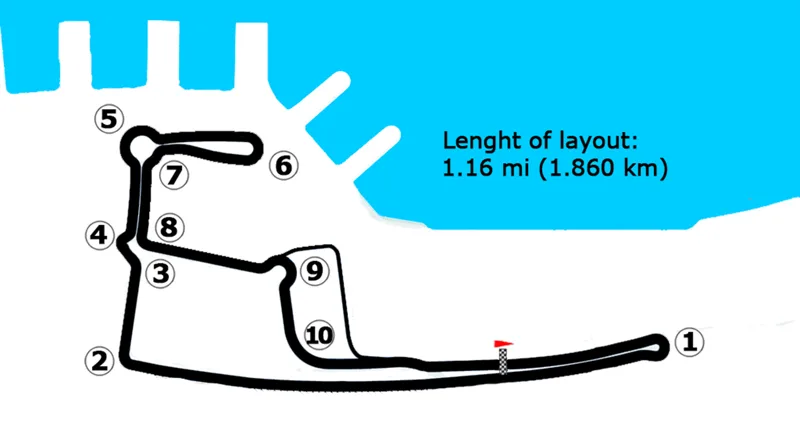
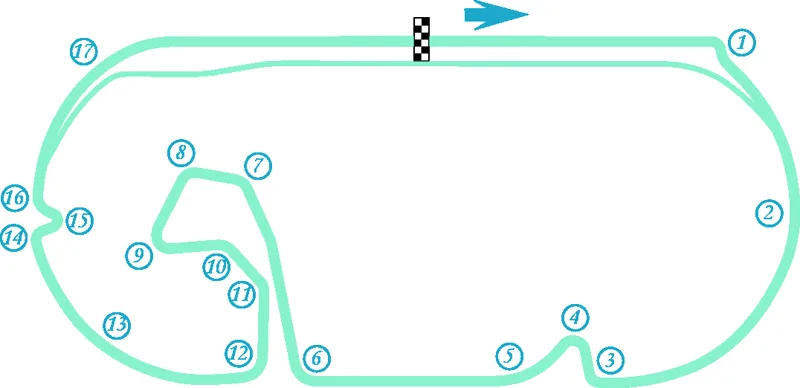
The Santiago track was 1.53 miles (2.46 km) long, with twelve turns in a clockwise loop. The lap began on Santa Maria Avenue, then crossed the Mapocho River and wound through Parque Forestal before rejoining the avenue. It was the first Formula E race ever held in Chile's capital.
Elsewhere, the layout was unveiled on 12 October 2017. Construction began on 22 January, twelve days before the race, and the track was finished on 2 February, a tight schedule for a street circuit of this length.
Stray dogs were a concern around Parque Forestal, so a local veterinary company was hired to feed them away from the circuit. Piquet expected the track to be technical, while the series manager at Michelin thought it would mix the character of Montreal and Berlin.
How did practice go in Santiago?
Practice ran in two sessions on the Saturday morning, lasting 45 minutes and half an hour, after a shakedown on the Friday afternoon. Bird set the fastest first-session time at 1 minute 19.439 seconds, and Vergne was quickest in the second at 1 minute 18.662 seconds, using 200 kW (270 hp).
The track had been cleaned overnight after drivers called the surface dirty and slippery. In the cold first session several drivers locked their tyres and ran wide, and Buemi lost the rear after leaving turn twelve, struck a tyre barrier and ended his session early.
Race director Scot Elkins stopped the first session with three minutes to go, after Maro Engel locked his brakes and understeered into the turn three barrier. Engel was unhurt. In the second session Prost went wide towards turn nine and hit the barrier, which ended that session five minutes early.
Lopez made light contact with the turn one wall in the second session, but he returned to the pit lane and switched into a second car, and the session carried on without further incident.
How did qualifying settle the grid?
Vergne took pole with 1 minute 19.161 seconds, his second pole of the season and the sixth of his career, and Buemi lined up beside him on the front row. Lotterer had set the fastest time in group qualifying at 1 minute 18.796 seconds, but his front wing broke on a bump at turn one during Super Pole.
Qualifying ran for an hour in four groups of five cars. The fastest five from those groups went into Super Pole, where one car at a time ran in reverse order from fifth to first. Di Grassi was the early pace-setter in group four, but he could not match that pace in Super Pole and finished third.
Two penalties reshuffled the order. Di Grassi lost ten grid slots after changing his inverter, while Prost lost two for going over the lap limit. Filippi started from the pit lane for tactical reasons after a poor qualifying session.
What happened at the start in Santiago?
Vergne led the field into the first corner, but Lopez tried an outside pass on Bird at turn four, and Bird pushed him into the tyre wall. The contact set off a chain of incidents behind them, and the safety car was called out to clear the wreckage.
Heidfeld hit the rear wheel of Abt's car at turn four, and both suspensions fractured. Heidfeld made an unscheduled stop, and Abt limped on for a short time before pitting too.
Engel and Turvey touched at turn five, and touched again at turn nine, which broke Engel's left-rear suspension. Rosenqvist then lunged at Engel on the outside into turn nine, sending him into the side wall, and Engel became the second retirement of the race.
The cars drove through the pit lane while the safety car was out, and it was withdrawn after five laps. Vergne led the field back up to speed at the restart, with Piquet closing on him and then falling away.
Why did Techeetah dominate the race?
Vergne held the lead through the mandatory stops and saved electrical energy after he lost radio contact with his team. Lotterer followed him home, and the Techeetah pair finished first and second, the first one-two in the history of the series.
Piquet had been second early on, but Lotterer overtook him for that place on lap nineteen. The mandatory pit stops began on lap twenty, and after them the Techeetahs held first and second, with Piquet third.
Several cars fell out of contention. Di Grassi stopped on lap 23 with an electrical problem, Heidfeld lacked the energy to finish in his second car and retired on lap 26, and a gearbox problem traced to a production deviation ended Lynn's race.
Buemi used his FanBoost to attack Piquet on lap 28 but was blocked, then tried again and passed him for third at the turn eight hairpin. Piquet later locked his brakes and dropped to sixth. On lap 33 Lotterer lunged at Vergne on the main straight, locked his tyres and pushed his nose cone into Vergne's rear wing, but both drivers made the corner.
What were the penalties over the seat belts?
After the race the stewards investigated Techeetah and Dragon over changes to their seat belts. Techeetah was fined 15,000 euros for each of its cars, and Dragon was given the same penalty for d'Ambrosio's car, with full payment required within 48 hours.
The FIA found that both teams had modified the harnesses without first consulting its technical delegate. The penalties did not alter the result, but several figures in Formula E criticised the inconsistency of the decision.
Mark Preston, Techeetah's team principal, said the regulation wording was unclear. The governing body promised to clarify the rules before the Mexico City round, and the motorsport press suspected the ruling was affected by the row over Abt's disqualification in Hong Kong.
Who was on the podium and what did it change in the title race?
Vergne won from Lotterer and Buemi. The win put him top of the Drivers' Championship for the first time, on 71 points, five clear of Rosenqvist, while Techeetah took the Teams' Championship lead on 89 points, two ahead of Mahindra.
Separately, Vergne said it was wrong to focus on the title so early, because it is decided at the end of the season. He stressed that the competition was tough and that one small mistake could cost a lot of points.
Lotterer was euphoric about second place after a poor start to his season, and he credited extra set-up work that Techeetah had done in its simulator before the race.
Buemi said a chassis defect that first appeared at the Hong Kong season opener had returned, costing him electrical energy and pace. He urged his team to fix it, but he congratulated Techeetah on its achievement.
What was the controversy with residents in Santiago?
Residents of Barrio Lastarria criticised the route, arguing that the race would damage roadside infrastructure and the natural scenery. A group appealed to cancel the event, and the Court of Appeal rejected that appeal on 31 January. The Court of Appeal rejected the challenge before the race was held.
Claudio Orrego, the intendent of the Santiago Metropolitan Region, later said the natural scenery would be left untouched and that no bleachers would be installed. On 20 February the mayor, Felipe Alessandri, said the series could remain in the city, though Parque Forestal was off limits for racing.
Cobblestones on Purisima Street were damaged after the asphalt protection layer was removed. While the trackside structures were being dismantled, a truck struck the Rebeca Matte Bello sculpture of Daedalus and Icarus outside the Chilean National Museum of Fine Arts, breaking one statue's leg, and the race organisers agreed to pay for the restoration.
Where did the championship stand before Santiago?
Rosenqvist led the Drivers' Championship with 54 points, four ahead of Bird and a further seven clear of Vergne in third. Piquet was fourth on 25 points, and Edoardo Mortara, the highest-placed rookie, was fifth on 24. Rosenqvist's lead over Bird was only four points, so the race was close at the top.
In the Teams' Championship Mahindra led on 75 points, with Virgin 18 points behind in second. Techeetah and Jaguar were third and fourth on 43 and 40 points, and Venturi were fifth with 30.
How did the Audi drivers see their problems?
Di Grassi retired on lap 23 with an electrical fault, and he called the run of reliability trouble unbelievable. He said the first lesson of racing is to finish, and that the team had the pace but was not completing races.
Audi team principal Allan McNish said he was puzzled why Abt had not suffered the same unreliability as his teammate, and he was unsure whether the fault was the same one from Marrakesh. The team had thought it had a solution, and the weekend ended with no points.
Engel was unhappy about his first-lap retirement and accused Turvey of causing the contact on purpose, although Turvey did not respond. Abt accepted an apology from Heidfeld on Twitter after Heidfeld admitted causing their collision at turn five.
What did the Santiago result change in the standings?
Rosenqvist's fourth place dropped him to second in the Drivers' Championship, while Bird fell to third, another five points behind Vergne. Buemi moved up to fourth, and Piquet dropped to fifth after finishing sixth. Vergne's advantage at the top was five points, and it was the first time he had led the championship.
The Teams' table changed too. Techeetah's one-two lifted it to 89 points, two clear of Mahindra in second, while Virgin slipped to third and Jaguar kept fourth. e.Dams-Renault climbed to fifth with eight races still to run.
Santiago 2018 top ten
| Position | Driver | Team | Notes |
|---|---|---|---|
| 1 | Jean-Eric Vergne | Techeetah | Pole; led 36 of 37 laps |
| 2 | Andre Lotterer | Techeetah | Passed Piquet for second on lap nineteen |
| 3 | Sebastien Buemi | e.Dams-Renault | FanBoost pass on Piquet at turn eight |
| 4 | Felix Rosenqvist | Mahindra | Moved to fifth after a fast pit stop |
| 5 | Sam Bird | Virgin | Dropped to seventh, then recovered |
| 6 | Nelson Piquet Jr. | Jaguar | Locked his brakes late in the race |
| 7 | Mitch Evans | Jaguar | Top ten finish |
| 8 | Jerome d'Ambrosio | Dragon | Top ten finish; seat belt fine |
| 9 | Antonio Felix da Costa | Andretti | Top ten finish |
| Tenth | Nico Prost | e.Dams-Renault | Top ten finish after a difficult weekend |