Formula E's first race in Chile, held on the Santiago Street Circuit, produced a Techeetah one-two and a new leader in the championship.
The Santiago ePrix was a Formula E race held on 3 February 2018 on the Santiago Street Circuit in Chile, the event's inaugural running. Pole-sitter Jean-Eric Vergne took the win for Techeetah, Andre Lotterer finished second, and Sebastien Buemi completed the podium.
The inaugural Santiago ePrix took place on 3 February 2018 in the Chilean capital, and it gave the series its first one-two, with Techeetah filling the top two places. Jean-Eric Vergne won from pole for Techeetah, with his teammate Andre Lotterer second and Sebastien Buemi third.
What was the 2018 Santiago ePrix?
The 2018 Santiago ePrix counted as round four of the 2017-18 season and was the series' debut in the Chilean capital. Its formal name was the 2018 Antofagasta Minerals Santiago E-Prix, and the 37-lap race was run on the Santiago Street Circuit.
The race was Vergne's second Formula E win. It was his first time at the top of the Drivers' standings, and the team's double result also lifted Techeetah to the head of the Teams' table.
The press framed it as Chile's largest sporting occasion since the 1962 FIFA World Cup. Organisers hoped for 20,000 visitors.
A half-hour shakedown session on the Friday gave teams a chance so teams could test their cars and electronics before the weekend.
A street race in the Chilean capital that delivered the series' first one-two and handed Jean-Eric Vergne the championship lead.
Why did Formula E come to Santiago?
In February 2017, Eliseo Salazar, a former driver, headed a diplomatic group that met Formula E chief executive Alejandro Agag in Buenos Aires. The FIA confirmed the race in June 2017, and the World Motor Sport Council added it to the calendar three months later.
Santiago had some experience with major events. Copa America had been held there in 1991 and 2015, and the Dakar Rally visited in several years between 2009 and 2015. Fangio had won a non-championship Formula One race on the city's streets back in 1950.
It was round four of a twelve-round, single-seat electric calendar that season. A total of 20 drivers from ten teams entered, with two cars per team.
How was the Santiago street circuit laid out?
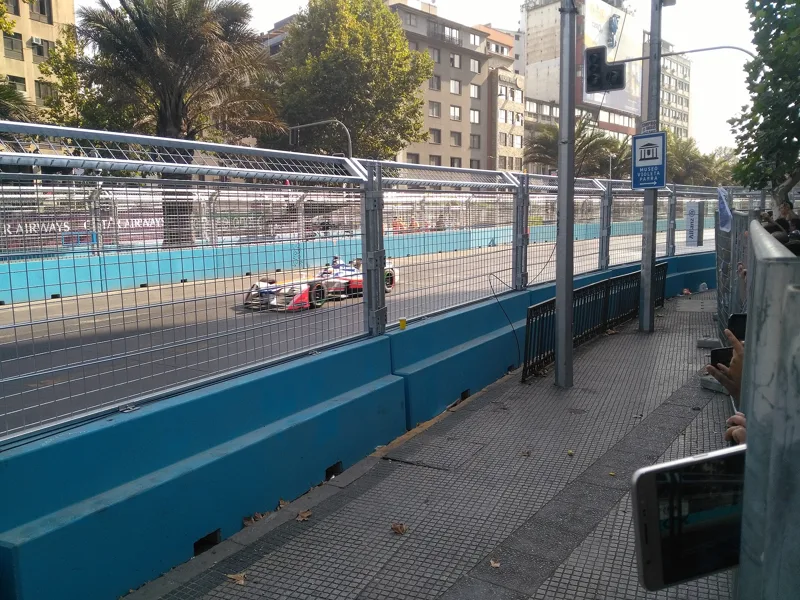
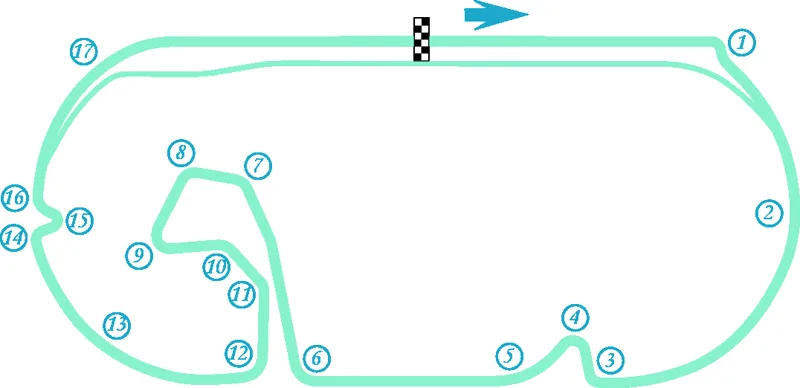
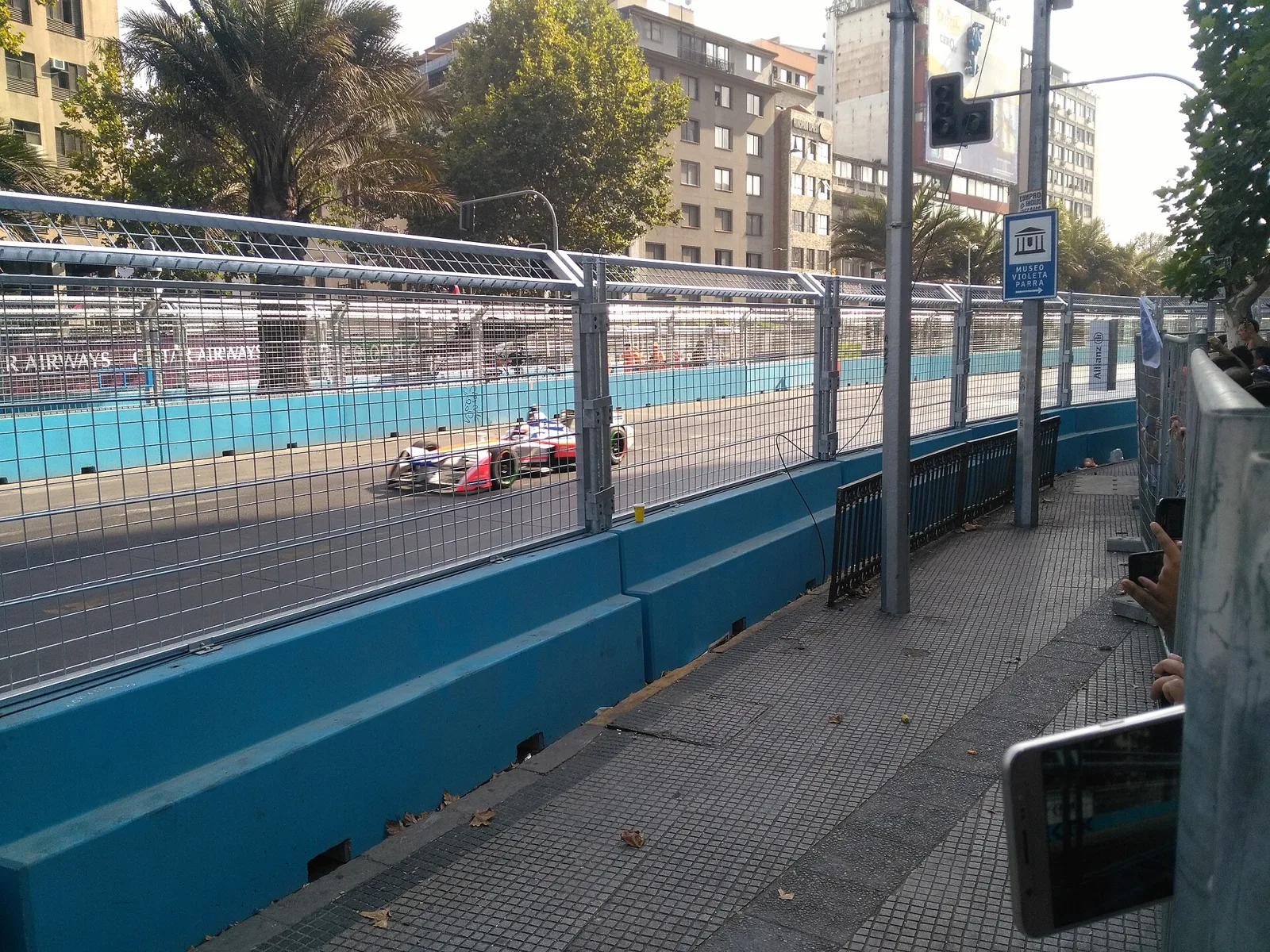
The 12-turn circuit covered 1.53 mi (2.46 km) and ran clockwise. Its layout was unveiled on 12 October 2017, and the lap began on Santa Maria Avenue, crossed the Mapocho River, ran through Parque Forestal and came back to the avenue.
Construction was rushed, with work starting only days before the race and finishing just in time. Piquet expected the layout to be technical, and the series manager at tyre supplier Michelin likened it to a blend of the Montreal and Berlin street circuits.
The park also raised a practical problem. Several dogs regularly visited Parque Forestal, so a local veterinary company was engaged to feed them away from the circuit, in an effort to stop them straying onto the track during the weekend.
What rule changes shaped the weekend?
Santiago was the first round at which the minimum pit stop time, in use since the series began in 2014, was dropped. The FIA had deferred that decision at the Marrakesh ePrix three weeks earlier after teams raised safety concerns about the change.
To prepare, Spark Racing Technology designed an endurance-style seat belt that was easier to fasten at speed, and some teams were given samples to practise with. The FIA also allowed spotters behind the pit wall and opposite the garages to guide drivers into their boxes.
Teams had raised safety concerns that delayed the change at Marrakesh, so the Santiago decision was closely watched.
The ruling had been put off only three weeks earlier, so teams arrived in Chile without a settled answer on stops.
How did qualifying set the grid?
Vergne took pole with 1 minute 19.161 seconds, the second pole of his year and his sixth overall. Buemi joined him on the front row, and Lotterer, di Grassi and Bird completed the top five of the super pole runs.
Practice was tricky. The track was cleaned overnight after drivers said the tarmac was dirty and slippery, and Bird set the early pace in the first session at 1 minute 19.439 seconds. Race director Scot Elkins stopped a session with three minutes left after Engel locked his brakes and struck a barrier.
Vergne was the fastest of the meeting in the second practice session, with 1 minute 18.662 seconds on 200 kW (270 hp). In qualifying the four groups of five had six minutes each, drivers were limited to two timed laps, and the fastest five then ran Super Pole in reverse order from fifth to first.
Lotterer went fastest in group four with 1 minute 18.796 seconds, but he later broke his front wing on a bump at turn one during his super pole lap. Bird hit a barrier in the same session and returned to the pits for a new rear wing.
The grid was then reshuffled. Di Grassi lost ten places after changing his inverter, while Prost lost two for running too many laps in qualifying.
Bird's pace was a theme of the weekend. He was fastest in the first practice session, but a barrier strike during Super Pole cost him a rear wing and time.
How did the race unfold?
From pole, Vergne took the best line into the first corner, while Piquet surged from fifth to second. Lotterer passed the slow-starting Buemi for third, and the first lap was tidy until contact at the opening corners.
Lopez tried to pass Bird on the outside into a corner and was pushed into the tyre wall. Heidfeld then hit Abt's rear wheel, and both cars suffered suspension failure, which brought out the safety car. Engel and Turvey made contact, and Engel retired after Rosenqvist lunged at him on the outside.
The safety car came in after five laps, and Vergne restarted at the front as the field regrouped. Piquet was caught off guard by the restart, and he ran into the back of Vergne, which damaged Vergne's left rear wheel guard.
Abt retired with a loss of power, and Mortara spun in the middle of the race. Lotterer tried to pass Piquet for second, and later he got through on the inside of the next right-hander.
The mandatory change into second cars began on lap 20, and Vergne emerged at the head of the field after the pit stops. Di Grassi retired on lap 23 after an electrical problem stopped his car at the exit of the pit lane.
Buemi used his Fan Boost to attack Piquet on lap 28 and took third on the following lap. Vergne and Lotterer fought at the front, and on lap 33 Lotterer tried to pass on the main straight and locked his tyres. His nose cone lodged in Vergne's rear wing, pushing Vergne through the braking zone for turn three, though both drivers continued.
Piquet, who had been fighting Buemi for third, locked his brakes on the inside and ran wide, then touched a barrier and dropped to sixth. Bird set the fastest lap of the race at 1 minute 20.235 seconds, which earned him one point. Vergne led 36 of the 37 laps, and there was only one lead change in the race.
Vergne's control of the race owed much to energy management. He had lost pit-to-car radio contact and had to save electrical energy, which let him hold off Lotterer on the final laps.
| Finish | Driver | Team | Note |
|---|---|---|---|
| 1 | Jean-Eric Vergne | Techeetah | Pole, 36 laps led |
| 2 | Andre Lotterer | Techeetah | First one-two in the series |
| 3 | Sebastien Buemi | e.Dams-Renault | Front row starter |
| 4 | Felix Rosenqvist | Mahindra | Fourth on the road |
| 5 | Sam Bird | Virgin | Fastest lap, one point |
Were any teams penalised after the race?
Techeetah and Dragon were investigated by the stewards on the Saturday evening over the seat belts in their cars. The FIA had decided both teams altered the harnesses without consulting its technical delegate, and each Techeetah car was fined 15,000 euros, with the same penalty for d'Ambrosio's Dragon car.
The penalties did not change the final result, and the decision drew criticism from several figures in the series. Techeetah principal Mark Preston said the wording of the rules was unclear, and the FIA promised to clarify the regulations before the Mexico City round.
The ruling was also read against the background of an earlier disqualification of Abt's victory in Hong Kong, and the motorsport press suggested the stewards may have been swayed by Techeetah's achievements.
What did the result mean for the championship?
Vergne moved to the top of the Drivers' Championship on 71 points, five clear of Rosenqvist. Bird slipped to third in the standings, and Buemi moved up to fourth after his third-place finish, with Piquet dropping to fifth.
In the Teams' Championship Techeetah led on 89 points, two ahead of Mahindra, after their one-two finish. Virgin fell to third and Jaguar kept fourth, while e.Dams-Renault climbed to fifth with eight races still to run in the season.
Lotterer was delighted with second after a poor start to the season, and Vergne said the close fight in the title race meant every mistake would be punished. Buemi pointed to a chassis problem that had reappeared from the season opener in Hong Kong.
The result left the title race wide open, with eight rounds still to run and the Techeetah pair in front.
What controversies surrounded the Santiago ePrix?
Residents of Barrio Lastarria objected to the route, claiming the race would damage roadside infrastructure and the natural scenery. Residents also took a case to the Court of Appeal seeking to cancel the race, and it was turned down on 31 January.
Claudio Orrego, the intendant of the Santiago Metropolitan Region, pledged that the scenery would stay intact and that no bleachers would go up. Felipe Alessandri, Santiago's mayor, confirmed on 20 February that the series could stay, though Parque Forestal was dropped from the racing permit.
Some damage followed. Residents reported cobblestones damaged on Purisima Street, and a truck struck the Daedalus and Icarus sculpture by Rebeca Matte Bello at the entrance to the National Museum of Fine Arts while the trackside structures were being dismantled. The organisers agreed to pay for the restoration.