Jean-Eric Vergne won from pole on a sand-covered street circuit in Uruguay, beating Lucas di Grassi by 0.447 seconds after a late nudge at the final turn.
On a sand-covered street circuit in Uruguay, Jean-Eric Vergne of Techeetah took the 2018 Punta del Este ePrix from pole, 0.447 seconds clear of Lucas di Grassi of Audi over 37 laps. Sam Bird of Virgin finished third in a race that returned to Uruguay after 2015-16.
The 2018 Punta del Este ePrix was the sixth round of the 2017-18 Formula E Championship and the third edition of the race in the series. Jean-Eric Vergne of Techeetah won from pole, while Lucas di Grassi of Audi and Sam Bird of Virgin completed the podium.
Who won the 2018 Punta del Este ePrix?
Jean-Eric Vergne of Techeetah won the 2018 Punta del Este ePrix from pole, a second victory this year and his third in total. Lucas di Grassi finished 0.447 seconds behind for Audi, and Sam Bird was third for Virgin. The race was run over 37 laps on 17 March 2018.
Vergne moved onto pole only after the stewards applied penalties to the original qualifying order, which gave him his third pole of the season. He kept the lead through the first corner, and di Grassi stayed within reach for most of the race.
Di Grassi tried several times to pass, but Vergne kept him at bay. On the final approach to the last turn, di Grassi gently nudged the rear of Vergne's car, yet Vergne held the lead across the line.
Vergne said afterwards it may have been the toughest of his three wins, and the one he was most content with as a driver. Bird, who finished third, said he had stayed within reach of the leaders to give himself a chance.
A sand-covered street circuit, a pole-sitting winner and a last-lap nudge that never changed the result.
Why was the race back on the calendar?
The Punta del Este ePrix had been dropped after the 2015-16 season, because the Uruguayan government did not reach a financial deal to keep it going. It returned when the FIA World Motor Sport Council added it to the calendar on 7 December 2017, after the Sao Paulo race was cancelled.
Sao Paulo's organisers had requested a cancellation because the sale of land to a private owner was delayed. The Punta del Este round was part of Alejandro Agag's backup plan, to be used if any race was cancelled.
What was the circuit like?
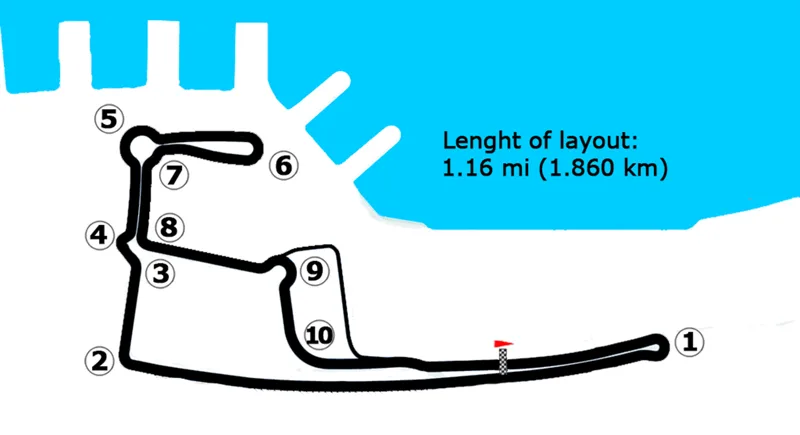
The 20-turn Punta del Este Street Circuit measured 2.785 km (1.731 miles) and was laid out on Playa Brava beach. Sand from the beach covered the tarmac and reduced grip, while the high ambient temperatures put extra strain on the batteries.
Work on the track started on 24 February 2018, 22 days ahead of the race, and ran for three weeks. Around 370 people were employed on long shifts.
After the 2015 race, all but one of the flexible bollards were removed by the FIA, and the sausage kerbing at the four chicanes was dismantled. Additional TecPro barriers were added to improve safety, and drivers were given a designated area to stop if they missed a chicane's turning point.
Drivers were split on the changes. Piquet believed they would help drivers attack the high-speed sections, and Lopez said the kerbing could be negotiated without major problems. Felix da Costa praised the circuit's fast and dangerous nature, while Di Grassi and Abt asked for the kerbs to be adjusted because they feared an accident.
How did the safety meeting and new rules affect the weekend?
Three days before the race, drivers, the Formula E Teams Association and FIA officials met to discuss car switches during mandatory pit stops. The session was prompted in part by an injury to a Techeetah mechanic in Mexico City, and the FIA gave stewards authority to review incidents after races had ended.
The clarifications meant the steering wheel had to remain in the first car until that car stopped, and the harness could not be fully fitted before the driver reached the second car. Teams and drivers were still responsible for pit stop safety and buckling up.
How did practice unfold?
Practice took place on the Saturday morning in two sessions, one of 45 minutes and one of half an hour, after a Friday shakedown topped by Lopez and di Grassi. Buemi posted the first session's quickest time, 1 minute, 14.536 seconds, and di Grassi was top in the second, setting an unofficial record of 1 minute, 13.672 seconds.
Cold conditions in the first session meant grip was limited, because sand still covered the asphalt. Evans stopped at the pit lane entry with a technical problem and needed outside help to be recovered to his garage.
Blomqvist crashed in the second session after mounting the kerbs at turns ten and eleven, which stopped the session for five minutes. The impact threw parts of his drivetrain onto the track.
Buemi also glanced a barrier in the first session, removing his rear wing endplate and needing a replacement.
How was pole decided?
Vergne took pole only after penalties were applied to the original qualifying order. Di Grassi, Lynn and Turvey had their lap times deleted for exceeding track limits in super pole, and each dropped one place. Those changes gave Vergne the top spot on the grid.
Vergne had been fastest in group qualifying with 1 minute, 13.672 seconds, but he slipped to fifth after a mistake at the start of his super pole lap. Di Grassi took provisional pole with 1 minute, 13.948 seconds, but he was investigated for hitting a bollard at turns 16 and 17.
Lynn joined di Grassi on the front row after striking a bollard on his own lap and damaging his front wing. Evans was third quickest after clipping a wall at turn nine, and Turvey was fourth before being investigated for hitting a bollard.
Evans fell to 16th after the scrutineers found his car's weight distribution 300 grams outside the limit. A battery change between second practice and qualifying had left the car 3 kg lighter, which Evans said was behind the problem.
Filippi lost three places after exceeding the speed limit under red flag conditions in practice. Blomqvist started at the back for a gearbox change, and Lopez started 18th because two of his tyres were below the 1.60-bar minimum pressure.
Mortara's ten-place grid penalty for a chassis issue was annulled after Venturi found the damage could not be fixed in Punta del Este and sent the chassis to Dallara for repair.
How did the race unfold?
Vergne led from the start and held the lead for most of the race, with di Grassi close behind. A period of neutralisation followed Heidfeld's stop, and the field made its mandatory pit stops on lap 19. Di Grassi could never pass Vergne on track.
The race began at 16:03 Uruguay time in dry, sunny conditions, with air between 28.85 and 30.56 degrees C and the track between 35.5 and 37.2 degrees C. Fan Boost went to Abt, Buemi and Rosenqvist, and the race had been lengthened from 33 laps in 2015 to 37.
Vergne kept the lead into the first corner, with di Grassi holding second and Lynn and Turvey close behind. Mortara ran wide at the chicane and fell to 20th.
Bird went for Lotterer at the turn eight and nine hairpin on lap two, but Lotterer blocked him off. Heidfeld stopped after the first chicane with a technical fault, and race control could not restart his car in the time allowed. The safety car came out on lap four to move it, and two drivers made overtakes during that period.
Buemi made an error on lap 11 and hit a wall, damaging his left-rear suspension, and he changed to his second car the following lap. Bird passed Lotterer for sixth, and Lotterer lost four places to Engel, Felix da Costa and Rosenqvist within two laps.
Mortara damaged his car on lap nine and changed to his second car on lap 16 because of steering damage.
Pit stops for second cars came on lap 19. Vergne and di Grassi kept first and second, Abt was third and Bird took fourth from teammate Lynn. Di Grassi then tried to pass Vergne into turn 17 right after leaving the pit lane. They made brief contact, di Grassi locked his brakes and went sideways, and he lost almost two seconds.
On lap 23 Abt's seat belts unbuckled under braking, and he rejoined in 15th. Post-race data showed the shoulder harnesses had been fitted correctly, and Bird moved up to third.
Evans overtook Rosenqvist for fifth before lap 28, and his attempt to repass Rosenqvist with Fan Boost failed.
Lopez set the fastest lap, 1 minute, 16.811 seconds, on lap 31 and earned a point. Di Grassi made several unsuccessful attempts on Vergne, and Bird closed up behind them.
On lap 34 di Grassi nudged Vergne wide at the final corner, but he could not match Vergne's acceleration on the start-finish straight. Bird's best chance of the lead slipped away after a small mistake on the last lap, while managing energy and battery temperatures took him out of contention.
Vergne held the lead to the flag, di Grassi finished 0.447 seconds behind, and Bird took third. Evans was fourth, Rosenqvist fifth and Lynn sixth.
Buemi finished 29 laps before retiring, and Piquet's drive shaft broke after 25 laps.
What were the main results at Punta del Este?
| Position | Driver | Team | Note |
|---|---|---|---|
| 1 | Jean-Eric Vergne | Techeetah | From pole; third pole of the season after penalties |
| 2 | Lucas di Grassi | Audi | 0.447 seconds behind the winner |
| 3 | Sam Bird | Virgin | Dedicated the result to Henry Hope-Frost |
| 4 | Mitch Evans | Jaguar | Demoted to 16th in qualifying for weight distribution |
| 5 | Felix Rosenqvist | Mahindra | Fifth at the finish |
| Fastest lap | Jose Maria Lopez | Dragon | 1 minute, 16.811 seconds, for one point |
| Retired | Sebastien Buemi | e.Dams-Renault | Completed 29 laps after an early car swap |
| Retired | Nelson Piquet Jr | Jaguar | Drive shaft failure after 25 laps |
What penalties followed the race?
Di Grassi was fined EUR 10,000 (GBP 8,750) and handed three penalty points for fireproof underwear that did not meet the rules, but he kept second place. The stewards also looked at Abt's seat belt incident and took no further action.
Di Grassi apologised, promised not to repeat the infraction and said Punta del Este's hot weather had caused his previous pair to soak up sweat. Abt was mystified by his belts unbuckling under braking, and Audi's team principal Allan McNish said the problem had cost Abt a podium.
What did the result mean for the championship?
Vergne extended his Drivers' lead to 30 points over Rosenqvist after the race, and Bird's third place helped him close five points on Rosenqvist. Techeetah's Teams' lead over Mahindra rose to 27 points, and Virgin moved into third. Rosenqvist remained second in the Drivers' table at that point.
Buemi and Piquet stayed fourth and fifth in the standings despite not finishing. Jaguar was fourth in the Teams' Championship, and e.Dams-Renault was fifth with six races left in the season.
What did the drivers say after the race?
Vergne called it possibly the toughest of his career and the win he felt most proud of as a driver. Bird dedicated third place to Henry Hope-Frost, a broadcaster and motorsport journalist who died in a motorbike accident nine days before the race.
Evans said he could have taken his first win, and that the weight penalty came from a battery that was lighter than the one it replaced. Jaguar team principal James Barclay praised Evans's pace and the car. Buemi said sorry to his team for the wall strike, and believed he might have managed three or four more laps if the safety car had returned.