The 2018 Formula E race on Zurich's streets, where a fifth-place starter took the win, a penalty storm followed and a Swiss ban on racing was finally lifted.
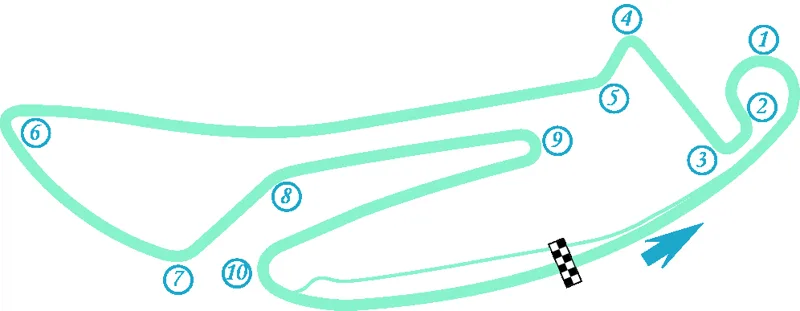
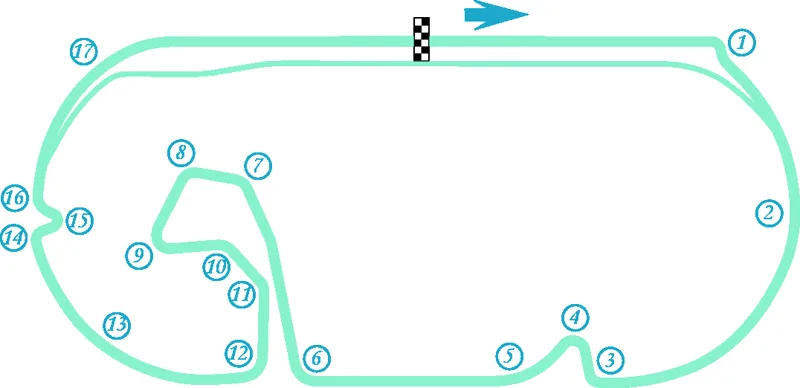
Lucas di Grassi of Audi won the 2018 Zurich ePrix from fifth on the grid, ahead of Sam Bird and Dragon's Jerome d'Ambrosio. The race took place on the 2.46 km (1.53 mi) Zurich Street Circuit, an 11-turn street course by the lake.
The 2018 Zurich ePrix took place on 10 June 2018 on a street circuit beside Lake Zurich, where Formula E raced in front of a reported crowd of about 150,000. Lucas di Grassi won from fifth on the grid, and the race ended a long Swiss drought in international circuit racing that dated back to 1954. The race itself was dramatic, with penalties, retirements and a late charge from fifth on the grid.
What was the 2018 Zurich ePrix?
The 2018 Zurich ePrix counted as round ten of the 2017-18 Formula E season. It was the event's debut, and it took place in the early evening.
Audi's di Grassi won the 39-lap race after starting fifth, with Virgin's Sam Bird second and Dragon's Jerome d'Ambrosio third. It was di Grassi's seventh career win, and it moved him from sixth in the standings to third.
The field had come to Zurich from Berlin four weeks earlier, and the title picture was tight. Techeetah's Jean-Eric Vergne arrived as leader on 162 points, with Bird second on 122 and Felix Rosenqvist third on 86. Some 87 points were left across the final three rounds.
A lakeside street circuit designed on a home computer, where a fifth-place starter took the win and ended Switzerland's racing drought.
Why did Formula E come to Switzerland?
Electric racing had to overcome a long-standing national ban. Switzerland had prohibited most motor racing after the 1955 Le Mans disaster, and its previous motor race had been held at Bremgarten, near Bern, in 1954.
Work began in March 2015, when Fathi Derder, a National Councillor, won the Council of States' backing for a motion that would lift the ban on electric racing. The Federal Council adopted the change in December, and electric vehicles were allowed to race from 1 April 2016, subject to approval from local authorities on maximum speeds.
An early plan put Lugano in line for a May 2016 race that would have replaced Berlin. It collapsed because the required funding of 10 million euros was not raised, and the organisers then backed Zurich, the largest city in Switzerland. The FIA's World Motor Sport Council confirmed Zurich on the 2017-18 calendar on 21 September 2017.
Organisers had expected between 25,000 and 150,000 people. Zurich's city council had given an early signal of approval, but a spokesperson later denied the report, and the council confirmed its support the following month. A three-year contract was signed with an option to extend, which was later pushed to 2024 and then to 2027.
Permission was overseen by the mayor's office, with project leader Pascal Derron negotiating with local politicians. A board member of a pedestrian association complained to the city council in December, arguing that the city's payment of 2 million Swiss francs was not justified, but the council took no action.
How was the Zurich circuit designed?
The 11-turn circuit covered 2.46 km (1.53 mi). It was not drawn by a professional track planner. Roger Tognella, chief executive of e-Mobil Zuri, and his son Andrin laid it out on their home computer using Google Earth, and it was first shown to the public in early January 2018.
Drivers started on Enge Harbour at the Mythenquai and followed a route that returned to the harbour through Stockerstrasse and Alfred-Escher-Strasse. The surface mixed new concrete with circuit asphalt, and tramlines at turns seven and nine were covered for the weekend while others were left as they were.
The pit lane was surfaced with cobblestones, so teams had to use a special software mode after a 30 km/h (19 mph) limit was imposed. Work on the course began in late May, and the layout came down two days after the race.
Buemi believed a low-downforce set-up would let cars make the most of the two long straights.
How did practice and qualifying go?
A half-hour shakedown on the Saturday afternoon allowed teams to check their cars and electronics at low speed. Practice then ran in two sessions on the Sunday morning, and di Grassi set the fastest first-session lap at 1 minute 11.995 seconds.
In the second session Rosenqvist set the pace with 1 minute 12.007 seconds, ten minutes before the end. The session was also marked by a crash for Bird, who damaged his suspension and steering after losing the rear of his car, and by a collision in the final seconds when Lotterer hit the rear of Prost's car at the turn ten hairpin.
Qualifying ran for an hour in four groups of five, with six minutes on track for each group and two timed laps per driver. Most drivers waited about four minutes before going out on the bumpy surface, and Vergne reported almost no grip from his car. The fastest five then contested Super Pole, one lap each, and the order was reversed from fifth to first.
Jaguar's Mitch Evans claimed his maiden pole with a time of 1 minute 12.811 seconds. He had set the fastest lap in the second group earlier at 1 minute 12.594 seconds, and Lotterer was second on the front row, his best qualifying result of the season.
Turvey glanced a barrier and bent a track-rod, leaving him slowest in qualifying. Bird was third after clipping a barrier, and d'Ambrosio was fourth after running close to Lotterer's time. Lopez, who had been penalised three grid places for speeding under yellow in practice, qualified fifth, while Lynn lost three places for entering the fast pit lane early.
How did the race unfold?
The 18:04 start was later than usual, because Formula E wanted to avoid clashing with the French Open final. Evans made a good start and kept Lotterer behind him, but Bird was held up, and Lotterer blocked Bird from second. The rest of the field got through the next corners with only minor contact.
Piquet struck the rear wing of Abt's car at the Tramstop chicane on the first lap. The collision scattered debris, and Abt and Piquet received a black flag with an orange disc, forcing both into the pits for repairs.
Evans reported rising battery temperatures, which limited how much energy he could harvest under braking. Mortara retired on lap 8 after a tie-rod broke, and Vergne began a fight through the field that saw him move into the top ten by the ninth lap.
Di Grassi used an energy advantage to close on Bird and pass him for third, then turned his attention to Lotterer. He got past Lotterer at the third attempt at the start of lap 16, and on the next lap he overtook Evans into the first corner to lead.
Vergne made contact with Rosenqvist on lap 17 while trying to pass him at the first corner. Rosenqvist slid into the barrier and lost his front wing, and the debris prompted race director Scot Elkins to call a full course yellow after lap 19.
During the yellow the field took its mandatory change into second cars. Vergne lost 12 seconds when he struggled to start his car leaving the garage, and Piquet's race ended with a broken driveshaft on lap 21.
The race lead settled into a pattern. Di Grassi pulled away from Evans, and Buemi overtook Bird for fourth. Prost's brakes failed into the turn 10 hairpin on lap 33, and he ran into the barrier outside the track.
Lotterer's quickest lap, 1 minute 14.730 seconds, came late on and earned him a single point. Di Grassi stretched his advantage beyond seven seconds and took the flag after 39 laps, seven and a half seconds clear of Bird.
Di Grassi led 22 laps, the most of any driver, and there were two lead changes between two drivers. The field finished close behind, with d'Ambrosio's penalty-assisted podium his first since the 2016 London race.
| Position | Driver | Team | Note |
|---|---|---|---|
| 1 | Lucas di Grassi | Audi | From fifth on the grid, 22 laps led |
| 2 | Sam Bird | Virgin | Finished seven and a half seconds behind |
| 3 | Jerome d'Ambrosio | Dragon | Podium helped by drive-through penalties |
| 4 | Andre Lotterer | Techeetah | Fastest lap, one point |
| 5 | Sebastien Buemi | e.Dams-Renault | Moved up from the field to fifth |
Who was penalised after the full course yellow?
Evans, Lotterer and Lopez were found to have not slowed enough when the full course yellow came out on lap 19. Buemi and Vergne were punished for pressing on before the yellow was lifted on the following lap.
The penalties were served as drive-through passes, with Evans and Lotterer taking theirs at the start of lap 31 and Buemi and Lopez at the end of that lap. Vergne served his on lap 32. Lotterer said the stewards should have been more lenient, because no driver gained an advantage from the lapse.
Vergne suggested that Formula E had introduced a new rule during the event, as five drivers were penalised for behaviour the field had repeated all season. He pointed out that the drivers had raced under full course yellows all year with no penalties. Buemi said his early braking had been caused by missing the race director's instruction over his radio.
Stephane Sarrazin also took a 22-second penalty for releasing a car unsafely from his stop, an incident separate from the yellow-flag cases.
What did the result change in the championship?
Vergne kept the top spot with 163 points, though Bird had cut his deficit to 23 points. Di Grassi moved from sixth to third with 101 points, and Buemi rose to fourth on 92, with Rosenqvist dropping to fifth after failing to score.
Techeetah stayed top of the Teams' table on 219 points, and Audi closed to 33 behind. Virgin dropped back to third, while Mahindra and Jaguar held fourth and fifth with two rounds still to run.
Di Grassi dedicated the win to his unborn son, Leonardo, and said the weekend was amazing, with the crowd cheering all over the track.
Where did the Zurich round go next?
The 2019 event moved to Bern, because officials in Zurich doubted the city could cope with a run of big events. The Zurich round was therefore a one-off in the city during the 2018 season.
Bird, who had qualified third, said he was confident of challenging di Grassi in the New York City double header that closed the season.