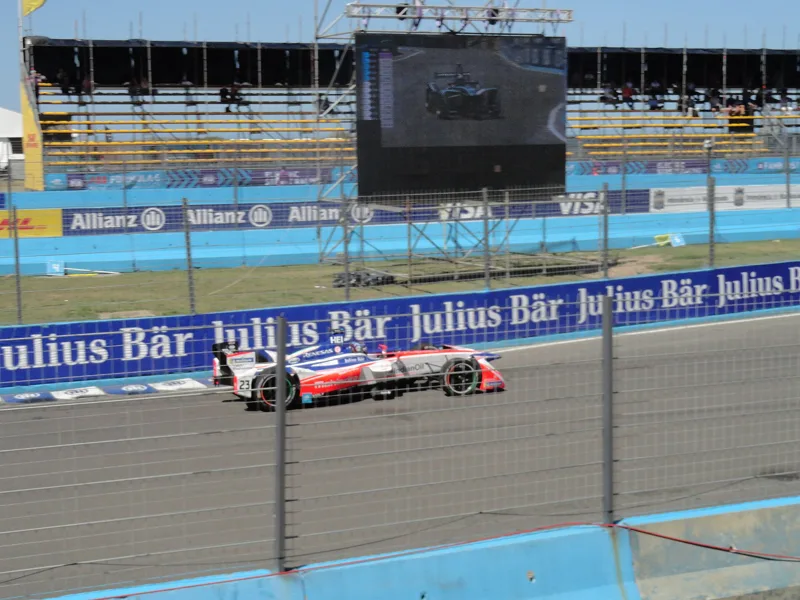
Switzerland's first international circuit race since 1954 went to Audi's di Grassi, who passed pole-sitter Mitch Evans on lap 18 and won by 7.542 seconds.
Lucas di Grassi won the 2018 Zurich ePrix for Audi, starting fifth on the grid. The 39-lap race on 10 June 2018 was run on an 11-turn street circuit in Switzerland, and Sam Bird finished second for Virgin.
Lucas di Grassi won the 2018 Zurich ePrix from fifth on the grid, on a first for Switzerland since 1954. The 39-lap race on 10 June 2018 finished with Sam Bird second and Jerome d'Ambrosio third. Penalties under a full course yellow reshuffled the lower end of the podium, while the win was never really in doubt.
Why was a Formula E race held in Zurich?
Switzerland had banned most motor racing in 1955 after the Le Mans disaster. A motion from National Councillor Fathi Derder, backed by the Council of States in March 2015, opened the door. The Federal Council adopted it in December, and electric cars were allowed to race from 1 April 2016, subject to local authorisation.
The organisers first tried for Lugano, aiming to replace the Berlin round on 7 May 2016. That bid was withdrawn because the required funding of 10 million euros was not raised, and they supported Zurich instead. The city was added to the 2017-18 calendar by the World Motor Sport Council in Paris on 21 September 2017.
Zurich was the tenth of twelve scheduled single-seater races that season. The organisers expected between 25,000 and 150,000 spectators, and the city council agreed to pay CHF 2 million towards the event. Pascal Derron led the negotiations with local politicians, and the contract was for three years with options that were later extended to 2027.
Not everyone was happy. A board member of Zurich's pedestrian association complained to the council in December and asked for a referendum, arguing that the event would lower quality of life and disrupt transport. The council took no action, and the race went ahead.
Di Grassi started fifth, took the lead on lap 18 and never gave it back in Zurich.
How was the Zurich circuit built?
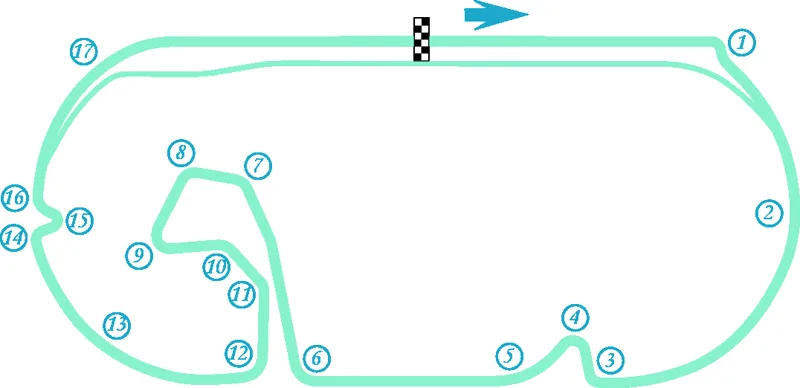
The street course was 11 turns and 2.46 km (1.53 mi) long, and it was laid out by Roger Tognella, chief executive of e-Mobil Zuri, and his son Andrin. They drew it using Google Earth on a home computer rather than a professional track planner. It was unveiled to the public on 5 January 2018.
Drivers began the lap at Enge Harbour on Mythenquai and returned to the harbour by Stockerstrasse and Alfred-Escher-Strasse. The surface mixed circuit asphalt with new concrete, and the organisers filled in the tramlines at turns seven and nine for the event but left the others alone.
Cobblestones in the pit lane forced teams to use a new software mode, because the speed limit there was lowered to 30 km/h (19 mph). Construction began in late May, and the circuit was dismantled on 12 June, two days after the race. Local officials made sure the public kept access to the roadside infrastructure during the build.
Buemi said he expected a low-downforce set-up to help on the two long straights.
What did practice reveal about the Zurich track?
Practice ran in two sessions on the Sunday morning, one lasting 45 minutes and the other half an hour, after a shakedown on the Saturday afternoon. Di Grassi set the fastest time in the first session at 1 minute 11.995 seconds, and Rosenqvist was fastest in the second at 1 minute 12.007 seconds.
Several drivers ran wide on the run-off areas in the first session, and Bird was caught out when Jose Maria Lopez braked early on the main straight. Bird lost the rear of his car on the bumps, hit a barrier and had to switch to his second car.
Evans was 0.054 seconds slower than Rosenqvist in the second session. In the final seconds Lotterer misjudged his braking at the turn ten hairpin and hit the rear of Nico Prost's car, dislodging a sidepod.
How did qualifying settle the front row?
Mitch Evans took his first pole in single-seater racing with a lap of 1 minute 12.811 seconds, and it was also Jaguar's first single-seater pole. Lotterer had been on pole until Evans set his time, and he took the other front-row slot.
Qualifying lasted an hour on the Sunday afternoon, split into four groups of five cars. Evans was fastest in group two with 1 minute 12.594 seconds, and he was the last driver to set a Super Pole lap, taking a wide line over the bumps at turn one.
Vergne had been the favourite for pole but could not find grip in the first group. He was reprimanded by the stewards for misreading the sector line, which meant he used 200 kW (270 hp) power mode about 100 m (330 ft) early, and he finished group one as the slowest driver.
Lopez started three places down after a penalty for speeding under yellow flags in first practice, and Lynn lost three places after an error in the pit lane. In Super Pole Bird was third, d'Ambrosio fourth and Lopez fifth.
What happened on the first lap in Zurich?
Piquet ran into the back of Abt's car at the Tramstop chicane on the opening lap, removing Abt's rear wing and damaging the front wing on Piquet's own car. The debris forced both drivers into the pit lane for repairs, and the race was shaped from that point on by the traffic.
Evans defended his lead from Lotterer, but he reported rising battery temperatures, which limited how much energy he could harvest under braking. By lap eight Mortara was out with a broken tie-rod, and Vergne was working his way back up the field on energy conservation.
Di Grassi, who had the better powertrain efficiency, used his energy advantage to pass Bird for third on lap 13. He then challenged Lotterer on the outside into turn ten, but was blocked twice before he made the pass into the first corner on lap 16.
Why did the race run under full course yellow on lap 19?
A detached front wing from Rosenqvist's car was lying on the track after his contact with Vergne on lap 17. Race director Scot Elkins called a full course yellow on lap 19 so marshals could clear the debris, and the field took its mandatory second-car stops during the caution.
Vergne hit that debris on the approach to the first corner, but he avoided a puncture. He then lost 12 seconds when he had trouble restarting his car from the garage, and he dropped to ninth at that point.
Piquet retired with a broken driveshaft on lap 21. The caution bunched the field and reset the energy battles that followed, and it changed the order of several cars on track.
Which drivers were penalised for speeding under the yellow?
Evans, Lotterer, Buemi and Lopez were investigated for exceeding the 50 km/h (31 mph) limit under the full course yellow, and each was given a drive-through penalty. Evans and Lotterer served theirs at the start of lap 31, while Buemi and Lopez took theirs at the end of that lap.
Vergne also received a penalty for the same offence, and he took his drive-through late in the race, emerging in 12th place behind Engel. Lotterer felt the penalty cost him a podium, and he argued that stewards should be more lenient when no driver gained an advantage.
Buemi said his early reaction to the yellow was caused by not hearing the race director on the radio. Vergne accused the series of creating a new rule during the event, arguing that five drivers were penalised for something the others had done all year.
How did di Grassi win from fifth on the grid?
Di Grassi moved up from fifth and took the lead on lap 18, when he passed Evans into the first corner. He held the lead to the finish after 39 laps, and he dedicated the victory to his unborn son, Leonardo, after leading a race-high 22 laps.
Bird finished second, 7.542 seconds behind di Grassi, after the leading group ran close together and could not overtake because of electrical energy restrictions. Rosenqvist, Buemi and Bird ran close together for the final laps, and the top five jostled over the bumpy surface.
Buemi used FanBoost to pass Evans into the first corner late on, and Lotterer set the fastest lap of the race at 1 minute 14.730 seconds on the same lap, earning him one championship point. The penalties helped d'Ambrosio to his first podium since the second 2016 London ePrix race.
Where did the Zurich result leave the championship?
Vergne still led the Drivers' Championship with 163 points, but Bird's second place cut his advantage to 23 points. Di Grassi's win moved him from sixth to third on 101 points, and Buemi was fourth on 92. Two races were left, and Audi had moved to within 33 points of the teams' leader.
Techeetah retained first place in the Teams' Championship with 219 points, while Audi moved to within 33 points. Virgin slipped back to third, while Mahindra and Jaguar stayed in fourth and fifth with two races to go.
The 2019 race later moved to Bern, because Zurich officials worried the city could not cope with a run of big events back to back.
What did the title fight look like before Zurich?
Before Zurich, Vergne led the Drivers' Championship with 162 points, ahead of Bird on 122 and Rosenqvist on 86. Abt was fourth on 85 and Buemi fifth on 82, and with 87 points still available in the last three races, Vergne could clinch the title in Zurich by winning.
The team table was tight as well. Techeetah led with 205 points, Audi were second on 161 and Virgin third on 139, while Mahindra on 108 and Jaguar on 96 were fourth and fifth.
For Vergne to be champion in Zurich he had to win while Bird failed to score. A second place for Vergne would have forced Bird to win both New York City races, with a count-back deciding the outcome.
Did Zurich's city council approve the race?
The approval was messier than the paperwork suggests. Local press reported that the city council had granted permission, but a spokesperson denied those reports two hours later, and the council did approve the race the following month. The race went ahead on 10 June 2018 as planned.
Elsewhere, the mayor's office, headed by Corine Mauch, issued the permits, and project leader Pascal Derron handled the talks with local politicians. Derron also made sure the people who ran the city's infrastructure were satisfied that the ePrix could go ahead.
How did the drivers react after the race?
Di Grassi said he had saved energy early on and then passed three cars in a row. He dedicated the win to his unborn son, and Bird said he had been disappointed after qualifying third but was confident of challenging in New York City.
Audi team principal Allan McNish said he thought di Grassi's win was well deserved after a tough start to the season, and that he had been impressed by the speed with which di Grassi caught Bird after climbing to fourth.
Vergne apologised to Rosenqvist for his lap 17 move. Rosenqvist accepted it as a misunderstanding with serious consequences for him. Evans, who had taken his first pole, said he felt conflicted after finishing seventh, because the race had not gone the way the team hoped.
Zurich 2018 finishing order
| Position | Driver | Team | Notes |
|---|---|---|---|
| 1 | Lucas di Grassi | Audi | Started fifth; led a race-high 22 laps |
| 2 | Sam Bird | Virgin | 7.542 seconds behind |
| 3 | Jerome d'Ambrosio | Dragon | Podium after the penalties |
| 4 | Andre Lotterer | Techeetah | Fastest lap, 1 minute 14.730 seconds |
| 5 | Sebastien Buemi | e.Dams-Renault | Used FanBoost to pass Evans |
| 6 | Nick Heidfeld | Mahindra | Top six finish |
| 7 | Mitch Evans | Jaguar | Pole position; led 17 laps |
| 8 | Antonio Felix da Costa | Andretti | Clean race |
| 9 | Oliver Turvey | NIO | Held off Vergne by six-tenths of a second |
| 10 | Jean-Eric Vergne | Techeetah | Drive-through penalty under full course yellow |