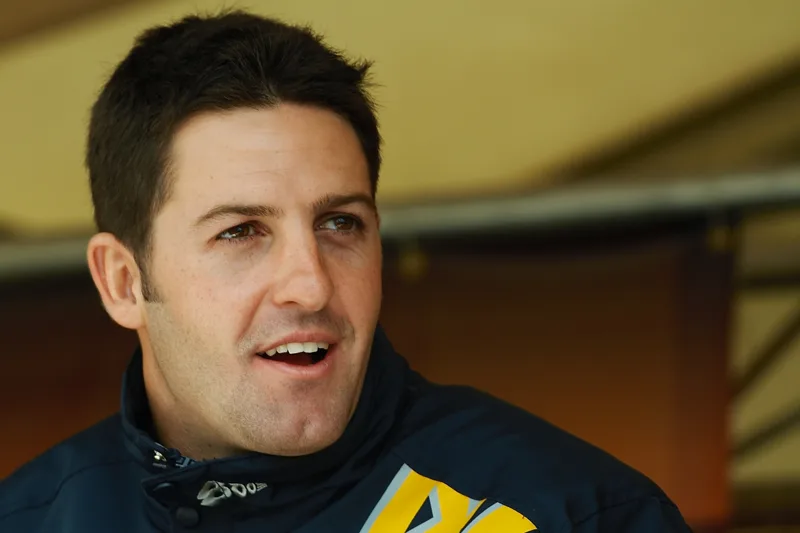
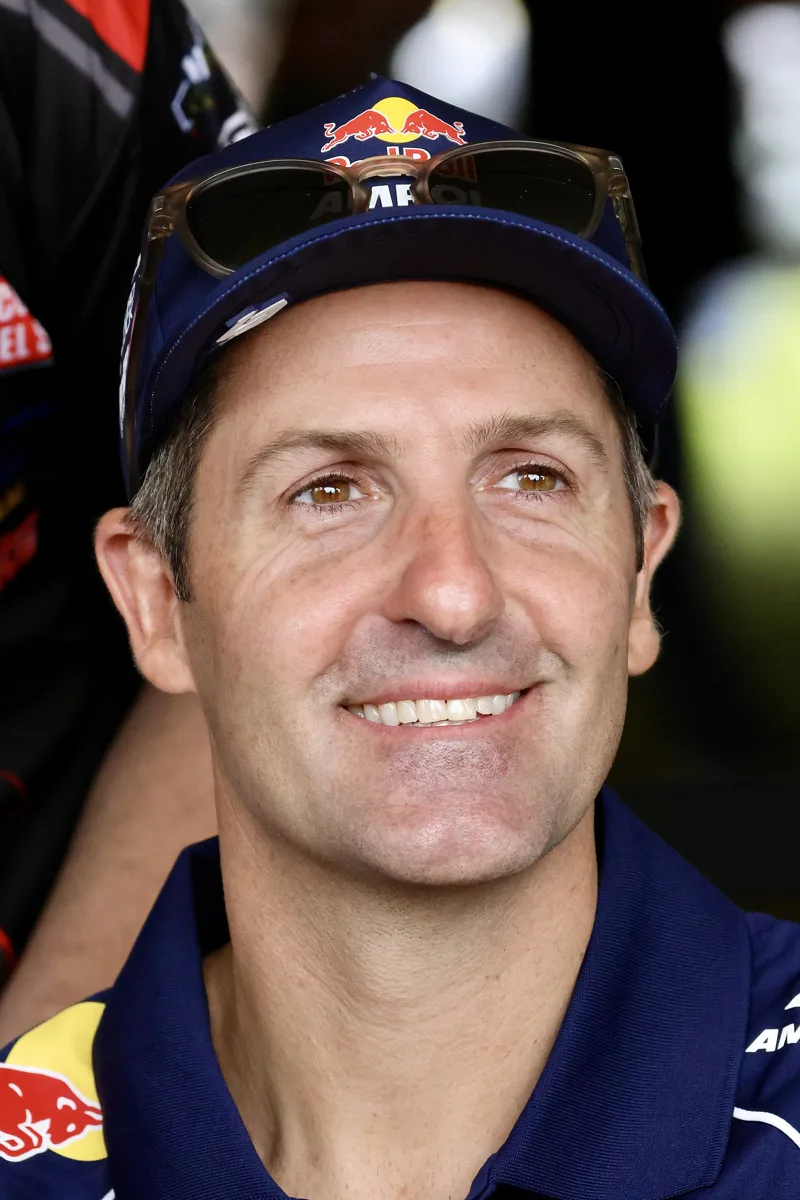
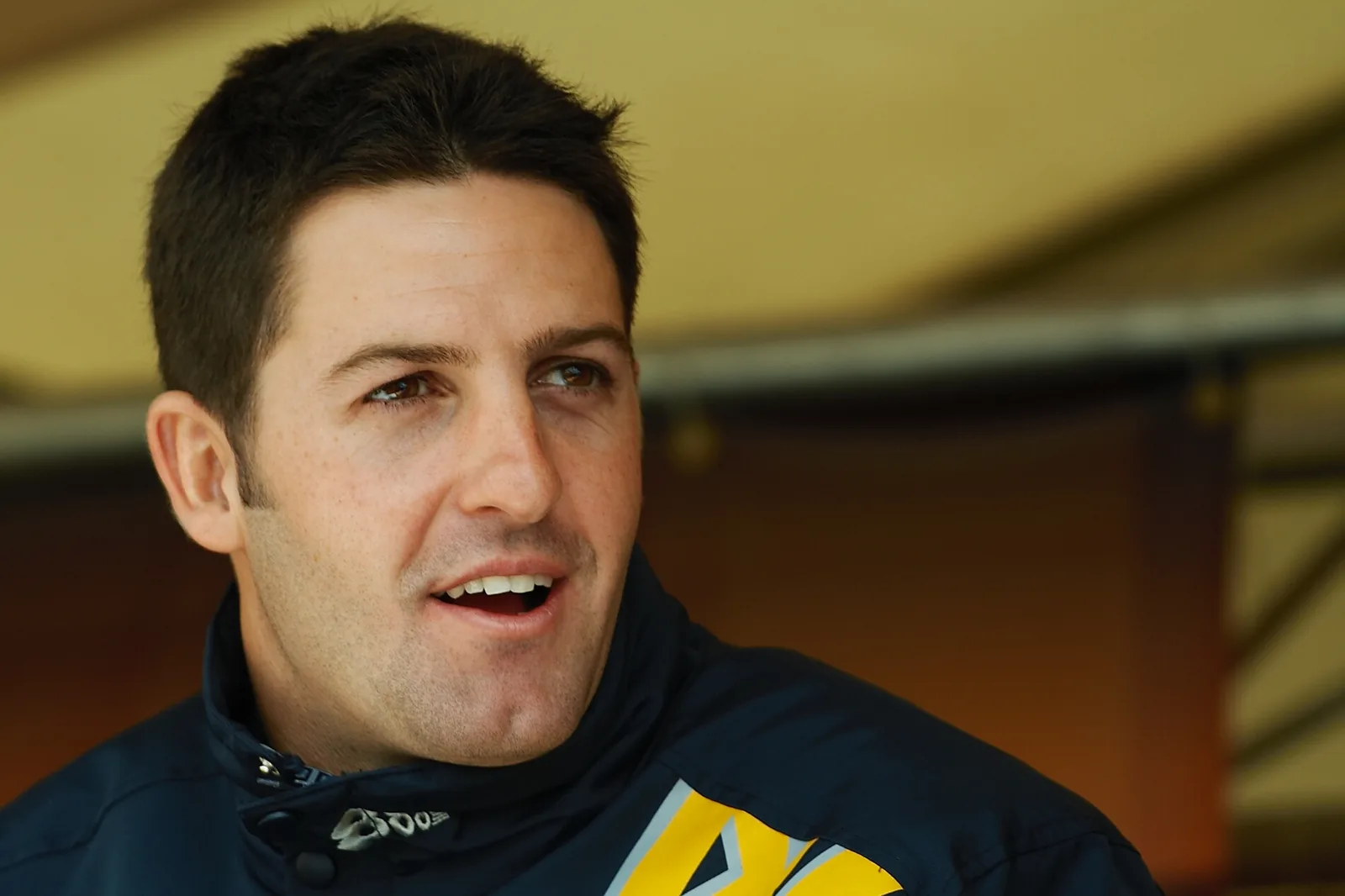
Whincup and Dumbrell won by three tenths of a second on Mount Panorama after a qualifying crash, a Ford pole and a wildcard entry with the youngest drivers in the event's history.
Whincup and Dumbrell won the 2012 Bathurst 1000 by three tenths of a second over David Reynolds and Dean Canto, in a race held on Mount Panorama. Will Davison started from pole with John McIntyre, but mechanical damage left their car twenty-fourth, eighteen laps down.
The 2012 Supercheap Auto Bathurst 1000 was a V8 Supercars touring car race held on Sunday, 7 October 2012, on the Mount Panorama Circuit in New South Wales. Jamie Whincup and Paul Dumbrell took the chequered flag after 6 safety car periods, repeated tyre failures and a late fight for fuel advantage at the front.
Where did the 2012 race fit in the event's history?
The 2012 running was the sixteenth edition of the Australian 1000 and the 55th race in a lineage that starts with the 1960 Armstrong 500 at Phillip Island. It was also the 52nd race held at Mount Panorama, a circuit the event has used since 1963.
From 1963 to 1972 the race covered 500 miles (800 km). From 1973 the distance became 1,000 kilometres (620 mi), and the 2012 edition was run over that longer distance.
The event went through an organisational split that led to two races in 1997 and 1998. The Australian Racing Drivers Club and V8 Supercars Australia could not agree on how the event should run, so Bathurst ran two separate races in those years. The split was repaired in time for the 1999 race, and the event returned to a single race.
Garth Tander and Nick Percat of Holden Racing Team were the defending winners, so the reigning pair arrived at Mount Panorama as the crews to beat. Organisers had planned the 2012 race to mark fifty years since the move to Mount Panorama.
A three tenths second win, six safety car periods and a pole battle that set the tone for a tyre-hit race.
Who was in the field for the race?
All twenty-eight regular V8 Supercar entries took part, joined by one wildcard entry prepared by Minda Motorsport and run by Kelly Racing. Each regular car was shared by its regular driver and a guest co-driver, and each driver had to complete at least 54 laps.
The guest co-drivers came from several other categories, including the Dunlop Development Series, the V8 Ute Racing Series and the V8 SuperTourer Series. Each regular car had one guest partner for the Bathurst race, which made the lineup a mix of full-time and visiting drivers. The 54-lap minimum meant every co-driver had a defined share of the race rather than a token appearance.
The wildcard car was driven by Cam Waters and Jesse Dixon. Waters had won the 2011 Shannons Supercar Showdown, a reality television programme created by Kelly Racing, and he was drafted in after Grant Denyer withdrew with an injury two weeks before the race. Waters was 18 and Dixon was 19, which made them the youngest driver line-up in the event's fifty-year history.
How did practice and qualifying set the grid?
Michael Caruso was fastest in the first free practice session, one-tenth of a second ahead of Jamie Whincup. Friday qualifying lasted forty minutes, decided positions eleven to twenty-nine and sent the top ten into a Saturday shootout.
Practice had its moments. Cam Waters finished the first session twenty-ninth, five and a half seconds behind Caruso, and James Moffat broke a tailshaft that left him thirty-six seconds off the pace in a later session. Mark Winterbottom then set the fastest time in Saturday morning practice.
Qualifying was less smooth. Garth Tander locked a tyre and hit the barrier at Griffins' Bend, and the session was red-flagged soon after the circuit opened. Tander limped back to the pits and still set a time fast enough for the shootout. A red flag stops a session entirely, so the cars return to the pits until the track is cleared, and the stoppage gave Tander's crew time to patch the damage before the session resumed.
Whincup topped one practice session before qualifying, half a second ahead of his Triple Eight teammate Craig Lowndes. In the qualifying hour itself, Whincup set the fastest time, ahead of Fabian Coulthard, while Winterbottom was third and edged out his teammate Will Davison.
Not every driver made the cut. Jonathon Webb missed the Top 10 Shootout by seven hundredths of a second, while Waters and Dixon qualified twenty-ninth, two-point-seven seconds behind Whincup.
Who took pole position at Mount Panorama?
Will Davison and John McIntyre of Ford Performance Racing won pole in the Top 10 Shootout, which ran at 16:30 on Saturday afternoon. It was Davison's first pole at Mount Panorama, and Whincup started second after missing out by half a second.
Positions one to ten were therefore decided in the shootout, while positions eleven to twenty-nine had already been settled on Friday. A single lap on Saturday could move a driver several places on the grid.
The shootout ran in reverse order, from tenth to first, so the fastest qualifier went last. Shane van Gisbergen had already set a 2:08.1791 benchmark that proved hard to beat, but Davison went quicker, and Whincup could not match him when he made his final attempt.
A grid penalty also shaped the start. Michael Patrizi received a five-place grid penalty for blocking Jason Bright, so he qualified twentieth on merit but started from 25th.
How did the race unfold?
Paul Dumbrell started second on the grid, but Will Davison took the lead around the outside at Griffins' Bend. From there tyre problems, 6 safety car periods and fuel strategy shaped the order, and the race was settled by three tenths of a second.
Tyre trouble came early. Craig Lowndes pitted after 11 laps with a tyre failure, and Mark Winterbottom made an early stop with a similar problem that sent him down the order.
The first safety car came when Jonny Reid stopped in the Cutting. Davison, Dumbrell and Garth Tander pitted under it, while Shane van Gisbergen stayed out and took the lead.
A second safety car followed when Nick Percat crashed at The Esses and left debris on the racing line. Percat returned to the pits under his own power, and his Holden Racing Team crew repaired the car, but it rejoined twenty laps down.
Steve Owen spun at Griffins' Bend, which brought out the third safety car. Whincup, meanwhile, pitted with a delaminated tyre and fell to 21st, although at one stage he had built a thirteen-second lead.
Triple Eight ran twenty-three-lap windows, the maximum it judged viable on the tyres. On lap 91 David Besnard spun at Skyline and needed help to get out of the gravel, which brought out the fourth safety car.
Andrew Jones then burst a tyre at Murray's Corner to bring out the fifth safety car. Besnard went off again at the same place, which brought out the sixth safety car of the race.
Davison's race fell apart after that. A roll bar snapped near the top of Conrod Straight, severing a brake line, and he spun across the infield and into the wall at the Chase. He finished twenty-fourth, 18 laps down. Davison had started from pole, so his damage removed the early leader from the front-running battle.
The final pit stops came on lap 134 and lap 135, which left the front runners to finish without another stop. James Courtney had one extra lap of fuel and passed Reynolds with twenty laps to go, but his tyres gave trouble and Reynolds took the place back.
Whincup held on by three tenths of a second over Reynolds. A margin that small meant the strategy calls on the final stint mattered as much as the cars' pace. Craig Lowndes finished third, having passed Michael Caruso late in the race.
Who finished where in the 2012 race?
Jamie Whincup and Paul Dumbrell won in six hours, sixteen minutes and one-point-three seconds, a time that was the second-fastest in the event's history. David Reynolds and Dean Canto took second, and Craig Lowndes and Warren Luff completed the podium.
| Finish | Drivers | Grid | Notes |
|---|---|---|---|
| 1 | Jamie Whincup and Paul Dumbrell | 2 | Triple Eight Race Engineering; six hours, sixteen minutes, one-point-three seconds |
| 2 | David Reynolds and Dean Canto | 8 | Three tenths of a second behind the winners |
| 3 | Craig Lowndes and Warren Luff | 9 | Triple Eight, number 888 |
| Eleventh | Mark Winterbottom | 4 | Early tyre problem |
| Twentieth | Cam Waters and Jesse Dixon | Twenty-ninth | Wildcard entry, three laps behind |
| Twenty-fourth | Will Davison and John McIntyre | 1 | 18 laps down after roll bar and brake line damage |
Jonathon Webb and Scott McLaughlin finished sixth, and Slade, Holdsworth, Ingall and Moffat completed the top ten. Mark Winterbottom's eleventh place came after the tyre problems that marked his race. Of the twenty-five classified finishers, the wildcard car came twentieth, three laps behind the leaders, after starting twenty-ninth. That meant climbing nine places in a race where many regular drivers were forced into pit stops under the safety cars.
Which teams ran special liveries that year?
Several teams ran liveries inspired by past race winners. Moffat and Alex Davison raced a Falcon modelled on a 1980 car, Craig Lowndes ran a replica of Peter Brock's 1982 design, and Reynolds and Canto ran a 1967 winning design.
The Moffat car was modelled on the Tru-Blu XD Falcon that Dick Johnson drove at the 1980 Hardie-Ferodo 1000. It carried number 17, the number Johnson used in that race.
Ford Performance Racing also dressed two more Falcons, one for Winterbottom with Richards and one for Davison with McIntyre. Both designs were based on the Moffat Ford Dealers one-two finish in 1977.
The Reynolds and Canto car was restyled after the winning livery of Harry Firth and Fred Gibson in 1967, and its number changed from #55 to #52.
Craig Lowndes ran a replica of the Marlboro-sponsored livery Peter Brock used in 1982. Brock won nine Bathurst races and died in 2006, and the Confederation of Australian Motor Sport retired his number 05 as a mark of respect. Lowndes ran number 888 instead, and the design was changed because tobacco sponsorship of sporting teams had been banned in Australia since 1995.
Karl Reindler and Daniel Gaunt designed a retro livery for number 11 that was loosely inspired by cars of the 1960s. A retro design of that kind gave the car a visual link to the event's early decades without copying a single winning car.
Why does the 2012 race still stand out?
The race stands out for its 6 safety car periods, its tyre failures and a winning margin of three tenths of a second. The winners' time was also the second-fastest in the event's history.
Each safety car bunched the field together and reset the gaps, which turned the race into a series of restarts rather than one long run. That pattern made pit timing and tyre life the decisive factors.
The race tested every team's tyre management. Lowndes lost time with an early failure, Winterbottom struggled through the race, and Whincup's delaminated tyre dropped him to 21st before he fought back to the front.
Mark Skaife joined the Bathurst commentary line-up for the first time, while the Seven Network covered the race for the sixth consecutive season.