A third Chase round decided by a late pit call, a track-record 26 lead changes and a result that lifted Stewart up the standings.
Tony Stewart won the 2009 Price Chopper 400 at Kansas Speedway, the third race of the ten-round Chase. The race was held on 4 October 2009 in Kansas City, Kansas. Starting fifth, he gained the lead through a two-tyre pit call under caution and beat Jeff Gordon by 0.894 seconds.
Tony Stewart claimed the 267-lap Price Chopper 400 at Kansas Speedway on 4 October 2009, the third round of the ten-race Chase for the Sprint Cup. He began fifth, moved into the lead late through a well-judged pit call, and held off Jeff Gordon to win by 0.894 seconds.
Why did the Price Chopper 400 matter?
The Price Chopper 400 was race 29 of 36 scheduled in 2009 and the third of ten races in the Chase for the Sprint Cup, the playoff that decides the title. Only Chase drivers could win the championship, so each finishing position carried weight. The race took place in Kansas City, Kansas, at Kansas Speedway.
Points were tight at the top of the table, and every driver in the field knew a strong result could change the picture quickly. Because a single race could lift a driver several places, teams treated Kansas as a real opportunity rather than a routine stop on the calendar.
A two-tyre call under caution gave Tony Stewart the lead and his fourth win of 2009.
What did the track look like?
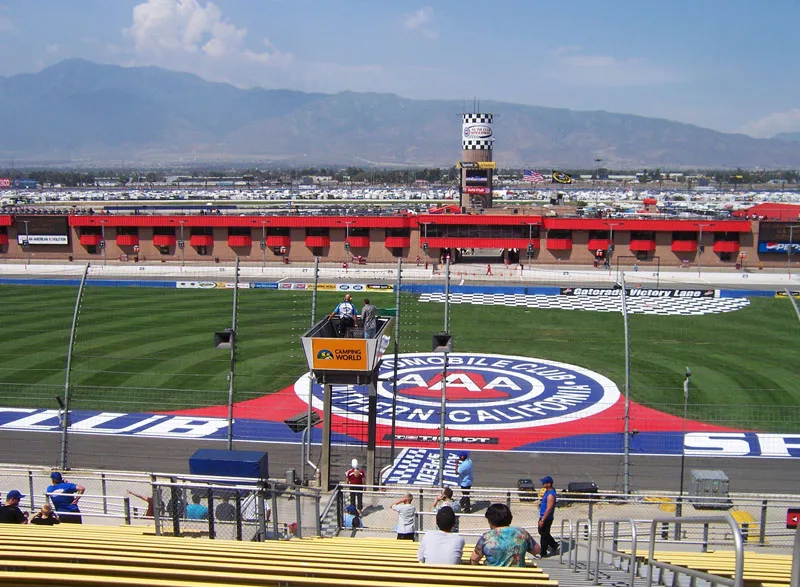
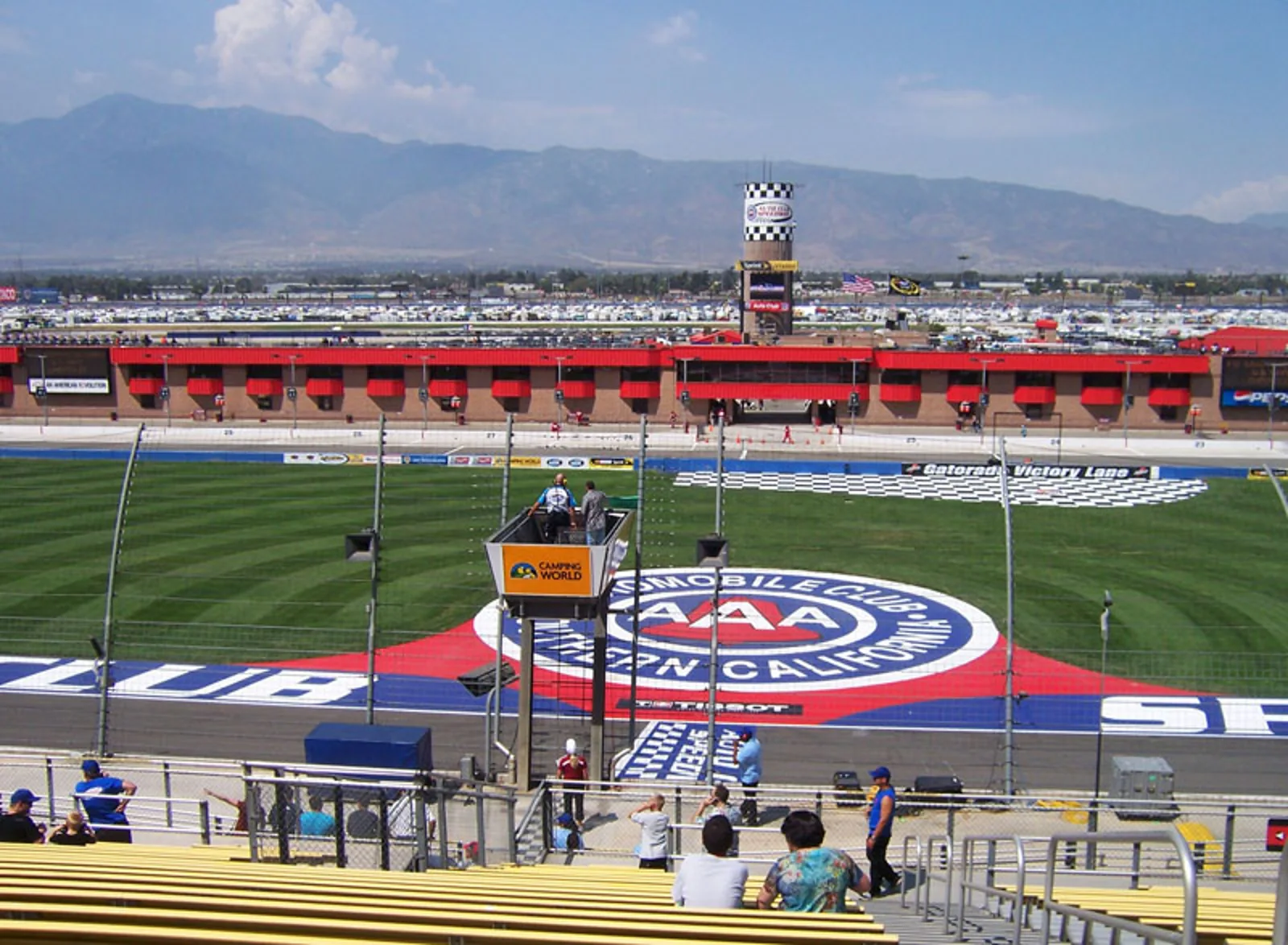
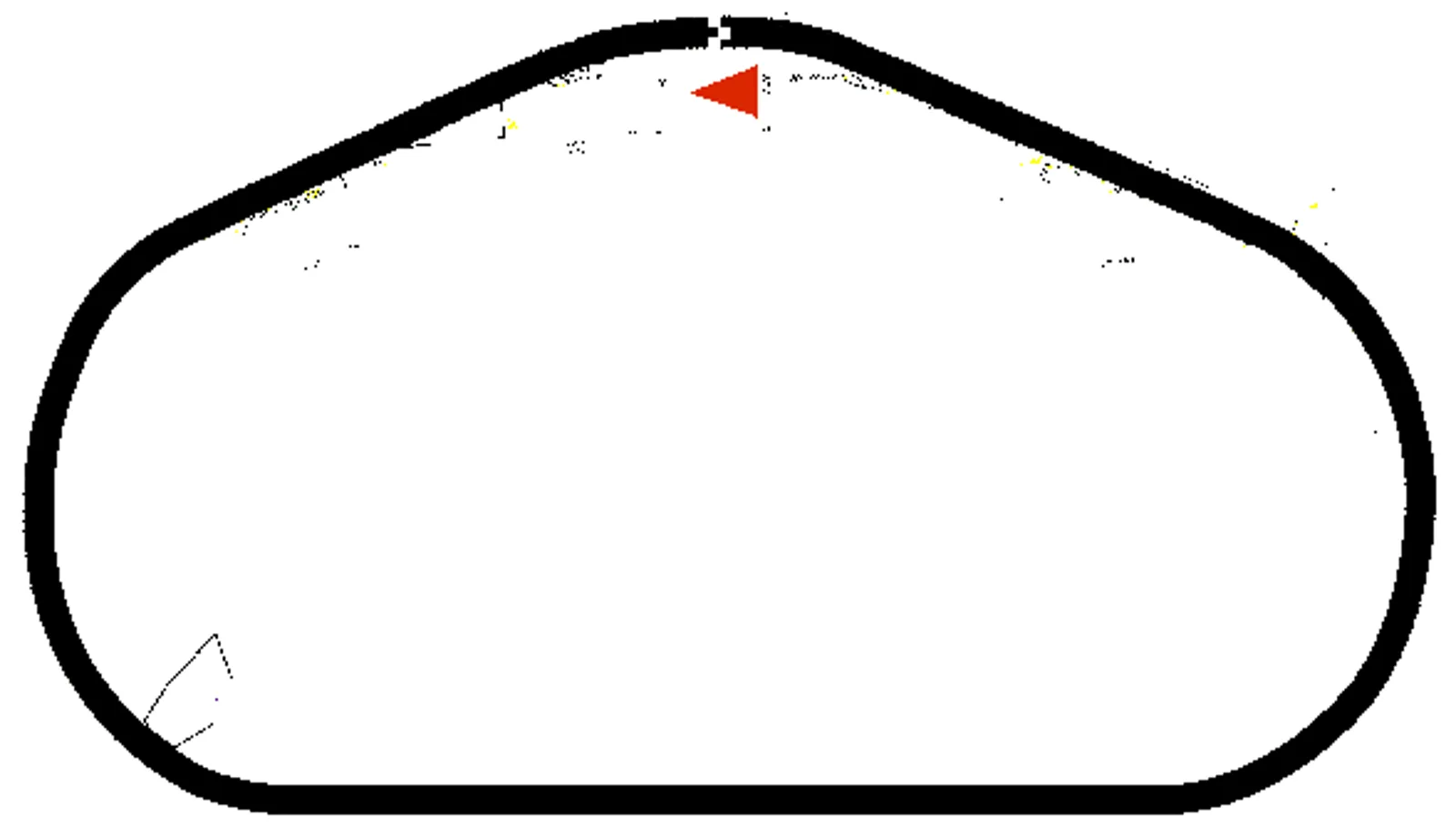
Kansas Speedway is a four-turn, D-shaped oval measuring 1.5 mi (2.4 km) per lap. Its turns are banked at 15 degrees, the front stretch at 10.4 degrees and the back stretch at five degrees, so the banking changes markedly from one part of the lap to another.
The finish line sits on the front stretch, which is banked less steeply than the turns. That difference shaped how drivers carried speed through the corners and how teams set up their cars for the long green-flag runs that often mattered most.
Where did the championship stand before the race?
The 2009 schedule had 36 races, and Kansas came in the middle of the Chase run. Going into Kansas, Mark Martin topped the Drivers' Championship on 5,400 points, ten ahead of Jimmie Johnson. Juan Pablo Montoya was third on 5,335, while Chevrolet held a 45-point lead over Toyota in the manufacturers' table. Johnson was also the defending winner here.
The margins were small enough that one weekend could reshape the top five. Stewart, Kurt Busch and Biffle all sat within reach of the leaders, and every team in the Chase knew a poor showing at Kansas would be hard to recover from over the remaining races.
What happened in practice?
Teams had three practice sessions: a Friday run followed by two on Saturday, all ahead of Sunday's start. The first lasted 90 minutes, the second 45 minutes and the third 60 minutes, which gave crews time to test setups before the qualifying run.
Newman, Johnson and Montoya were among the early pace setters in the opening session. Drivers used the later sessions to refine their cars before qualifying, and the lap times tightened as the weekend went on.
How did qualifying set the grid?
Mark Martin took pole with a time of 30.724 seconds, the 48th of his career. Dale Earnhardt Jr. joined him on the front row, 0.084 seconds behind, and Keselowski, McMurray and Stewart completed the top five. Forty-six drivers had attempted to qualify on Friday afternoon.
Each driver ran two laps, and the grid followed each car's fastest time. Hendrick Motorsports and Chevrolet filled the first three places, a result that showed how strong those cars were on a fast, flat-out track like Kansas.
Kahne, Nemechek, Bowyer, Gordon and Speed rounded out the top ten. Three drivers missed the field: David Gilliland, Michael McDowell and Kevin Hamlin, who did not qualify for the race.
What were the conditions at the start?
The race started at 2:00 p.m. EDT on ABC, with sunny skies and an air temperature of 56 F (13 C). Martin kept pole through the first corner, with Earnhardt Jr. right behind him as the field settled into its opening laps.
Pastor Jimmy Ybarra opened proceedings with the invocation, country singer Blaine Larsen sang the national anthem, and grand marshal Kent Blair sent the cars away. Those ceremonies set the tone before the green flag, and the field found its rhythm with Martin still in front.
The first caution came out on lap two when Logano lost control at turn two. Most of the leaders stayed on track during that yellow period, which let Martin keep the lead when the race restarted.
How did the race unfold?
Martin led the first lap, but Earnhardt Jr. passed him on lap 12 and Johnson took the lead after the first green-flag pit stops. Biffle first led on the 72nd lap, and went on to lead six times, totalling 113 laps out front, more than any other driver.
Stewart's decisive moment came on lap 238, when a caution period brought pit stops. He took only two tyres, while Biffle chose four, and Stewart emerged in clean air at the restart with a clear run ahead of him.
Biffle had led the most laps, but his four-tyre call left him trailing once the race went green again. Gordon then closed on the leader in the final laps, and Stewart answered his pace rather than letting the gap shrink.
Green-flag stops came in rounds, with a first round that let Johnson take over, and a second round on lap 122. Each round reshuffled the leaders, and teams used those windows to adjust cars and tyres, which is one reason the lead changed hands so often through the middle of the race.
The race ran with six cautions, and Earnhardt Jr. retired after his engine failed and left oil on the track. Those yellow periods gave teams a chance to change strategy, and the lead changed hands 26 times among 14 drivers, a track record for the venue.
Martin, who had started from pole, lost the lead to Earnhardt Jr. on lap 12 and recovered to finish seventh. His afternoon showed how quickly a strong start can fade once the pit calls begin.
Which drivers mattered most?
Stewart won the race, Gordon pressed hard in the closing laps and Biffle led more laps than any other driver. Johnson and Martin stayed in contention for much of the day, and both left the track still in the title hunt.
Gordon's second place came after a late push, while Biffle's third came despite the four-tyre call that cost him ground. Montoya and Hamlin completed the top five, and Kasey Kahne was among the drivers who finished inside the top ten.
What were the final results?
Stewart finished ahead of Gordon, Biffle, Montoya and Hamlin in the top five. Behind the leaders, Kahne, Martin, Reutimann, Johnson and Edwards filled out the top ten, with Martin seventh and Johnson ninth. Stewart crossed the line 0.894 seconds ahead after a race time of 2 hours, 55 minutes and 13 seconds.
| Finish | Driver | Notes |
|---|---|---|
| Winner | Tony Stewart | Started fifth; 37th career Cup win |
| Second | Jeff Gordon | Pressed hard in the closing laps |
| Third | Greg Biffle | Led six times, 113 laps in total |
| Fourth | Juan Pablo Montoya | Top five finish |
| Fifth | Denny Hamlin | Top five finish |
| Sixth | Kasey Kahne | Top ten finish |
| Seventh | Mark Martin | Started from pole |
| Eighth | David Reutimann | Top ten finish |
| Ninth | Jimmie Johnson | Top ten finish |
| Tenth | Carl Edwards | Top ten finish |
The win was Stewart's second at Kansas Speedway and his fourth of the 2009 season. A crowd of 100,000 attended, and the broadcast reached 5.25 million television viewers.
What did the result change in the standings?
Stewart moved up a place to fourth in the Drivers' Championship, passing Kurt Busch in the process. Martin still led on 5,551 points after finishing seventh, but his margin over Johnson fell to 18 points. Stewart sat 67 points behind Martin afterwards.
Chevrolet claimed a seventh consecutive manufacturers' title and its 33rd in NASCAR Cup competition. Toyota stayed second with 167 points, and Ford pulled ahead of Dodge in the fight for third as the season neared its end.
After the race, the cars of Johnson and Martin went to NASCAR's facility in Concord, North Carolina, for a precautionary check. Both had come close to measurement tolerance limits the previous week, and both passed once Hendrick Motorsports staff had watched the process.
What did the drivers say afterward?
Stewart credited Darian Grubb's plan for giving him clean air. Gordon admitted he had chosen the wrong tyre strategy, while Johnson said he hated losing points. Martin was pleased to keep the points lead despite finishing seventh. Each of them pointed to the strategy calls that had shaped the day.
Grubb noted that the rivals who also took two tyres ended up seventh and ninth, which left Stewart free to pick his own line on the restart. Stewart praised the whole pit crew for a strong day's work.
Gordon said he could not catch Stewart once the leader had built a gap, and that his car grew harder to drive the closer he got. Martin, meanwhile, cautioned against celebrating a points lead with several races still to run. Johnson made a similar point, saying it was far too early to worry about the Chase standings.
Why did the result matter beyond 2009?
The win gave Stewart momentum in the Chase and added to a season in which he collected several victories. It also reinforced Chevrolet's grip on the manufacturers' title, its 33rd in Cup competition, while the race reached 5.25 million television viewers.
Stewart's record at Kansas became stronger with the victory, since his second win there came in the same season as his fourth win of the year. For a driver chasing the title, that kind of consistency mattered more than any single lap.
The outcome turned on the tyre decisions as much as on raw pace. Stewart's two-tyre strategy, Biffle's four-tyre call and Gordon's own choice all shaped who finished where, and that theme ran through the rest of the Chase.