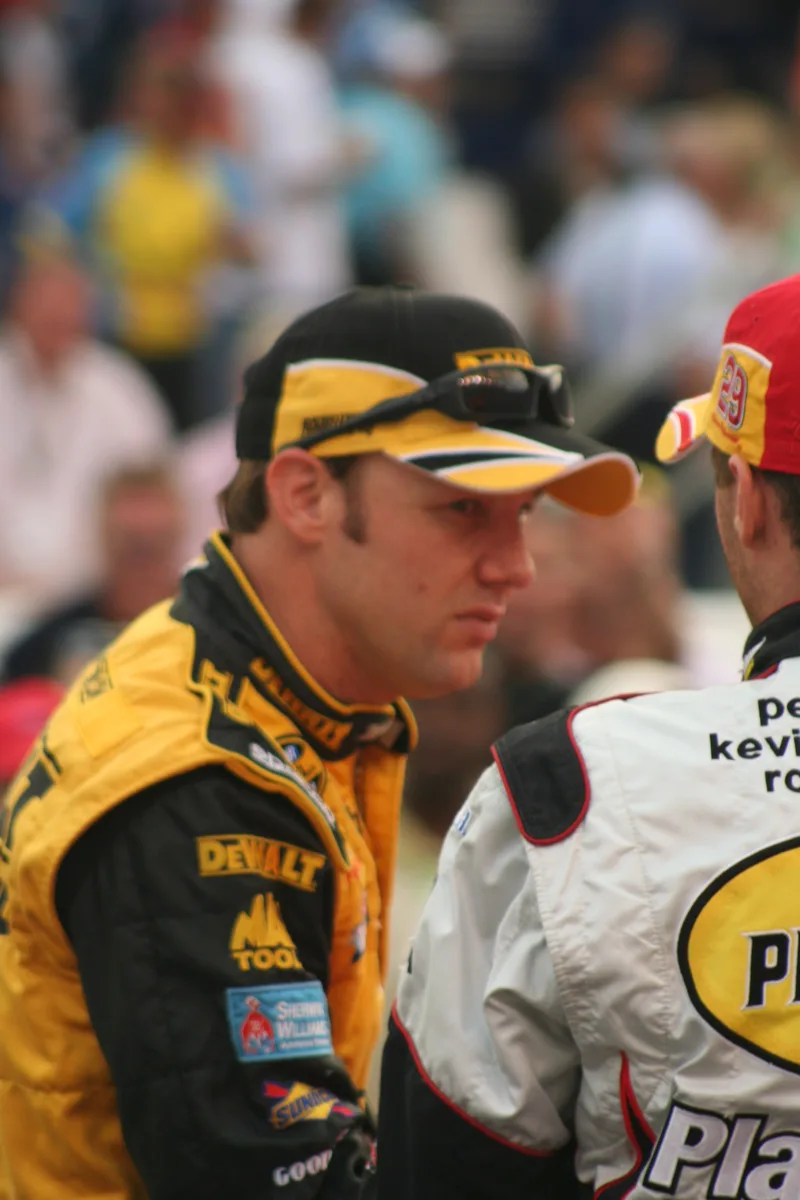
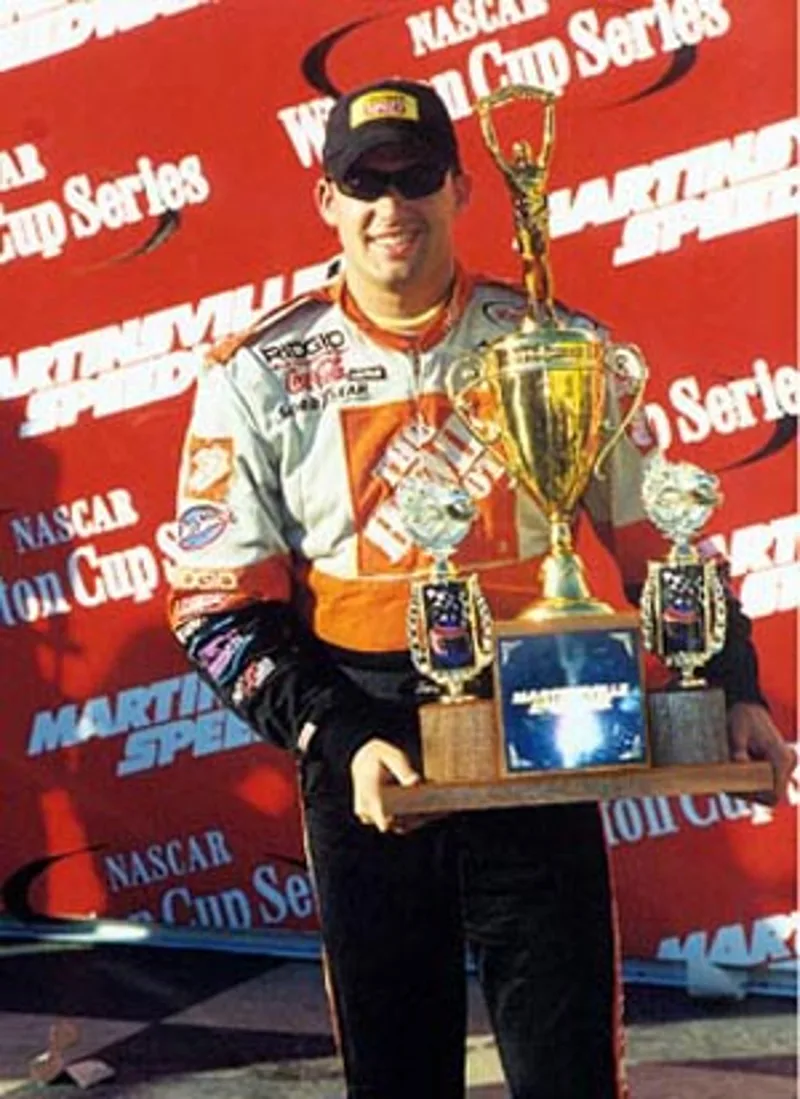
Dale Jarrett came from ninth on the grid to win the second race of the 2003 Winston Cup season at North Carolina Speedway.
The 2003 Subway 400 was the season's second event, run at North Carolina Speedway on February 23. Dale Jarrett won from ninth on the grid, with Kurt Busch second and Matt Kenseth third. The victory was Jarrett's 31st career win, and it put him second in the championship behind Busch.
Dale Jarrett won the 2003 Subway 400 at North Carolina Speedway in Rockingham on February 23, 2003, holding off Kurt Busch over 393 laps. It was the second race of the Winston Cup season and the first round of the year without restrictor plates. Jarrett's 31st career win moved him from tenth to second in the championship.
What was the 2003 Subway 400?
The 2003 Subway 400 was the second stock car race of the 2003 Winston Cup Series, held on February 23 at North Carolina Speedway in Rockingham. Around 40,000 spectators watched Jarrett come from ninth on the grid to win the event.
The race was televised live on Fox. Jim Ritter, pastor of Marston Baptist Church, gave the invocation, and jet dryers cleaned the track and removed paper debris before the start. The air was cold and blustery, at 12 to 13 C (54 to 55 F), while the track sat at 26 C (78 F).
Matt Kenseth was the defending race winner, and Michael Waltrip was the points leader at 185 before the start.
A race of cautions and near-misses ended with Dale Jarrett's 31st win, scored on a late pass that his rival could not answer.
How did the track and the rules shape the race?
North Carolina Speedway is a D-shaped oval of 1.637 km (1.017 mi), with four turns banked between 22 and 25 degrees. Both straights are banked at eight degrees. The Winston Cup first came to the track late in the 1965 season.
The race was the first round of the 2003 season without restrictor plates, a change that followed the season-opening Daytona 500 one week earlier. NASCAR kept a regulation from Daytona: a race slowed by a yellow flag with five or fewer laps to run would not restart.
The track also had an effect on the schedule. Wind, rain and a tornado alert cancelled the Saturday morning practice sessions, and a forecast of rain on Friday pushed teams to concentrate on race setups rather than qualifying speed.
Where did the 2003 standings stand before the race?
Michael Waltrip led the drivers' championship with 185 points before the race, with Kurt Busch second on 170 and Jimmie Johnson on 170 as well. Kevin Harvick was fourth with 160 and Mark Martin fifth with 155. Those figures set up a tight title picture early in the season.
Tony Stewart, Robby Gordon, Jeremy Mayfield, Mike Wallace and Dale Jarrett completed the top ten. In the manufacturers' standings Chevrolet led with nine points, three ahead of Ford, while Dodge sat third on four points, one ahead of Pontiac.
Those figures made the race a chance to shake up the title picture early in a long season. Waltrip's lead was narrow, and a single good result could change the order at the top.
Who was on the front row in qualifying?
Dave Blaney took his first career pole at his 113th race, with a time of 23.669 seconds. It was Jasper Motorsports' first pole since the 1994 season. Johnny Benson Jr. joined him on the front row, two-hundredths of a second slower.
Forty-three drivers entered the Friday qualifying session, and each ran two timed laps. Rain delayed the session for an hour and 15 minutes, and that delay created a mixed starting order because some teams concentrated on setups. Mark Martin qualified third, Sterling Marlin fourth and Bill Elliott fifth.
Ricky Craven, Jamie McMurray, Rusty Wallace, Dale Jarrett and Bobby Labonte completed the top ten. Ryan Newman had been quickest in first practice at 23.525 seconds, but a fuel line came loose from his carburettor during qualifying. Jeff Burton spun his rear tyres and hit a barrier, so he set no lap at all.
Blaney said afterwards that the car was a new type they had not tested, so the team did not know what to expect. He said it was good from the start, and that winning the pole made the day even better.
How did the race unfold?
Blaney's early lead lasted eight laps, and Martin took the front on lap nine. Craven got in front on lap 17, but Rusty Wallace passed him on lap 27 and began a long spell at the front. Jeff Gordon made contact with Dale Earnhardt Jr. on lap 12, pushing a piece of sheet metal into Earnhardt's front-left tyre.
NASCAR had announced a competition caution for lap 45 because of the previous day's rain, which required mandatory pit stops. Before that, Earnhardt's left-rear tyre burst and brought out a caution. He made five pit stops under it because a rubber strip was lodged in his front-left rotor.
The second caution on lap 88 came when Todd Bodine cut a right-front tyre and hit a barrier after turn two. The third followed on lap 107, when Jack Sprague hit the rear of Kenny Wallace and Kenny spun toward the outside wall. Earnhardt spun again on lap 122 after hitting the rear of Nadeau's car, and John Andretti then struck Mayfield's slowing car.
Rusty Wallace led again from the restart and held the front for 48 laps. A fifth caution came when Earnhardt spun on lap 174, and Tony Stewart hit the rear of Petty's slower car. Martin took the lead on lap 175, but Wallace went back in front on lap 179.
Several teams made green-flag pit stops during the middle stage, and each restart reshuffled the order behind the leaders.
Kurt Busch passed Wallace for the lead on lap 220 and held it for much of the middle stage. Kenseth then took over briefly on lap 255, and Sterling Marlin led laps 258 to 260 before Busch returned to first. The sixth caution came on lap 275 when Earnhardt spun for the second time that afternoon.
The race reached its final caution on lap 298, when Gordon hit the rear of Earnhardt's car and sent him into the grass on the frontstretch. Most drivers pitted under that caution. Labonte led briefly, and Jeff Burton passed him for the lead on the next lap before Busch regained it six laps later.
In the last 30 laps, Busch and Jarrett negotiated slower traffic. Late on, Jarrett drew alongside Busch and left him very little room against the backstretch wall. Busch lost control of his car and Jarrett took the lead. Busch passed Jarrett two laps later on the outside, but his rear tyres had worn out in the process.
Jarrett regained the front on lap 390, passing on the way into turn four. He then held the front through slower traffic over the final four laps. Busch fell back, and Jarrett crossed the line to claim his second win at North Carolina Speedway.
What was the final result?
Jarrett won from ninth on the grid, Busch finished second and Matt Kenseth third. The margin of victory was 0.966 seconds, which made the final restarts and the last few laps decisive. Ricky Craven was fourth and Jamie McMurray fifth. The race time was 3 hours, 23 minutes and 29 seconds.
Jarrett celebrated in Victory Lane in front of the 40,000 spectators, with his crew chief, Brad Parrott, among the team around him.
| Finish | Driver | Detail |
|---|---|---|
| Winner | Dale Jarrett | 31st career win and second at this track; won $167,050 |
| Second | Kurt Busch | Led four times over 149 laps; worn rear tyres at the end |
| Third | Matt Kenseth | Felt his car had been a contender but was behind on the last restart |
| Fourth | Ricky Craven | Led early and held a top-five run |
| Fifth | Jamie McMurray | Strong result with crew chief Donnie Wingo |
The race had 20 lead changes among 11 drivers, and seven yellow flags covered a cumulative 46 laps. Rusty Wallace led the most laps of any driver, four times for 182 laps, while Jarrett led twice for nine laps.
What did the result do to the championship?
Busch took over the drivers' lead with 345 points. Jarrett's victory moved him from tenth to second with 314 points, and Johnson stayed third with 312. Martin climbed to fourth with 306, and Waltrip dropped to fifth after finishing 19th.
The top four drivers were separated by a narrow margin after the race, and the championship picture was far from settled.
In the manufacturers' standings, Ford took the lead with 15 points. Chevrolet had led by three points before the race, and Pontiac passed Dodge for third with 34 races left in the season.
What did the drivers say after the race?
Jarrett dedicated the win to the older generation of drivers. Sadler had tested at the track beforehand and provided a suspension setup for Jarrett's car, and Jarrett's crew chief, Brad Parrott, said that close working relationship would help Robert Yates Racing in the year ahead.
Busch was disappointed to finish second for the second race in a row. He said he would have loved an early win for the season, and that the result was harder to accept than his second place at Daytona. Kenseth said he was happy with third, though his car had been a little too loose on the last run to challenge for the win.
Rusty Wallace called his car a bullet when he was out front, but said it became too loose later in the race. Earnhardt said Gordon's contact was unintentional and blamed the loose handling, which he said was causing tyre damage and the rubbing that led to his failure. McMurray said his fifth-place finish gave him confidence with his new crew chief, Donnie Wingo, after a difficult year with three crew chiefs.